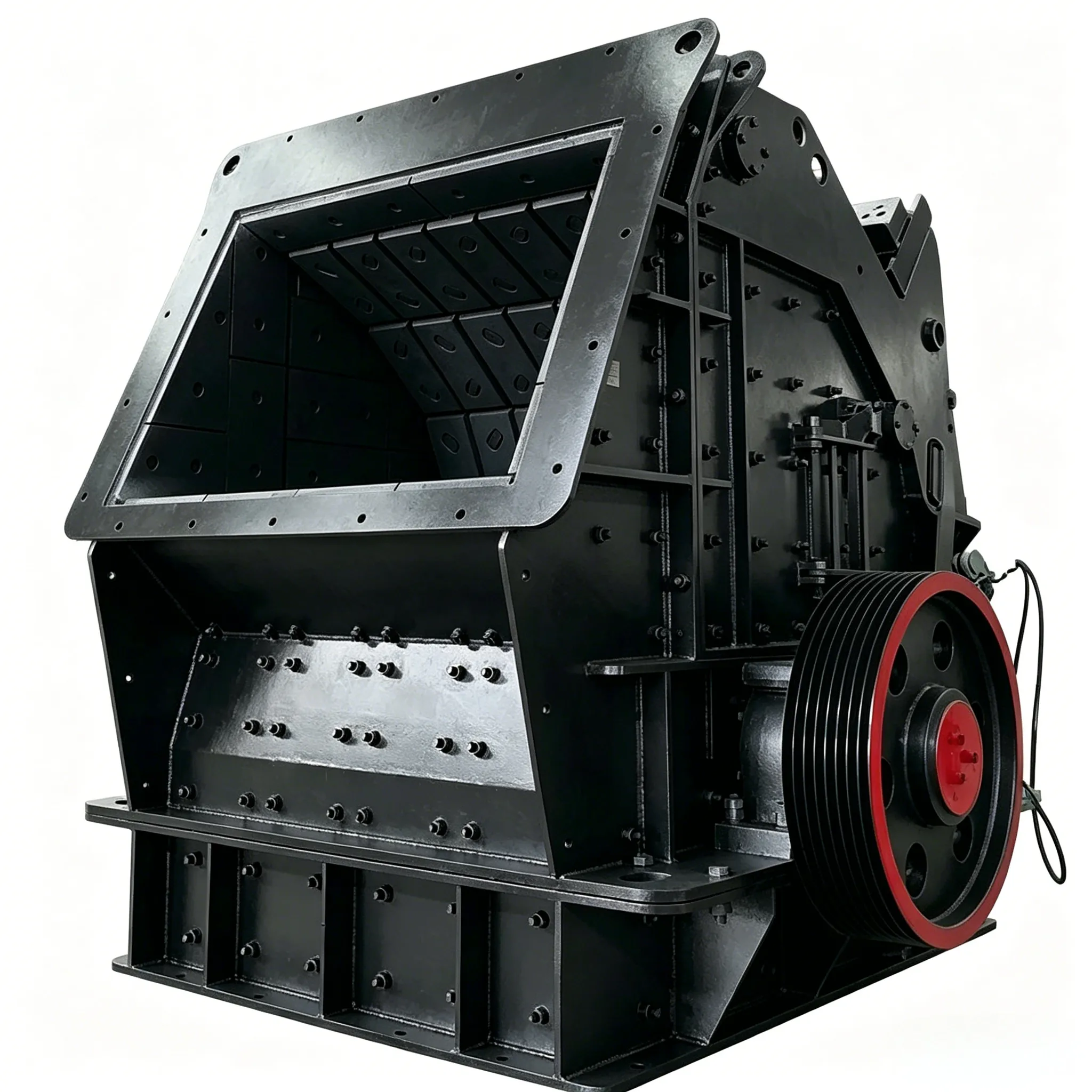
Prallbrecher
Arten von Prallbrechern Ein Prallbrecher ist eine Vorrichtung, die mit Prallkraft arbeitet…


A beneficiation method for copper‑nickel sulfide ores, comprising a grinding process of the ore and a flotation process using Y89 flotation reagent, dadurch gekennzeichnet, dass the preparation process for slurry flotation comprises:
a. after grinding the raw ore to a certain particle size and feeding it into a stirring tank, adding modified sodium silicate and controlling the pH value, with the process conditions being: ore particle size of <0.074 mm accounting for 60%, pH value of 5.5–8.0, and modified sodium silicate addition of 500–1000 g/t;
b. then adding copper sulfate and controlling the Es potential, with the process conditions being: copper sulfate addition of 200–600 g/t, and Es potential value of –300 mV.
The present invention relates to a beneficiation method for non-ferrous metals, and in particular to a beneficiation process for sulfide ores containing copper and nickel metals.
At present, in the beneficiation process of copper‑nickel sulfide ores, a relatively effective and commonly used method involves adding ammonium sulfate or sodium hexametaphosphate during the first stage of grinding, grinding the ore to <0.074 mm accounting for 60%, then adding 80–100 g/t of copper sulfate in a stirring tank and agitating for 3–5 minutes, followed by adding the collector butyl xanthate and the frother J662 for a first-stage roughing flotation. The tailings from the first-stage roughing are subjected to second-stage grinding (with the ore ground to <0.074 mm accounting for 80%), then enter a stirring tank where copper sulfate, butyl xanthate and J622 are added, and after stirring for 3–5 minutes, a second-stage roughing flotation is carried out. The concentrate from the first-stage roughing and that from the second-stage roughing are combined and subjected to cleaning flotation to produce a mixed copper‑nickel concentrate. With the above beneficiation process, the nickel recovery is low and the content of harmful impurities is relatively high. Especially for ores with high magnesium content, because this process cannot effectively control the magnesium content in the concentrate, the smelting operation becomes more difficult. In order to meet the requirements of the smelting process, on the one hand, the content of magnesium oxide in the concentrate has to be controlled at the expense of metal recovery; on the other hand, for ores with high magnesium content, electric furnaces with high energy consumption and low efficiency have to be used for smelting, resulting in high production costs and low metal recovery. Therefore, finding an effective flotation method for copper‑nickel ores, and in particular a flotation process that further improves metal recovery and reduces the magnesium oxide content in the concentrate, is of great significance for improving smelter benefits, especially for the effective treatment and development/utilization of high‑magnesium raw ores.
The object of the present invention is to overcome the problems existing in the conventional beneficiation processes for copper‑nickel sulfide ores, namely low metal recovery and high harmful impurity content in the concentrate, and to provide a beneficiation method for copper‑nickel sulfide ores that can effectively improve nickel metal recovery during beneficiation, reduce impurity content, and in particular effectively treat high‑magnesium copper‑nickel sulfide ores and reduce the magnesium oxide content in the concentrate.
The object of the present invention is achieved through the following technical solution.
A beneficiation method for copper‑nickel sulfide ores, comprising ore grinding and a flotation process using Y89 flotation reagent, characterized in that the slurry flotation preparation process comprises: a. grinding the raw ore to a certain fineness and feeding it into a stirring tank, then adding modified sodium silicate and controlling the pH value, with the process conditions being: ore particle size of <0.074 mm accounting for 60%, pH value of 5.5–8.0, and modified sodium silicate addition of 500–1000 g/t; b. then adding copper sulfate and controlling the Es potential, with the process conditions being: copper sulfate addition of 200–600 g/t, and Es potential value of –300 mV.
Using the beneficiation method for copper‑nickel sulfide ores according to the present invention for flotation of copper‑nickel sulfide ores, especially for flotation of high‑magnesium copper‑nickel sulfide ores, the copper and nickel recoveries can be increased by 1%–3% compared with the prior art, and the magnesium oxide content in the obtained concentrate is below 6.5%, which fully meets the requirements of flash furnace smelting regarding concentrate impurity content. It is a relatively ideal beneficiation method for copper‑nickel sulfide ores.
Die vorliegende Erfindung wird im Folgenden anhand von Ausführungsformen näher beschrieben.
A beneficiation method for copper‑nickel sulfide ores, for copper‑nickel ores containing 1.3%–1.6% nickel and 0.5%–1.0% copper. First, the ore is ground to <0.074 mm accounting for 60%, then fed into a stirring tank, where modified sodium silicate is added at a rate of 500–1000 g/t, stirred for 5 minutes, and the pH is controlled at 5.5–8.0. Then copper sulfate is added at 200–600 g/t, stirred for 3–5 minutes, and the Es potential is controlled at –300 mV to complete the slurry flotation preparation process. Finally, Y89 flotation reagent is added at 180 g/t and frother at 20 g/t, and flotation is carried out under controlled electrochemical potential for 8–10 minutes to obtain a copper‑nickel rough concentrate. The tailings are subjected to second-stage grinding (with the ground particle size of <0.074 mm accounting for 80%), then Y89 flotation reagent is again added at 40 g/t and flotation is carried out for 6–8 minutes to obtain a second‑stage copper‑nickel rough concentrate. The two rough concentrates are combined and subjected to 2–4 cleaning stages to obtain the final copper‑nickel concentrate.
In the method of the present invention, during the flotation slurry preparation process, a certain amount of modified sodium silicate is added to the ground slurry and the pH is controlled to an appropriate value. This activates copper and nickel in the slurry while simultaneously depressing MgO, effectively increasing the recovery of copper and nickel metals and reducing the magnesium oxide content in the concentrate.
Through the above process steps of the present invention, the activity of the valuable metals Ni and Cu in the slurry is increased, MgO is effectively depressed, and finally, by using Y89 flotation with controlled electrochemical potential, ideal flotation results are achieved.
Beispiel 1
A copper‑nickel sulfide ore contains 1.60% Ni, 0.7%–0.8% Cu, and 27% MgO. The ore is ground to a particle size of <0.074 mm accounting for 60%, and fed into a stirring tank. Modified sodium silicate is added at 500 g/t, stirred for 5 minutes, and the pH is controlled at 5.5–6.5. Then copper sulfate is added at 600 g/t, stirred for 3–5 minutes, and the Es potential is controlled at –300 mV to complete the slurry flotation preparation process. Finally, Y89 flotation reagent is added at 180 g/t, and a laboratory closed‑circuit flotation test is carried out under controlled electrochemical potential. The flotation results are shown in Table 1.
Tabelle 1
| Produktname | Yield(%) | grade(%) | Recovery rate (%) | |||
| Ni | Cu | Mg0 | Ni | Cu | ||
| Copper-inlaid concentrate | 20.50 | 7.58 | 3.46 | 3.25 | 92.35 | 90.11 |
| Tailings | 70.50 | 0.16 | 0.10 | 7.65 | 9.89 | |
| raw ore | 100.00 | 1.68 | 0.79 | 27.84 | 100.00 | 100.00 |
Beispiel 2
The copper-nickel sulfide ore contains 1.60% nickel, 0.7%–0.8% argon, and 0.28% Mg . Grind the ore to a particle size
For : <0.074 mm 60%, After entering the mixing tank, add 1000 g/t of modified sodium silicate. Stir for 5 minutes. Control the pH value between 7.0 and 8.0; then add 200 g/t of copper sulfate. Stir for 3-5 minutes, controlling the Es potential to be – 350 mV, Complete the preparation process for pulp flotation. Finally, add 180 g/t of Y89 flotation reagent and control the electrochemical… Laboratory closed-circuit flotation was performed using electrophoresis . The flotation results are shown in Table 2.
Tabelle 2
| Produktname | Yield(%) | grade(%) | Recovery rate (%) | |||
| Ni | Cu | Mg0 | Ni | Cu | ||
| Copper-nickel concentrate | 17.61 | 8.30 | 3.12 | 4.52 | 89.64 | 86.37 |
| Tailings | 82.39 | 0.20 | 0.10 | 32.90 | 10.36 | 13.63 |
| raw ore | 100.00 | 1.66 | 0.66 | 27.84 | 100.00 | 10.00 |

 English English
 Spanish
 Russian
 Arabic
 Swahili
 French
 Turkish
 Portuguese
 Korean
 Japanese
 German
 Italian