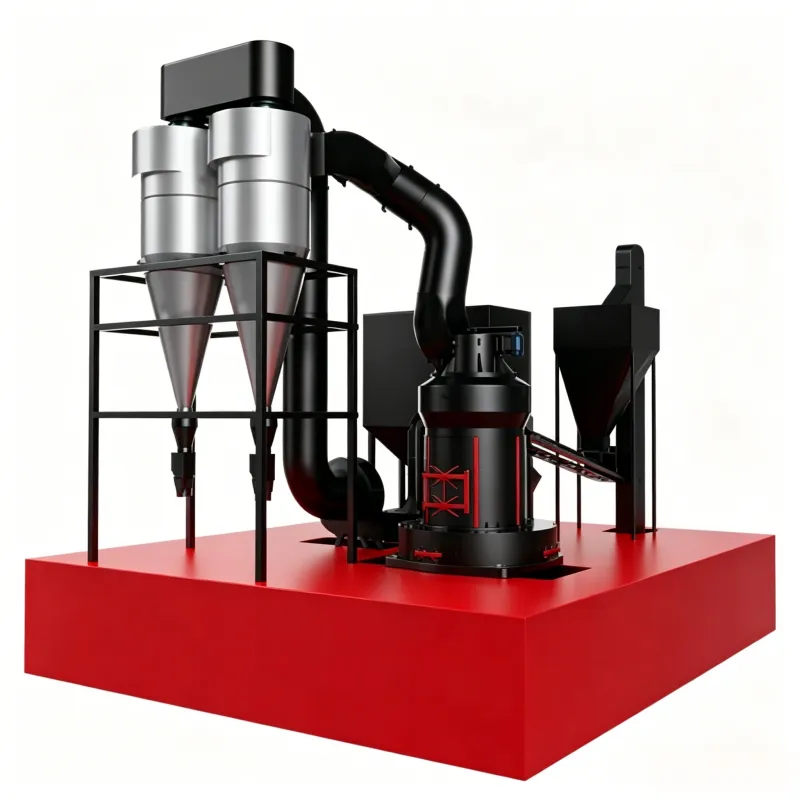
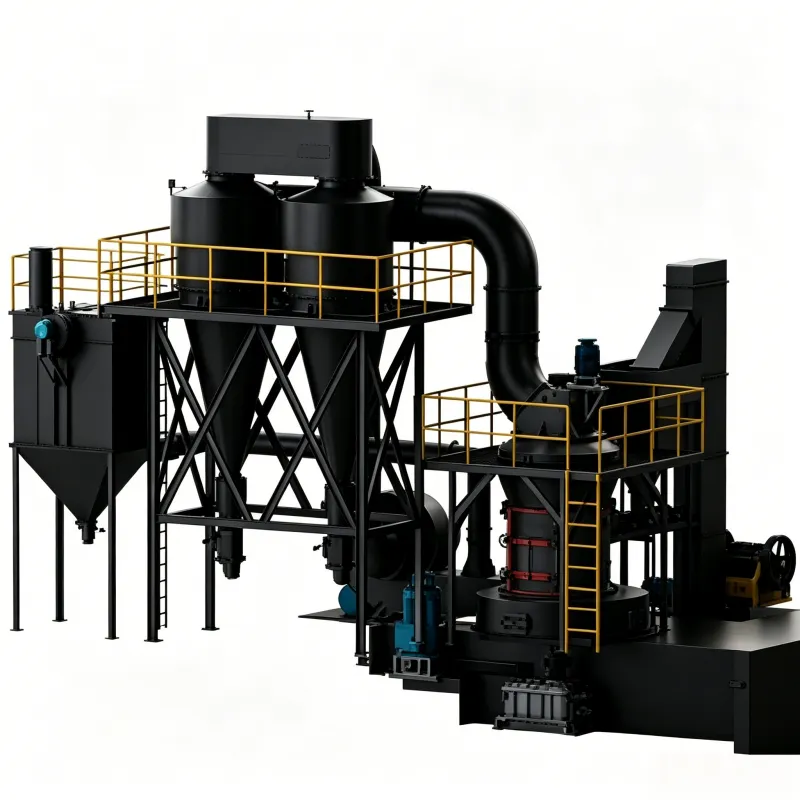
Schleifmühle aus Siliziumkarbid (SiC)
Einführung in die Siliziumkarbid (SiC)-Mühle Siliziumkarbid verfügt über extrem…


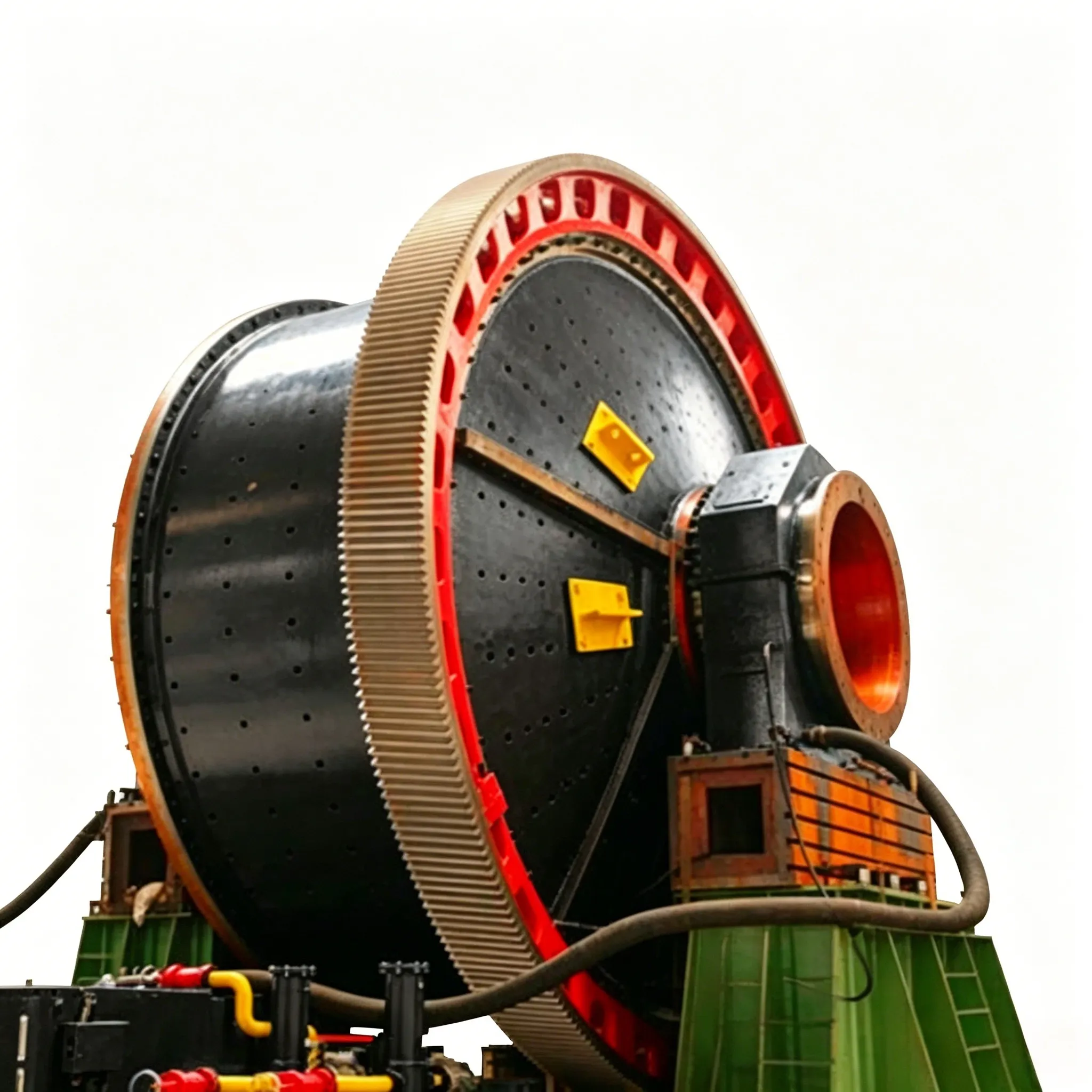
Ordinary high-manganese steel used for mill liners, due to the small impact force, achieves a surface hardness of only about HB 350 with a hardened layer depth of less than 0.2 mm. As a result, it is susceptible to ploughing and cutting wear by the material. At the same time, because of its low yield strength, it is prone to plastic flow, bulging deformation, and sometimes even pulling apart the liner bolts. When used for intermediate diaphragms and grate plates, the plastic flow of high-manganese steel often causes the grate slots to become blocked or narrowed, affecting production.
However, due to its good toughness and operational safety, it is still used. To maintain its high toughness while improving its yield strength, initial hardness, and work hardening rate, various modified high-manganese steels have been developed. For components such as diaphragms and grates in large and medium mills, the industry should move towards ultra‑high‑strength alloyed high‑manganese steels that are both reliable and offer significantly extended service life. Some small and medium mills use medium‑manganese steel, high‑manganese steel, or even so‑called as‑cast water‑quenched high‑manganese steel with noticeable results, but product quality must be ensured.
Medium‑carbon multi‑alloy steel is characterised by a carbon content in the medium‑carbon range, alloyed with 4%–6% chromium, 0.4%–0.8% molybdenum, and micro‑alloying elements such as V, Ti, and Re. After air‑quenching and tempering heat treatment, the microstructure consists of tempered martensite with dispersed carbides, achieving a hardness of HRC 48–56, impact toughness of 15–25 J/cm², and tensile strength ≥ 10 MPa. It has been used on ordinary stepped liners, angle spiral liners, grooved liners, and ring‑groove hyperboloid energy‑saving liners in dozens of large, medium, and small mills, all achieving a service life 1–2 times longer than that of high‑manganese steel liners with good results.
Various alloy steel liners have seen considerable development in recent years. Low‑carbon low‑alloy steels, after water‑quenching or oil‑quenching heat treatment, can reach a hardness of about HRC 50, but because the chromium content is around 2%, few carbides are present in the microstructure, so the wear resistance improvement is limited. Improper water‑quenching control can also lead to cracking. High‑carbon medium‑ and high‑alloy steels can achieve a hardness above HRC 50 by air‑quenching alone, but their toughness is relatively low, limiting their application range. Therefore, developing medium‑carbon medium‑alloy steels is a direction for mill liner materials.
In the 1960s, foreign countries began to use high‑chromium cast iron (steel) with excellent wear resistance for mill liners. Because the liner structure consisted of small square blocks with a single bolt hole, cracking was not a major problem. In the 1970s, institutions such as Xi’an Jiaotong University and Shenyang Foundry Research Institute introduced high‑chromium materials into China for manufacturing mill liners. However, as domestic mill liners for φ1.83–3.5 m mills were mostly long strips with two bolt holes and large thickness differences, this restricted their use. Over the years, research units have actively explored ways to improve toughness by adjusting composition and heat treatment, and by minimising the retained austenite content in the microstructure. Their application in medium‑sized mills of φ2.2–3.0 m has been relatively successful. However, the high content of chromium, molybdenum, and other elements, along with high production and selling costs, has constrained their manufacture and use. In recent years, medium‑chromium cast iron has also been developed for certain applications. When high‑chromium cast iron (steel) is used in mining and wet‑process raw mills in the cement industry, its wear resistance is no longer outstanding due to the corrosive effect of the grinding medium.
 English English
 Spanish
 Russian
 Arabic
 Swahili
 French
 Turkish
 Portuguese
 Korean
 Japanese
 German
 Italian