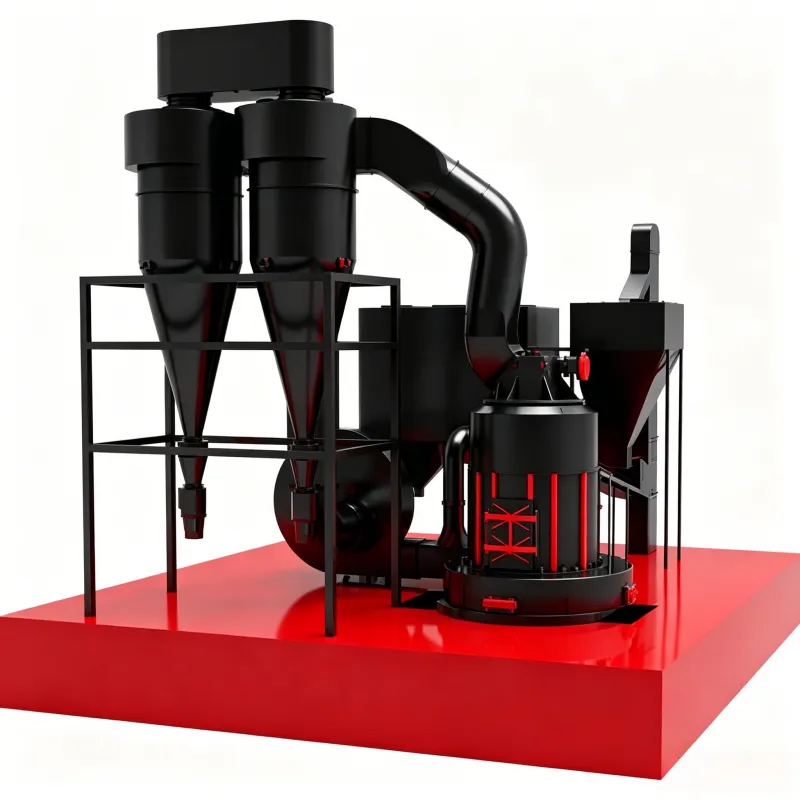
Mobile Raymond-Mühle
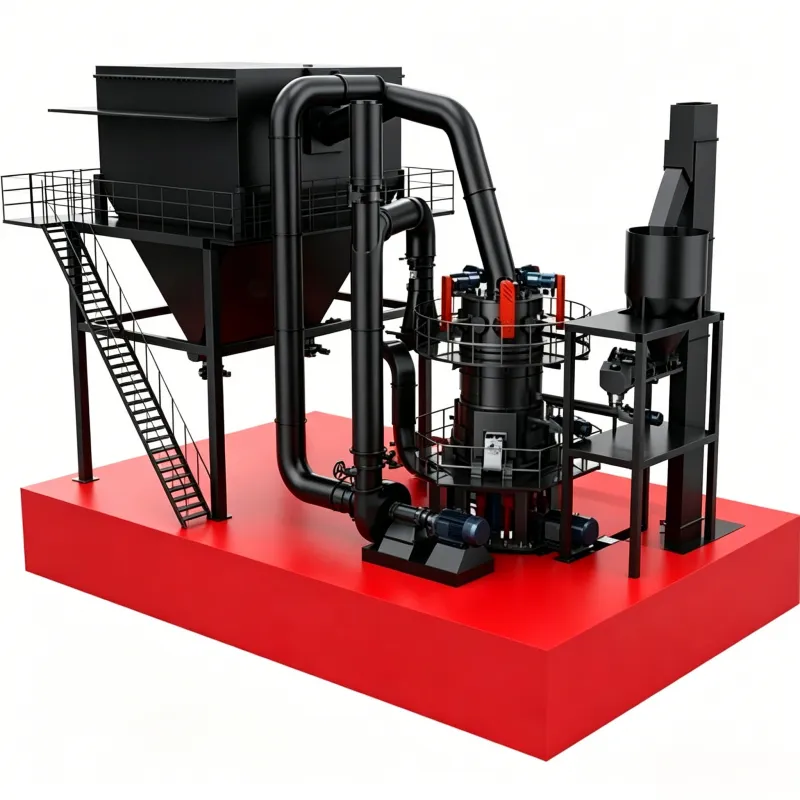
Einführung in die mobile Raymond-Mühle Die mobile Raymond-Mühle (auch bekannt als…


Many mineral processing plants have already installed PLCs, DCSs, and host computers (HMI/SCADA). Ball mills can start and stop automatically, water pumps can run in interlock, reagent pumps can add reagents quantitatively, and on-site parameters can be displayed in real time. However, production indices still require continuous adjustment by process personnel, and problems such as unstable grinding fineness, fluctuating flotation froth, and erratic concentrate grades have still not been fundamentally resolved.
This raises a thought-provoking question: Is mineral processing automation about automatically controlling equipment, or about automatically controlling the process?
My understanding is: Equipment automation control is the foundation, process control automation is the core, and production index optimization is the higher-level goal. The three are not mutually substitutive, but represent a progressively deepening relationship.
1. The First Level: Equipment Automation — Solving How Equipment Operates
Equipment automation mainly focuses on equipment start/stop, operating sequences, interlock protection, and fault alarms.
For example, before starting a ball mill, it is necessary to confirm that the lubrication system, cooling system, and related auxiliary equipment are in a permitted state; when stopping, the feed and related equipment are stopped in an established sequence; if a water pump fails, the system can issue an alarm and, if necessary, start a standby pump.
These functions are very important. Without reliable equipment control and interlock protection, it is difficult for the production system to operate stably.
However, the fact that equipment can start and stop automatically does not mean the grinding effect is necessarily stable; the fact that water pumps can run automatically does not mean the cyclone classification performance is necessarily qualified.
This is because equipment automation mainly solves “whether the equipment can operate as required,” but has not fully solved “whether the production process can remain stable.”
2. The Second Level: Process Automation — Solving How the Production Process Remains Stable
Process automation no longer focuses only on individual pieces of equipment, but on the relationships between equipment and the interactions among key process parameters.
Take the grinding-classification system composed of a ball mill and a cyclone as an example.
If only the start/stop of the ball mill, the operation of the feeder, and the pump sump level are controlled, the system can operate automatically, but when the raw ore hardness, feed rate, or pulp density changes, the grinding fineness may still fluctuate.
True process automation requires linking and analyzing parameters such as feed rate, mill load, pump sump level, cyclone feed pressure, pulp density, and overflow particle size.
For example, when the feed rate increases, the system should not only focus on whether the feeder is operating normally, but should also determine whether the mill load has increased, whether the classification system can handle it, and whether the overflow particle size has become coarser.
If there are clear, verifiable relationships among these parameters, coordinated control strategies can be designed according to on-site process requirements to reduce production fluctuations.
It should be noted that different mineral processing plants have different ore properties, equipment specifications, and process flowsheets, so control strategies cannot be simply copied.
3. Why Do Some Mineral Processing Plants Have PLCs but Have Not Truly Achieved Process Automation?
The key lies in the fact that: the control system collects a lot of data, but does not necessarily truly use this data to control the process.
For example, liquid level gauges are installed in flotation cells, and operators can see level changes; flow meters are installed in the reagent system to display the dosing amount; pressure transmitters are configured on the cyclones to monitor feed pressure in real time.
However, if there is no reasonable adjustment strategy after the liquid level changes, if no appropriate control relationship is established between the reagent dosage and the pulp flow rate, and if the cyclone pressure is normal but the classification performance is not judged in combination with the overflow particle size, then the system is more about “monitoring production” rather than “controlling the process.”
Of course, process automation does not mean that all parameters must be automatically closed-loop controlled. Some parameters are suitable for continuous adjustment, some are suitable for alarms and manual intervention, and some final indices can only be obtained through assays or online analysis.
The key is not how many automatic control loops there are, but whether the control strategies truly solve the problems in production.
4. The Third Level: Production Index Optimization — Solving How to Produce Better
The further development of process automation is optimization around production indices.
What a mineral processing plant cares about is not how stably the PLC runs, but whether the throughput, grinding fineness, concentrate grade, metal recovery rate, reagent consumption, and unit energy consumption can reach reasonable levels.
For example, when the flotation froth becomes thinner, the system should not simply be allowed to automatically increase the frother dosage. This is because froth changes may come from changes in air input, pulp level, ore properties, or upstream grinding and classification.
If the system can conduct a comprehensive analysis by combining liquid level, air input, pulp flow rate, reagent dosage, and assay results, it is more likely to identify the key factors affecting flotation indices.
However, production index optimization cannot be achieved by control programs alone. It also requires reliable detection instruments, reasonable process conditions, validated control models, and the long-term accumulated experience of process personnel.
Automation can help stabilize the process and reduce human-induced fluctuations, but it cannot replace mineral processing research, nor can it guarantee that all production indices will automatically reach the optimum.
5. How Should Mineral Processing Automation Be Built to Be More Effective?
If a mineral processing plant is preparing to carry out an automation upgrade, I believe it can be advanced in three steps.
Step 1: First, do a good job in equipment control and interlock protection. Ensure that equipment status is reliable, start/stop sequences are reasonable, and fault alarms are effective, avoiding basic control problems affecting production.
Step 2: Establish control loops around key process problems. For example, the grinding-classification system should focus on feed rate, pump sump level, pulp density, and overflow particle size; the flotation system should focus on liquid level, air input, reagent flow rate, and key process indices. The specific parameters to be selected should be determined according to on-site problems and instrument conditions.
Step 3: Establish the connection between production data and process indices. Combine equipment operating data, process parameters, online detection results, and assay data to continuously analyze the causes of production fluctuations, and then gradually improve the control strategies.
This is more pragmatic than pursuing unmanned operation, artificial intelligence, or full-process automatic optimization from the very beginning.
 English English
 Spanish
 Russian
 Arabic
 Swahili
 French
 Turkish
 Portuguese
 Korean
 Japanese
 German
 Italian