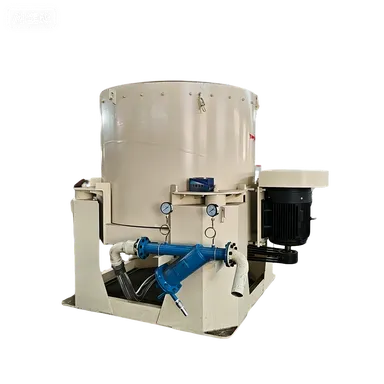
Zentrifugalkonzentrator
Zentrifugalkonzentrator – Hocheffizienter Schwerkraftkonzentrator für Feinpartikel – Produktübersicht Der Zentrifugalkonzentrator…

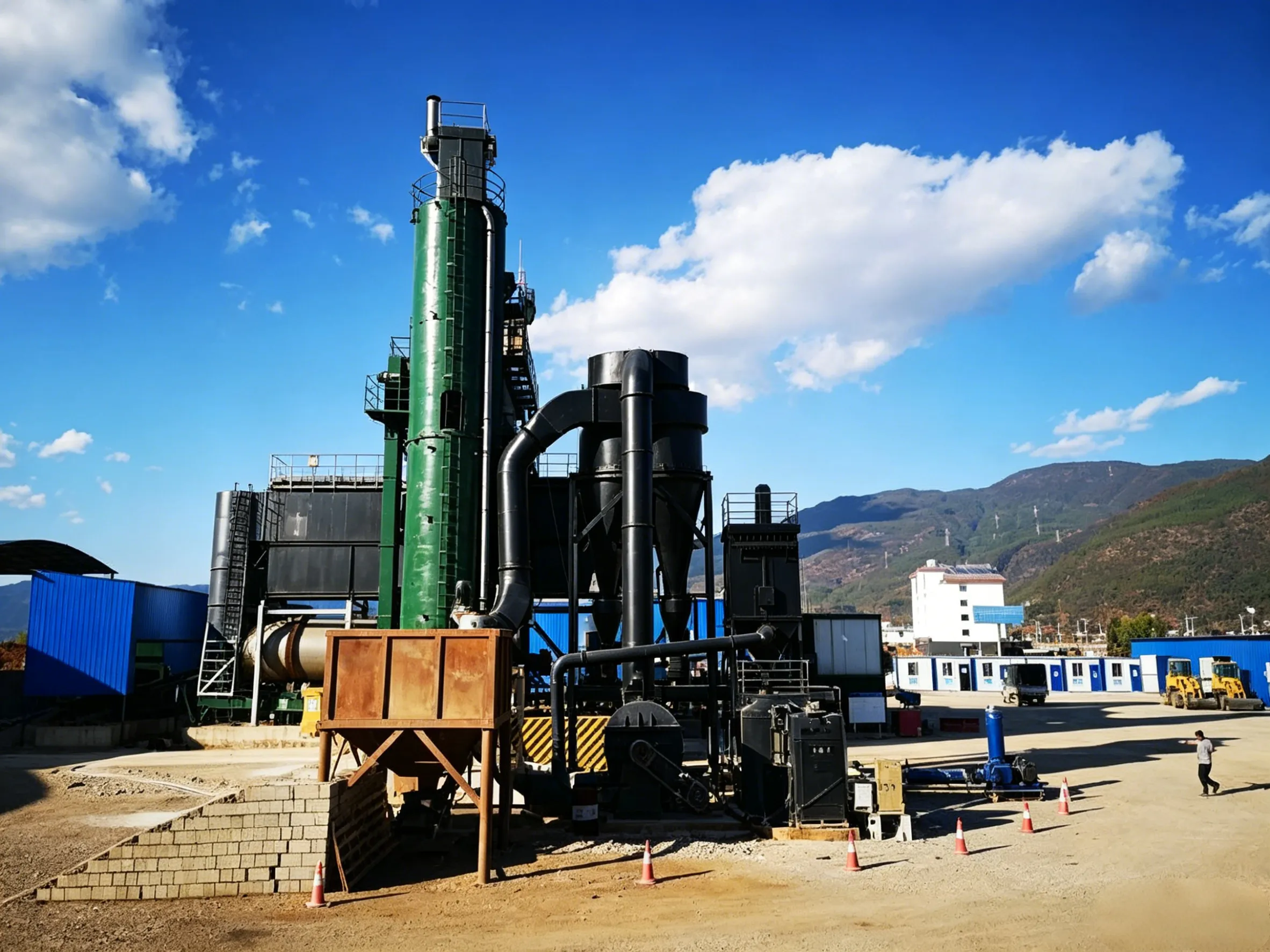
Marble is a metamorphic rock formed from pre‑existing rocks subjected to high temperature and pressure. It is mainly composed of calcite, limestone, serpentine, and dolomite, with calcium carbonate (CaCO₃) as the primary component, typically accounting for more than 50%. Marble resources are widely distributed and easy to process. With economic development, the domestic and international demand for marble powder has been growing steadily. Using Raymond mills to grind marble is an effective way to convert marble resources (including waste materials from mining and processing) into high‑value‑added industrial raw materials.
Raw materials for marble grinding are abundant and include:
Using marble waste for grinding not only enables resource recycling but also reduces environmental pollution, aligning with the national strategy for a green circular economy.
The Raymond mill (pendulum roller mill) is a vertical fixed‑disc mill primarily used for grinding various non‑metallic ores. The process is as follows: large materials are crushed by a crusher to the required size, then elevated by a bucket elevator to a storage hopper, from which an electromagnetic vibrating feeder uniformly and continuously delivers the material into the grinding chamber. Driven by the transmission device, the central shaft rotates the plum blossom frame and the roller assembly, generating a strong centrifugal force that presses the rollers tightly against the grinding ring. The material is scooped up by a plough blade and fed between the rollers and the ring, where it is crushed by rolling, squeezing, and impact. The ground powder is carried by air flow upward to the classifier, where a turbo classifier separates the fines. Particles meeting the fineness requirement are carried into a cyclone collector for collection, while oversize particles are returned to the mill for re‑grinding.
Marble fully meets the operating conditions of Raymond mills:
| Condition | Marble Property | Verdict |
|---|---|---|
| Mohs hardness ≤ 7 | 3–4 | ✅ Fully suitable |
| Moisture ≤ 6% | <1% | ✅ Fully suitable |
| Non‑flammable and non‑explosive | Inert mineral | ✅ Fully suitable |
| Feed size ≤ 30 mm | Can be crushed to ≤30 mm | ✅ Fully suitable |
Marble ore / waste
       ↓
Backenbrecher (primary crushing to ≤30 mm)
       ↓
Becherwerk
       ↓
Storage hopper
       ↓
Electromagnetic vibrating feeder (uniform feeding)
       ↓
Raymond mill (grinding)
       ↓
Turbo classifier (classification)
       ↓
Qualified fine powder → Cyclone collector → Packaging
Oversize particles → Return to mill for re‑grinding
       ↓
Pulse bag filter (collection efficiency ≥99.9%)
(1) Crushing
Large marble blocks (typically >300 mm) are crushed by a jaw crusher to below 30 mm to meet the feed size requirement of the Raymond mill. For marble edge scraps that are already 15–50 mm, the crushing step may be omitted.
(2) Conveying and Storage
The crushed material is conveyed by a bucket elevator to a storage hopper, which acts as a buffer to ensure continuous feeding.
(3) Feeding
An electromagnetic vibrating feeder delivers the material uniformly and quantitatively from the hopper into the grinding chamber. Stable feed rate directly affects product quality and equipment performance.
(4) Grinding
The material is crushed by rolling, squeezing, and impact between the rollers and the grinding ring. Key parameters during grinding include roller pressure and main shaft speed, which should be adjusted according to the target fineness.
(5) Classification
The ground powder is carried upward by air flow to the classifier. The turbo classifier separates the fines; those meeting the fineness requirement pass through, while oversize particles are returned to the mill. Classification accuracy directly determines product quality.
(6) Collection and Packaging
Qualified powder is carried by air into the cyclone collector for gas‑solid separation. The collected finished powder is discharged through the powder outlet and sent to packaging. Packaging can be in tonne bags or small bags, depending on customer requirements.
(7) Dust Collection System
The entire system is equipped with a pulse bag filter, achieving a collection efficiency of over 99.9%. The air‑classification circuit circulates internally between the fan, cyclone separator, ducting, and fan. Minimal dust is emitted, keeping the workshop clean and environmentally friendly.
| Nein. | Ausstattung | Specification / Model | Funktion |
|---|---|---|---|
| 1 | Backenbrecher | PE‑250×400 or PE‑400×600 | Primary crushing to ≤30 mm |
| 2 | Becherwerk | Selected based on capacity | Material lifting |
| 3 | Storage hopper | Steel structure, with level indicator | Material buffering |
| 4 | Elektromagnetischer Schwingförderer | GZ series | Uniform and quantitative feeding |
| 5 | Raymond-Mühle | Selected based on capacity (see table below) | Grinding |
| 6 | Turbo classifier | Built‑in or external | Particle size classification |
| 7 | Cyclone collector | Selected based on air volume | Gas‑solid separation |
| 8 | Pulse bag filter | Selected based on air volume | Dust collection / environmental protection |
| 9 | High‑pressure blower | Selected based on air volume | Air conveying |
| 10 | Electrical control system | PLC automatic control | Centralised control |
| Modell | Anzahl der Walzen | Zufuhrgröße (mm) | Product Fineness (mm) | Leistung (t/h) | Total Power (kW) | Geeignete Skala |
|---|---|---|---|---|---|---|
| HC1000 | 3 | ≤25 | 0.022–0.18 | 1–6.5 | 85–101 | Klein |
| HCQ1290 | 3 | ≤20 | 0.038–0.18 | 1.5–6 | 125 | Klein |
| HC1300 | 4 | ≤30 | 0.038–0.18 | 2–12 | 165–180 | Mittel |
| HCQ1500 | 4 | ≤25 | 0.038–0.18 | 2–13 | 238.5 | Mittel |
| HC1500 | 4 | ≤30 | 0.038–0.18 | 3–15 / 6–16 | 242 / 98 | Mittel |
| HC1700 | 5 | ≤30 | 0.038–0.18 | 5–20 / 6–25 | 264–314 / 342–362 | Groß |
| HC2000 | — | ≤30 | 0.038–0.18 | 6–25 | 342–362 | Groß |
For producing ultra‑fine marble powder (800 mesh or finer), a high‑fineness ring roller mill can be selected:
| Modell | Zufuhrgröße (mm) | Product Fineness (mesh) | Leistung (t/h) | Total Power (kW) |
|---|---|---|---|---|
| HCH980 | ≤10 | 325–2500 | 1.3–6.8 | 237 |
| HCH1395 | ≤10 | 325–2500 | 2.6–11 | 395 |
| HCH2395 | ≤10 | 325–2500 | 5–22 | 680 |
The Raymond mill grinding line has a compact three‑dimensional structure, small footprint, and strong system integration. From raw material preparation to grinding to final packaging, it forms an independent production system. The finished powder is uniform in fineness, with a screening pass rate of 99%.
Raymond mills can produce marble powder with fineness adjustable within 80–600 mesh (0.18–0.038 mm). Some upgraded models can reach 800 mesh. When using a high‑fineness ring roller mill, fineness can be adjusted between 325 and 2500 mesh, with product fineness reaching D97 ≤ 5 μm in a single pass.
| Feinheitsbereich | Product Type | Typical Applications |
|---|---|---|
| 80–200 mesh | Grobes Pulver | Building fillers, concrete admixtures |
| 200–325 mesh | Mittelfeines Pulver | Plastic and rubber fillers |
| 325–600 mesh | Fine powder | Paints, coatings, papermaking |
| 600–2500 mesh | Ultrafeines Pulver | High‑grade coatings, inks, cosmetics |
Marble powder (mainly calcium carbonate, CaCO₃) has high whiteness, good purity, stable chemical properties, and is non‑toxic and odourless. Ground marble powder (ground calcium carbonate, GCC) is widely used in the following fields:
Marble powder is used as a filler in plastic products to increase volume, improve processing properties (adjusting viscosity and rheology), and reduce costs. Different fineness grades are used in PVC, PE, and other plastic products. The plastics industry is one of the largest consumers of calcium carbonate, accounting for a significant share of downstream demand.
Marble powder is used as a filler to improve hiding power, durability, and application properties. It is mainly used in interior/exterior wall paints, waterproofing materials, and industrial coatings.
As a paper filler, marble powder improves paper whiteness, opacity, and printability. The paper industry is a major consumer of GCC.
Marble powder has wide applications in building materials:
Marble powder is used as a filler in rubber products to improve processing and mechanical properties.
Marble powder is used to adjust viscosity, increase volume, and reduce costs in adhesives and sealants.
The Raymond mill system operates under negative pressure and is equipped with a pulse dust collection system. The pulse bag filter achieves a collection efficiency of over 99.9%. The air‑classification circuit is internal, so very little dust is emitted, keeping the workshop clean. Electrical systems are centrally controlled, and the mill can operate virtually unattended.
The mill mainframe can be equipped with vibration‑damping devices to reduce noise and vibration. The integral base structure is robust and offers good seismic resistance.
The investment cost of a marble Raymond mill grinding line varies depending on equipment model, capacity, automation level, and auxiliary equipment:
| Scale | Equipment Investment (10,000 RMB) | Leistung (t/h) | Anwendungsszenario |
|---|---|---|---|
| Small line | 20–50 | 1–6 | Small/medium processing plant, waste utilisation |
| Medium line | 50–150 | 6–16 | Scale production |
| Large line | >200 | >20 | Large powder processing enterprises |
Equipment prices vary significantly with configuration. For reference, the HC1300 model is around 400,000–500,000 RMB, HC1500 about 100,000–200,000 RMB, and HCH1395 ultra‑fine mill about 600,000–700,000 RMB. These are indicative prices; final quotes depend on specific configurations and supplier negotiations.
Additional costs include factory construction, power upgrades, installation, and commissioning, generally accounting for 30%–50% of total investment.
Main operating costs include:
| Risk Factor | Beschreibung | Mitigation Measures |
|---|---|---|
| Raw material supply | Unstable supply of marble waste | Sign long‑term supply agreements with multiple processing plants |
| Marktrisiko | Price fluctuations of products | Develop multi‑grade products (coarse, fine, ultra‑fine) to diversify market risk |
| Umweltrisiko | Dust emissions failing to meet standards | Install high‑efficiency pulse bag filters ensuring ≥99.9% collection efficiency |
| Equipment risk | Breakdowns affecting production | Choose reputable brands, maintain spare parts inventory, and implement preventive maintenance |
| Technisches Risiko | Unstable product quality | Train operators and establish a quality control system |
 English English
 Spanish
 Russian
 Arabic
 Swahili
 French
 Turkish
 Portuguese
 Korean
 Japanese
 German
 Italian