1. Definition of Hammer Crusher
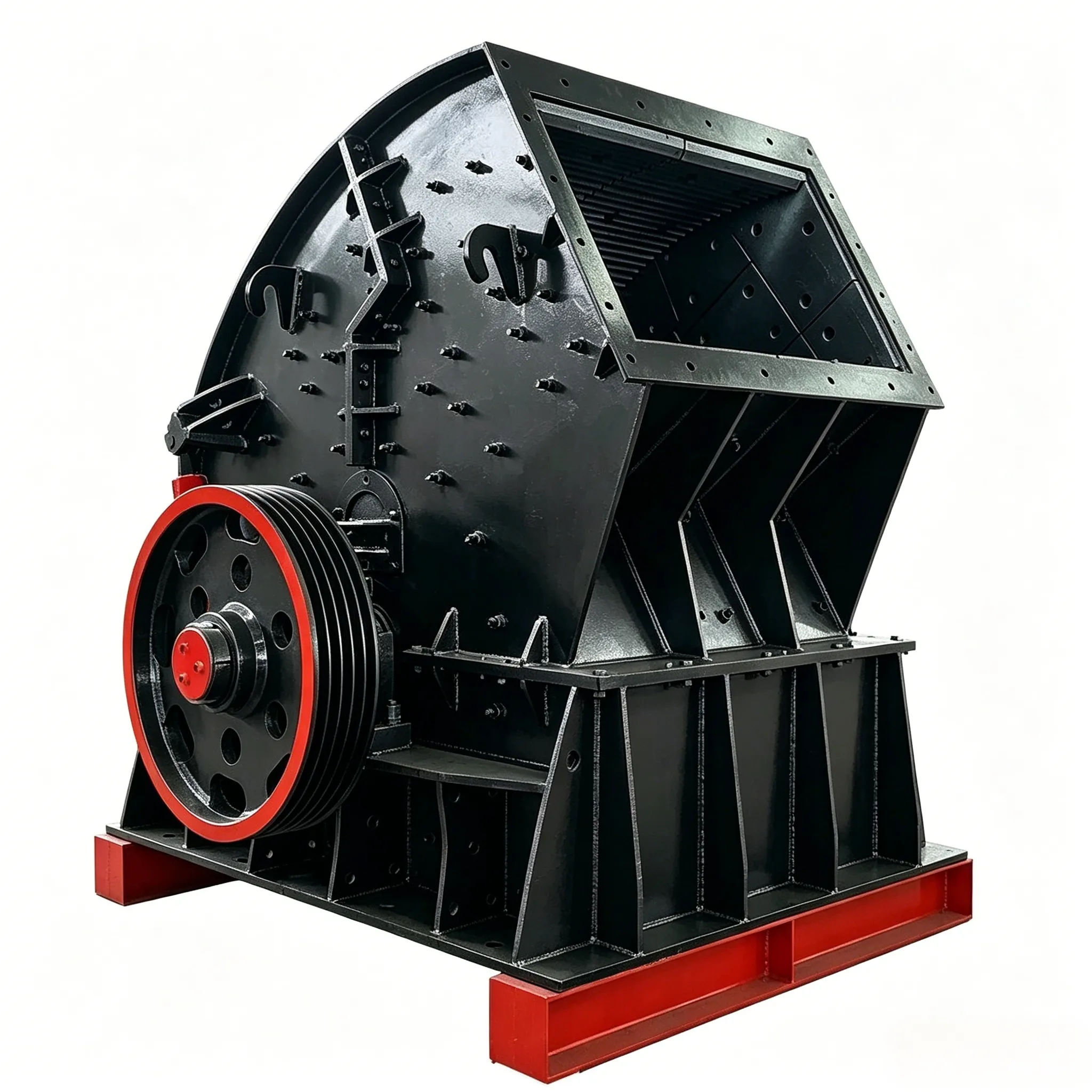
Commonly known as hammer mill, the hammer crusher is an impact crushing equipment for both coarse and fine crushing. It crushes materials through impact, striking, shearing and grinding force generated by high-speed rotating hammerheads. Featuring simple structure and low investment cost, it is widely used in small and medium-sized sand aggregate plants, coal mining, building materials, solid waste recycling, livestock feed and other industries.
It can be used as primary crushing equipment independently, or matched with jaw crushers for secondary fine crushing. It is mainly designed for medium-low hardness brittle materials, and is not suitable for high-hardness abrasive ores, which will cause extremely fast wear of hammerheads.
1.1 Main Classifications
- Single-stage Hammer Crusher: It can crush large raw materials into finished products in one pass, commonly used for limestone and coal crushing.
- Ring Hammer Crusher: Mostly applied in coal crushing for thermal power plants, with good sealing performance and low dust emission.
- Heavy Hammer Crusher: Equipped with thickened heavy-duty housing and large-size hammerheads, it allows larger feeding size and can replace small jaw crushers for primary coarse crushing.
1.2 Anwendbare Werkstoffe
It is suitable for medium-soft brittle materials with compressive strength ≤150 MPa, including limestone, coal, gypsum, shale, construction waste, bricks, mine tailings, crop straw, grain and so on.
❌ Not recommended for high-hardness ores such as granite, basalt and iron ore, which will lead to severe short-term wear of hammerheads and sharply increased operation & maintenance costs.
1.3 Core Application Purposes
- Small sand plants: Process limestone into finished crushed stones in one single crushing procedure.
- Thermal power plants and coal mines: Raw coal crushing and processing.
- Recycling and crushing of construction waste, bricks and concrete residues.
- Chemical and building material industries: Pre-crushing of raw materials like gypsum and kaolin.
- Agriculture & animal husbandry: Crush straw and grain to produce feed raw materials.
2. Main Structure of Hammer Crusher
- Feed Inlet: Materials are fed into the crushing chamber from the top.
- Rotor Assembly & Hammerheads: Core vulnerable components. The motor drives the rotor to rotate at high speed, and hammerheads strike materials to realize fragmentation.
- Liner Plates: Wear-resistant steel plates fixed on the inner housing wall; materials collide with liners for secondary crushing.
- Grate Bars: Installed at the machine bottom to control discharge particle size. Materials smaller than grate gaps fall off and get discharged, while oversized stones remain inside the chamber for repeated striking.
- Machine Housing, Driving Motor & Pulley: The sealed housing prevents dust leakage and provides rotary power for equipment operation.
3. Detailed Working Principle of Hammer Crusher
The hammer crusher adopts high-speed impact crushing technology, and materials go through three crushing stages:
Step 1: Primary Crushing via High-speed Impact
Materials fall into the crushing chamber from the top feed inlet. The motor drives the rotor to rotate at high speed via V-belts. High-manganese steel hammerheads fixed on the rotor violently strike falling materials. Stones crack along their natural fissures under instantaneous impact force to finish the first crushing process.
Step 2: Secondary Crushing by Colliding with Liner Plates
Materials thrown away by hammerheads strike the wear-resistant liners on the inner housing wall at high velocity. Most kinetic energy is consumed during collision, and stones are fractured again. Then fragments rebound and fall back into the striking range of hammerheads for repeated crushing.
Step 3: Fine Crushing through Mutual Collision & Grate Bar Screening
Inside the crushing chamber, materials continuously collide, rub and shear with each other for further fine grinding.
Only crushed stones with particle size smaller than the gaps between bottom grate bars can pass through the grates and be discharged from the machine bottom.
Oversized materials are blocked by grate bars and kept in the crushing chamber to be struck repeatedly by hammerheads until meeting the qualified discharge size.
Discharge Size Adjustment Methods
- Replace grate bars with different gap widths: narrower gaps produce finer finished materials, while wider gaps produce coarser aggregates.
- Adjust finished particle size slightly by replacing hammerheads of different weights and dimensions or changing rotor rotating speed.
Safety Protection Principle
When unbreakable hard foreign objects such as iron blocks and steel bars enter the crushing chamber, the instantaneous huge impact will cause overload on hammerheads, possibly leading to hammerhead falling off or rotor damage. Some heavy hammer crushers are equipped with safety pins, which will break under overload to protect the main shaft and rotor from severe damage.
4. Advantages & Disadvantages
4.1 Advantages
- Compact and simple structure with small floor space, low equipment procurement and installation cost.
- Large crushing reduction ratio, capable of completing both coarse and fine crushing in one process; small production lines can operate with a single machine for a short technological flow.
- Easy operation, convenient disassembly and replacement of hammerheads; routine maintenance can be completed by ordinary workers.
- Wide feeding range; heavy hammer crushers can directly process large-size raw materials without additional primary crushing equipment.
4.2 Disadvantages
- Hammerheads and liners wear rapidly when processing high-hardness ores, requiring frequent replacement of spare parts.
- Wet and clay-rich materials tend to stick to bottom grate bars, resulting in material blockage and output reduction.
- A large proportion of flaky particles in finished products with ordinary aggregate shape, not suitable for high-grade infrastructure projects such as expressways and bridges.
- High noise and dust emission during high-speed operation, requiring matched dust removal and noise reduction devices.
5. Common Production Line Configurations
- Small limestone / construction waste production line: Heavy Hammer Crusher + Vibrating Screen (one-step forming with single machine)
- Large-scale sand aggregate production line: Jaw Crusher + Hammer Crusher + Vibrating Screen
- Coal crushing for power plants and coal mines: Ring Hammer Crusher + Enclosed Belt Conveying System