
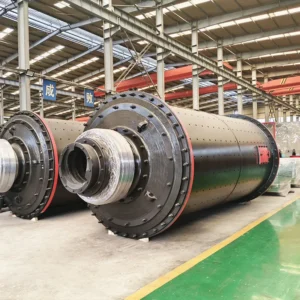
The beneficiation methods for fluorite, influenced by factors such as ore type, raw ore properties, and concentrate quality requirements, mainly include hand sorting, gravity separation, and flotation. The specific process type chosen varies depending on the ore type.
The beneficiation methods for fluorite, influenced by factors such as ore type, raw ore properties, and concentrate quality requirements, mainly include hand sorting, gravity separation, and flotation. The specific process type chosen varies depending on the ore type. Because fluorite is brittle, easily broken, non-magnetic, and has a relatively small density difference with other gangue minerals, flotation is a commonly used method for fluorite ore . Fluorite is easily floated, and fatty acid anionic collectors are commonly used . Flotation methods for single-type fluorite ore are relatively simple, while those for associated fluorite ore are more complex. Based on the main associated gangue minerals, fluorite can be classified into: quartz-fluorite ore , sulfide-fluorite ore , carbonate-fluorite ore , and barite-fluorite ore . The following mainly introduces the beneficiation techniques for these types of associated fluorite ore.
The beneficiation technology for non-associated fluorite deposits generally involves separating gangue from the valuable components based on the characteristics of the fluorite ore and the different occurrence states of the valuable components. According to the physical and chemical properties of different minerals in the fluorite ore, after crushing and grinding, gravity separation, flotation, and other methods are used to enrich the valuable components, reducing fuel and transportation consumption in smelting or other processing, and enabling the economical utilization of low-grade fluorite.
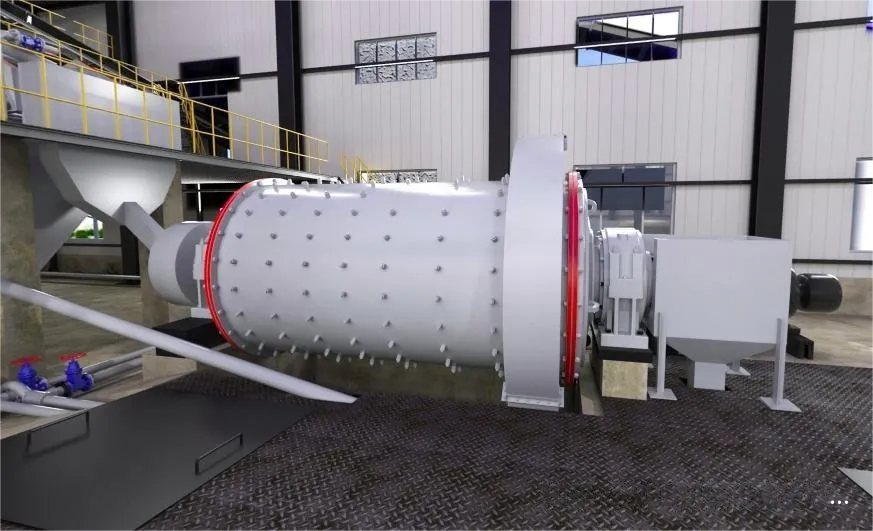
For different types of fluorite ore, it is crucial to employ appropriate beneficiation technologies. Based on its physical and chemical properties, fluorite ore requires methods such as gravity separation and flotation to separate valuable fluorite minerals from gangue minerals. Furthermore, it is essential to ensure the separation of associated valuable minerals to reduce or remove harmful impurities, thereby obtaining raw materials suitable for smelting or other industries.
Among the many types of fluorite ore, single-type fluorite ore beneficiation technology has attracted attention due to its simplicity. This type of fluorite ore is mainly composed of a single fluorite mineral, containing only small amounts of quartz and calcite, and often occurs in veins. Its calcium fluoride grade is typically between 35-40%, and a small amount of high-quality fluorite can be used directly for smelting. Although the beneficiation technology for single-type fluorite is relatively simple, high-grade concentrates can still be obtained through alkaline oleic acid flotation and roughing, scavenging, and cleaning steps.
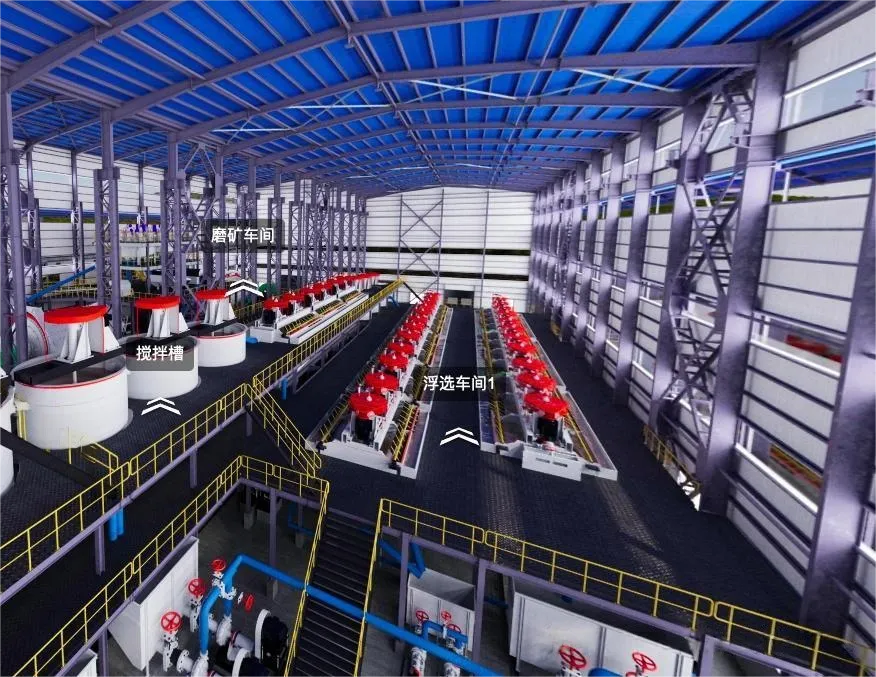
On the other hand, beneficiation technology for quartz-type fluorite ore faces certain challenges. This type of ore is mainly composed of fluorite and quartz, with fluorite content reaching 80%-90%, but also containing small amounts of calcite, barite, and sulfides. Due to the relatively complex mineral composition, special attention must be paid to reducing silica in the concentrate during beneficiation to avoid quartz concentrate being mixed with fluorite concentrate. Flotation is typically the main method for beneficiating quartz-type fluorite, with grinding significantly affecting the separation parameters. To ensure the liberation of quartz and fluorite without over-grinding, a staged grinding and staged beneficiation process is generally adopted. During flotation, adjusting the pH value and using collectors and depressants can effectively separate high-grade fluorite concentrate.
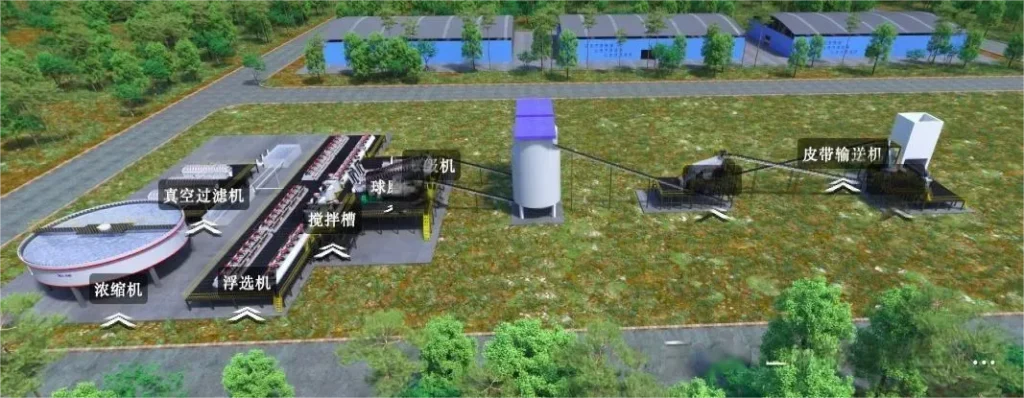
The production process of fluorite powder for chemical use generally requires a calcium fluoride content of over 97%. Commonly used beneficiation techniques for fluorite ore, such as gravity separation and hand sorting, often fail to achieve this grade. Therefore, most fluorite is produced through flotation, which is currently the only method for producing fluorite powder for chemical use. Fluorite ore has good natural floatability, and flotation processes generally offer high recovery rates. However, due to the stringent grade requirements for fluorite ore used in chemical applications, multiple refining processes are necessary.
Metallurgical-grade fluorite ore is mostly in the form of granular lumps. The beneficiation process for fluorite ore includes crushing, screening, gravity separation, and dewatering. Generally, fluorite lumps used in the metallurgical industry do not require very high concentrate grades, 70-90% is sufficient, so gravity separation is commonly used. Jigging machines offer advantages such as large feed particle size and a wide feed size range, capable of separating fluorite ore in the 0-50mm size range, with advantages including low energy consumption, high throughput, and economic efficiency.
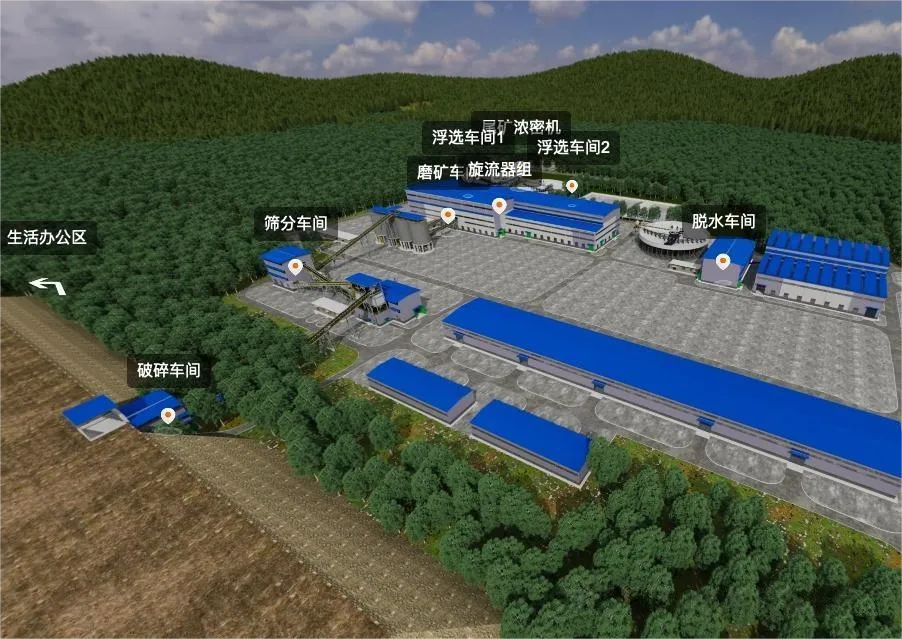
The mineral composition of quartz-fluorite ore mainly consists of fluorite and quartz, with small amounts of calcite, barite, and sulfides. In the flotation of quartz-fluorite ore, a method of regrinding the rough concentrate followed by multiple cleaning processes is commonly used. Sodium carbonate is used as a pH adjuster during flotation; adjusting the pulp pH to around 9 can improve flotation efficiency. Sodium carbonate also softens the water, preventing metal cations in the water from activating gangue minerals such as quartz. Additionally, water glass can be used to suppress silicate gangue minerals.
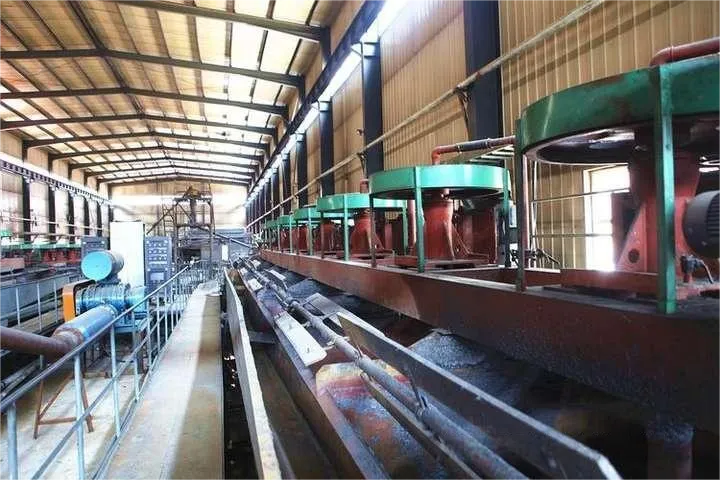
The sulfide minerals in this type of associated fluorite deposit mainly refer to galena and sphalerite. When flotating sulfide-type fluorite deposits, collectors are generally used first to float away the metallic sulfide minerals, and then fluorite is collected from the flotation tailings. The flotation method involves preferentially flotating the sulfide minerals, then roughing the fluorite, regrinding the middlings, and repeating this process multiple times to obtain the fluorite concentrate.
The main gangue mineral in this type of fluorite deposit is calcite, a calcium-bearing mineral. Fatty acid collectors have a strong adsorption effect on it. Commonly used depressants in flotation include starch, tannin, sodium hexametaphosphate, tannic acid, and acidified water glass.
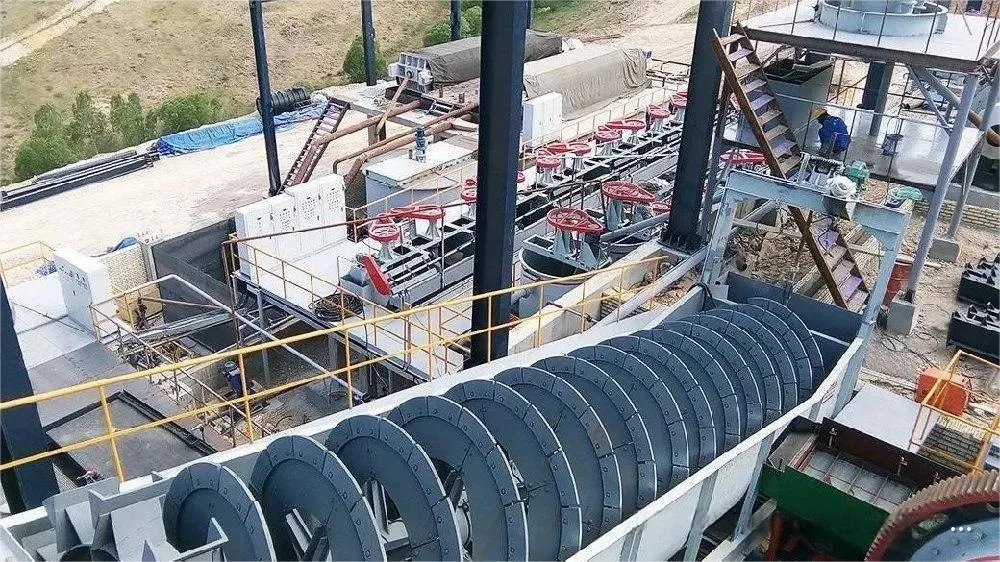
Flotation techniques for barite-fluorite ore are mainly divided into two categories: The first is mixed flotation, where fatty acid collectors are first used to mix and float fluorite and barite concentrates, and then the concentrates are separated by flotation. The second is preferential flotation, which inhibits either barite from flotating fluorite first or vice versa. During flotation, citric acid can be used as a depressant for fluorite, while salt depressants containing aluminum and iron ions can be used as depressants for barite.
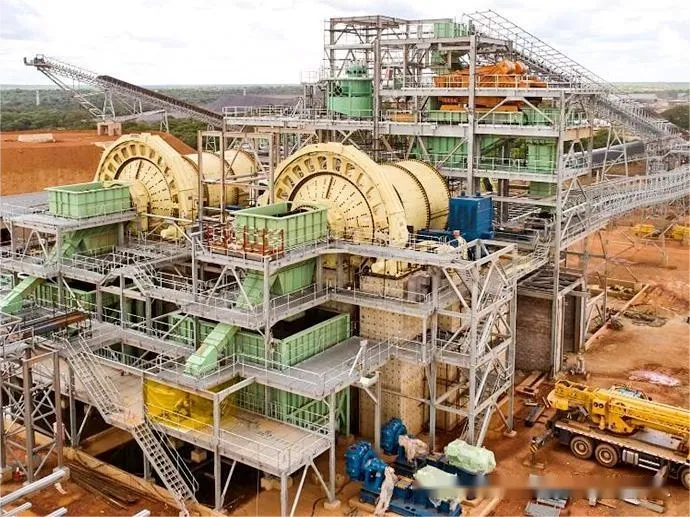
In summary, the conditions for beneficiation technology of different types of fluorite ore include: softened water, pH adjuster, pulp pH adjustment, and selection of collectors and depressants. Fluorite flotation processes commonly employ staged grinding, staged separation, and multiple cleaning processes. The specific fluorite beneficiation process should be selected based on the ore characteristics and the production requirements of the beneficiation plant. Our factory can provide customized fluorite beneficiation solutions, beneficiation equipment production, installation, and commissioning services according to customer needs, helping customers improve ore resource utilization and economic benefits.