
Hematite’s main component is ferric oxide (Fe2O3) . During its mineralization process, iron is often isomorphously replaced by elements such as aluminum, magnesium, and titanium. Based on its composition
Hematite’s main component is ferric oxide (Fe2O3) . During its mineralization process, iron is often isomorphously replaced by elements such as aluminum, magnesium, and titanium. Based on its composition, it can be classified into types such as hydrohematite , magnesian hematite , aluminum hematite , and titanium hematite . As one of the main raw materials for iron smelting in industry, hematite is also a type of iron ore processed in large quantities by beneficiation plants. The properties of raw hematite ore vary greatly from region to region; therefore, the beneficiation processes differ between mining areas. This section uses a common hematite beneficiation process flow diagram as an example to briefly introduce the beneficiation equipment for hematite.
Analysis of the hematite beneficiation process flow chart:
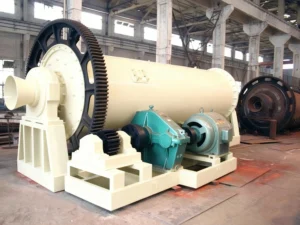
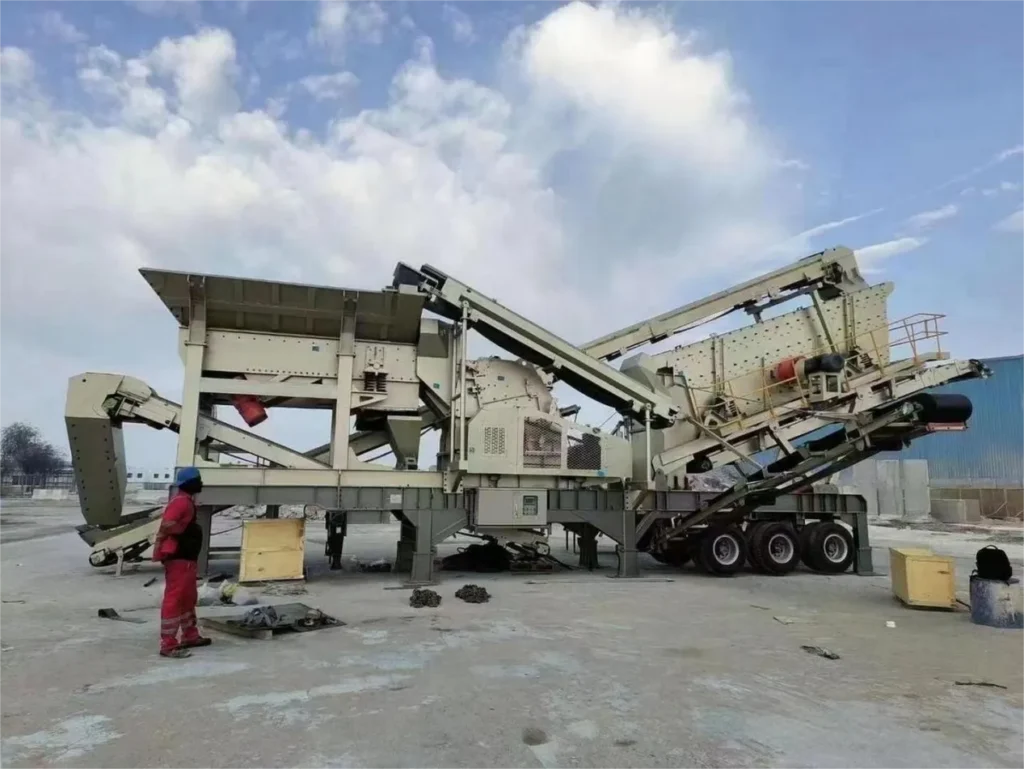
The hematite beneficiation process mainly includes crushing, grinding, classification, magnetic separation, and flotation. Some beneficiation plants also introduce gravity separation before flotation to remove associated slime from the hematite. Crushing in conventional beneficiation plants is divided into coarse crushing, medium crushing, and fine crushing. Pre-screening or inspection screens are set up before and after fine crushing as needed. Coarse crushing equipment mainly includes jaw crushers and gyratory crushers; medium crushing equipment mainly includes jaw crushers and cone crushers; and fine crushing equipment often uses various types of cone crushers. Screening machines commonly used are circular vibrating screens or linear vibrating screens. The ore crushed to a suitable particle size is sent to the grinding workshop, where continuous impact and grinding with steel balls in a ball mill fully liberates the valuable minerals in the ore, preparing it for subsequent beneficiation processes.
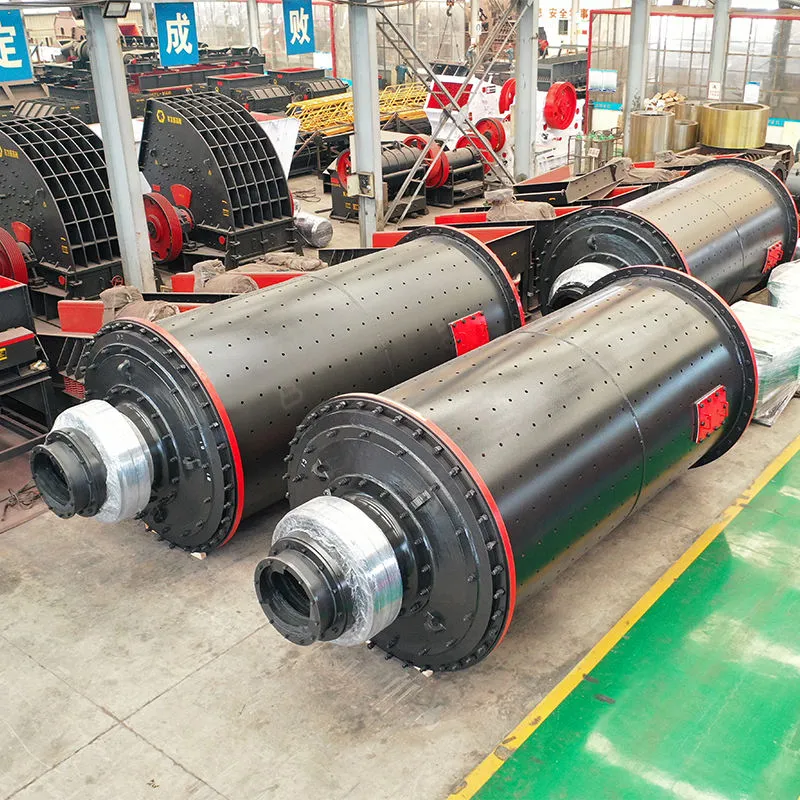
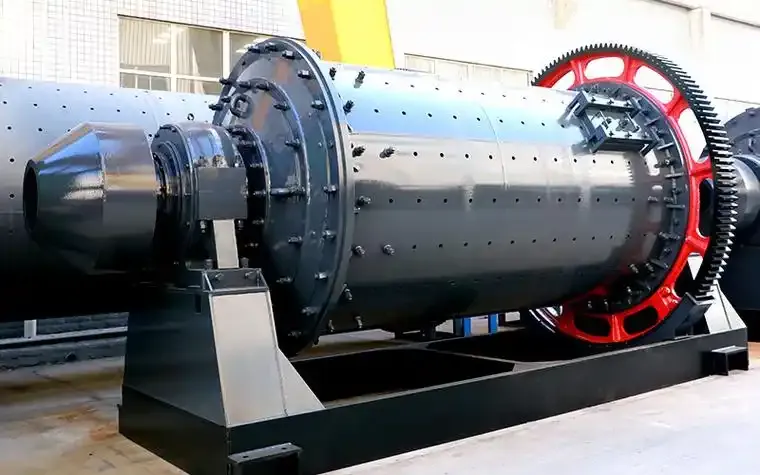
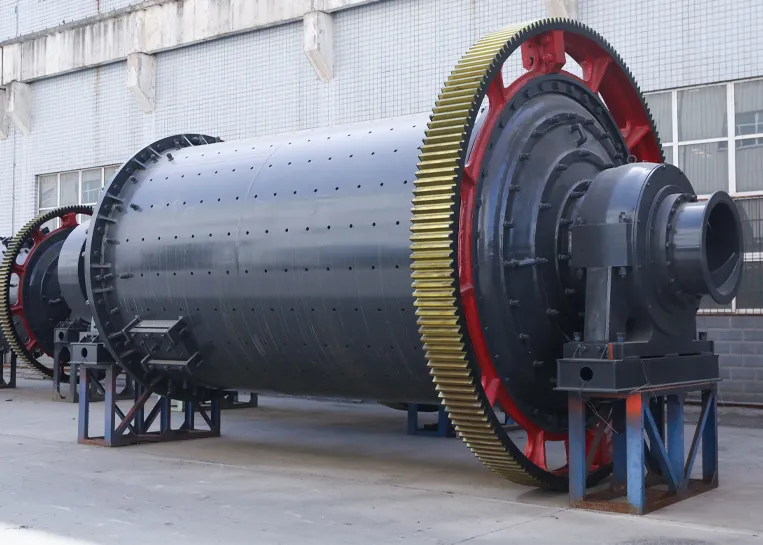
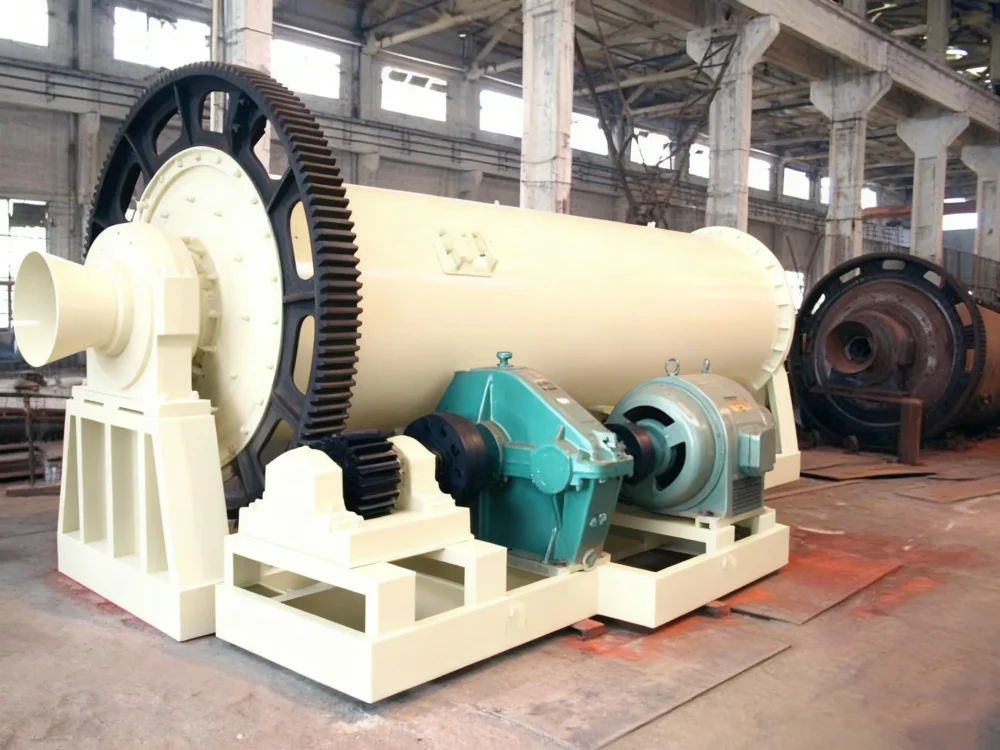
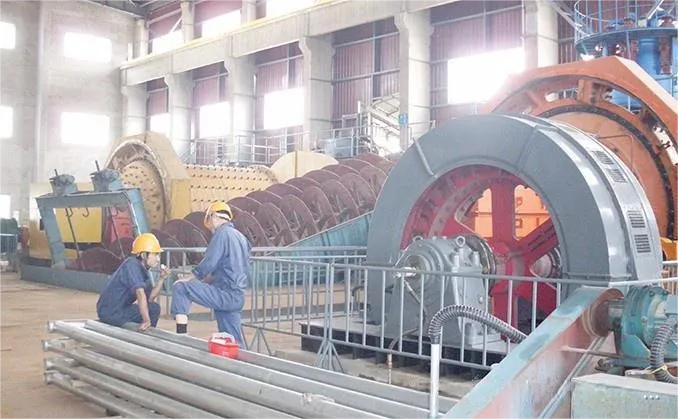
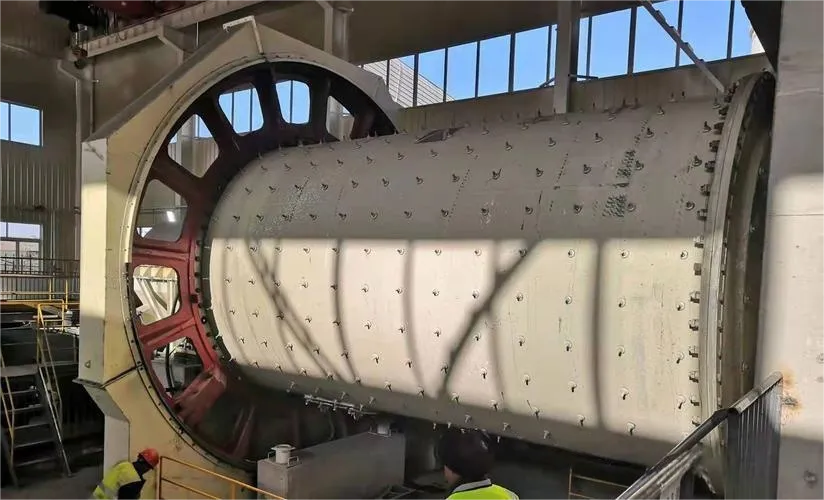
In hematite production, grinding operations typically employ two-stage grinding. Grate-type ball mills are commonly used in the first stage of hematite grinding due to their high discharge speed, uniform product particle size, and minimal over-grinding. Overflow-type ball mills, producing finer particles, are primarily used in the second stage. Since ball mills lack control over the particle size of their own products, a closed-circuit operation is usually established by combining a hydrocyclone with the ball mill to ensure the grinding product particle size meets beneficiation requirements. Hematite is a magnetic mineral, and beneficiation typically involves high-intensity magnetic separation for roughing and low-intensity magnetic separation for cleaning to remove non-magnetic particles from the ore. Typical high-intensity magnetic separators used in hematite production are vertical ring pulsating high-gradient magnetic separators, while low-intensity magnetic separation equipment mainly includes concurrent, counter-current, and semi-counter-current magnetic separators. Because the smelting process has specific requirements for the content of elements such as sulfur, phosphorus, and silicon in the raw materials, flotation is usually used after magnetic separation to remove various harmful impurities. The main flotation equipment for hematite includes the SF type mechanically agitated flotation machine , the JJF type mechanically agitated flotation machine, and the BF type mechanically agitated flotation machine . The concentrate product after flotation is then processed through concentration, filtration, and other dewatering processes to obtain the final iron concentrate powder.
How to efficiently recover high-grade hematite? The answer lies directly in the chosen hematite beneficiation process. Currently, the conventional hematite beneficiation process mainly includes: crushing and screening, grinding and classification, separation (magnetic separation, flotation), concentration, dewatering, and filtration. Below, we will examine these stages in detail to understand the hematite beneficiation process.
The crushing and screening process for hematite can be divided into two parts: crushing and screening. The following is a description of both parts of the hematite crushing and screening process.
Crushing operation: The raw ore obtained from the mine is stored in the raw ore bin and then fed into the crusher by a trough feeder for crushing. Once the material is crushed to a size suitable for feeding into the ore mill, it can proceed to the next process.
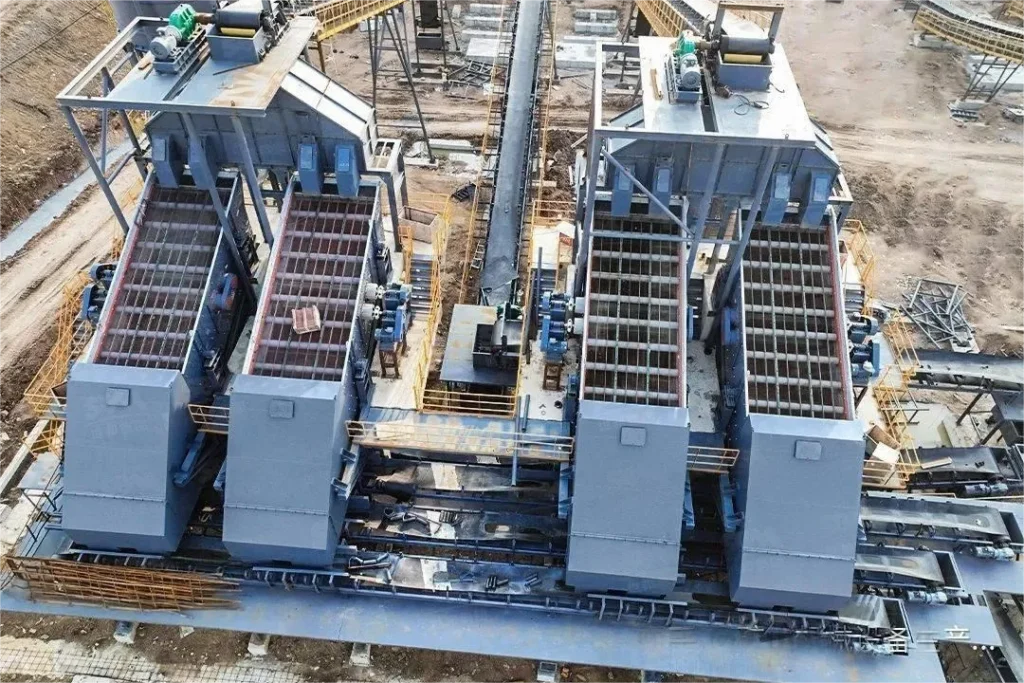
Screening: After crushing, most of the hematite ore can be directly fed into the ore mill for further processing. However, some large pieces of ore are unsuitable for the mill’s feed size. Therefore, you need to screen the crushed hematite ore to remove those that could damage the ball mill and send them back to the crusher for further crushing. This reduces the risk of damage to the ore mill and allows for the full extraction of the hematite component from the ore.
The above describes the crushing and screening process for hematite beneficiation. The crushed hematite powder is transported by belt conveyor to a powder silo for storage, awaiting the next grinding stage. The beneficiation equipment used in this stage includes: crushers, screening machines, feeders, and conveyors.
The grinding and classification process is mainly used to further grind the crushed ore particles, so that associated minerals or impurities are liberated from hematite as much as possible. The commonly used method is a staged grinding and classification process, and the specific process flow is as follows:
First-stage grinding and classification: The hematite powder crushed by the crusher enters the ore mill with the assistance of an electric feeder and belt conveyor to begin the grinding process. Once the powder reaches the required particle size, it is discharged from the machine, completing one grinding cycle. After the first grinding, the powder enters a hydrocyclone for inspection and classification. Powder meeting the standards is sent to a magnetic separator for magnetic separation. Powder that does not meet the standards is returned to the ball mill for regrinding.
After grinding and classification, the minerals need to be separated from the gangue minerals by beneficiation methods to obtain hematite concentrate. Flotation and magnetic separation processes are commonly used, and the specific processes are as follows:
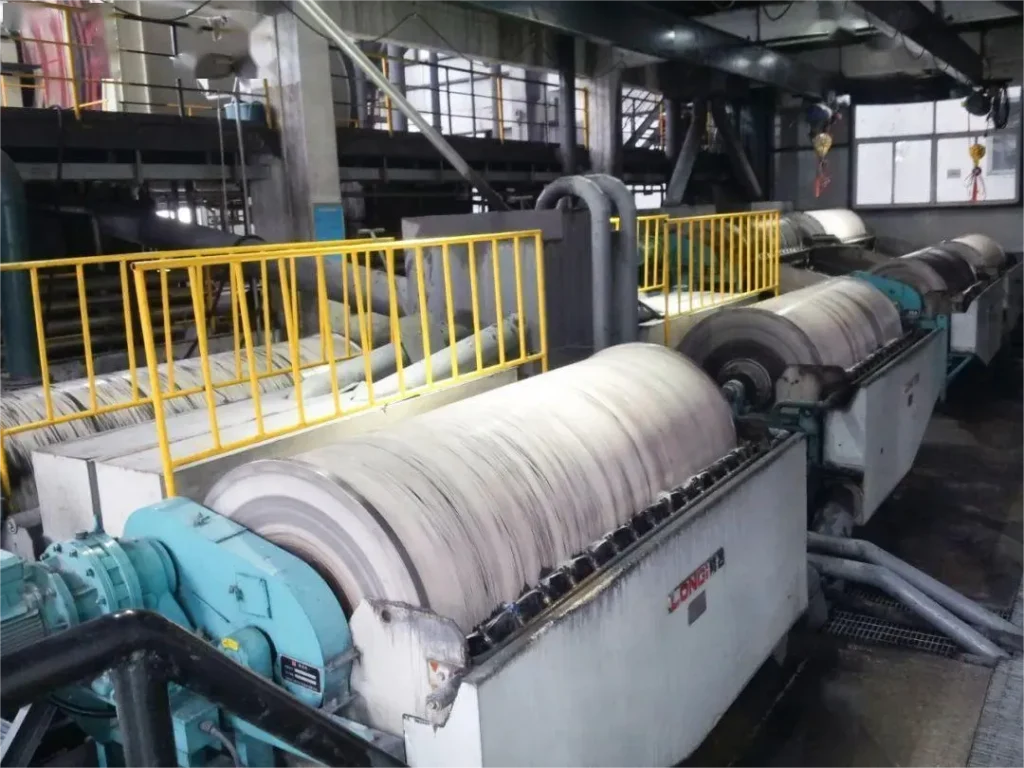
Magnetic separation process: After inspection and classification, the mineral powder is fed into a magnetic separator for initial separation. The coarse hematite concentrate obtained from the magnetic separator is then pumped into a second hydrocyclone for controlled classification. The tailings after magnetic separation flow by gravity to a tailings dam for further processing.
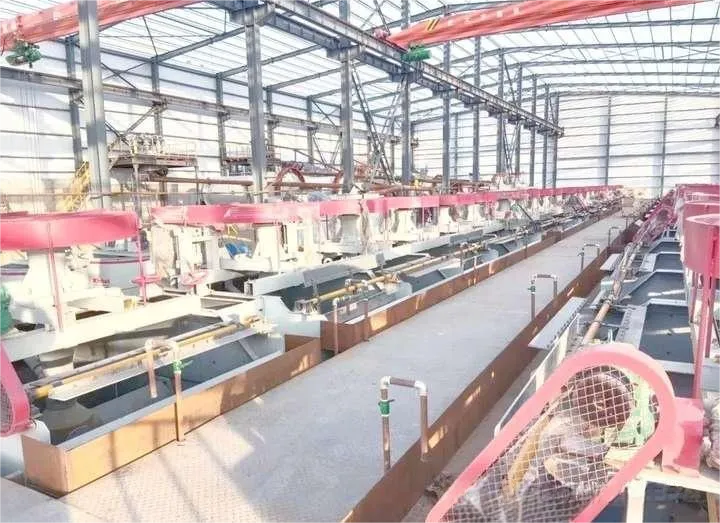
Flotation process: Reverse flotation is commonly used. Flotation is an essential step in obtaining high-grade hematite concentrate, primarily for concentrate separation. To improve the efficiency of reverse flotation of hematite, flotation reagents are added to the pulp beforehand, and a stirred tank is used to thoroughly mix the reagents with the hematite pulp. The mineral is then fed into the flotation machine by itself or an external suction device to complete three flotation stages, yielding high-grade hematite concentrate. The flotation tailings are then stored in a tailings pond. The main equipment used in the hematite separation stage includes: magnetic separators, flotation machines, and stirred tanks.
The concentrate slurry obtained from reverse flotation contains a large amount of water. To obtain the final hematite concentrate, it needs to be concentrated and dehydrated. The specific processes for concentration and filtration are as follows:
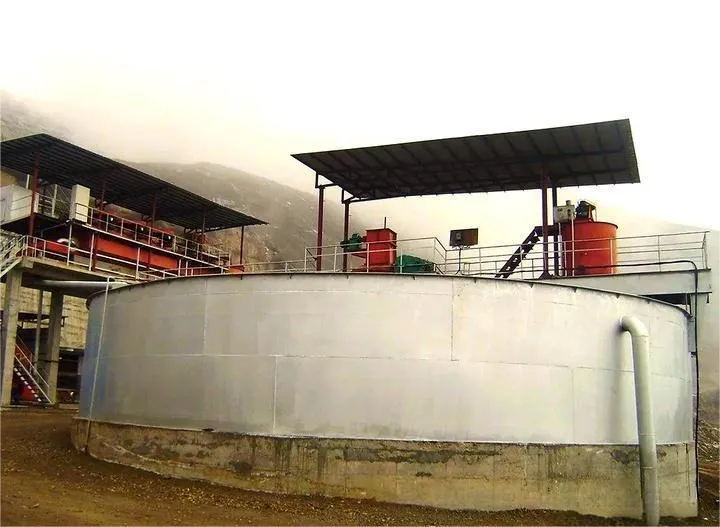
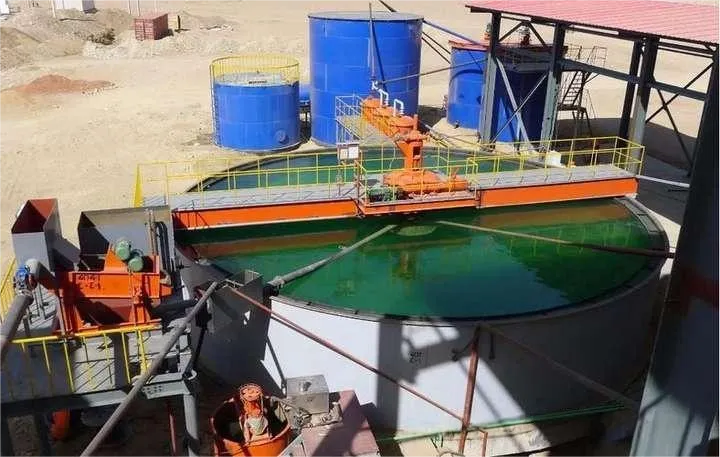
Thickening Operation: The slurry from reverse flotation is pumped into a thickener. Hematite particles in the slurry settle to the bottom of the thickener due to gravity. Simultaneously, the ore particles are collected by rakes at the bottom of the thickener and then flow out of the machine for further dewatering and filtration. Our thickeners are suitable for concentrate thickening in large, medium, and small concentrators.
Filtration Process: The concentrate flowing from the thickener needs to undergo further dewatering. To improve dewatering efficiency and reduce energy consumption, we recommend using a disc vacuum filter. When the hematite concentrate slurry flows into the filter, the ore particles are adsorbed onto the filter cloth on the disc under the negative pressure created by the vacuum pump. After a period of operation, a filter cake of a certain thickness will form on the disc filter cloth. This filter cake will fall into the filter cake trough under the pressure of the blower and the action of the scraper on the filter. The remaining filtrate will be discharged from the central shaft. The hematite after thickening, dewatering, and filtration is the concentrate product.
The main equipment required for this stage of the process includes: a concentrator and a filter.
The above is a detailed introduction to the hematite beneficiation process, steps, and required equipment. In this beneficiation process, the process flow design and the selection of beneficiation equipment are particularly important. These two factors directly affect the final grade of the hematite concentrate and the beneficiation recovery rate. Therefore, selecting the correct hematite beneficiation process and equipment is crucial.
Crusher: Jaw crushers are generally used for coarse crushing in the first stage of crushing, with a coarse crushing particle size range of 80~300mm ; cone crushers are used for fine crushing in the second stage of grinding, with a fine crushing particle size range of 30~160mm ; in addition, there are hammer crushers, mobile crushing plants and double roll crushers, etc.
Vibrating screens: There are three types available: central vibrating screen , linear vibrating screen , and circular vibrating screen , with a screening particle size range of 6~200mm ;
Belt conveyor: Equipped with a backstop, and various speed reducers can be selected according to actual working conditions.
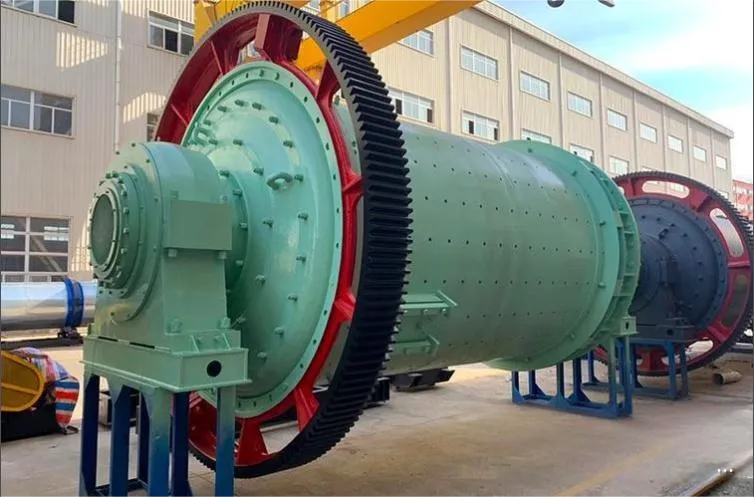
Ball mills: mainly grate-type ball mills and overflow-type ball mills , with grate-type for coarse crushing and overflow-type for fine crushing. In large-scale mineral processing plants, autogenous mills can also be used for coarse crushing .
Classifiers: There are two types: spiral classifiers (divided into high weir type and submerged type) and hydrocyclones. Spiral classifiers are generally used in the first stage of grinding and classification with grate ball mills; hydrocyclones are used in the second stage of grinding and classification with overflow type.
Slurry pumps: There are single-stage slurry pumps and double-stage slurry pumps, which are mainly selected according to the conveying standards.
1. Hematite flotation equipment
Xcf-kyf flotation machine: Composed of Xcf type flotation machine and kyf type flotation machine, it can complete roughing, scavenging and cleaning operations. The two machines are used together and no pumping is required.
Jjf-sf flotation machine: Composed of Jjf type flotation machine and sf type flotation machine, mainly used for roughing and scavenging operations;
Bf type flotation machine: It can suck up slurry but not air, so it needs to be equipped with a blower. It is mainly used for roughing and cleaning operations.
XJB type flotation machine: suitable for medium and small-sized hematite beneficiation plants, processing minerals with high density and coarse particle size;
CLF type flotation machine: mainly suitable for coarse particle separation, while also taking into account fine particle separation.
2. Hematite magnetic separation equipment
Magnetic drum: Mainly used for strong magnetic separation, suitable for magnetic separation of coarse hematite particles smaller than 30mm.
Permanent magnet drum separator: for weak magnetic separation, with a particle size range of 2~10mm.
Dry magnetic separator: used for pre-selection of hematite before it enters the mill;
High gradient magnetic separator: performs strong magnetic separation and is suitable for processing fine-grained hematite ore smaller than 2mm.
Sawtooth jig: Generally suitable for coarse separation, suitable for processing minerals with an ore particle size of 30(2)~0.5mm;
6s/shaking table: can be used for roughing, cleaning and scavenging operations, suitable for processing hematite with a particle size of 2~0.074mm;
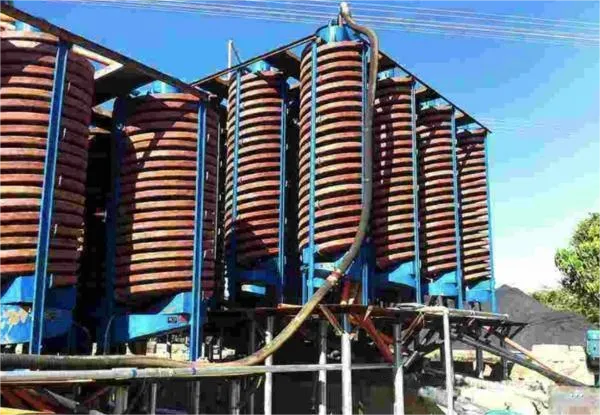
Spiral sluice: Used for separating finer particles, mainly for finer selection, suitable for processing hematite with a particle size of 0.1~0.37mm and low mud content.
Hydrocyclones: There are single hydrocyclones and hydrocyclone groups, selected according to the processing capacity. They are mainly suitable for primary thickening of tailings, with a final tax content of less than 60%.
Thickeners include center-driven thickeners, inclined plate thickeners, and deep cone thickeners. Depending on the situation, they are generally used for one stage of dewatering in the concentrate and two or three stages of dewatering in the tailings, with a moisture content of less than 50%.
Dewatering screens are generally used in tailings plants for three-stage dewatering, with a final moisture content of 12-15%.
Filter presses/filters: There are several types, including permanent magnet vacuum filters, disc vacuum filters, box filter presses, and ceramic filters. They are mainly used for the final dewatering of concentrates and tailings, with a moisture content range of 9-12%.
Hematite beneficiation process flow diagram – How to choose hematite beneficiation equipment?
1. First, conduct a mineral processing test and analysis (50kg ore sample);
2. Through experimental analysis, design the mineral processing flow and customize the mineral processing construction plan, including civil engineering, power, automation, etc. After customizing the complete mineral processing process, design the construction drawings and provide the types and models of equipment required for each stage;
3. Based on the actual situation, find the relevant equipment manufacturers or agents to purchase complete sets of hematite beneficiation equipment.
Our factory specializes in providing comprehensive services for mineral processing plants. Through years of development and expansion, we can now offer a complete service package tailored to our clients’ specific needs, including mine design, mineral processing research, equipment manufacturing, installation, commissioning, and worker training. As a manufacturer of hematite beneficiation equipment, we not only customize complete sets of equipment for our clients but also provide comprehensive services, from pre-sales consultation to after-sales follow-up, striving to eliminate all our clients’ concerns.
Currently, numerous manufacturers of hematite beneficiation equipment have emerged in China. So how should a beneficiation plant correctly select hematite beneficiation equipment? Several key indicators are crucial. First, we need to understand the manufacturer’s industry standing and production capacity; second, we need to grasp the market share of the manufacturer’s various equipment. Our factory has been dedicated to the research and production of hematite beneficiation equipment for over 20 years. Our long-standing reputation in the industry confirms that we are a trustworthy and established brand. As a manufacturer specializing in hematite beneficiation process research and equipment manufacturing, we have completed the design of over one hundred hematite production lines both domestically and internationally. The successful completion and high production targets of these projects rely on both the rational design of the beneficiation process flow and the powerful beneficiation equipment that ensures the smooth implementation of the process. Among numerous designs both domestically and internationally, our hematite beneficiation equipment has withstood the test of various harsh environments. Through repeated trials and improvements, our equipment can now handle beneficiation work under various difficult conditions.
When recommending hematite beneficiation equipment to our clients, our factory prioritizes quality over price, saving them time and money to the greatest extent possible. If you are also interested in purchasing complete hematite beneficiation equipment, please feel free to consult our customer service online. We are confident we can provide you with a satisfactory answer, and we look forward to cooperating with you.