
With the continuous development and utilization of resources, high-quality ilmenite resources are becoming increasingly scarce, making the utilization of low-grade ilmenite resources imperative.
With the continuous development and utilization of resources, high-quality ilmenite resources are becoming increasingly scarce, making the utilization of low-grade ilmenite resources imperative. For some low-grade ilmenite ores, the minerals share similar beneficiation characteristics and interact during the beneficiation process, making ilmenite beneficiation challenging. To effectively and rationally obtain titanium concentrate, it is necessary to analyze the characteristics of the titanium ore and then design suitable beneficiation methods for difficult-to-process ilmenite. Below is a case study of titanium ore beneficiation, showcasing a beneficiation method for difficult-to-process ilmenite designed by our plant through beneficiation experiments, which yielded ideal titanium and iron concentrates for the beneficiation plant.
This ilmenite is a low-grade vanadium-ilmenite rock deposit, with ilmenite as the main useful mineral, followed by titanomagnetite, pyrite, and chalcopyrite. Gangue minerals are primarily titanium-bearing pyroxene, followed by plagioclase. Titanium is mainly distributed in ilmenite, with smaller amounts found in silicate gangue minerals such as titanomagnetite, titanium-bearing pyroxene, amphibole, and plagioclase. Iron is mainly distributed in ilmenite, titanomagnetite, and titanium-bearing pyroxene.
Due to the complex mineral composition of ilmenite in the raw ore and its low grade, a strategy of recovering and discarding as much as possible is adopted to achieve a better recovery rate. The useful mineral, titanomagnetite, is a magnetic mineral, while the gangue minerals such as plagioclase are non-magnetic; therefore, strong magnetic tailings removal is considered. Secondly, ilmenite and the gangue mineral, common pyroxene, are both weakly magnetic minerals, but they have a difference in specific gravity; therefore, gravity separation can be considered for tailings removal to improve the titanium grade, followed by flotation for titanium removal. Therefore, the process flow is decided to be a single-stage strong magnetic tailings removal, two-stage gravity separation tailings removal, grinding, iron removal, and flotation.
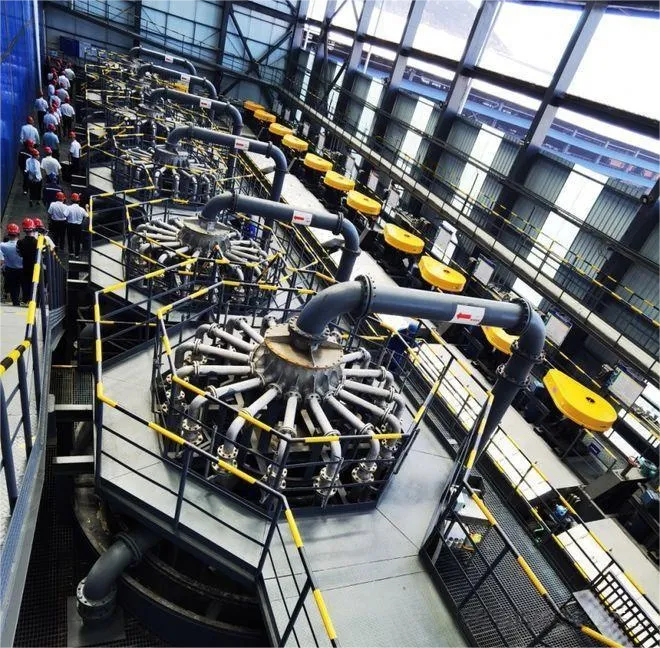
The high-intensity magnetic tailings removal process mainly removes gangue minerals from the raw ore. A pulsed high-gradient magnetic separator is used . When the diaphragm reciprocates under the drive of the stroke box, the slurry in the separation chamber reciprocates up and down. The pulsed fluid force keeps the mineral particles in a loose state during the separation process, thereby effectively eliminating the mechanical inclusions of non-magnetic particles. The magnetic field strength is controlled at 0.6T for magnetic separation, with 3mm magnetic media as the separation medium. The rotating ring speed is fixed at 2r/min, and the number of strokes is 300 times/min. The final high-intensity magnetic concentrate yield is 52.95%, and the titanium recovery rate is 90.32%.
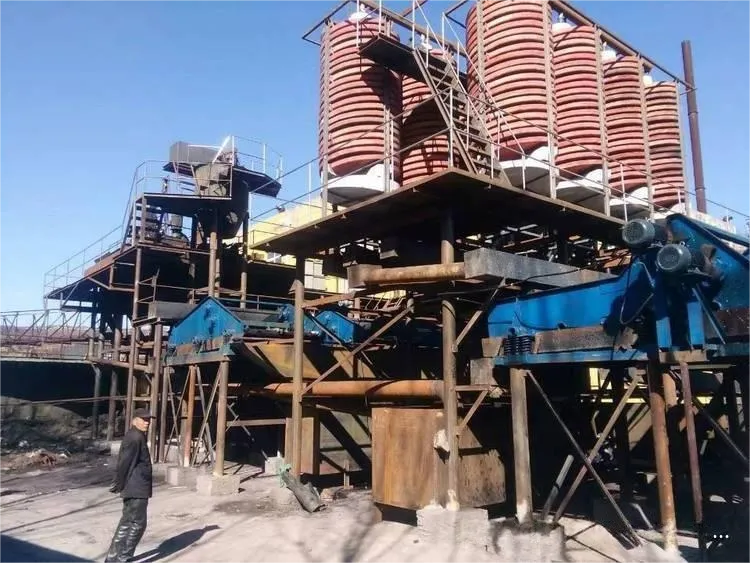
After strong magnetic tailings removal, the gangue minerals (common pyroxene) in the obtained product are weakly magnetic and difficult to remove with a strong magnetic separator. Therefore, gravity separation is required to remove the pyroxene. After a first stage of shaking table gravity separation , 55.29% of the tailings can be removed from the strong magnetic concentrate. After a second stage of shaking table gravity separation, 43.35% of the tailings can be removed, resulting in a gravity concentrate with a grade of 23.12%.
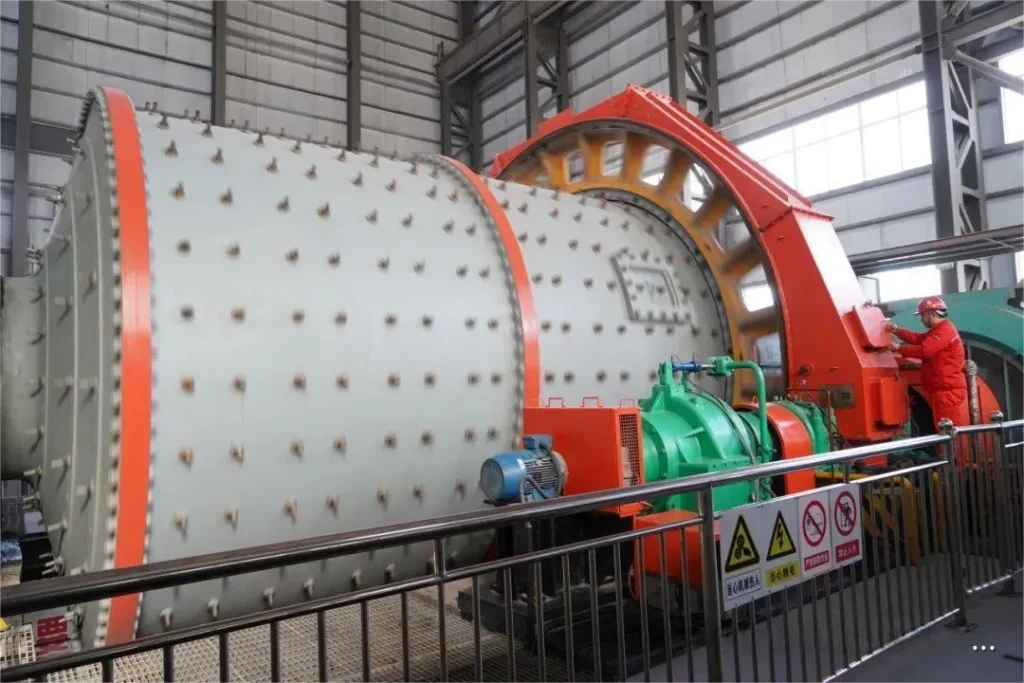
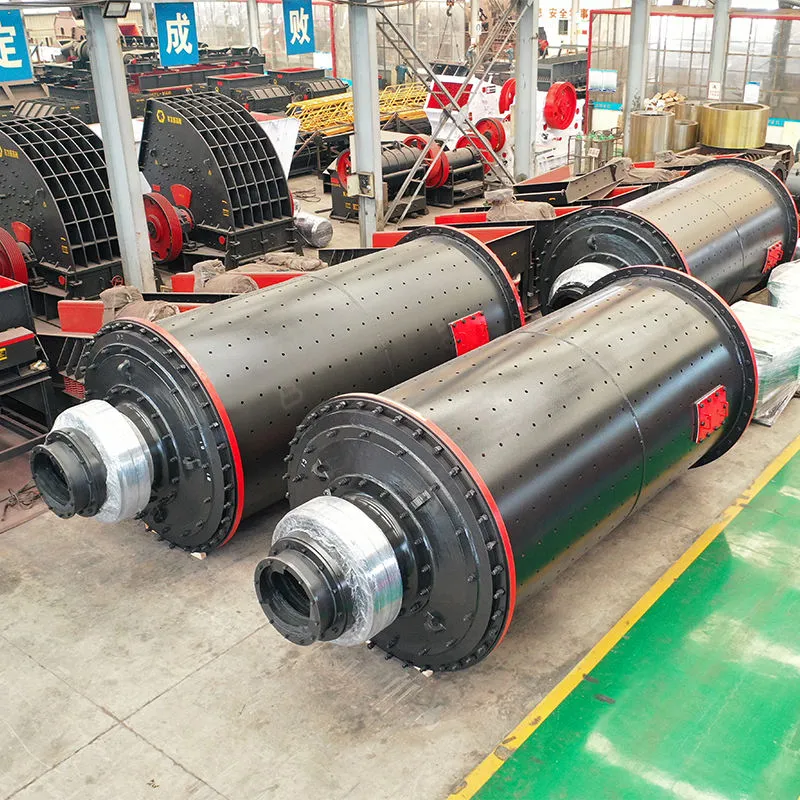
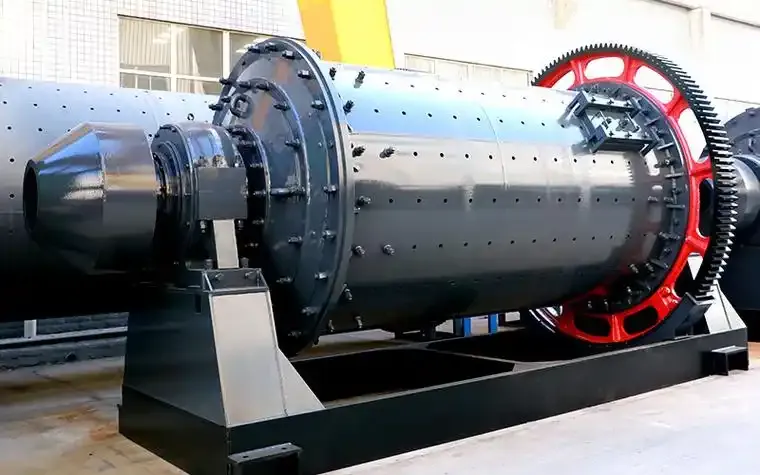
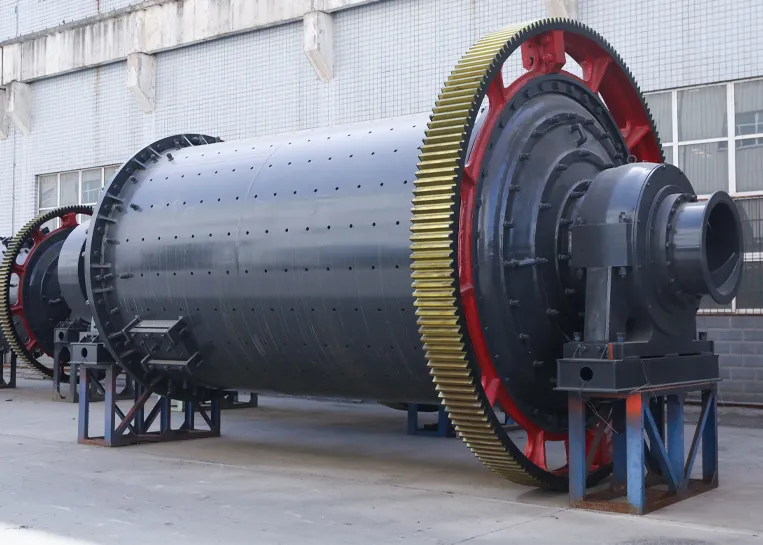
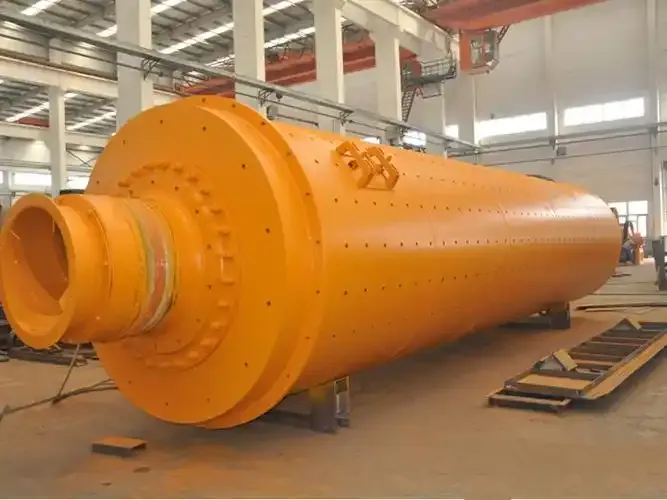
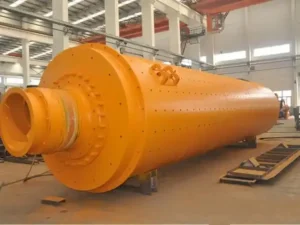
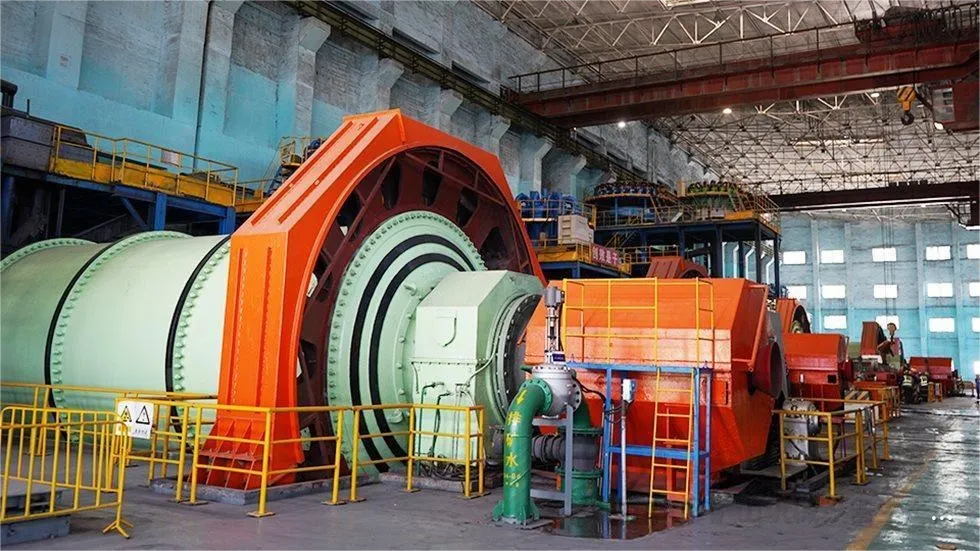
The concentrate after gravity separation meets the flotation conditions, but its particle size is relatively coarse. To obtain better flotation indicators, further grinding is required. A single-stage grinding and classification process is adopted, using an overflow ball mill and a hydrocyclone to complete the grinding and classification operation under the conditions of a grinding concentration of 80% and a grinding time of 3 minutes.
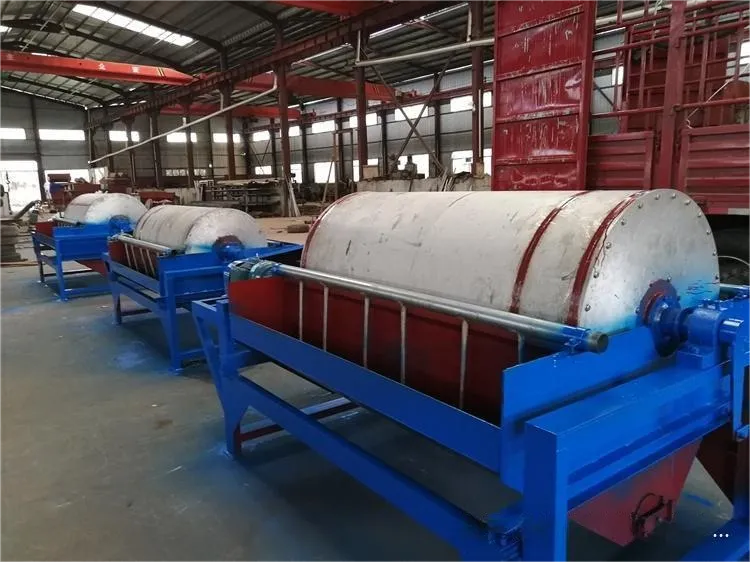
Because the gravity concentrate contains a small amount of titanomagnetite, iron removal is performed before flotation tests. After grinding, the gravity concentrate is then subjected to electromagnetic wet method (using a drum magnetic separator) for iron removal. By controlling the magnetic field strength at 2500 Gs (0.250 T), an iron concentrate with a TFe grade of 41.85% and a yield of 8.9% can be obtained.
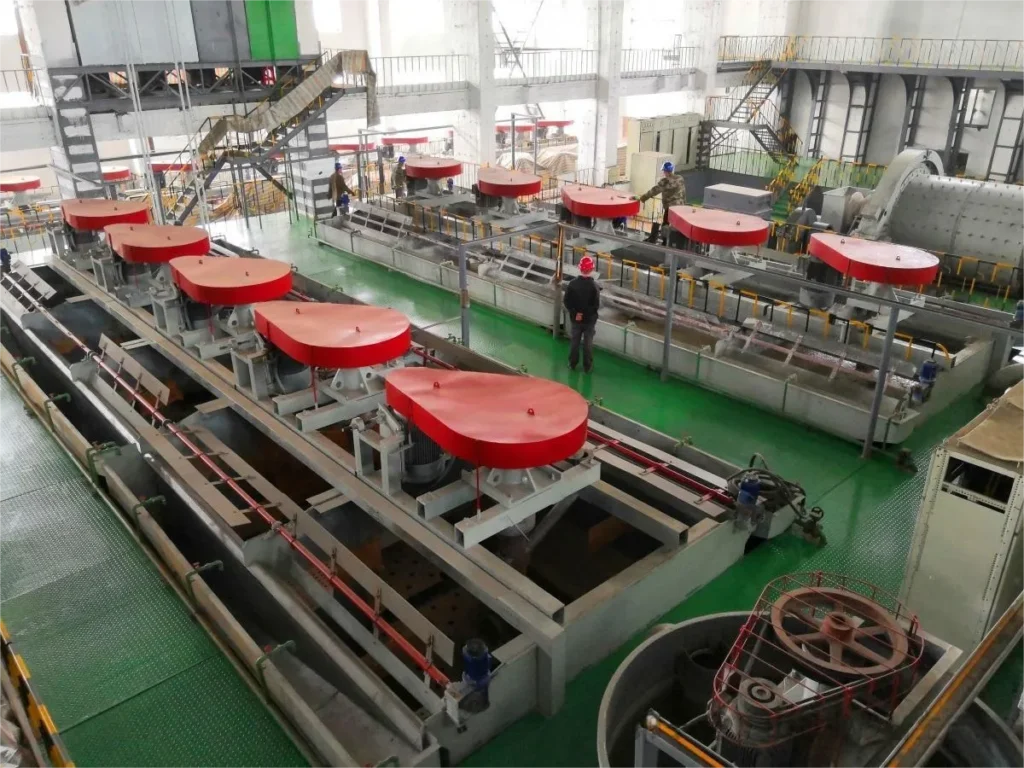
After iron removal through grinding, the gravity concentrate undergoes titanium roughing flotation. A measured amount of MOH collector and sulfuric acid are used to float the rough titanium concentrate, followed by further flotation with a measured amount of sulfuric acid. The designed titanium beneficiation process for ilmenite yields a titanium concentrate with a final titanium grade of 48.17% and a recovery rate of 79.74%, thus improving the company’s recovery rate.
Our factory not only designs beneficiation methods and construction plans for refractory ilmenite according to user needs, but also provides integrated services such as complete sets of beneficiation equipment, beneficiation installation and commissioning, and beneficiation plant operation and management (EPCM+O mining full industry chain service).