
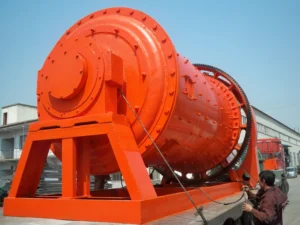
Lead-zinc ore typically contains metallic elements such as lead and zinc, and its ore properties are complex and varied. This type of ore often contains sulfides, carbonates, and oxides; therefore, when beneficiating it
Lead-zinc ore typically contains metallic elements such as lead and zinc, and its ore properties are complex and varied. This type of ore often contains sulfides, carbonates, and oxides; therefore, when beneficiating it, a suitable lead-zinc ore beneficiation process must be selected based on the specific composition and properties of the ore . Beneficiation requirements mainly include improving concentrate grade, increasing metal recovery rate, and reducing process costs.
Lead-zinc mineralization is complex and diverse. Based on different genesis, lead-zinc deposits are mainly classified into stratabound carbonate rock type (MVT), carbonate rock-fine clastic rock type (SEDEX), and conglomerate type, etc. However, the industrial mineral occurrence forms of these deposits are relatively consistent, mainly sulfide lead-zinc ores and oxide lead-zinc ores . Oxidized lead-zinc ores are formed by the oxidation of sulfide lead-zinc ores. In sulfide ores, lead mainly exists in the form of galena , and zinc mainly exists in the form of sphalerite or ferrosphalerite. In oxide ores, lead mostly exists in the form of cerussite and ferruginous monzoite, and zinc mostly exists in the form of smithsonite and zinc schist. Galena has excellent natural floatability and is one of the most easily floatable sulfide minerals. Sphalerite has a certain degree of natural floatability. Therefore, the characteristics of these mineral properties determine that the lead-zinc ore beneficiation process is mainly based on flotation. With the development of beneficiation technology, the research and development of flotation reagents , and the upgrading of beneficiation equipment, the beneficiation and recovery of more and more complex and difficult-to-beneficiate lead-zinc ores has become possible.
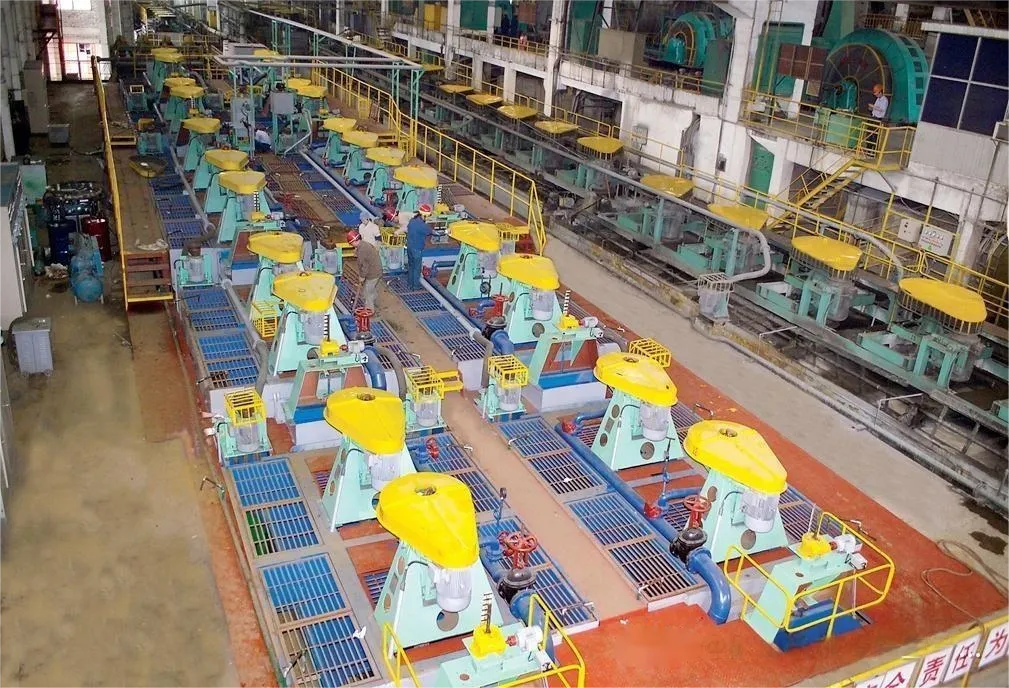
Brief introduction to lead-zinc ore beneficiation process:
The lead-zinc ore beneficiation process generally includes several main stages: ore crushing and screening, grinding and classification, and flotation. These stages are all aimed at separating and recovering valuable minerals from the lead-zinc ore. First, ore crushing and screening breaks down large pieces of ore into suitable particle sizes for subsequent grinding and flotation. Next, grinding and classification further refine the ore particle size through grinding and classification to improve flotation efficiency. Finally, the flotation process utilizes the differences in the floating and sinking properties of different minerals in water to collect and extract lead-zinc minerals separately.
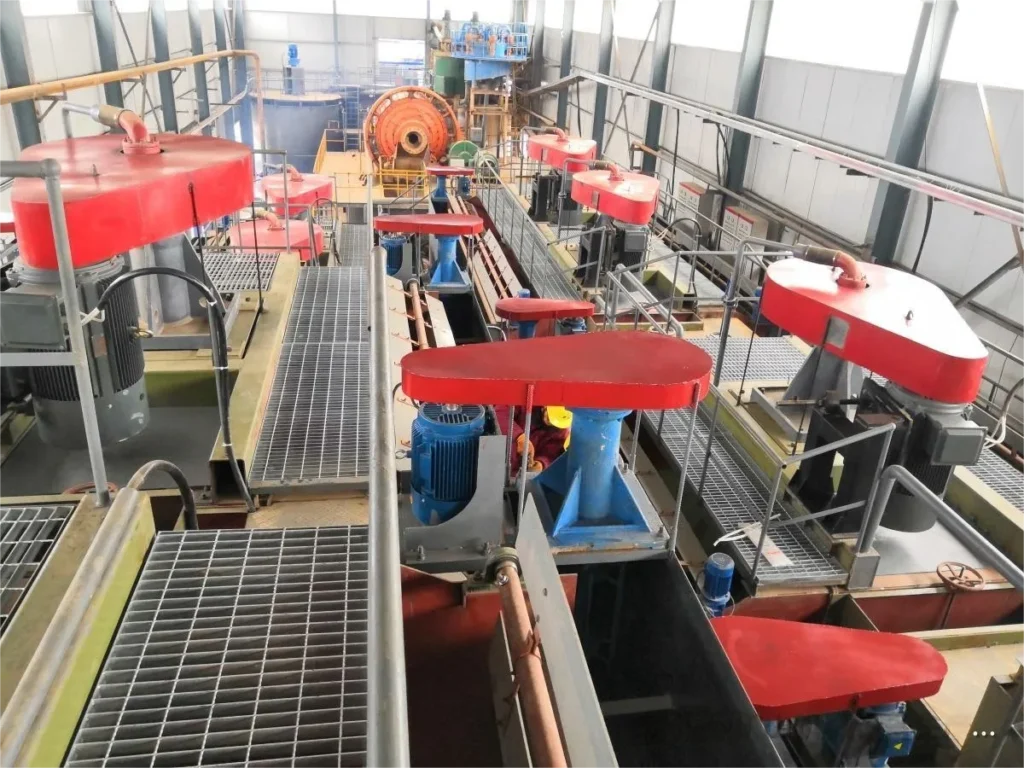
Main steps in lead-zinc ore beneficiation process:
1. Lead-zinc ore crushing and screening process
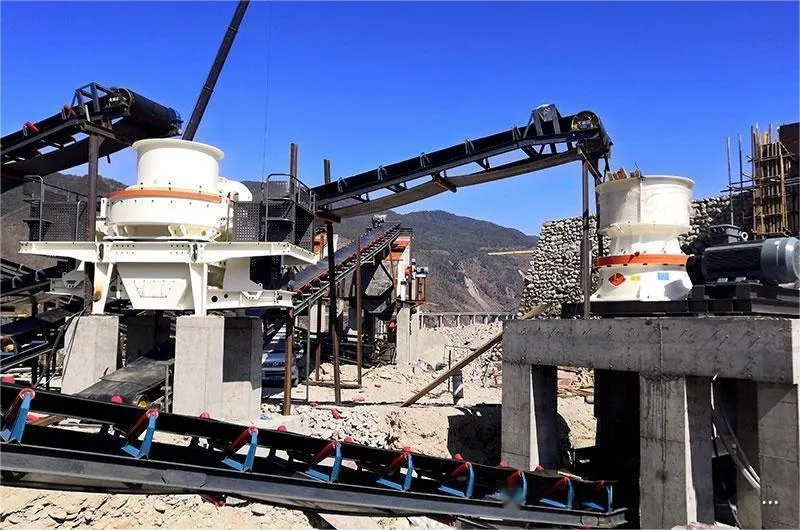
Lead-zinc ore mainly contains metallic minerals such as galena, sphalerite, pyrite, and chalcopyrite. Crushing operations typically employ a two-stage, closed-circuit crushing and screening process. The raw ore is fed into a jaw crusher via a trough feeder for primary crushing. The crushed material is then conveyed to a vibrating screen via a belt conveyor for screening. Qualified particles enter the grinding stage, while unqualified particles are conveyed by another belt conveyor to a cone crusher for secondary crushing, forming a closed circuit. This process continues until all minerals meet the required size and are then transported to a powder silo for the next stage.
2. Lead-zinc ore grinding and classification process
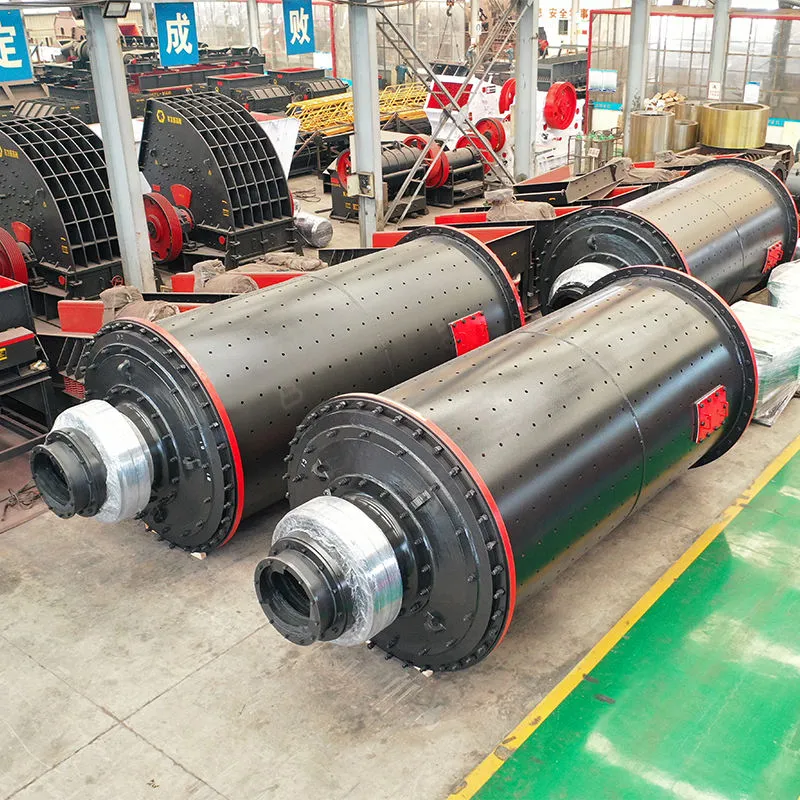
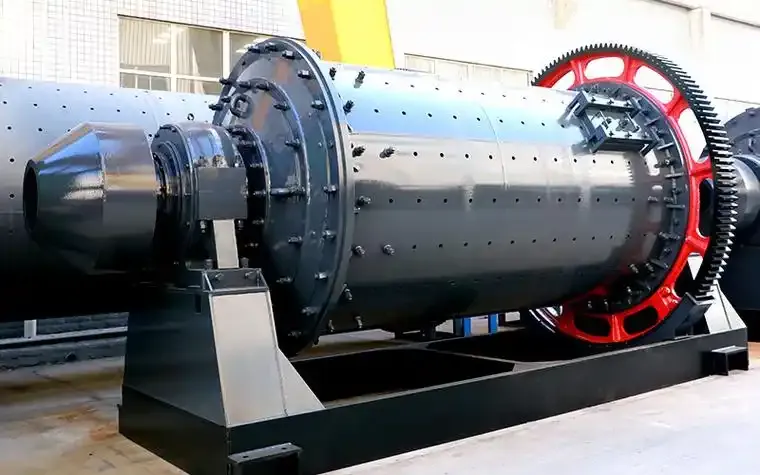
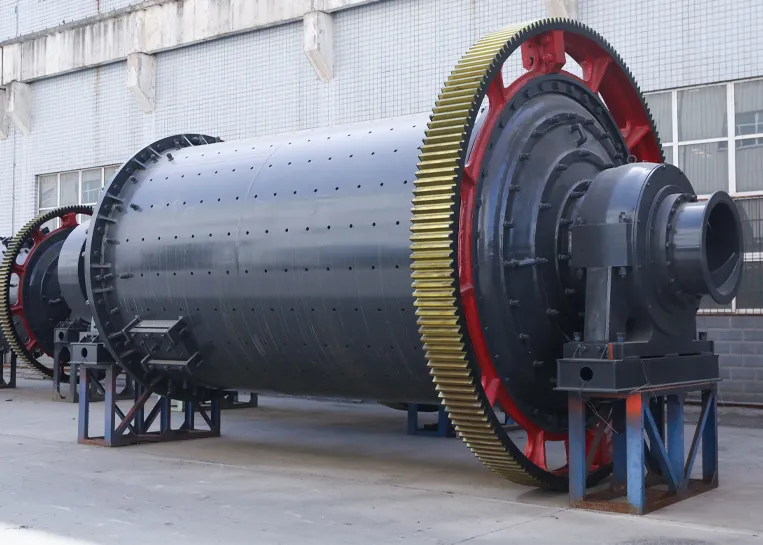
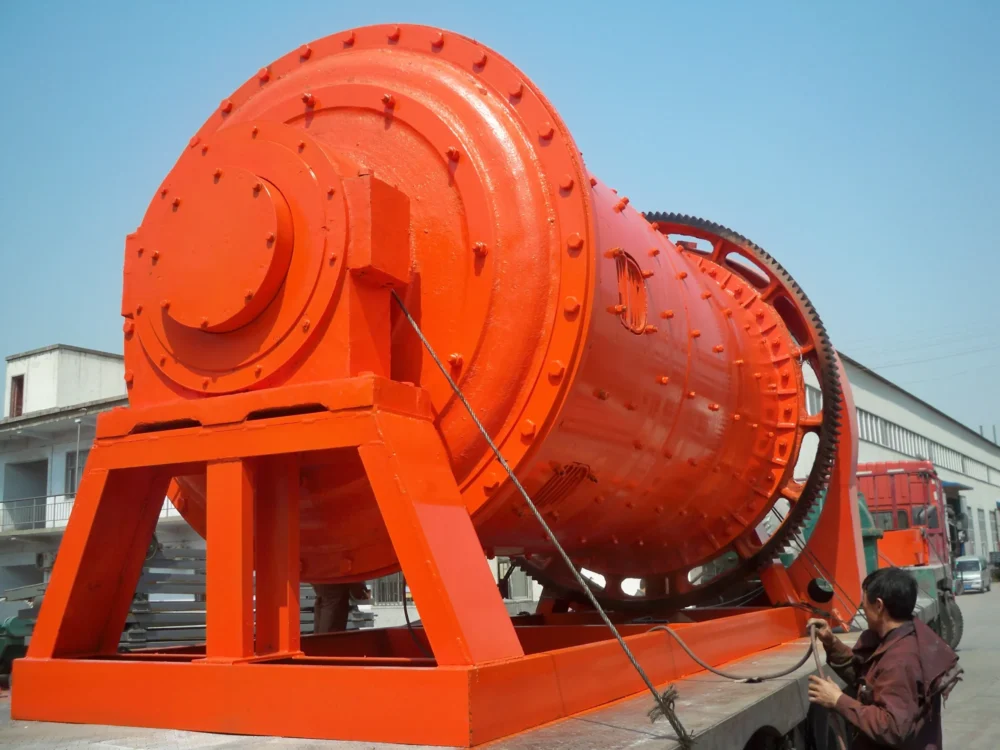
Qualified crushed minerals are fed from the powder silo into the ball mill via a belt feeder and belt conveyor for grinding. The resulting slurry is discharged to a linear vibrating screen for screening. Qualified slurry is pumped into a hydrocyclone for classification. Unqualified slurry from the linear vibrating screen and hydrocyclone is returned to the ball mill for regrinding until all slurry is qualified. The overflow portion after classification by the hydrocyclone proceeds to the next stage.
3. Lead-zinc ore flotation and beneficiation process
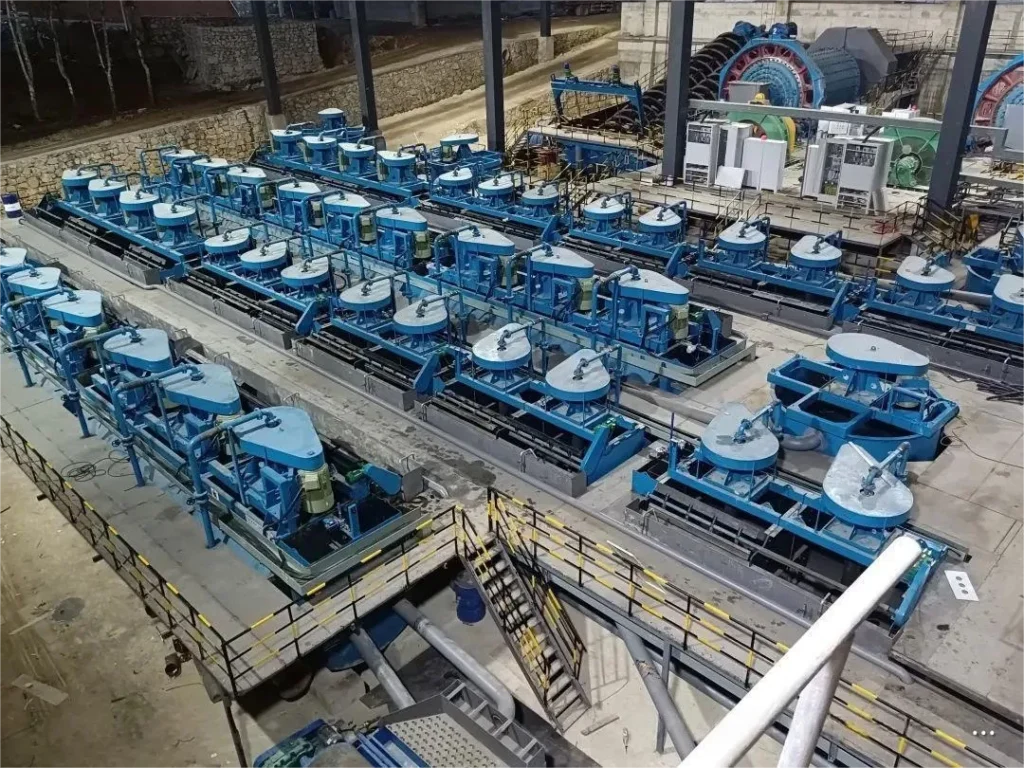
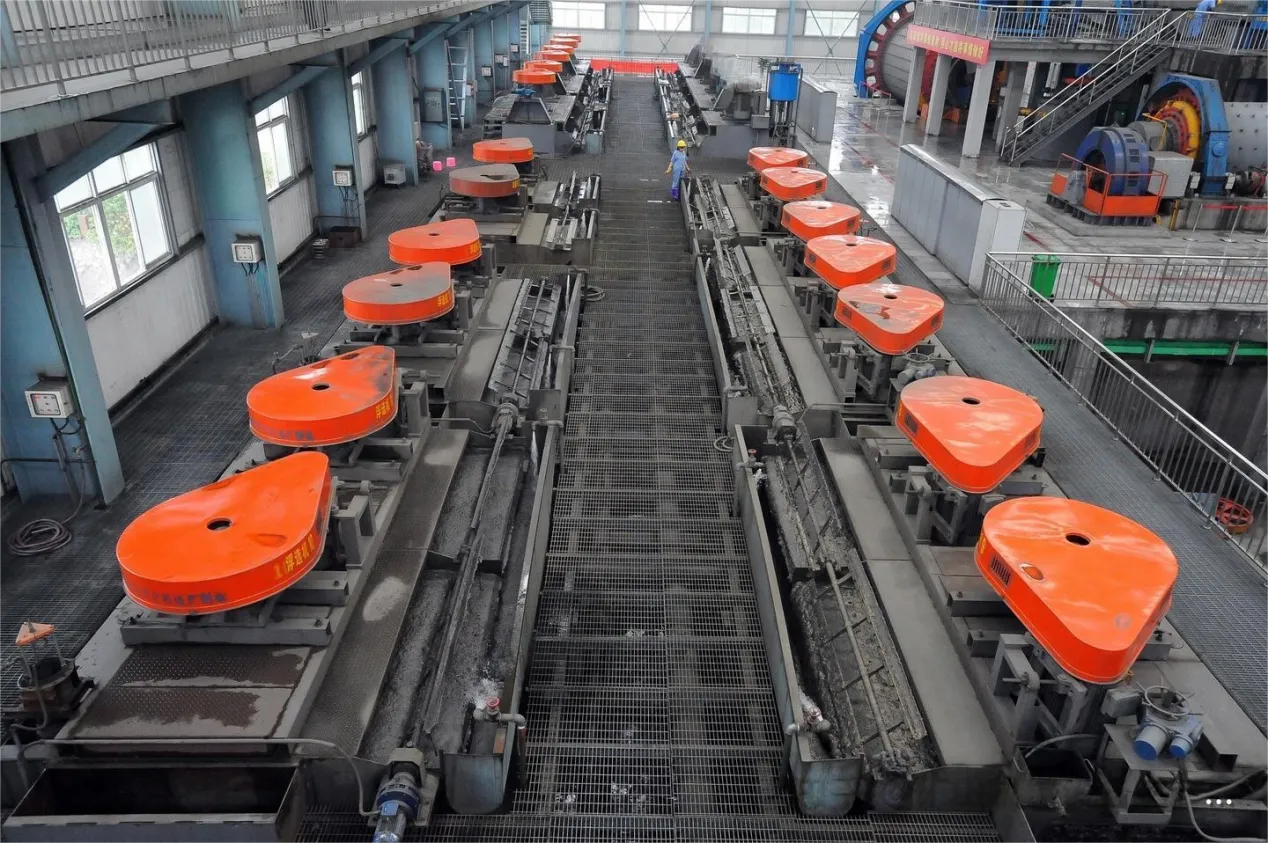
Lead-zinc ores have complex and diverse compositions and varying floatability, making flotation the most common process. Based on their degree of oxidation, lead-zinc ores are classified into three types: sulfide lead-zinc ores, oxidized lead-zinc ores, and mixed lead-zinc ores. In actual beneficiation, the appropriate flotation method must be selected based on the degree of oxidation of the lead-zinc ore. During flotation, suitable flotation reagents are added to effectively improve concentrate recovery and concentrate indicators; the selection of reagent types and dosages must be determined based on the specific ore properties.
4. Lead-zinc ore concentration and dewatering process
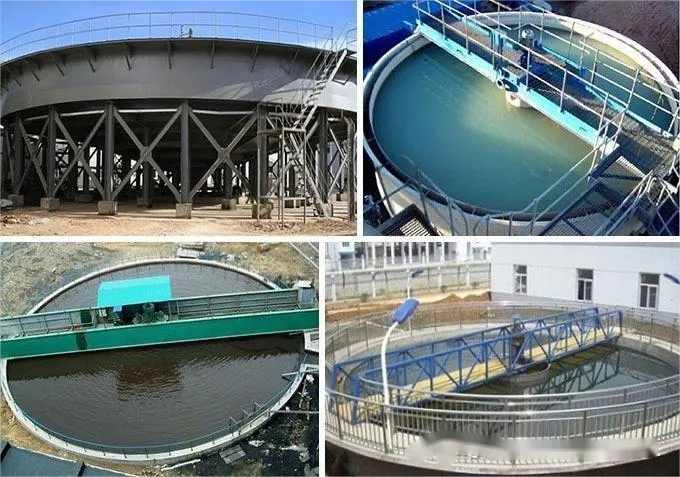
After flotation, the froth from the slurry is fed into a thickener via a slurry pump. In the thickener, the solid particles suspended in the slurry settle under gravity, resulting in solid-liquid separation. The sludge deposited at the bottom is collected by a scraper and discharged. The discharged sludge is then pumped to a filter press, where the solids and liquids are separated through a filter medium, ultimately yielding a concentrate.
5. Concentrate Drying Process
The filtered concentrate needs to undergo further drying to remove moisture for storage and transportation. The drying process mainly involves using a dryer to bring the mineral to the required moisture content standard, ensuring product quality.
6. Tailings treatment
Tailings treatment is an essential step in lead-zinc ore beneficiation. The hazardous substances remaining in the tailings need to be treated to prevent environmental pollution. Methods such as pressure filtration, stockpiling, or reuse are commonly used to render the tailings harmless and meet environmental protection requirements.
7. Process control and optimization
Process control and optimization are integral to the lead-zinc ore beneficiation process. Real-time monitoring and data analysis allow for adjustments to process parameters, improving beneficiation efficiency and product quality. Continuous optimization of technology and operational procedures can significantly enhance both economic and environmental benefits.
Common lead-zinc ore beneficiation process
(I) Sulphide lead-zinc ore beneficiation process
1. Preferred flotation process flow
This process involves sequentially flotating and recovering lead, zinc, and sulfur products according to their floatability and flotation velocity, yielding lead concentrate, zinc concentrate, and sulfur concentrate, respectively. This process offers advantages such as reducing flotation cell volume and saving flotation reagents.
2. Mixed flotation process flow
This process involves selecting all fluidized lead and zinc sulfide minerals into a mixed concentrate, directly discarding the tailings. The mixed concentrate is then de-treated before lead-zinc separation. This process achieves good flotation separation results.
3. Equal floatable flotation process flow
In cases where some sphalerite and most galena have similar floatability in the feed ore, and a small portion of galena has similar floatability to most sphalerite, an equal floatability flotation process can be adopted. That is, when lead is preferentially floated, some zinc minerals with good floatability are allowed to float simultaneously. While floating zinc, the remaining lead minerals are floated. Then, zinc is removed from the lead concentrate, and lead is removed from the zinc concentrate, resulting in lead concentrate and zinc concentrate, respectively.
4. Rate-based branching flotation process flow
Rapid flotation is performed on lead-zinc ores that are readily floatable and those that are easily floatable. It is mainly suitable for sulfide lead-zinc ores where different embedded components result in different flotation behaviors.
5. Potential-controlled flotation process flow
The main method is to control the process and direction of the oxidation-reduction reaction on the surface of sulfide ore in the pulp system by changing the electrochemical conditions of the flotation system. By influencing the surface state of sulfide ore and the form and stability of the products of the collector on the surface of sulfide ore, the hydrophilic-hydrophobic properties of the sulfide ore surface are increased, thereby achieving selective flotation separation.
(II) Oxide Lead-Zinc Ore Beneficiation Process
1. Sodium oxide sulfide flotation process flow
There are two types of flotation: sulfide-xanthate flotation and sulfide-amine flotation. Specifically:
* **Sulfide-xanthate flotation:** This involves sulfiding the zinc oxide ore (using sodium sulfide) before flotation, and is suitable for processing lead oxide ores.
* **Sulfide-amine flotation:** This involves sulfiding the zinc oxide ore before flotation, and is mainly suitable for processing zinc oxide ores containing easily mud-forming gangue.
2. Sulfur sulfidation flotation process flow
Sulfur powder is used to treat oxidized lead-zinc ore with sulfidation before flotation. This method is rarely used nowadays.
3. Flocculation and flotation process flow
Vigorous stirring of hydrophobic fine-grained minerals with added polymers, followed by the addition of a collector for flotation, is suitable for separating fine-grained oxidized lead-zinc ore.
4. Combined gravity flotation and separation process flow
First, the denser minerals are subjected to gravity separation (or gravity separation pre-tailing), followed by flotation separation. This method is suitable for ores with a large density difference between the useful minerals and gangue minerals.
(III) Process flow of mixed lead-zinc ore beneficiation
1. Mixed-partial flotation process flow
First, the lead-zinc ore in the mixed minerals is recovered, and then the lead and zinc are recovered by partial flotation process.
2. Mixed-Preferred Flotation Process Flow
Similarly, the mixed minerals are first comprehensively recovered, and then lead and zinc ores are preferentially floated (based on the preferential flotation of sulfide lead and zinc ores).
The advantages of the lead-zinc ore beneficiation process mainly include the following aspects:
1. High-efficiency separation: The lead-zinc ore beneficiation process utilizes flotation and gravity separation to effectively separate metallic minerals from gangue minerals. The flotation process selectively combines minerals with air bubbles, causing them to float and separate, thus achieving the separation of metallic minerals from gangue minerals.
2. High adaptability: The lead-zinc ore beneficiation process is suitable for different types of ores. For example, the preferential flotation process is suitable for ores with coarse particle size of useful minerals and high content of useful minerals; while the mixed flotation process is suitable for complex ores with dense and uniformly distributed lead and zinc coexistence.
3. Environmentally friendly and low-cost: The gravity separation process in lead-zinc ore beneficiation does not require the addition of any chemical reagents, making it an environmentally friendly and low-cost beneficiation method. The combined gravity-flotation process removes coarse, strong impurities through gravity separation followed by flotation for precise separation. This not only effectively improves concentrate recovery but also reduces the amount of flotation reagents used and the processing difficulty, resulting in high economic and environmental benefits.
4. Technological Advancements: In recent years, lead-zinc ore beneficiation processes have been continuously improved, and the research and application of new beneficiation reagents have enhanced beneficiation efficiency and concentrate quality. For example, through potential control technology, newly dissociated pyrite can be effectively suppressed under low potential and high alkalinity conditions, thereby improving the recovery rate and grade of lead and zinc concentrates.
5. Process Selection: Lead-zinc ore beneficiation processes include preferential flotation, mixed flotation, and equal flotation, which are suitable for ores with different properties. For example, preferential flotation is suitable for ores with coarse-grained valuable minerals and high content of valuable minerals; while mixed flotation is suitable for complex ores with tightly intergrowth and uniform distribution of lead and zinc.
In summary, the lead-zinc ore beneficiation process has advantages such as high efficiency separation, strong adaptability, environmental protection and low cost, technological advancement and multiple process options, which can meet the processing needs of different ores and achieve efficient, environmentally friendly and economical technological application.
The above is a brief introduction to different lead-zinc ore beneficiation processes for lead-zinc sulfide and oxide ores. In summary, each flotation process has its own advantages and disadvantages, and the choice must be made based on the specific properties of the ore and processing conditions. Whether sequential or mixed flotation, optimizing various processes not only helps improve the recovery rate and concentrate grade of lead-zinc ore but also reduces production costs to some extent. However, in actual production, the selection of lead-zinc ore beneficiation processes must comprehensively consider factors such as equipment corrosion and reagent costs to maximize the benefits of beneficiation. Through continuous technological improvement and practical exploration, these flotation processes will play a greater role in the efficient utilization of lead-zinc ore.
Lead-zinc ore beneficiation process design scheme:
The lead-zinc ore crushing stage employs a three-stage, closed-circuit system. First, a 600×900 mm jaw crusher coarsely crushes the 500 mm raw ore. The product then enters an 800×1500 mm screen. The undersize product, along with the undersize from the vibrating screen, enters a standard cone crusher for further medium crushing. The medium-crushed product has a particle size of 35 mm. This is then combined and fed into an 1800×3600 mm vibrating screen. Fine crushing is completed by two short-head cone crushers, forming a closed circuit with the vibrating screen. In the grinding section, there are five φ2400×1800 mm cone ball mills. Four of these are in a closed circuit with a target classifier, and one is in a closed circuit with a single spiral classifier. Each ball mill has a capacity of 17.5 tons/hour. The overflow concentration of the classifiers is maintained between 40% and 50%, and the particle size is controlled between 50% and 0.074 mm.
The lead-zinc ore flotation process employs a hybrid flotation flow, divided into two systems. System 1 performs one roughing, three scavenging, and two cleaning stages, using 21 Type 6A flotation machines to process slurry from three ball mills. System 2 performs one roughing, two scavenging, and one cleaning stage, using 14 flotation machines to process slurry from two ball mills. During full system operation, typically only some of the ball mills and flotation systems are operational.
Lead-zinc ore concentrate is processed through hydrocyclone classification. Lead roughing involves one roughing, three scavenging, and four cleaning stages, using a total of 18 Type 6A flotation machines. Zinc-sulfur separation is carried out after the tailings from the third lead scavenging stage. The final tailings are generated after the third scavenging stage of mixed flotation. The lead, zinc, and sulfur concentrate froths are dewatered using a Dohr center-drive thickener, and then further concentrated and filtered using a vacuum filter.
In the entire grinding and flotation process of lead-zinc ore beneficiation, the ball consumption is 887 grams per ton, the steel liner consumption is 138 grams, the water consumption is 4 cubic meters per ton, and the electricity consumption is 37 kilowatt-hours per ton, showing the characteristics of high efficiency, energy saving and environmental protection.
This paper summarizes the research and application progress of lead-zinc ore beneficiation processes, including crushing and grinding, separation, reagents, and equipment. It points out that the traditional multi-crushing, multi-grinding process, consisting of crushing and ball milling, has been expanded by incorporating rod mills, semi-autogenous mills, stirred mills, and high-pressure roller mills, forming diverse and distinctive crushing and grinding processes. This has become an important way to simplify processes, save energy, reduce consumption, and increase production capacity in lead-zinc ore beneficiation. Flotation remains the most effective and widely used beneficiation method for lead-zinc ore. Fully utilizing the differences in the natural floatability of minerals and selecting appropriate flotation processes is key to efficient mineral separation. Flotation should be the primary method, combined with gravity separation, magnetic separation, sorting, and smelting processes to fully leverage the advantages of combined processes. The development trend of lead-zinc ore beneficiation is an important trend. Research and application of new beneficiation reagents and combinations of conventional beneficiation reagents, especially the development of collectors with strong collecting performance and good selectivity, as well as environmentally friendly, low-cost, and efficient inhibitors and activators, have always been the fundamental guarantee for the clean and efficient beneficiation and recycling of lead-zinc ore. Combining the ore properties and the production scale of the beneficiation plant, the rational use of semi-autogenous mills, high-pressure roller mills, mobile crushing stations, stirred mills, and flotation columns is of great significance for improving resource utilization, increasing production efficiency, reducing production costs, and promoting energy conservation and emission reduction.
The benefits of lead-zinc ore beneficiation processes are mainly reflected in mineral recovery rate, concentrate grade, and economic returns.
Mineral recovery rate: This refers to the percentage of valuable minerals recovered during the beneficiation process relative to the total amount of valuable minerals in the original ore. A higher recovery rate results in better beneficiation efficiency. Different lead-zinc ore beneficiation processes have varying impacts on mineral recovery rates.
Concentrate grade: refers to the content of valuable minerals in the concentrate. Higher concentrate grade results in better mineral processing efficiency. Different lead-zinc ore beneficiation processes have varying impacts on concentrate grade.
Economic benefit: refers to the net profit of a mineral processing plant after deducting the cost of mineral processing from the revenue obtained from the sale of concentrate. The economic benefit of the lead-zinc ore beneficiation process is the ultimate indicator for measuring the efficiency of mineral processing.
A detailed analysis of the costs and benefits of different mineral processing procedures can help companies select the most suitable solution. For example, while preferential flotation is complex, it can effectively improve the recovery rate of lead and zinc and the grade of concentrate, thus achieving higher economic returns. Conversely, while fully mixed flotation is simpler, it may result in lower concentrate grades, thereby impacting economic returns.