
Potassium feldspar ore in nature typically contains various impurities, such as quartz, mica, rutile, and magnetite. To apply potassium feldspar in industries like ceramics and glass, these impurities must be removed, requiring a potassium feldspar processing flow.
Potassium feldspar ore in nature typically contains various impurities, such as quartz, mica, rutile, and magnetite. To apply potassium feldspar in industries like ceramics and glass, these impurities must be removed, requiring a potassium feldspar processing flow. This article introduces the basic potassium feldspar processing flow and six commonly used combined beneficiation processes.
A single potassium feldspar processing flow is insufficient for complete potassium feldspar purification because the raw ore contains numerous impurities with varying properties. Therefore, different processing methods are needed for different impurities, which is where combined beneficiation processes come in. Common combined potassium feldspar beneficiation processes include the following six:
1. Potassium Feldspar Magnetic Separation-Flotation Combined Process: Magnetic separation-flotation is primarily used for potassium feldspar ores with high iron content. This process first uses magnetic separation to remove impurities such as iron minerals, biotite, and tourmaline with a certain degree of magnetism, and then uses flotation to remove the remaining impurities, such as quartz and mica. This process combines the advantages of magnetic separation and flotation, enabling more thorough removal of impurities and improving the purity of potassium feldspar.
2. Potassium Feldspar Reverse Flotation-High Intensity Magnetic Separation Combined Process Flow
When separating potassium feldspar from mica, reverse flotation is often used. Most concentrators employ amine-based cationic collectors under acidic conditions for reverse flotation, which reduces feldspar loss during mica flotation. High-intensity magnetic separation follows reverse flotation to further remove weakly magnetic minerals from the potassium feldspar ore, resulting in more thorough impurity removal.
3. Acid Leaching-Flotation Combined Process Flow
The acid leaching-flotation combined process first uses acid leaching to remove most of the iron minerals, then uses flotation to separate a small amount of iron-containing compounds. For some finely intercalated iron impurities, magnetic separation is insufficient, necessitating acid leaching. The acid-leached product is used as flotation feedstock, with sodium oleate as the collector to separate a small amount of iron-containing compounds, significantly improving the whiteness of the potassium feldspar and enhancing iron removal.
4. Combined Flotation-Magnetic Separation Process Flow: The combined flotation-magnetic separation process first performs flotation to remove iron and titanium minerals from potassium feldspar and to separate feldspar from quartz. Appropriate flotation reagents are selected based on the different impurities; for example, reverse flotation is used to separate potassium feldspar from mica, while acidic, neutral, or alkaline flotation can be used to separate potassium feldspar from quartz. Magnetic separation follows flotation to remove weakly magnetic impurities, further improving the purity of potassium feldspar. This combined process allows for the gradual removal of different impurities, improving the beneficiation efficiency.
5. Potassium Feldspar Scrubbing-Magnetic Separation-Flotation Combined Process Flow
Scrubbing plays a crucial role in this combined process. It removes impurities and deposits from the surface of potassium feldspar, improving its purity and quality. Magnetic separation then removes magnetic impurities such as iron minerals, biotite, and tourmaline. Finally, flotation further removes remaining impurities, increasing the purity of the potassium feldspar. The advantage of this process is its ability to comprehensively utilize the advantages of scrubbing, magnetic separation, and flotation, resulting in more thorough impurity removal and improved product quality and beneficiation efficiency.
6. Potassium Feldspar Desliming-Strong Magnetic Separation-Acid Leaching Combined Process Flow
The desliming-strong magnetic separation-acid leaching combined process first removes primary slime and secondary slime from the potassium feldspar ore through desliming. These slimes can affect the effectiveness of subsequent flotation and magnetic separation processes. Then, strong magnetic separation removes weakly magnetic impurities. Finally, acid leaching removes iron impurities from the potassium feldspar, making it particularly suitable for difficult-to-beneficiate potassium feldspar ores. This combined process can effectively address the characteristics of difficult-to-process potassium feldspar ores, improving beneficiation efficiency and product quality.
Processing flow of pegmatite-type potassium feldspar: Pegmatite-type potassium feldspar deposits have good feldspar quality and a relatively simple mineral composition, therefore their beneficiation process is also relatively simple. The beneficiation process generally includes sorting, crushing, grinding, and strong magnetic separation. Grinding: Continuous crushing is carried out using pebble mills or rod mills lined with ceramic plates and quartzite.
Processing flow of leucogranite-type potassium feldspar: Leucogranite-type potassium feldspar minerals are uniformly formed and of stable quality, with potassium feldspar and sodium feldspar accounting for approximately 50-60%. Gangue minerals mainly include quartz, mica, and iron-bearing minerals. Typically, this type of deposit requires flotation to obtain feldspar concentrate.
Processing flow of granite-type potassium feldspar: Granite-type feldspar is a coarse-grained acidic plutonic igneous rock. Its grain size is finer than that of pegmatite, with quartz content of approximately 25-30%, and mica and iron-bearing minerals accounting for approximately 10%. Feldspar is its main component (alkaline), specifically a crystalline feldspar composed of potassium and sodium feldspar in a certain proportion. Granite has a fine grain size, resulting in higher grinding and beneficiation costs.
The processing flow for granite-type potassium feldspar is largely the same as that for leucogranite. The beneficiation process generally includes crushing, grinding, classification, flotation (removal of iron and mica), and flotation (quartz and feldspar separation). The flotation process for the ground product needs to be determined based on the mineral composition. If the mica and iron content is low, it is generally directly introduced into the quartz and feldspar flotation separation process after classification and desliming. If the content of impurities such as mica and iron is high, it is necessary to first remove these impurities through flotation before proceeding with the feldspar and quartz separation flotation.
Processing flow of potassium feldspar in feldspar placer deposits: The main components of feldspar placer deposits are quartz and feldspar, primarily formed by the deposition of granite and feldspar-bearing metamorphic rocks during long-term weathering. While the quality of feldspar placer deposits is inferior to that of pegmatite feldspar deposits, the beneficiation cost is relatively low because crushing and grinding operations are omitted during mining and beneficiation. It is currently one of the important sources of feldspar concentrate. The beneficiation process for feldspar placer deposits is relatively simple, mainly including washing, scrubbing, classification, magnetic separation, and flotation. Classified products require further separation based on their mineral composition.
Potassium feldspar processing steps:
1. Crushing and Grinding: The mined potassium feldspar ore is crushed and ground to a particle size suitable for individual particle liberation before entering the beneficiation stage. This separates the potassium feldspar from other impurities, thereby improving its purity.
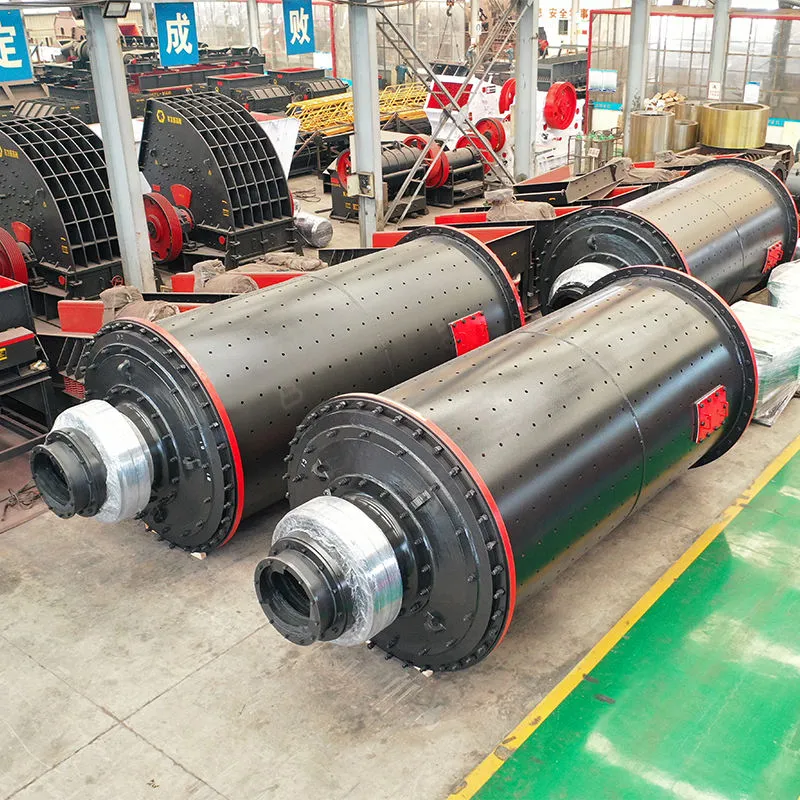
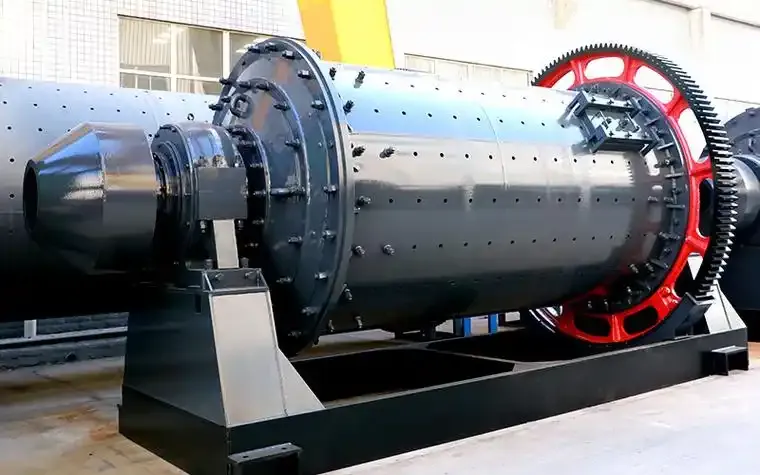
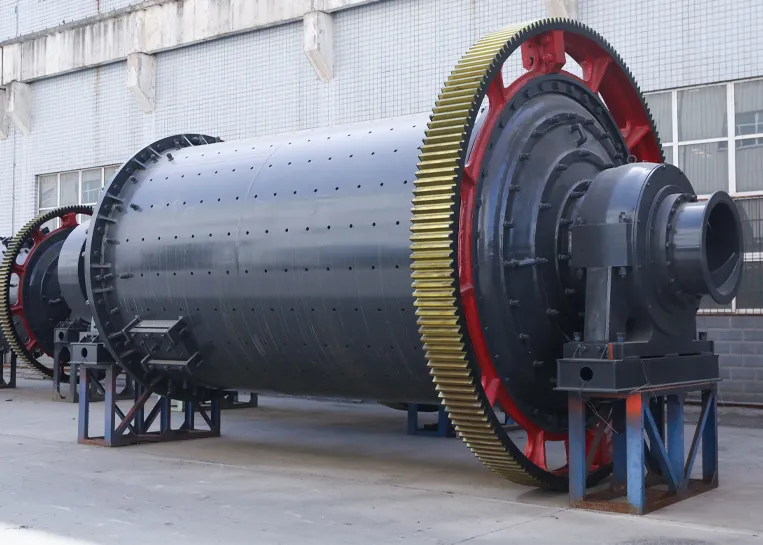
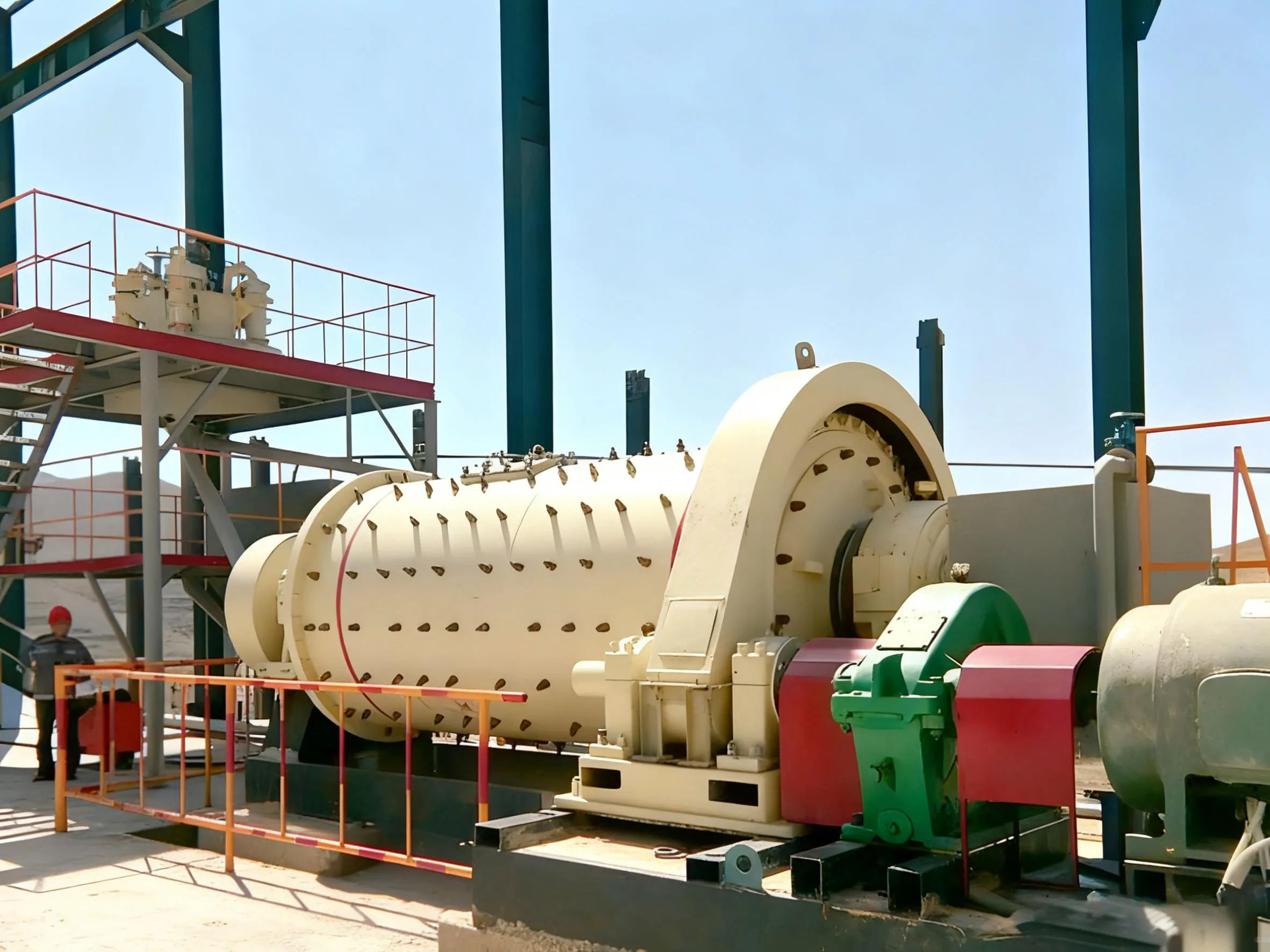
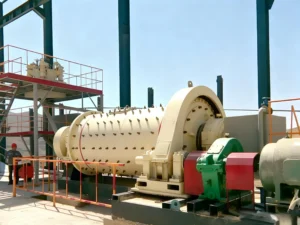
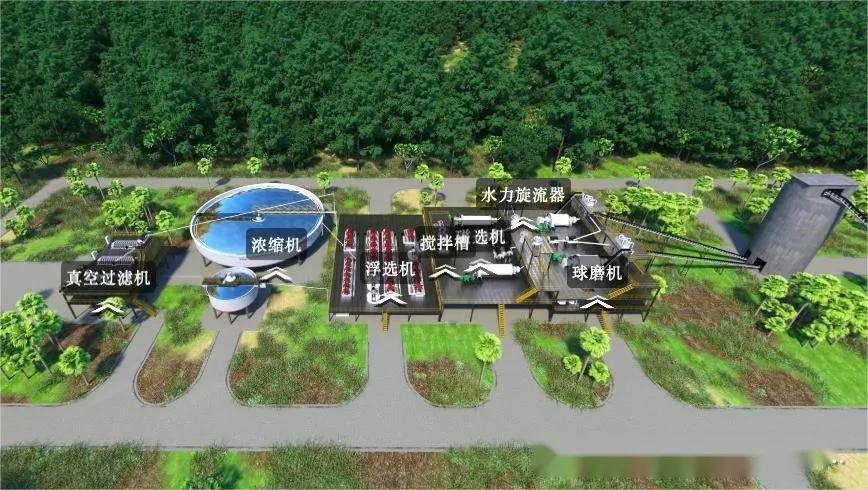
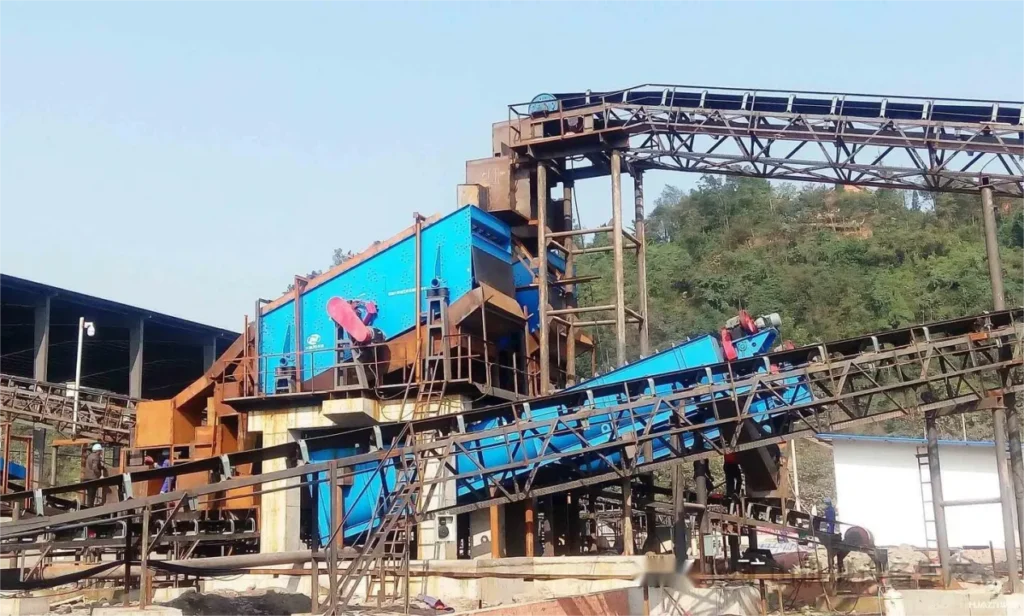
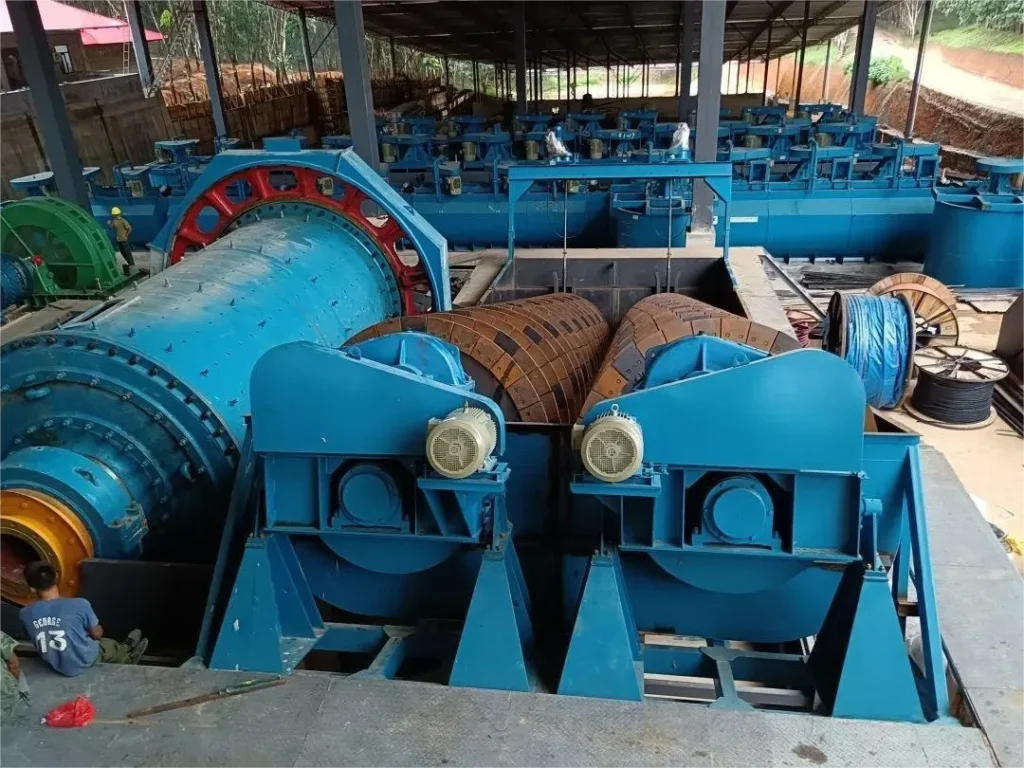
This process typically uses a crusher in conjunction with a vibrating screen. The crushed material is then conveyed to a grinding system, usually a ball mill. The classifying equipment used in conjunction with the ball mill is generally a spiral classifier or a hydrocyclone.
2. Ore Washing and Desliming
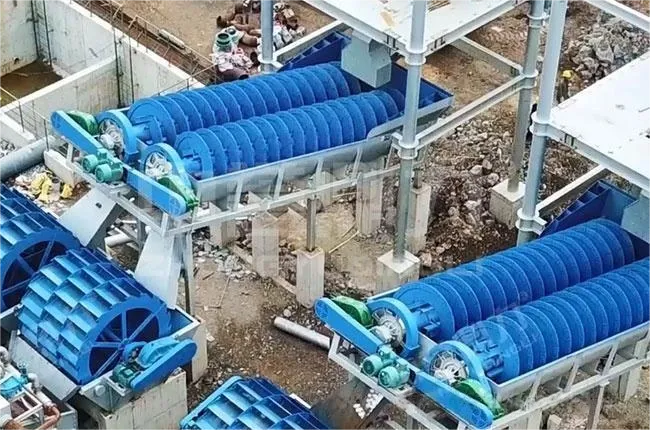
Ore washing is primarily for potassium feldspar ore from weathered granite or feldspar placer deposits. Using vibrating screens or washing tanks, impurities such as clay, fine mud, and mica are separated from coarse feldspar under the action of water flow, reducing the ferric oxide content in the potassium feldspar.
Desliming involves using equipment such as desliming buckets and hydrocyclones to remove primary slime and secondary slime generated during grinding. This slime significantly interferes with subsequent beneficiation operations, affecting the final beneficiation results; therefore, desliming treatment is necessary.
3. Separation Operation After completing the above preparatory work, the ore particle size has reached a fineness sufficient for individual separation, and the slime affecting the separation effect has been removed. Finally, the actual separation operation can begin. This stage typically employs flotation, gravity separation, and magnetic separation to separate potassium, sodium, and other impurities.
(1) Magnetic Separation: Magnetic separation is a commonly used method for potassium feldspar beneficiation. It can remove iron minerals, biotite, tourmaline, and other magnetic impurities from feldspar. Equipment used includes magnetic drums and high-gradient magnetic separators.
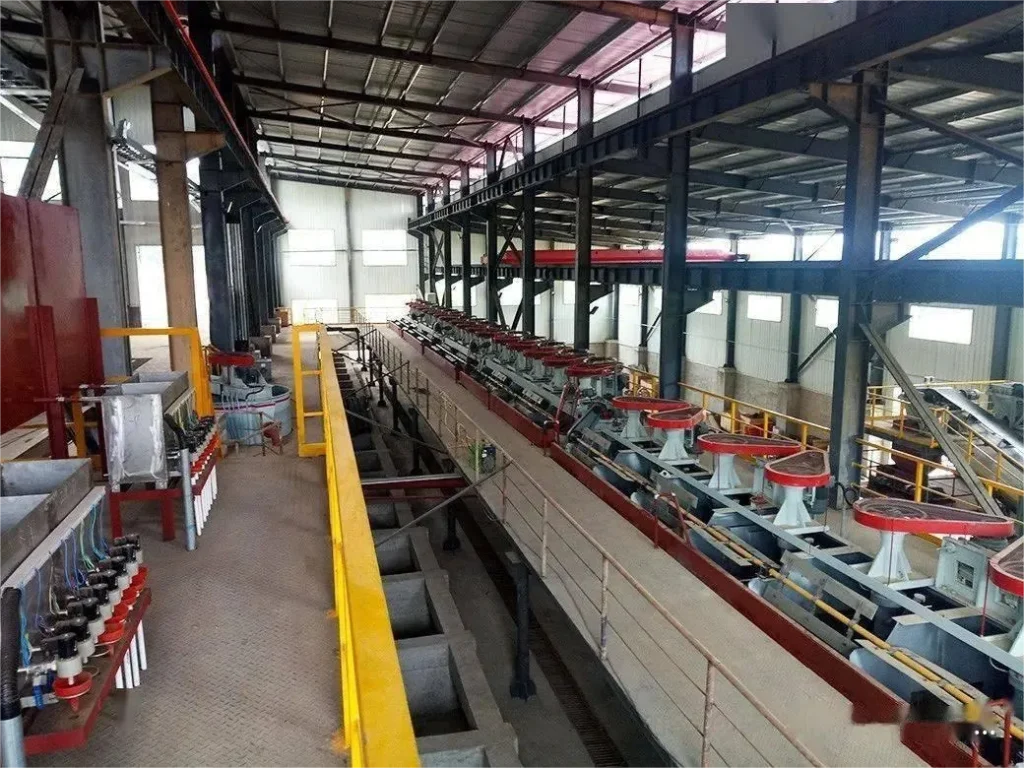
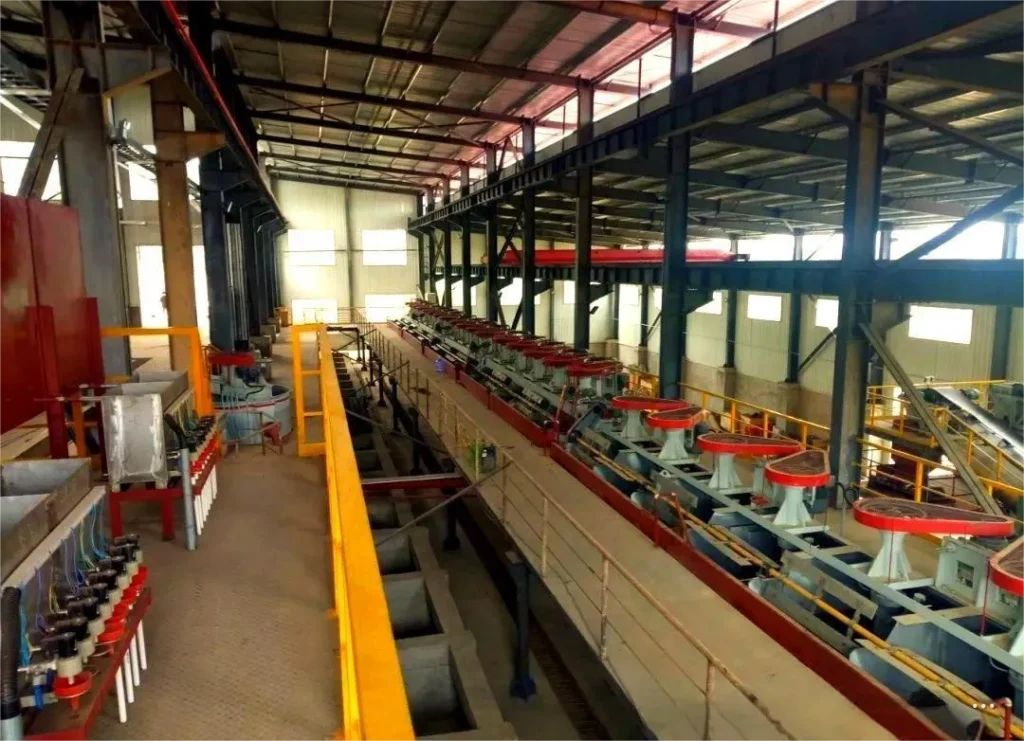
(2) Flotation: Flotation is used to remove titanium minerals and non-metallic impurities such as quartz and mica. Commonly used flotation methods include acid flotation, neutral flotation, and alkaline flotation. Equipment used includes flotation machines and stirred tanks.
(3) Acid Leaching: Acid leaching is also an effective method for removing impurities from potassium feldspar. High-concentration sulfuric acid is often used for leaching at high temperatures for a relatively long time to remove iron impurities. It is often suitable for impurities with fine intercalated crystal structures in potassium feldspar. 4. Dewatering Operation: The potassium feldspar concentrate after beneficiation needs to undergo dewatering to further enrich the concentrate. The equipment used in this stage includes thickeners, filter presses, etc.
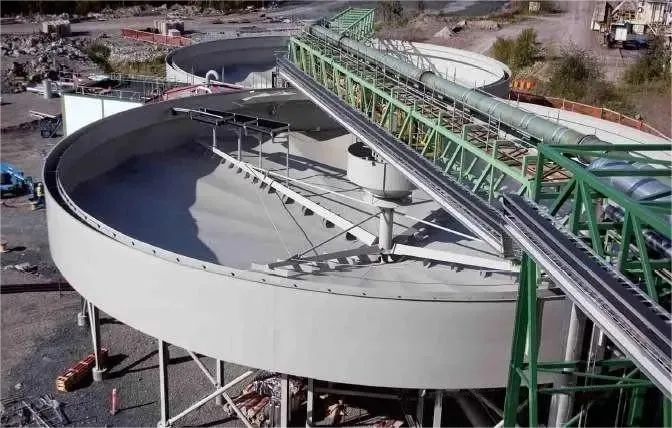
my country has limited rich potassium feldspar resources, which often occur alongside other impurity minerals, particularly trace amounts of iron and titanium, affecting its quality and applications. Therefore, impurity removal is necessary. Due to variations in deposit types and ore properties, potassium feldspar beneficiation processes differ. Common potassium feldspar beneficiation processes include crushing and screening, grinding and classification, desliming, magnetic separation, gravity separation, flotation, and combined processes using multiple methods to remove associated minerals such as quartz, iron, and mica.
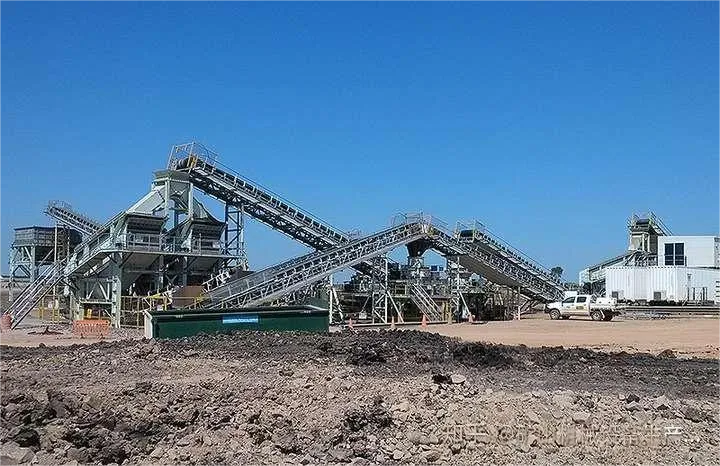
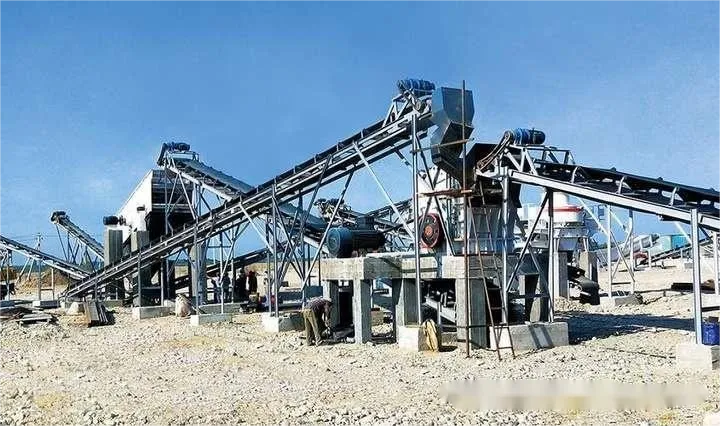
1. Potassium Feldspar Processing Flow: Crushing and Screening Process: After screening, the oversize product enters the first-stage jaw crusher. The first-stage crushing product and the undersize product enter a vibrating screen with a 12mm aperture for pre-screening in the second stage of crushing. The oversize product enters a cone crusher, and its discharge is returned to the vibrating screen for inspection and screening. The undersize product (12~0 mm) is sent to the grinding section.
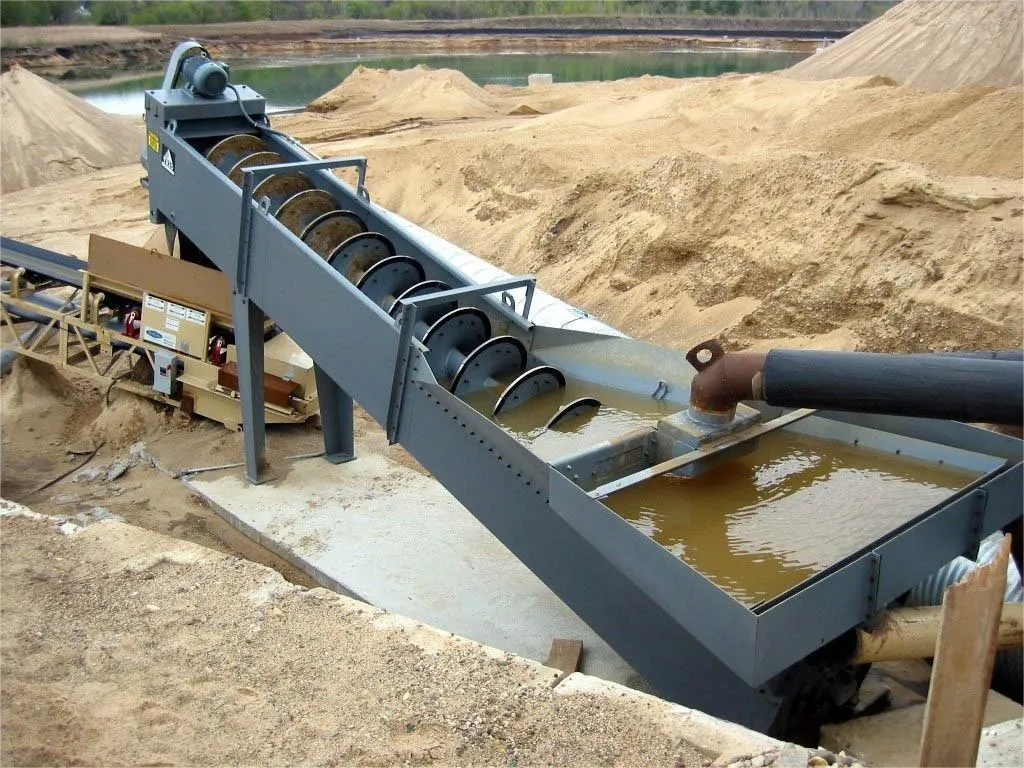
2. Potassium Feldspar Processing Flow: Grinding and Classification Process: In the potassium feldspar beneficiation process, one or two stages of grinding are generally used. The use of more than two stages is usually determined by the requirements of staged beneficiation. Single-stage grinding and classification process: Main advantages are: fewer equipment, lower investment, simple operation, and less downtime loss as a shutdown of one grinding stage will not affect the operation of another. Disadvantages: Wide feed particle size range, difficulty in proper ball loading, difficulty in obtaining a finer final product, and low grinding efficiency. Applicable scope: When the maximum particle size of the final product is required to be 0.2~0.15mm (i.e., 60%~79%-200 mesh), a single-stage grinding process is generally used. In small plants, to simplify the process and equipment configuration, a single-stage grinding process can also be used when the grinding fineness requirement is 80%-200 mesh. Two-stage grinding and classification process: The outstanding advantage is that it can obtain a finer product, allowing for coarse and fine grinding in different grinding stages, making it particularly suitable for staged processing. In large and medium-sized factories, when a grinding fineness of less than 0.15mm (i.e., 80%-200 mesh) is required, two-stage grinding is more economical, produces a more uniform particle size distribution, and minimizes over-grinding. Depending on the connection method between the first-stage mill and the classifier, two-stage grinding processes can be divided into three types: open-circuit first stage; fully closed-circuit second stage; and partially closed-circuit first stage with the second stage always operating in a closed-circuit manner.
3. Potassium Feldspar Processing Flow – Potassium Feldspar Magnetic Separation for Impurity Removal: For weakly magnetic minerals such as iron oxides, mica, and garnet in potassium feldspar ore, strong magnetic separation is recommended. The selection of magnetic separation equipment needs to be determined based on the ore properties. Commonly used magnetic separation equipment includes wet drum magnetic separators, vertical ring high-gradient magnetic separators, and plate magnetic separators. In actual production, the magnetic separation effect for impurity removal in potassium feldspar ore is mainly affected by the magnetic field strength and the number of magnetic separation cycles. Higher magnetic field strength and more magnetic separation cycles result in lower iron content in the ore. Pulsating current can also improve the iron removal effect.
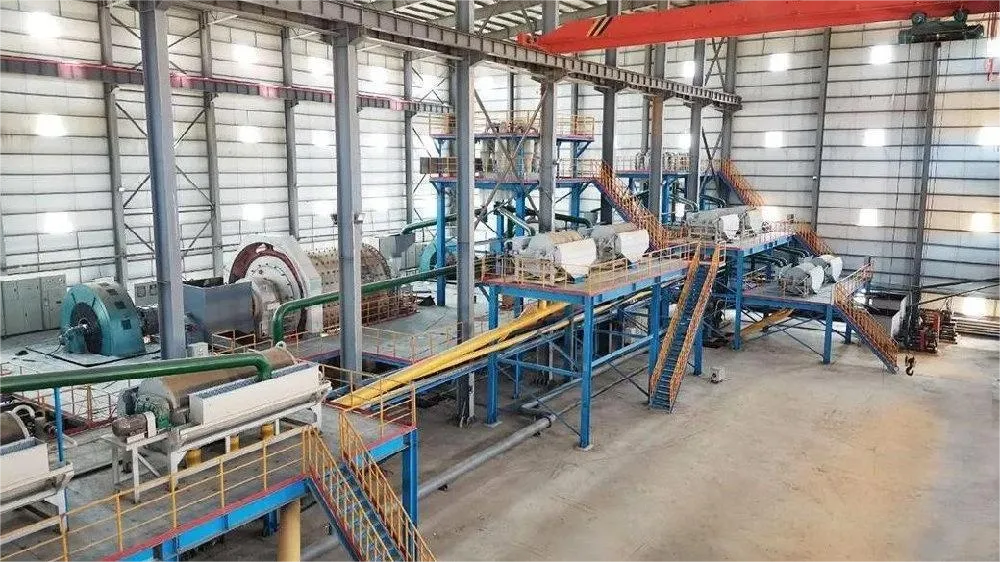
4. Potassium Feldspar Processing Flow – Potassium Feldspar Flotation Impurity Removal Process: When iron-containing impurities in potassium feldspar exist as pyrite, mica, or iron-containing alkali metal silicate minerals such as garnet, tourmaline, and amphibole, flotation is often used for impurity removal. It is worth noting that weakly acidic flotation requires less reagent, yields higher potassium feldspar production, and has better flotation results than weakly basic flotation. During grinding, over-grinding should be avoided as it can lead to insufficient particle kinetic energy, preventing air bubbles from breaking through the surrounding hydration layer and making it difficult for the target mineral to float.
5. Potassium Feldspar Processing Flow – Potassium Feldspar Acid Leaching Impurity Removal Process: Acid leaching is a method of removing iron by selectively dissolving iron-containing minerals in potassium feldspar using acids. Acid leaching is an effective means of treating impurities with extremely fine intercalated crystal structures in potassium feldspar.
6. Potassium Feldspar Processing Flow – Combined Impurity Removal Process: For some difficult-to-process potassium feldspar ores, not only is the iron content high, but some impurities also permeate into the cleavage fissures of the potassium feldspar in the form of iron stains. When a single beneficiation process cannot meet the concentrate requirements, a combined impurity removal process should be adopted, such as acid leaching-flotation combined process, flotation-magnetic separation combined process, scrubbing-magnetic separation-flotation combined process, desliming-strong magnetic separation-acid leaching combined process, etc.
7. Potassium Feldspar Processing Flow – Potassium Feldspar Concentrate Dewatering Process: After obtaining the potassium feldspar concentrate product through beneficiation, a thickener is used for concentration and filtration dewatering to obtain potassium feldspar powder, which is used directly as the product. The tailings generated during the beneficiation process can be utilized through tailings re-concentration, tailings dry stacking, or dry heaping.
In the processing of potassium feldspar, magnetic separation is a relatively environmentally friendly and easy-to-operate method, making it one of the important impurity removal processes in potassium feldspar beneficiation. For potassium feldspar containing non-magnetic impurities, flotation is preferable, while careful selection of appropriate flotation reagents and operating parameters is crucial. For potassium feldspar containing fine particles or iron staining impurities that are difficult to remove, acid leaching or a combined impurity removal process is recommended.
In summary, the potassium feldspar processing is a complex and variable process. Before developing a beneficiation plan, representative ore samples should be taken for beneficiation tests. Based on the test results, targeted measures should be taken to address the impurities in the raw ore, and a beneficiation plan should be developed to better achieve the goal of removing impurities and purifying potassium feldspar.