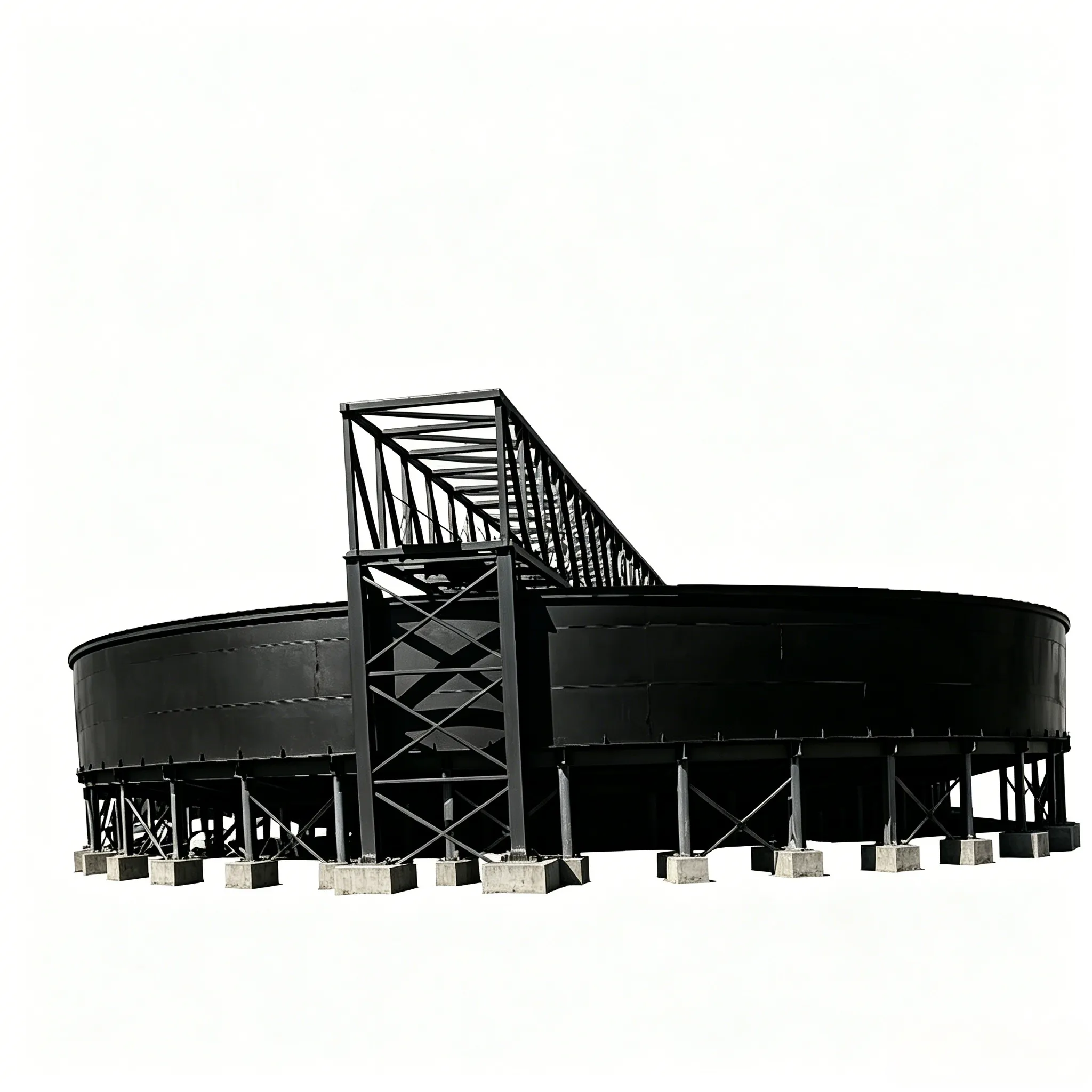
Box‑type inclined‑plate thickener
Conventional Inclined‑Plate Thickener The KMIZ(Y) series inclined‑plate thickener (clarifier) is a new…

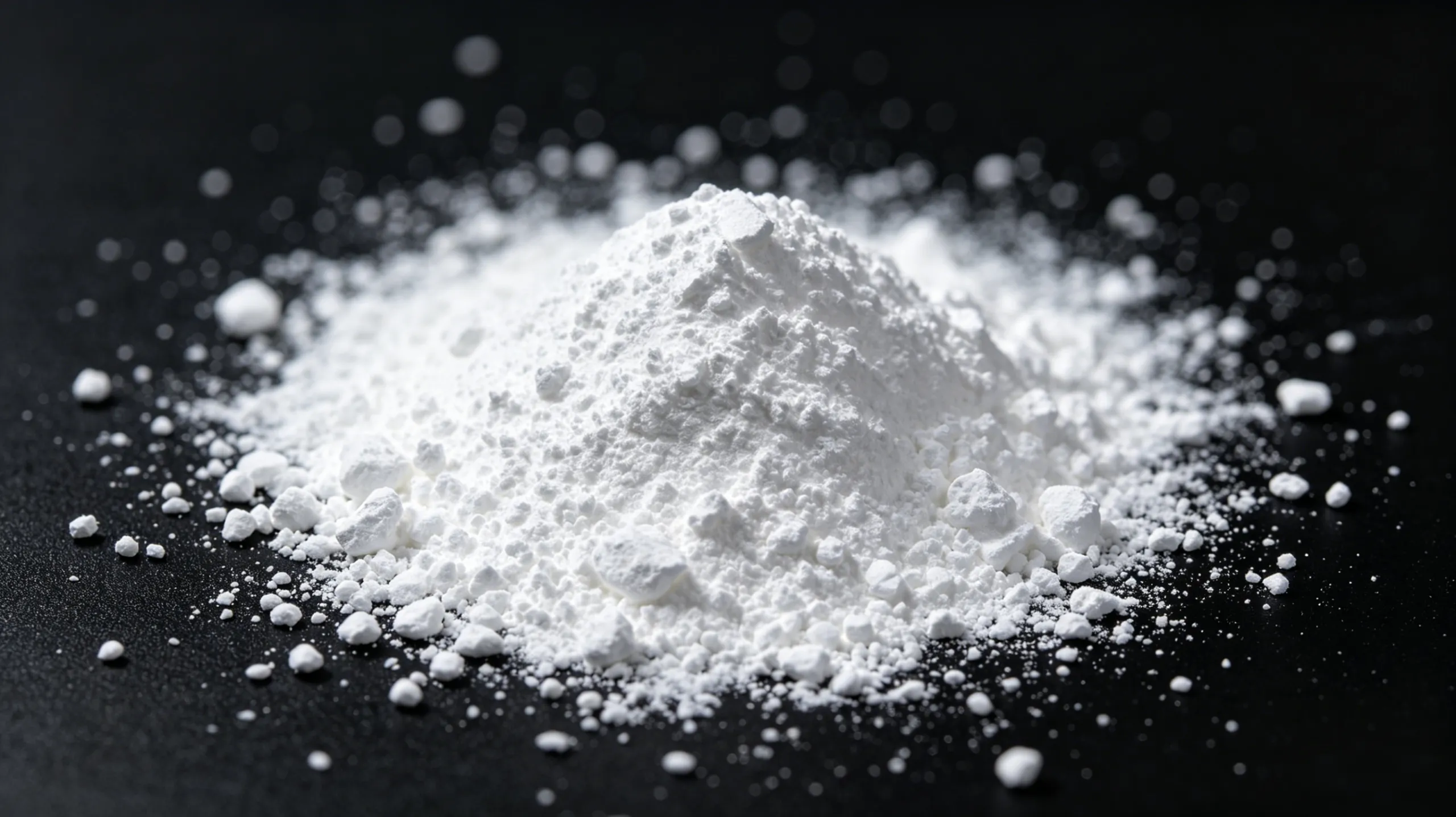
CaCO₃ is the most widely used filler in the plastics industry. Owing to its small aspect ratio, it has long been employed as an extender. In the late 1980s, the concept of toughening polymers with organic rigid particles emerged. Fu Qiang et al. used the HDPE/CaCO₃ composite system as a model to investigate the possibility of toughening polymers with inorganic rigid particles. Their experimental results led to the following conclusions: if the following conditions are met – ① appropriate particle size and size distribution of the dispersed particles; ② good interfacial adhesion between particles and the resin matrix, facilitating stress transfer; and ③ a certain degree of toughness in the matrix – then inorganic rigid particles can toughen the polymer. They also proposed the “critical matrix layer thickness theory” as a criterion for determining whether a composite is toughened. Subsequently, many other researchers obtained similar experimental results. For the HDPE/CaCO₃ system specifically, the CaCO₃ particles used by Fu Qiang et al. were all larger than 1 μm in size, while systems filled with CaCO₃ particles below 1 μm had not been studied. Nanoscale CaCO₃ is a newly developed product with an average primary particle size of less than 0.1 μm and a specific surface area as high as 24 m²/g. Drawing on previous research, Xu Weiping et al. conducted studies on HDPE composites modified with nanoscale CaCO₃.
Regarding the mechanical properties of the nanoscale CaCO₃‑filled HDPE system, according to the toughening theory of inorganic rigid particles, one necessary condition for toughening is good interfacial adhesion between the dispersed particles and the resin. CaCO₃ is a filler with a polar surface, whereas polyethylene is a non‑polar polymer; the compatibility between them is poor, resulting in weak interfacial bonding. Therefore, for the HDPE/CaCO₃ system, CaCO₃ can function as a toughening agent only after surface treatment.
CaCO₃ content (wt%)
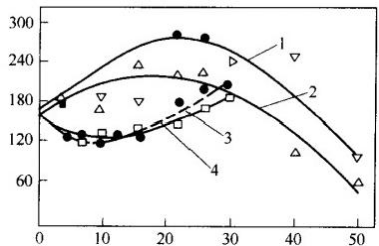
Figure 14‑7 Impact strength of HDPE/CaCO₃ composites
1 – System with treated nanoscale CaCO₃;
2 – System with untreated nanoscale CaCO₃;
3 – System with treated ultrafine CaCO₃;
4 – System with untreated ultrafine CaCO₃.
(1) Impact strength
Figure 14‑7 shows the relationship between impact strength and CaCO₃ content for different HDPE/CaCO₃ filled systems. It can be seen from the figure that for the two ultrafine CaCO₃ filled systems, the impact strength first decreases sharply with increasing filler content, and then gradually recovers. This indicates that: ① without surface treatment, ultrafine CaCO₃ cannot produce a toughening effect; ② even conventional surface treatment of ultrafine CaCO₃ does not achieve toughening. The inorganic rigid particle toughening theory is applicable to the ultrafine CaCO₃‑modified HDPE system.
For the nanoscale CaCO₃ filled systems, as the CaCO₃ content increases, the impact strength of the composites gradually increases, reaching a maximum at about 25 wt% CaCO₃ (mass fraction, same below). Among them, the system treated with NDZ101 shows a more pronounced toughening effect, with the maximum impact strength being 70% higher than that of neat HDPE. Beyond this content, the impact strength decreases with further addition of CaCO₃. This behaviour is significantly different from that of the ultrafine CaCO₃ filled systems.
It is generally believed that the smaller the filler particle size, the higher its specific surface energy, and the better the interfacial bonding between the resin and the filler. Some researchers have pointed out that many components that cannot be mixed in the molten or liquid state can be alloyed at the nanoscale, meaning that two originally incompatible materials gain a certain degree of compatibility at the nanoscale.
From a morphological standpoint, in the ultrafine CaCO₃ filled HDPE system, the HDPE matrix exhibits some characteristics of post‑yield tearing, and some agglomerated CaCO₃ particles with diameters between 5 and 15 μm are observed on the impact fracture surface, as shown in Figure 14‑8(a). In contrast, for the nanoscale CaCO₃ filled system, the drawn structure of the matrix becomes finer and denser. The SEM micrographs show a richly layered micro‑fibrillar and cellular structure, with more pronounced post‑yield fracture features. In addition, a large number of fine CaCO₃ particles are found adhering to the resin matrix, as shown in Figure 14‑8(b). This indicates that the addition of nanoscale CaCO₃ can act as stress concentration points. Under external force, the shear stress around the particles is transferred, causing local yielding of the adjacent matrix, which absorbs more energy and thus improves the fracture toughness.
As shown in Figure 14‑8(c), after treatment of the nanoscale CaCO₃ with NDZ101, the composite impact fracture surface exhibits a more compact drawn structure, indicating significant plastic deformation of the matrix and absorption of large amounts of energy. On this fracture surface, the CaCO₃ particles are uniformly distributed, with extremely small particle sizes, and no obvious large particles are present. This suggests that surface treatment with NDZ101 greatly improves the dispersibility of the nanoscale CaCO₃. Consequently, the NDZ101‑treated system exhibits higher impact strength and a more evident toughening effect.
Furthermore, from the SEM images of the brittle fracture surfaces of the two filled systems, in the ultrafine CaCO₃ filled system [Figure 14‑8(d)], the interface between CaCO₃ and the matrix is clear, the particle sizes are non‑uniform, and large particles exist. In contrast, on the brittle fracture surface of the nanoscale CaCO₃ filled specimen [Figure 14‑8(e)], the CaCO₃ particles are uniformly distributed with sizes below 1 μm. This demonstrates that reducing the size of the dispersed phase particles and improving their dispersibility can enhance the impact strength of the composites.
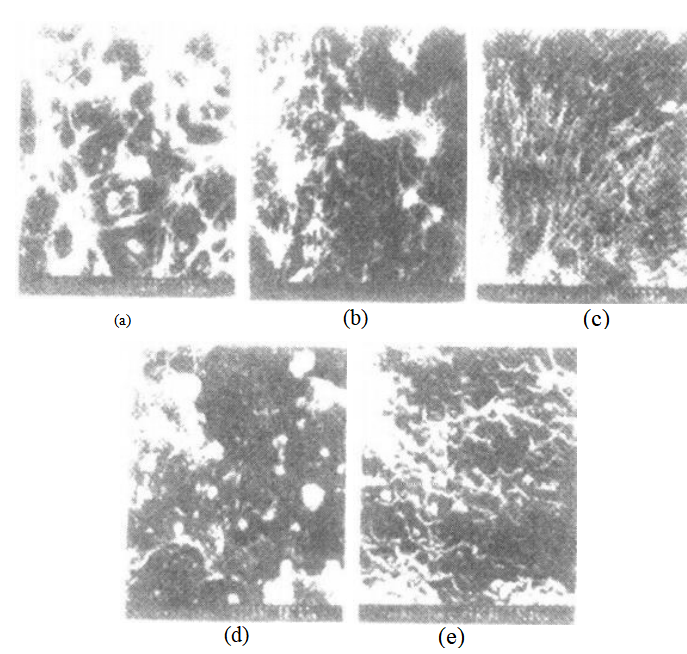
Figure 14‑8 SEM micrographs of HDPE/CaCO₃ composites (HDPE/CaCO₃ = 84/16)
(a) Treated ultrafine CaCO₃ filled system, impact fracture surface;
(b) Untreated ultrafine CaCO₃ filled system, impact fracture surface;
(c) Treated nanoscale CaCO₃ filled system, impact fracture surface;
(d) Treated ultrafine CaCO₃ filled system, cryogenic brittle fracture surface;
(e) Untreated nanoscale CaCO₃ filled system, cryogenic brittle fracture surface.
(2) Tensile strength and elongation at break
For micron‑sized fillers, the tensile strength of the composites generally decreases with increasing CaCO₃ content; however, reducing the CaCO₃ particle size can slow down this decreasing trend. As shown in Figure 14‑9, for the ultrafine CaCO₃ filled system (dashed lines in the figure), the tensile strength drops rapidly as the CaCO₃ content increases. For the nanoscale CaCO₃ filled system, the decline in tensile strength with increasing CaCO₃ content is greatly mitigated. According to Griffith theory, the strength of a composite can be expressed as:
σ = (2E · γ / π · C)⁻²
where
σ — strength of the material;
E — Young’s modulus of the material;
γ — surface energy per unit area of the crack;
C — effective defect size.
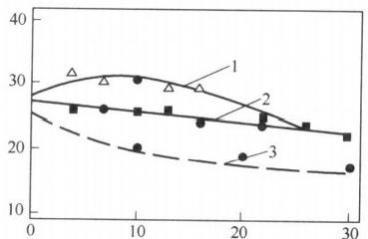
CaCO₃ content (wt%)
Figure 14‑9 Tensile strength of HDPE/CaCO₃ composites
1 – System with untreated nanoscale CaCO₃;
2 – System with treated nanoscale CaCO₃;
3 – Ultrafine CaCO₃ system
Here, the effective defect size mainly refers to the voids caused by interfacial debonding between the filler and the polymer. The size of the voids depends on the particle size of the filler. The smaller the filler particle size, the smaller the voids resulting from interfacial debonding, i.e., the smaller the value of C. Consequently, the decrease in material strength caused by debonding is less significant. It can thus be seen that the variation trend of tensile strength after filling HDPE with nanoscale CaCO₃ differs from that with micron‑sized CaCO₃.
Table 14‑4 Elongation at break of different systems (unit: %)
| Nanoscale CaCO₃ content / % | 0 | 4 | 7 | 10 | 13 | 16 | 22 | 26 | 30 |
|---|---|---|---|---|---|---|---|---|---|
| Untreated | 500 | 460 | 590 | 100 | 200 | 300 | 370 | 7 | – |
| NDZ‑101 treated | 600 | >600 | >600 | >600 | 670 | 660 | 550 | 420 | 400 |
As shown in Table 14‑4, after surface treatment of nanoscale CaCO₃ with NDZ‑101, the elongation at break of the filled systems is significantly improved compared with the untreated systems. At a CaCO₃ content of up to 16%, the elongation at break of the composite still reaches or exceeds that of neat HDPE. Under the same content and the same surface treatment conditions, the elongation at break of the ultrafine CaCO₃ filled systems is generally very low.
The high elongation at break observed in the nanoscale CaCO₃ filled systems is attributed to at least two factors: ① the small particle size of CaCO₃; and ② the effect of the coupling agent.
(3) Processing properties of the nanoscale CaCO₃ filled HDPE system
Figures 14‑10(a) and (b) show the rheological curves of two HDPE/nanoscale CaCO₃ composites. It can be seen from the figures that at low shear rates, the apparent viscosity of the composites increases with increasing CaCO₃ content. However, after surface treatment of the nanoscale CaCO₃, the apparent viscosity at low shear rates is significantly reduced. Comparing the experimental data, treatment of nanoscale CaCO₃ with NDZ‑101 results in a more pronounced improvement in the flowability of the composite at low shear rates. As the shear rate increases, the rheological curves of the filled systems gradually approach that of neat HDPE. After the shear rate reaches 500 s⁻¹, the apparent viscosity values of the different filled systems are very close to each other and are nearly identical to that of neat HDPE. In plastics processing, the shear rate for extrusion moulding is in the range of 10²–10³ s⁻¹, and for injection moulding it is in the range of 10³–10⁵ s⁻¹. Therefore, even at relatively high nanoscale CaCO₃ loadings, the HDPE/nanoscale CaCO₃ composites still exhibit good processing properties.
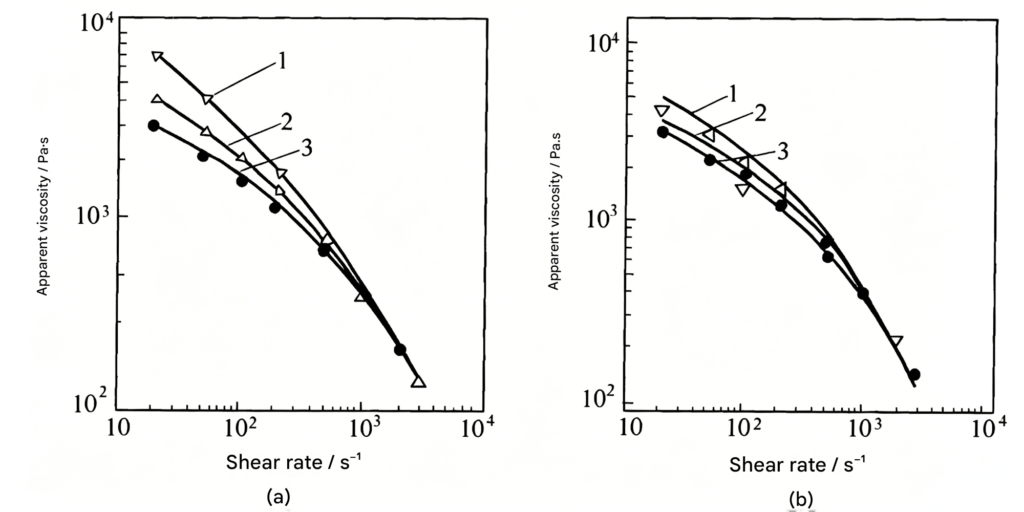
Figure 14‑10 Rheological curves of HDPE/nanoscale CaCO₃ systems
(a) Untreated system; (b) NDZ‑101 treated system. Temperature: 200 °C.
Curves 1–3 correspond to CaCO₃ contents of 50%, 26%, and 0%, respectively.
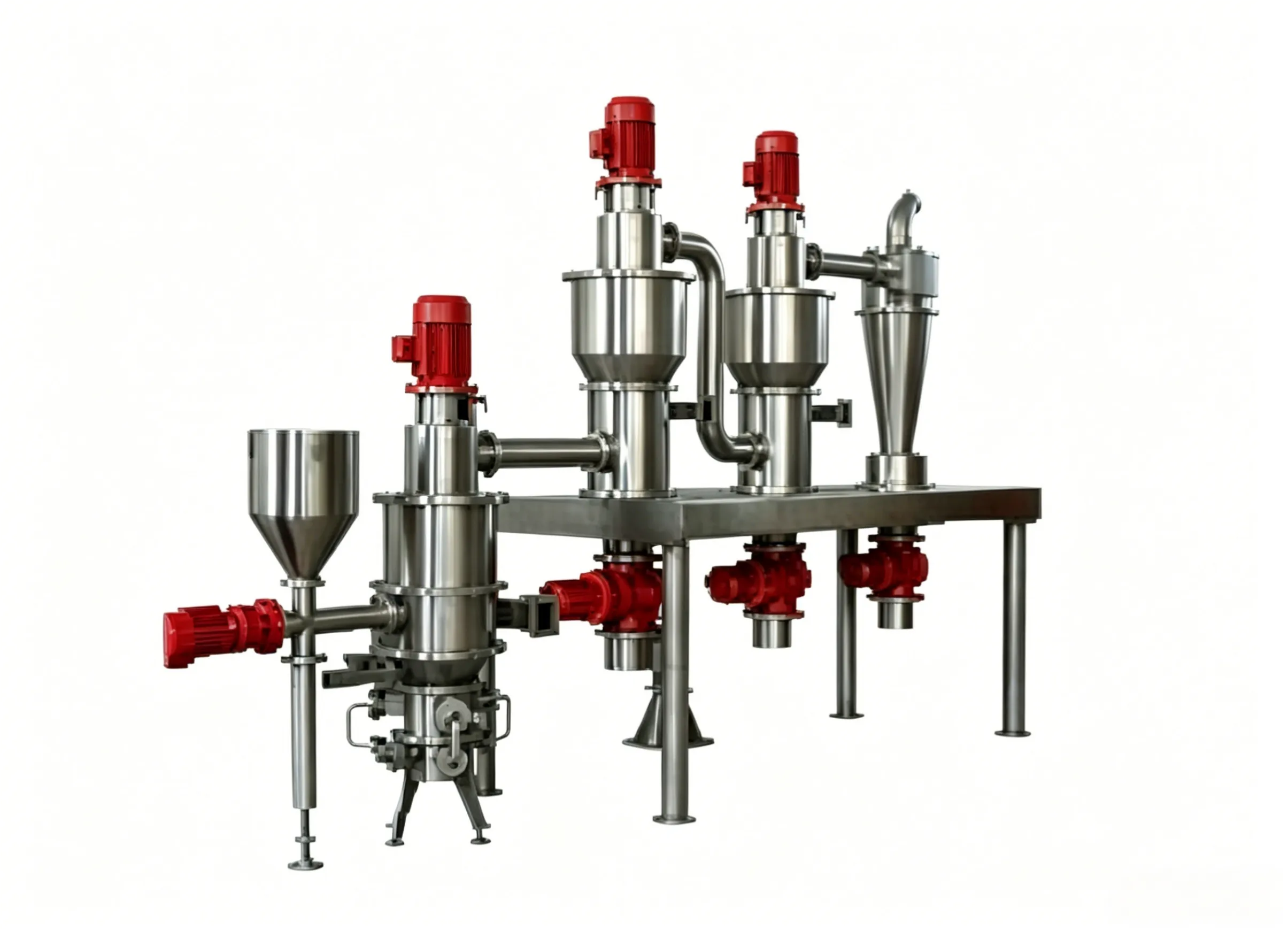
In summary, the filling of HDPE with nanoscale calcium carbonate that has been product by the raymond mill has the following effects:
① Nanoscale CaCO₃, even without surface activation treatment, exhibits a certain toughening effect on HDPE;
② With appropriate surface treatment, nanoscale CaCO₃ can significantly improve the impact strength and elongation at break of HDPE/CaCO₃ composites, thereby enhancing the overall mechanical properties of the composites;
③ In the nanoscale CaCO₃‑filled HDPE system, the brittle‑ductile transition point disappears, but the impact strength reaches a maximum at a nanoscale CaCO₃ content between 20% and 25%;
④ Even at a nanoscale CaCO₃ content as high as 50%, the HDPE/CaCO₃ composites still exhibit good processing properties;
⑤ Compared with the ultrafine CaCO₃‑filled HDPE composites, the nanoscale CaCO₃‑filled HDPE composites possess superior overall mechanical properties and better processing performance.
Hunan Jinxin Chemical Co., Ltd. (formerly Zijiang Nitrogen Fertilizer Plant) produces “Aote Calcium” – a superfine plastic reinforcing agent – using a novel “dual‑spray” process. This product has an average particle size of <70 nm, fine particle size, low impurities, high purity, and is surface‑activated, giving it a large specific surface area and high activity. When used as a filler in PVC, PE, and PP plastics, it exhibits good compatibility with the plastics, uniform dispersion, shortened plasticization time, reduced dust emission during processing, and significantly improved surface gloss of the finished plastic products. It also provides a reinforcing effect for PVC, PE, and PP plastics. The recommended addition levels for various products are shown in Table 14‑5.
Table 14‑5 Recommended addition levels (parts by weight) of activated ultrafine calcium carbonate in various plastic products
| Product | Parts | Product | Parts | Product | Parts |
|---|---|---|---|---|---|
| Calcium‑plastic doors & windows | 15–20 | Rigid pipe | 10–20 | Flexible hose | 15–20 |
| Calcium‑plastic ceiling panels | 20–25 | Rigid sheet/plate | 10–20 | Flexible thin film/sheet | 10–20 |
| Calcium‑plastic boxes/cases | 15–20 | Rigid sheeting | 5–13 | PVC foam | 15–20 |
| Calcium‑plastic corrugated board | 20–25 | Artificial leather | 15–20 | Foamed leather | 15–20 |
| Wallpaper | 15–25 | Cable | 20 | Strapping | 20–25 |