логотип рудоуправления

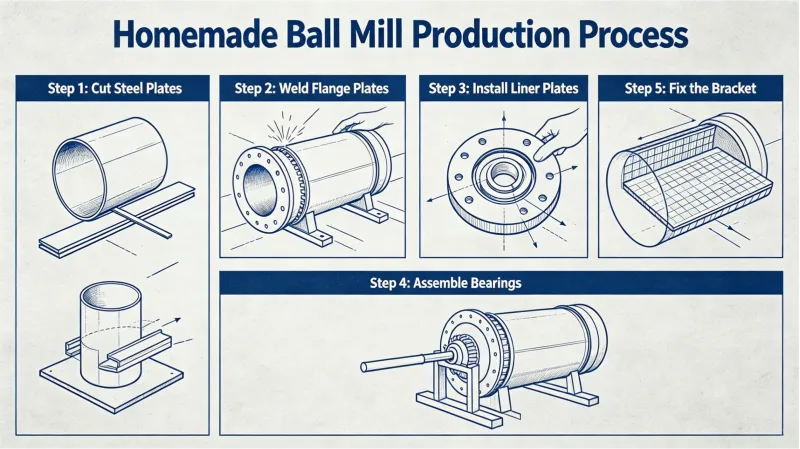
Как построить самодельную шаровую мельницу: Полное пошаговое руководство

Как построить самодельную шаровую мельницу: Полное пошаговое руководство

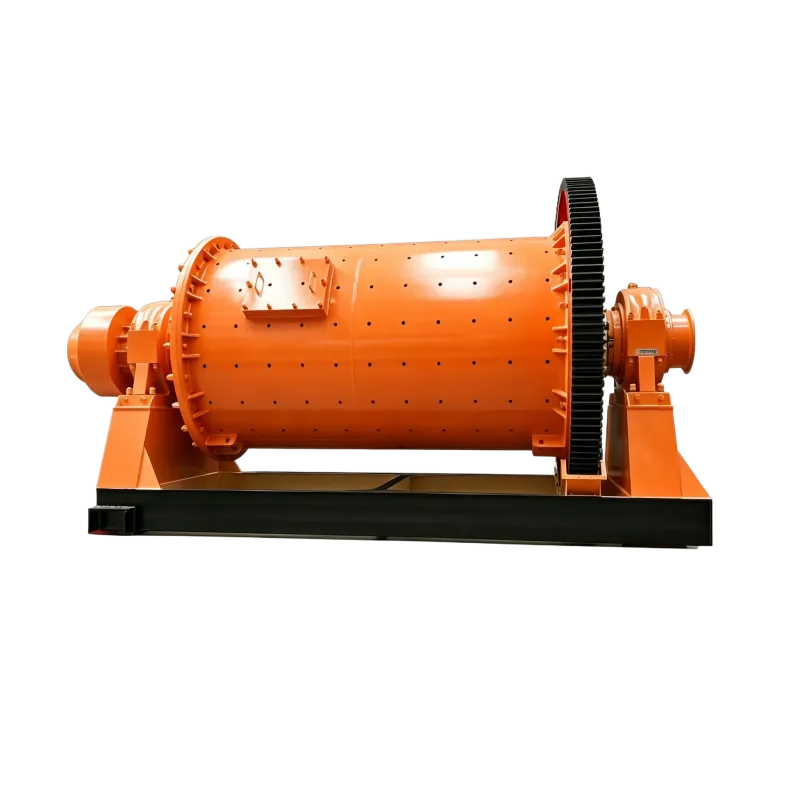
A шаровая мельница is a rotating machine used to grind materials into fine powder. It works by placing the material to be ground inside a cylindrical container along with heavy grinding media (such as steel balls or ceramic balls). As the container rotates, the media cascade and tumble, crushing and grinding the material through impact and friction. These machines are widely used for grinding chemicals, ceramic materials, ores, glass-making ingredients, and even as rock tumblers for polishing stones. While industrial ball mills can cost thousands of dollars, a functional and effective ball mill can be built at home using recycled components and basic shop tools for a fraction of the cost.

Overview of the Project

This guide will show you how to build a two-roller ball mill — the most common and reliable DIY design. The mill uses a motor to drive a belt that rotates a drum resting on two parallel roller shafts (often four caster wheels). This design is robust, easy to build, and produces excellent results.

Two main design approaches are popular among DIY builders:

  1. Drill-Powered Mill: The simplest and cheapest approach. A hand drill or cordless drill is clamped to a stand and directly drives the container. This is ideal for very small-scale, intermittent use.
  2. Motor-Powered Mill with Belt Drive: A more robust and permanent solution. An electric motor (often salvaged from a printer, dryer, or old appliance) drives the drum via a pulley and rubber belt. This allows for continuous operation and better speed control.

This guide will focus primarily on the motor-powered belt drive design, as it is more versatile and suitable for larger projects. However, simplified steps for the drill-powered version are also included for those seeking a quicker build.

Section 1: Materials and Tools

Before beginning construction, gather all necessary materials. Many components can be salvaged from discarded appliances, printers, or machinery, keeping the project cost very low.

For the Drum (Milling Container)

ItemSpecifications/Notes
Cylindrical containerPVC pipe (schedule 40), metal pipe, heavy-duty plastic container, or a commercial grinding jar. A diameter of 4–8 inches and length of 10–12 inches works well for most home uses.
End capsTo seal both ends of the container. For PVC, use standard PVC caps with cement.
Grinding mediaSteel balls (5/8″ diameter recommended), ceramic balls, lead balls (non-sparking), or marbles. Should fill about half the container’s volume.
Lid sealing materialRubber gasket, silicone sealant, or cork sheet to make the lid watertight if wet grinding is planned.

Tip: Schedule-40 type 316 stainless steel pipe is ideal for the drum because it resists abrasion and corrosion, is easy to clean, and will not rust — but it is expensive. Heavy-duty PVC pipe is a popular and affordable alternative for most DIY applications.

For the Drive System (Motor-Powered Design)

ItemSpecifications/Notes
Electric motorA 12V DC motor (often from a printer) running from a variable power supply, or a 1/2 HP AC motor (1370 RPM). Recycle from an old printer, dryer, ventilation fan, or appliance.
Rubber beltA round belt or flat belt that fits around the drum and motor pulley. Must be at least 1 inch larger in diameter than the container.
Motor pulleySmall diameter pulley to mount on the motor shaft. A 2-inch fixed pulley is a good starting point.
Driven pulleyLarger pulley mounted on the driven shaft. A 4-inch pulley paired with a 2-inch motor pulley works well for typical jar sizes.
Power supplyVariable DC power supply (if using a DC motor) or standard mains power with switch (if using an AC motor).

For the Frame and Rollers

ItemSpecifications/Notes
Wooden platform (base)1″ × 10″ lumber, cut to about 14 inches long.
Base risersTwo pieces of 1″ × 4″ lumber, each 4 inches long.
Caster wheelsFour inexpensive fixed caster wheels (non-swiveling). Each wheel should have a metal frame and a hard rubber or plastic wheel.
ShaftsTwo steel rods or threaded rods to connect the caster wheels (if building a shaft-based design).
Bearing supportsPillow block bearings or simple bushings to mount the shafts.
Drum stop (end plate)A small piece of aluminum or wood to prevent the drum from walking off the rollers.
Wood screwsVarious sizes for assembling the platform.

For the Drill-Powered Design (Simplified)

ItemSpecifications/Notes
Electric drillHand drill or cordless drill with variable speed control.
ContainerA can or PVC pipe with a secure lid.
Screws or boltsFor attaching the container to the drill’s chuck or a drive shaft.
Strong glue or epoxyTo secure connections.

Tools Required

  • Electric drill with drill bits
  • Jigsaw or handsaw
  • Screwdriver (Phillips and flathead)
  • File or sandpaper
  • Measuring tape or ruler
  • Clamps or vise (helpful for drilling)
  • Soldering iron (for DC motor wiring)
  • Wrenches

Safety Gear

Section 2: Building the Ball Mill

Step 1: Build the Base Platform

The wooden base supports the entire assembly and positions the drum at the correct height.

  1. Take the 1″ × 10″ × 14″ wooden plank as your main platform.
  2. Place the two 1″ × 4″ × 4″ wood pieces on a flat surface.
  3. Set the platform on top of these riser pieces, one at each end.
  4. Screw the platform to the risers using four evenly spaced wood screws per side. For extra strength, apply wood glue before screwing.

This creates a stable base that sits approximately 4 inches off the work surface, providing clearance for the motor mounted underneath.

Step 2: Mount the Rollers (Caster Wheels)

The drum will rotate on four caster wheels arranged in two parallel pairs. The wheels act as rollers that support the drum and allow it to spin freely.

  1. Place the four caster wheels on top of the platform.
  2. Space them approximately 2 inches in from the edges of the platform, and about 7.5 inches apart (measured between the left pair and right pair).
  3. Ensure the wheels on each side are aligned — they must be parallel to each other so the drum rolls straight.
  4. Mark the screw holes and pre-drill.
  5. Screw the caster wheels securely to the platform using the provided mounting holes.

Tip: Fixed caster wheels (non-swiveling) are essential. Swiveling casters will allow the drum to wander sideways, causing it to fall off.

Step 3: Mount the Motor

The motor is mounted on the underside of the platform. A clever trick is to mount the motor loosely so it can pivot downward under its own weight. This gravity tensioning keeps the drive belt tight and prevents slipping without requiring a complicated tensioner mechanism.

  1. Turn the platform upside down.
  2. Position the motor in the center of the platform, about 1 inch from the left side.
  3. Mount the motor using screws on only one side of its mount, leaving the other side unattached.
  4. If the motor mount has screw holes on both sides, fasten only the side closer to the center of the platform. The hanging motor will pivot downward, creating belt tension.

For AC motors: Ensure the motor is securely mounted and properly grounded. For DC motors: A printer motor works very well; they are designed for continuous operation and are easy to control with a variable voltage supply.

Step 4: Cut the Belt Slot

The belt must pass through the platform to connect the motor pulley (below) to the drum (above).

  1. With the motor mounted, locate the position of the motor pulley attachment above the platform.
  2. Mark the platform directly above the motor pulley.
  3. Cut a long, narrow slot through the platform using a jigsaw or drill. The slot should be just wider than the width of the belt and long enough to allow for slight belt movement as the motor pivots.

Step 5: Install the Drive Belt and Check Alignment

  1. Loop the rubber belt around the motor pulley and bring the belt up through the slot.
  2. Position the belt so it will contact the drum when the drum is placed on the rollers.
  3. The belt should rest in the center of the drum’s circumference.
  4. Allow the motor to hang loose. Its weight will automatically tension the belt against the drum.

Step 6: Install Drum End Stop

A common problem with DIY ball mills is that the drum slowly “walks” sideways during operation and eventually falls off the rollers. Installing an end stop prevents this.

  1. Identify which direction the drum tends to drift when running (usually toward the motor side).
  2. Find a scrap piece of aluminum, wood, or plastic.
  3. Mount it vertically at the end of the platform where the drum walks to, positioned so the drum will ride against it.
  4. A smooth metal surface works best because it creates minimal friction against the rotating drum.

Step 7: Build the Drum

The drum (milling container) is the heart of the ball mill. It must be strong, securely sealed, and properly sized.

Method A: PVC Pipe Drum

  1. Cut a length of thick-walled PVC pipe to your desired length (approximately 10–12 inches for most projects, although a 15-inch length is also commonly used).
  2. Attach PVC end caps to both ends using PVC cement, ensuring an airtight seal-.
  3. Allow the cement to fully cure before use.

Method B: Metal Can or Container Drum

  1. Select a heavy-duty cylindrical container (a paint can or metal canister works well). The container should be strong enough to withstand the constant rotation and impacts from the grinding media.
  2. Ensure the lid fits securely. If the lid is not leak-proof, add a rubber gasket or apply silicone sealant around the edge to prevent spills, especially for wet grinding.

Примечание: A 20 cm (8-inch) diameter by 38 cm (15-inch) long drum is a proven and effective size for a homemade laboratory ball mill.

Step 8: Prepare the Drum for Operation

  1. Drill a small ventilation hole in the lid (optional but recommended) to prevent pressure buildup during milling.
  2. Smooth all rough edges around any holes using a file or sandpaper.
  3. Add the grinding media to the container — fill it approximately halfway full.
  4. Add the material to be ground, ensuring enough empty space remains for the media to tumble freely.
  5. Seal the lid tightly. Use tape or additional epoxy around the seal if needed for extra security.

Important: Never fill the container more than halfway. Overloading prevents proper tumbling and drastically reduces grinding efficiency. Also, the container’s lid must be absolutely secure to prevent leakage.

Step 9: Assemble and Test

  1. Place the filled drum on top of the four caster wheels, resting in the grooves of the wheel surfaces.
  2. Loop the belt over the drum so it contacts the drum’s surface at the center.
  3. Connect the motor to the power supply.
  4. Turn on the power and observe the rotation. The drum should spin smoothly at approximately 60–80 RPM for most jar sizes.
  5. Adjust the speed as needed. For DC motors, a variable power supply allows fine-tuning.

Section 3: Alternative Design — The Drill-Powered Ball Mill

If you prefer a simpler, faster build that requires minimal materials, the drill-powered design is an excellent option. This method uses a standard electric or cordless drill as the power source.

Materials for Drill-Powered Mill

  • Cylindrical container (can or PVC pipe with lid)
  • Electric drill with variable speed control
  • Screws or bolts
  • Epoxy or strong glue
  • Grinding media (steel balls, ceramic balls, or marbles)

Step-by-Step Instructions

  1. Clean the container. Ensure it is dry and free from debris.
  2. Drill holes. Make two holes on opposite sides of the container near the base, positioned so they will align with the drill’s rotation axis.
  3. Prepare the drill. Set the drill to a clockwise rotation for standard tumbling. If using a cordless drill with a childproof cap mechanism, set it to counter-clockwise.
  4. Attach the container. Connect the drill to one end of the container using screws or bolts through the drilled holes. Secure the connection with epoxy.
  5. Add grinding media. Fill the container halfway with grinding media.
  6. Add material. Place the substance to be ground inside the container.
  7. Seal the lid. Ensure the lid is tight and secure. Reinforce the seal with tape if necessary.
  8. Operate. Connect the drill to power. For permanent operation, use a wire or zip tie to hold the trigger in the ON position. Start at a slow speed and increase gradually.
  9. Monitor. Periodically stop the mill and check the consistency of the grind using a fine mesh strainer to separate fine powder from larger particles that need more grinding.

Примечание: This design has limitations. The drill may overheat during extended operation, and the container bearings may wear more quickly than in the motorized design. However, for occasional, small-batch milling, it works remarkably well.

Section 4: Calculating Correct Drum Speed

Operating at the correct speed is critical for efficient grinding. If the drum rotates too slowly, the grinding media will simply roll to the bottom without tumbling. If it rotates too fast, centrifugal force will pin the media against the drum wall, preventing any grinding action.

Optimal Speed Formula

The critical speed (CS) is the speed at which the grinding media begins to centrifuge against the drum wall. The mill should be run at approximately 65% of this critical speed.

For measurements in inches:
Critical Speed (RPM) = 265.45 ÷ √( Jar Inner Diameter – Media Diameter )

For measurements in centimeters:
Critical Speed (RPM) = 423.06 ÷ √( Jar Inner Diameter – Media Diameter )

Example: A jar with an inner diameter of 7.25 inches using 1/2-inch steel balls:

  • CS = 265.45 ÷ √(7.25 – 0.5) = 265.45 ÷ √6.75 ≈ 265.45 ÷ 2.60 ≈ 102 RPM
  • Optimal speed = 102 × 0.65 ≈ 66 RPM

This is why most DIY ball mills aim for a drum speed of approximately 60–80 RPM. The exact optimal speed depends on your specific jar diameter and media size.

Section 5: Using the Шаровая мельница

Loading the Mill

  • Fill the container approximately halfway with grinding media.
  • Add the material to be ground, but do not exceed 25% of the container’s volume.
  • The total space occupied by material and media should never exceed 75% of the container’s capacity. The remaining space is necessary for tumbling action.

Grinding Time

Grinding times vary widely depending on the material being processed, the size of the grinding media, and the desired fineness. Typical grinding runs can range from 5 minutes to several hours or even days. For most fine powders, expect to run the mill for several hours. For polishing operations in a rock tumbler configuration, runs may last 2–5 days.

Monitoring the Process

Stop the mill periodically to check the grind consistency:

  1. Remove a small sample from the drum.
  2. Pass it through a fine mesh sieve or screen.
  3. Return any oversized particles to the drum and continue grinding.

Cleaning and Maintenance

After each use:

  1. Unplug the machine and allow all moving parts to stop completely.
  2. Remove the drum and open the lid carefully.
  3. Pour out the contents into a sieve to separate the ground material from the grinding media.
  4. Clean the grinding media thoroughly to prevent residue buildup.
  5. Wipe down the drum interior.
  6. Store the cleaned media and drum in a dry place.

Dual Use as a Rock Tumbler

The same machine can function as a rock tumbler. Simply remove the steel grinding media and replace it with:

  • Rough stones to be tumbled
  • Tumbling grit (coarse, then medium, then fine)
  • Water to create a slurry
  • A small amount of soap to keep stones clean

Seal the drum watertight before operation. The drum lids of many DIY designs are not liquid-tight, so add a cork or rubber gasket if you plan to do wet tumbling.

Section 6: Safety Precautions

Ball mills are powerful machines that generate significant forces, heat, and noise. Following proper safety protocols is essential.

Personal Protective Equipment (PPE)

Always wear:

  • Safety goggles to protect eyes from flying particles-
  • Protective gloves to shield hands while handling grinding media and materials
  • Dust mask or respirator when handling powders to avoid inhaling fine particulates
  • Hearing protection as ball mills are extremely loud during operation

General Operational Safety

  1. Never touch the machine while it is running. Keep hands and loose clothing away from all moving parts
  2. Never reach into the mill while the drum is rotating.
  3. Lock out/tag out the power source before performing any maintenance or cleaning to prevent accidental startup-.
  4. Check all components before each use. Inspect screws, belts, pulleys, and the drum for any signs of looseness, cracking, or wear-.
  5. Use the mill in a well-ventilated area. Good airflow removes dust and any flammable gases that may be generated during milling
  6. Do not operate the mill unattended. Stay nearby in case of belt breakage, drum derailment, or overheating.

Explosion and Fire Hazards (CRITICAL)

This section is of utmost importance.

Milling certain materials, especially flammable or explosive substances such as black powder, aluminum powder, or organic peroxides, presents serious fire and explosion risks-. The impact of steel grinding media can create sparks. Friction from milling can generate significant heat.

If you must mill flammable or explosive materials:

  1. Never use steel grinding media. Steel balls striking each other can produce sparks. Use only non-sparking media such as lead balls, ceramic balls, or brass. In professional pyrotechnic manufacturing, lead media is standard because it is completely non-sparking
  2. Never use the mill indoors. Run it only in a well-ventilated outdoor location away from any ignition sources.
  3. Do not mill dry chemicals that are known to be sensitive to friction, heat, or impact. Some materials should only be milled wet (with water or alcohol) to suppress static and reduce explosion risk.
  4. Regularly inspect the inside of the drum. Any buildup of material on the walls increases friction and heat generation.
  5. Keep appropriate fire extinguishing equipment nearby at all times.
  6. Understand the materials before milling. Research the explosion limits, minimum ignition energy, and auto-ignition temperature of every substance you intend to process

Safe approach: For dangerous materials, consider purchasing commercially available safety-rated milling equipment rather than using a DIY machine. The risk of serious injury or property damage is substantial.

Wet Grinding Precautions

Wet grinding (adding water or another liquid to the drum during milling) can improve efficiency for some materials and reduce dust hazards. However, it introduces additional risks:

  • Ensure the drum is completely watertight before adding any liquid
  • Water and electricity are a dangerous combination — keep all electrical components, including the motor and any cords, far away from any possible leaks
  • Some materials react violently with water. Never add liquid without confirming it is safe to do so
  • After wet grinding, clean and dry all components thoroughly to prevent corrosion or residue buildup

Summary and Final Recommendations

Building your own ball mill is a satisfying and practical DIY project that can save hundreds of dollars compared to purchasing a commercial unit. A well-constructed homemade ball mill will serve for years, whether you are grinding glass-making chemicals, ceramic glazes, ore samples, or simply tumbling rocks as a hobby.

For most home users, the two-roller design with four caster wheels, a wooden base, and a 12V DC printer motor is highly recommended. It strikes the best balance between simplicity, cost, and performance. For those with only occasional grinding needs, the drill-powered design is a fast and effective alternative.

Remember the most important rule: Safety first. A ball mill can be dangerous if misused, especially when processing energetic or flammable materials. Always wear appropriate protective equipment, run the mill in a safe location, and never leave it unattended.

With careful construction and proper operation, your homemade ball mill will open up a world of possibilities for material processing and fine powder production. Now go build something!
Вам также могут понравиться эти продукты

Стержневая мельница

Стержневая мельница

Конструкция стержневой мельницы Стержневые мельницы мокрого помола можно разделить на...
Copyright © 2026 Oreprocessings. Все права защищены.