


The grate plate is a unique component of a grate-type grinding mill, forming the discharge grid together with the central liner and the scoop liner. Its main functions are:
(1) To achieve forced discharge (low-level discharge) of the grinding mill, resulting in faster material turnover, less over-grinding, and improved mill capacity.
(2) To act as a screen, preventing the discharge of large pieces of ore and crushed media. The grate holes of the grate plate should meet the requirements of smooth discharge and minimal clogging. There are several ways to arrange the grate holes: 1) Concentric arrangement, as shown in Figure 3-8a, where the slurry flows along the grate, resulting in severe wear of the grate holes and easy backflow of the slurry. 2) Radial arrangement, as shown in Figure 3-8b, where the ore particles are subjected to centrifugal force upon passing through the grate plate and move outward along the holes, easily causing clogging. 3) Inclined arrangement, as shown in Figure 3-8c, which overcomes the disadvantages of concentric and radial arrangements and is widely used.
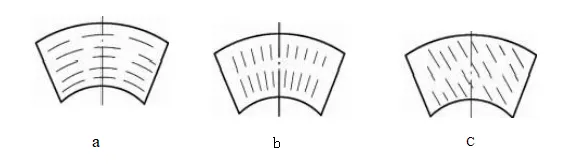
Figure 3-8 Arrangement of grid holes The width of the grid holes in the grid liner gradually increases towards the discharge direction (trapezoidal), which can prevent the backflow of slurry and the blockage of large mineral particles.