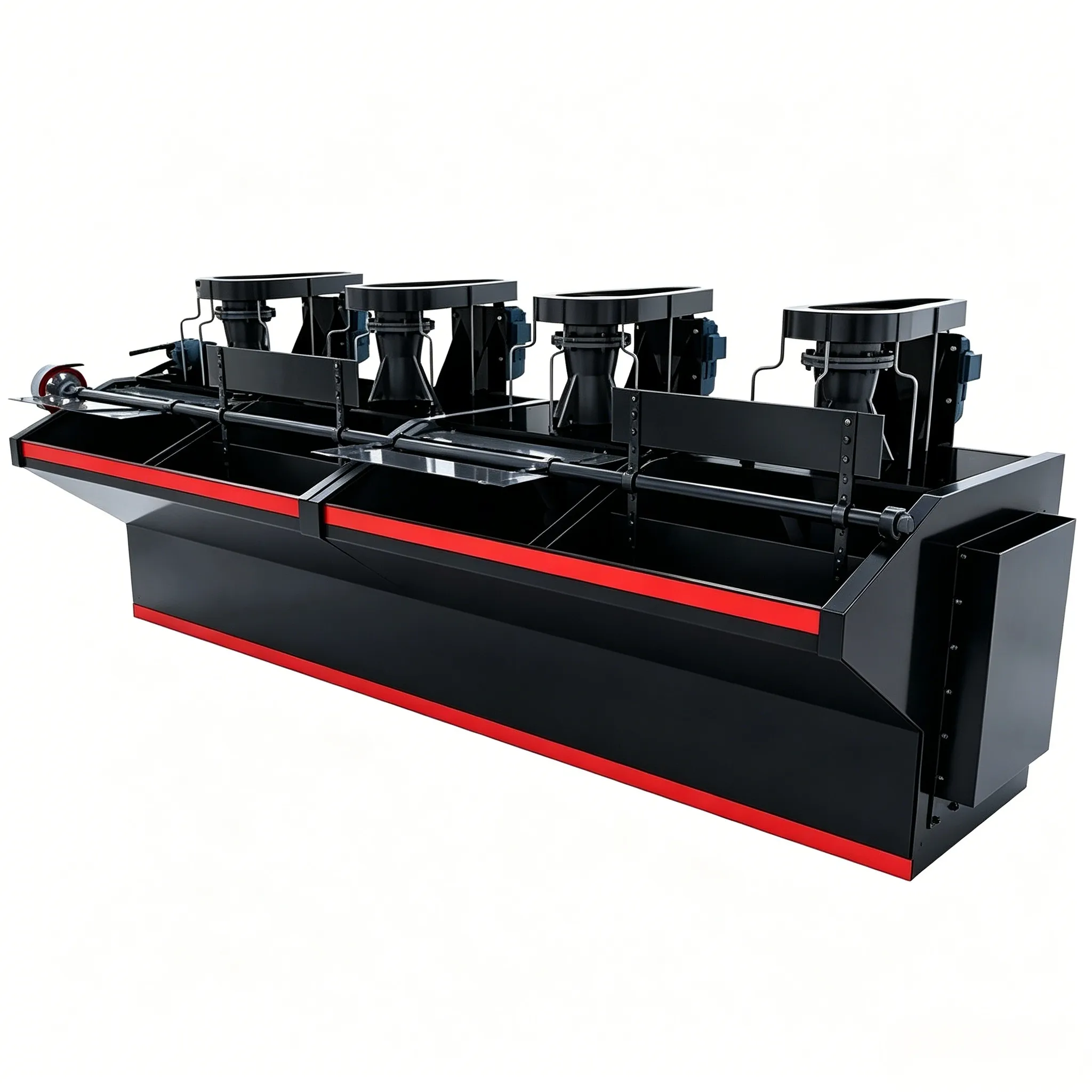
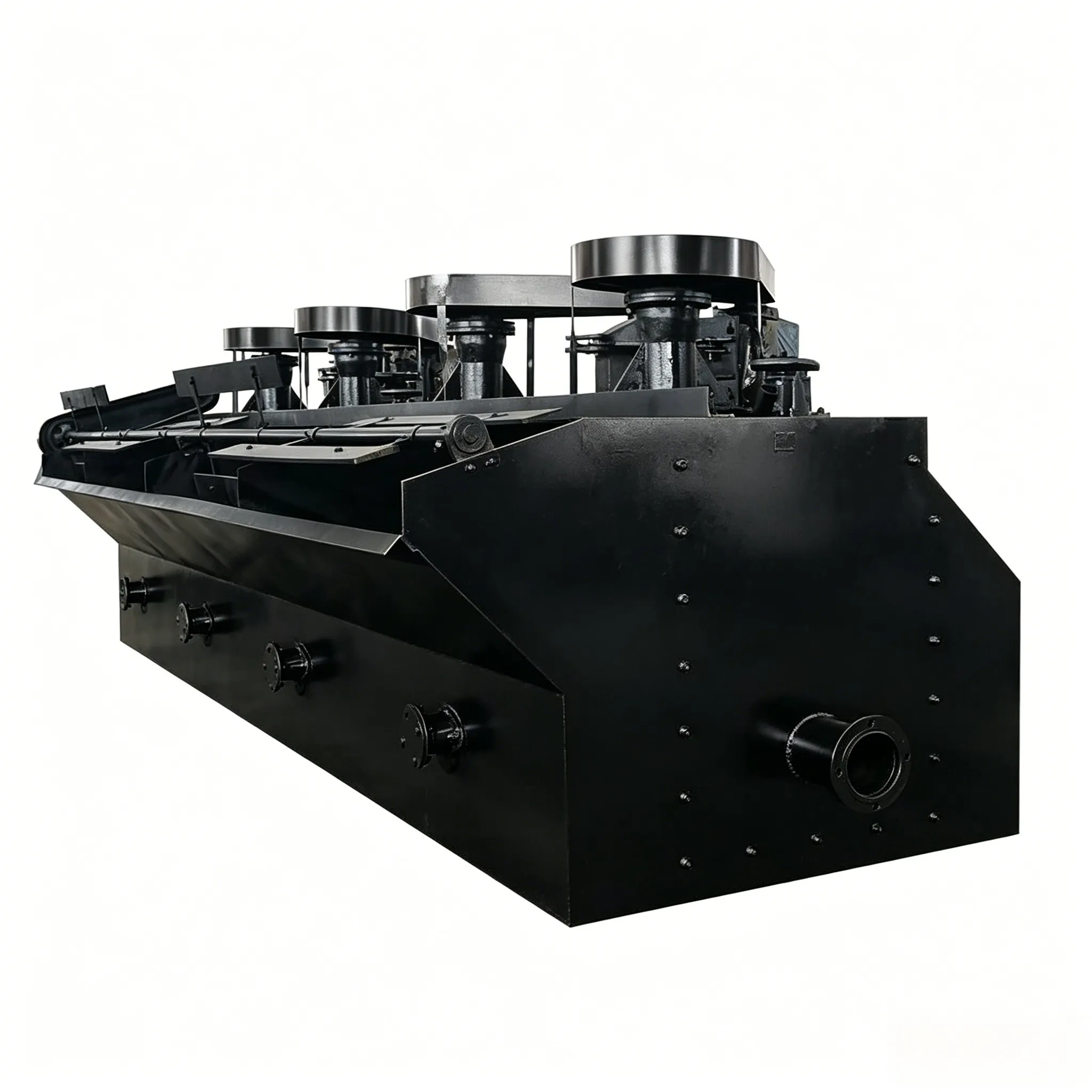
XJB-Stabflotationsmaschine
XJB-Stabflotationsmaschine Die XJB-Stabflotationsmaschine ähnelt…


Lithium hydroxide (LiOH) is an inorganic compound appearing as a white crystalline powder. Its physical properties are as follows:
| Property | Parameter |
|---|---|
| Chemical formula | LiOH (anhydrous) / LiOH·H₂O (monohydrate) |
| Appearance | White crystalline powder |
| Dichte | 1.43 g/cm³ |
| Melting point | 462°C |
| Boiling point | 925°C |
| Solubility | Soluble in water, slightly soluble in ethanol |
| Merkmale | Strongly alkaline; readily absorbs carbon dioxide and moisture in air |
Lithium hydroxide is mainly used in the preparation of lithium salts, lithium‑based greases, electrolyte for alkaline batteries, and absorbent solutions for lithium bromide chillers. With the rapid development of the new energy vehicle industry, battery‑grade lithium hydroxide, as a key raw material for ternary cathode materials, has seen continuously growing market demand.
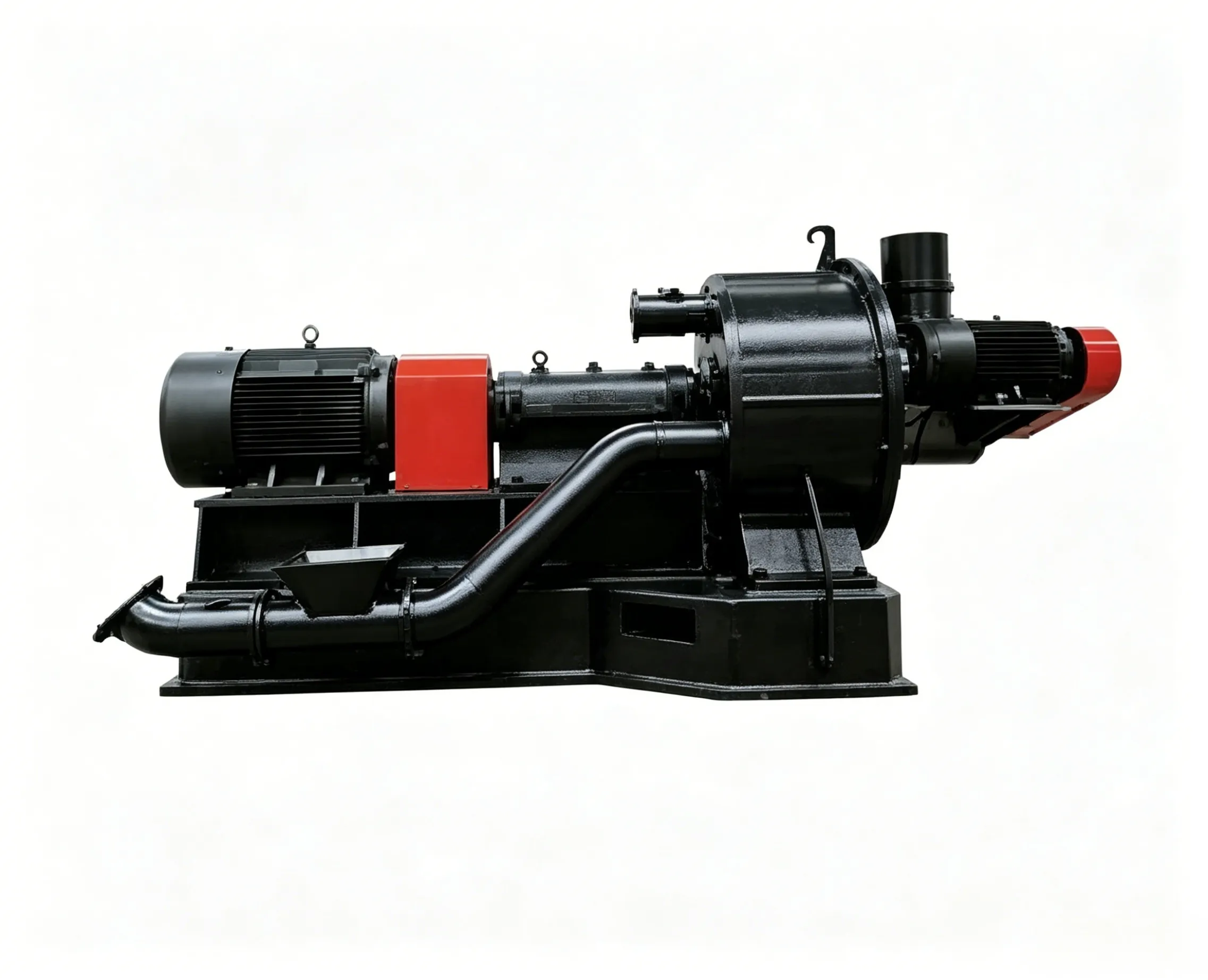
The Raymond mill (roller suspension mill) is a dry grinding equipment widely used for non‑metallic mineral processing. The spodumene Raymond mill is specifically designed for grinding lithium ore raw materials such as spodumene and lepidolite with Mohs hardness below 7. It uses the compression action of grinding rollers and rings to crush and grind materials into fine powders of 80‑600 mesh. The Raymond mill is one of the key pieces of equipment in the front‑end process for lithium battery cathode materials (such as lithium carbonate and lithium hydroxide).
In lithium extraction processes, to increase the specific surface area of particles and enhance the reaction speed and efficiency of the impurity‑containing electrolyte during heating and stirring, the electrolyte needs to be sent to a Raymond mill for grinding into powder. The European‑type Raymond mill is also a common choice for lithium ore grinding, serving as an ideal dry‑process powdering solution.
Different grades of lithium hydroxide have different fineness requirements:
| Produktklasse | Typical Fineness Requirement | Main Application |
|---|---|---|
| Industrial‑grade LiOH | 80‑200 mesh (coarse powder) | Lithium greases, chemical raw materials |
| Battery‑grade LiOH | D50 = 3‑8 μm, D97 ≤ 15 μm | Lithium‑ion battery cathode materials |
Grinding lithium hydroxide presents the following special challenges:
The main components of a Raymond mill are a fixed base ring and rotating grinding rollers. The base ring is equipped with a grinding ring at its edge. As the rollers rotate around the vertical axis, centrifugal force presses them tightly against the grinding ring. Scrapers rotating together with the rollers spread the material on the base plate between the rollers and the ring, where it is crushed by compression and attrition. The pulverised powder is blown up by the airflow from the fan, passes through the classifier, and the fines that meet the fineness requirement are carried into the cyclone collector for collection.
| Parameter | Typical Raymond-Mühle Spezifikation | Suitability for Lithium Hydroxide |
|---|---|---|
| Material hardness | Mohs hardness below 7 | Lithium hydroxide has low hardness – satisfied |
| Material moisture content | Within 6% | Lithium hydroxide requires strict moisture control – drying equipment required |
| Product fineness range | 80‑400 mesh (38‑180 μm) | Meets industrial‑grade requirements; not sufficient for battery‑grade ultrafine |
| Produktionskapazität | 1‑50 t/h (depending on model) | Can meet various production scale needs |
| Futtergröße | ≤30‑50 mm | Requires upstream crushing equipment |
✅ Suitable applications:
❌ Unsuitable applications:
Application scenario: Coarse powder processing of industrial‑grade lithium hydroxide with fineness requirement of 80‑200 mesh and less stringent metallic impurity limits.
Process flow:
Bulk LiOH → Backenbrecher (coarse crushing) → Elevator → Storage hopper →
Electromagnetic vibrating feeder → Raymond mill (grinding) → Classifier (separation) →
Cyclone collector → Pulse dust collector → Finished product packaging
Recommended equipment configuration:
| Ausstattung | Recommended Specification | Anmerkungen |
|---|---|---|
| Backenbrecher | PE‑250×400 | Crush bulk material to ≤30 mm |
| Raymond mill (main unit) | 4R3216 or 5R4119 | Select according to capacity requirements |
| Klassifikator | Cage‑type classifier | Frequency‑controlled fineness adjustment |
| Cyclone collector | Matching specification | Collect finished powder |
| Impuls-Staubabscheider | Matching specification | Meet environmental emission standards |
| Drying equipment | Vacuum paddle dryer | Control moisture content before feeding |
Raymond mill model reference:
| Modell | Futtergröße | Product fineness | Kapazität | Main motor power |
|---|---|---|---|---|
| 4R3216 | ≤ 30 mm | 80‑600 mesh | 1.5‑12 t/h | 37 kW |
| 5R4119 | ≤35 mm | 80‑400 mesh | 3‑20 t/h | 75 kW |
Key precautions:
Application scenario: Ultrafine grinding of battery‑grade lithium hydroxide requiring D50 = 3‑8 μm and D97 ≤ 15 μm.
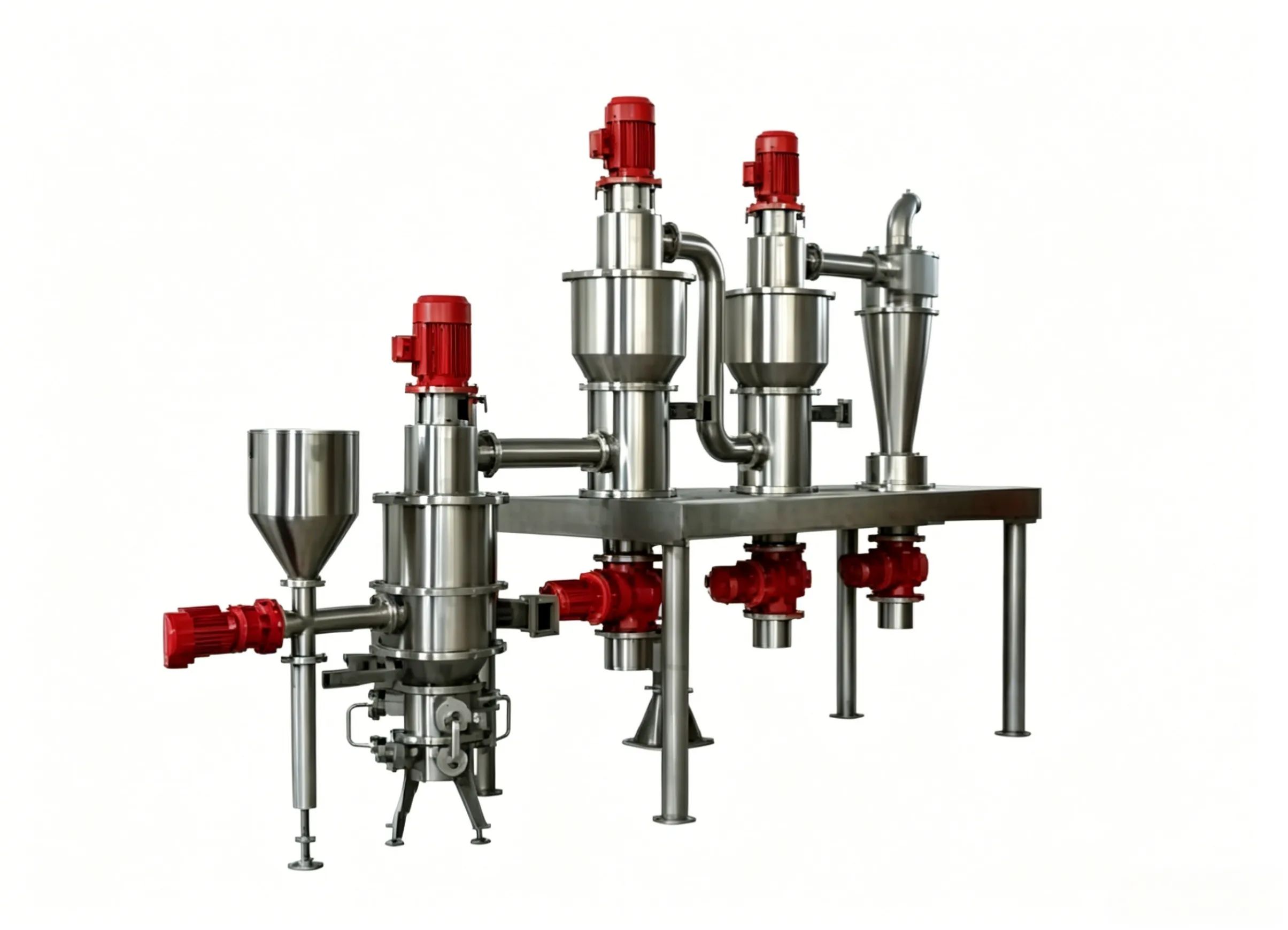
Recommended equipment: Nitrogen‑protected fluidized bed opposed‑jet mill
Reasons for recommendation:
Reference equipment parameters:
| Parameter | Spezifikation |
|---|---|
| Modell | ZJ‑QLM600X |
| Product fineness | 800‑12,500 mesh |
| Kapazität | 10‑1000 kg/h |
| Futtergröße | ≤5 mm |
| Installed power | 135 kW |
| Nitrogen purity | ≥99.95% |
Application scenario: Pre‑grinding of calcined spodumene in the sulphuric acid process for lithium extraction.
Spodumene calcine is a mixed material typically requiring dry grinding to about 200 mesh, which is well within the capabilities of a Raymond mill. Common equipment types for spodumene calcine grinding include R‑series Raymond mills and HC pendulum mills, covering powder production from 80 to 2,500 mesh.
Recommended process:
Spodumene calcine → Jaw crusher → Raymond mill → Classifier → Collector → Next process (acid roasting, etc.)
| Vergleichsaspekt | Raymond-Mühle | Strahlmühle (Nitrogen‑protected) |
|---|---|---|
| Suitable product grade | Industrial grade | Battery grade |
| Product fineness | 80‑400 mesh (38‑180 μm) | D50 = 3‑8 μm |
| Metal contamination risk | High (mechanical wear) | Low (self‑impact) |
| Moisture protection | Mäßig | Excellent (closed‑loop nitrogen) |
| Capital investment | Relatively low (hundreds of thousands to millions) | Relatively high (~USD 100k‑200k per system) |
| Operating cost | Relatively low | Higher (nitrogen consumption) |
| Environmental performance | Requires dust collector | Fully enclosed negative‑pressure operation |
A Raymond mill can be used for grinding lithium hydroxide, but its applicability has clear boundaries:
If a Raymond mill is chosen for lithium hydroxide grinding, we recommend:
If producing battery‑grade lithium hydroxide, we recommend:
Directly evaluate a nitrogen‑closed‑loop fluidised‑bed jet mill system. Although the initial investment is higher, it guarantees product purity and fineness.
 English English
 Spanish
 Russian
 Arabic
 Swahili
 French
 Turkish
 Portuguese
 Korean
 Japanese
 German
 Italian