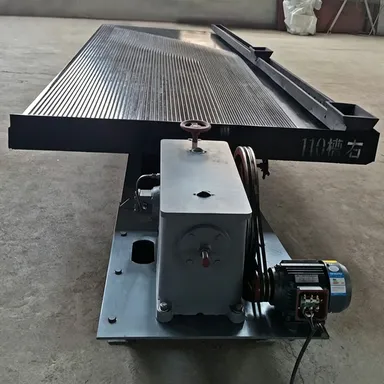
Rütteltisch
Rütteltisch – Hochpräziser Schwerkraftkonzentrator – Produktübersicht Der Rütteltisch (auch…


Process Introduction: Tin ore has a higher density than its associated minerals; therefore, gravity separation is generally used in tin ore beneficiation. However, various iron oxide minerals such as magnetite and hematite may be present in the ore. These minerals cannot be well separated from tin ore by gravity separation or flotation alone, so magnetic separation and/or flotation operations are also used.
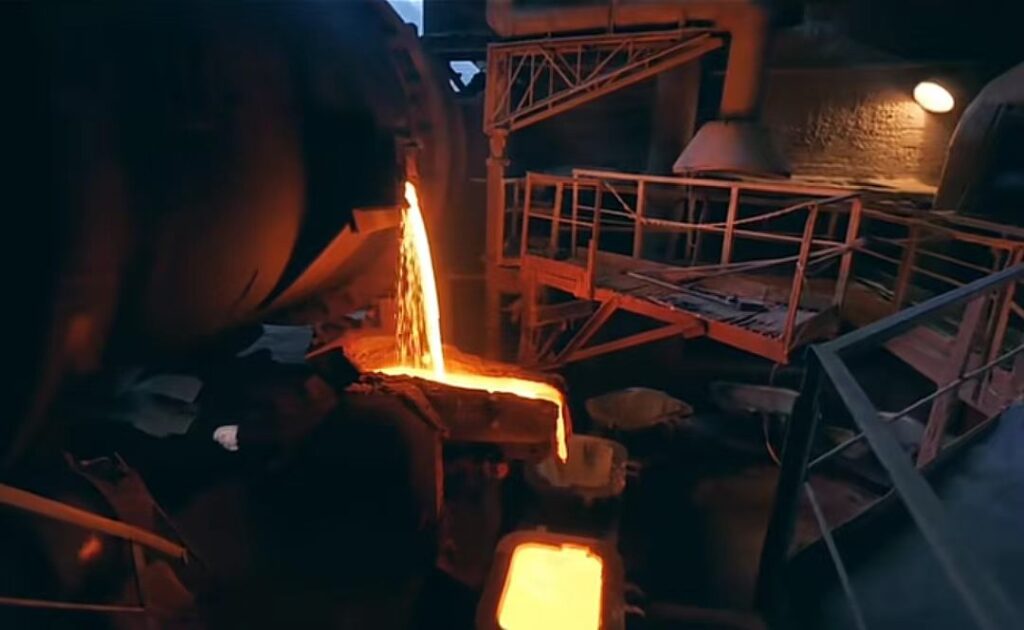
Application Fields: Gravity separation is used to treat tungsten-tin-gold ores, especially placer gold and tin placer ores. The traditional method is also widely used in treating placers containing rare metals such as tantalum, niobium, titanium, and zirconium. Gravity separation is also used to separate weakly magnetic iron ore, manganese ore, and chromium ore.
Process Description: Crushing and screening: the raw ore is crushed to 20 mm and then screened into two size fractions, 20–4 mm and 4–0 mm.

Pre-concentration: the 20–4 mm ore is sent to a dense-medium cyclone for pre-concentration. After one-stage rod milling, jigging is used for pre-concentration. The jig tailings are screened on a 2 mm vibrating screen, and the +2 mm fraction is discarded as waste tailings.
The −2 mm fraction is sent to shaking tables for separation and flotation. The jig concentrate and shaking table concentrate are ground separately and then subjected to bulk flotation. The bulk flotation tailings are processed on shaking tables to produce qualified tin concentrate. The bulk flotation concentrate is finely ground and subjected to lead-zinc separation flotation, producing lead-antimony concentrate and zinc concentrate, respectively.

The gravity-separation slime enters the overflow of a φ300 mm cyclone and then passes through φ125 mm and φ75 mm hydraulic cyclone groups to remove fine slime and sand. After concentration and desulfurization flotation, cassiterite flotation is carried out.
 English English
 Spanish
 Russian
 Arabic
 Swahili
 French
 Turkish
 Portuguese
 Korean
 Japanese
 German
 Italian