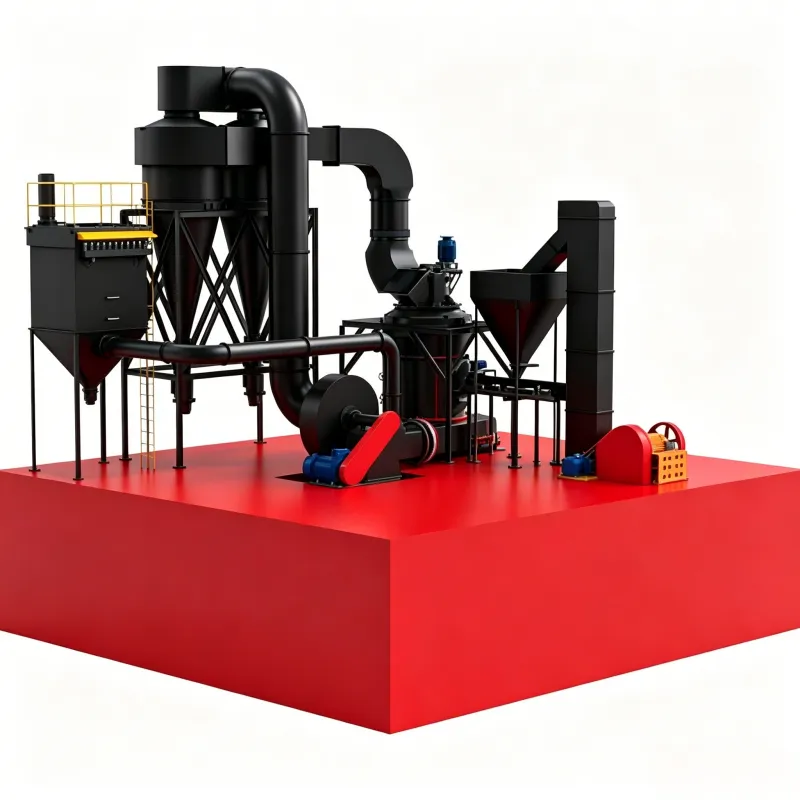
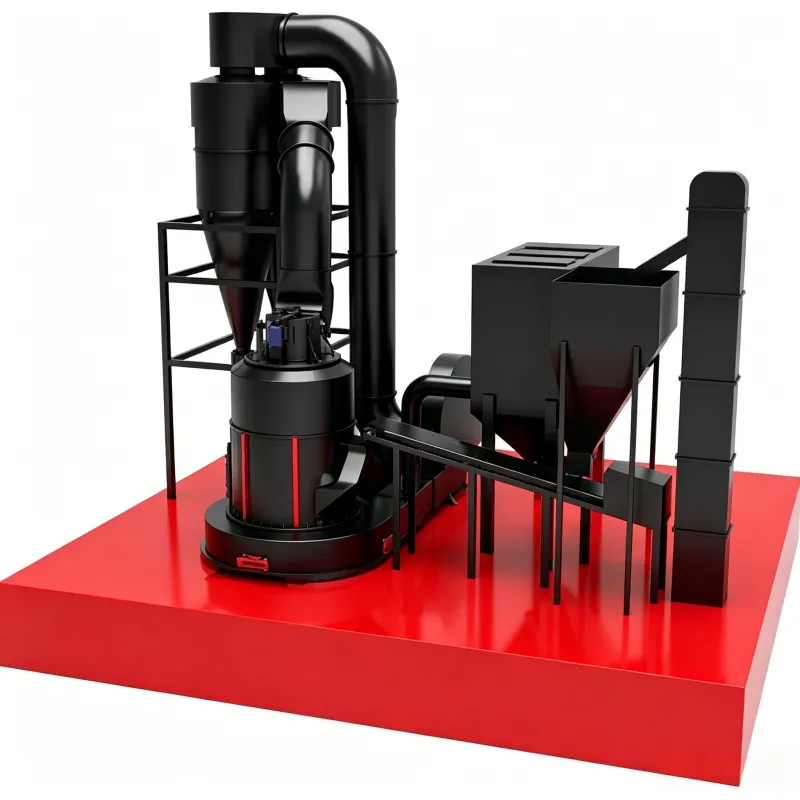
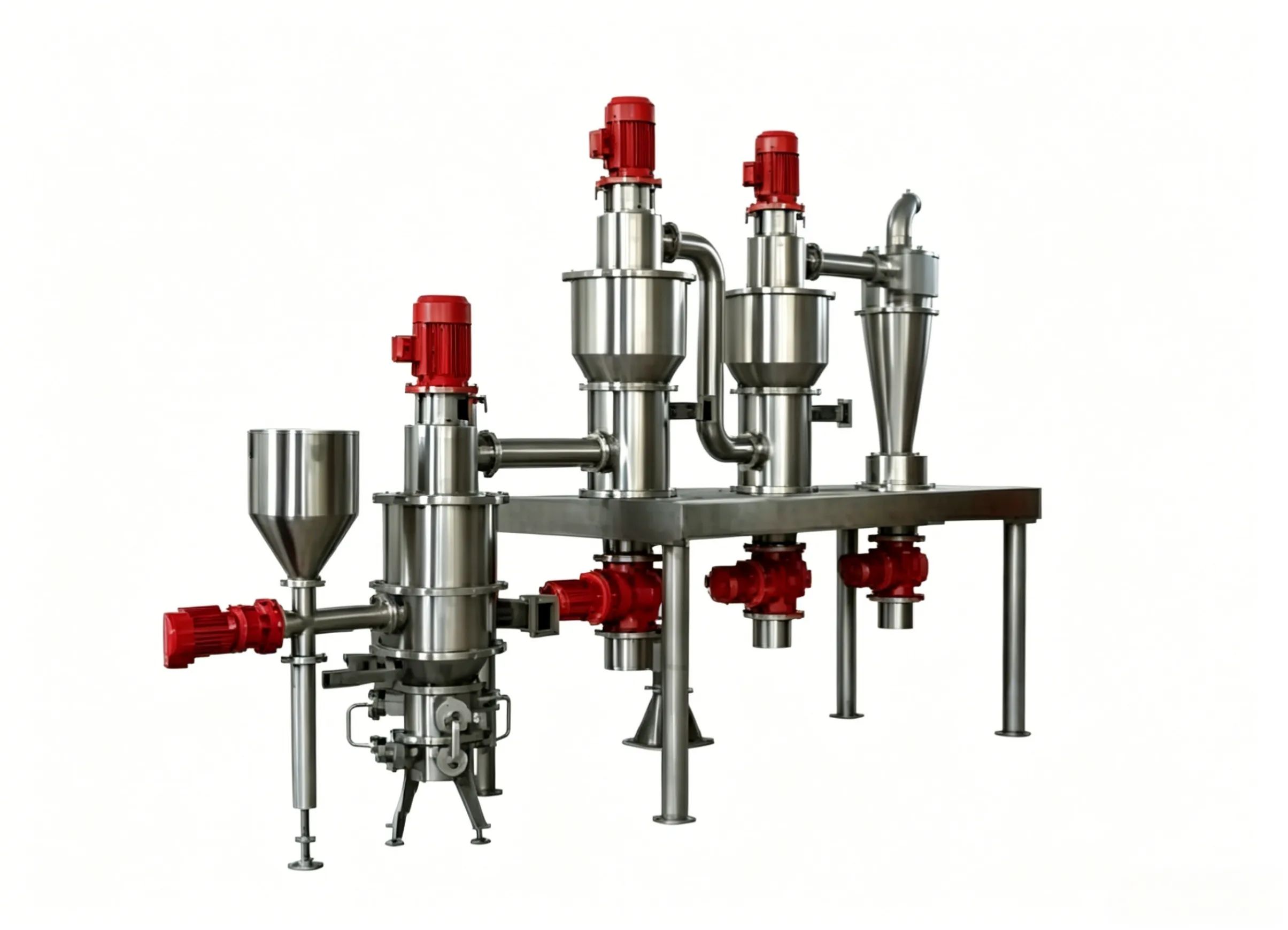
Große Raymond-Mühle
Einführung in die große Raymond-Mühle Die große Raymond-Mühle vom Typ KX ist eine…

1. A wet beneficiation method for medium-low grade diatomite, comprising the following processes: scrubbing and pulping, stirring and detaching, and cross sedimentation under flowing and static conditions, characterized in that:
a. during the stirring and detaching, 10‑20% by weight of a heavy magnetic water prepared from sodium metasilicate or sodium hexametaphosphate, sodium hydroxide, sodium carbonate, and vegetable alkali is added, wherein the ratio is: 20% concentration sodium metasilicate (or 5% concentration sodium hexametaphosphate) : 2% sodium hydroxide : 5% sodium carbonate : 5% vegetable alkali = 3‑5 : 0.3‑0.8 : 0.3‑0.8 : 1‑1.5;
b. the process further comprises negative‑pressure blasting separation and ultrasonic oscillation separation.
2. The method according to claim 1, wherein the negative‑pressure blasting separation comprises feeding the slurry into a negative‑pressure blasting machine at a flow rate of 250‑450 kg/min, and stirring the slurry under a negative pressure of 0.5‑0.8.
3. The method according to claim 1, wherein the ultrasonic oscillation separation comprises feeding the slurry into an ultrasonic oscillation separation device, and allowing the slurry to flow through the device at a flow rate of 250‑450 kg/min under a micro‑oscillation frequency.
4. A negative‑pressure blasting machine used in the beneficiation method according to claim 1, characterized in that it comprises a body, a stirrer disposed in the body, and a vacuum pump connected to the body.
5. The negative‑pressure blasting machine according to claim 4, wherein the body is provided with a slurry outlet and a slurry inlet, the outlet being provided in the middle of the body, the inlet being provided at the bottom of the body, the top of the body is connected to the vacuum pump via a connecting pipe and a water storage tank, and the stirrer is connected to a motor.
6. An ultrasonic oscillation device used in the beneficiation method according to claim 1, characterized in that it comprises a trapezoidal pipe, oscillation rods disposed in the pipe, and an ultrasonic generator connected to the oscillation rods.
Field of the Invention
The present invention relates to a beneficiation method, in particular to a purely physical wet beneficiation method for upgrading and purifying medium‑low grade diatomite to produce refined diatomite.
Background of the Invention
At present, diatomite resources are limited in terms of production and reserves, especially those with economic quality suitable for development are even more limited. Therefore, technologies for developing and utilizing medium‑low grade diatomite resources are increasingly advantageous, and in particular beneficiation technologies for selecting refined diatomite from medium‑low grade diatomite are more urgently needed. Existing beneficiation methods include magnetic separation, gravity separation, flotation, etc., but they are not effective when used for diatomite beneficiation. Chinese patent application (Application No. 94108311) discloses a method for beneficiation of low‑ and medium‑grade diatomite ore, which uses four mechanical scrubbing and vibrating washing steps to disperse fine mud impurities attached to diatom bodies, adds dispersant to the slurry, and then uses gravity separation methods of shallow trench and shallow pond desanding and deep pond settling to obtain concentrate. However, this method still cannot completely select refined diatomite from medium‑low grade diatomite; its recovery rate is low, cannot be continuously operated, is complex and cumbersome, has poor adaptability, and is difficult to implement, thus not being widely used.
Zusammenfassung der Erfindung
The object of the present invention is to provide a purely physical wet beneficiation method with high recovery rate, good beneficiation effect, no pollution, and capable of continuous beneficiation.
Another object of the present invention is to provide a negative‑pressure blasting machine and an ultrasonic oscillation device specifically used in the method.
The technical solution of the present invention comprises the following processes: scrubbing and pulping, stirring and detaching, cross sedimentation under flowing and static conditions, characterized in that:
a. during the stirring and detaching, 10‑20% by weight of a heavy magnetic water prepared from sodium metasilicate or sodium hexametaphosphate, sodium hydroxide, sodium carbonate, and vegetable alkali is added, wherein the ratio is: 20% concentration sodium metasilicate (or 5% concentration sodium hexametaphosphate) : 2% sodium hydroxide : 5% sodium carbonate : 5% vegetable alkali = 3‑5 : 0.3‑0.8 : 0.3‑0.8 : 1‑1.5;
b. the process further comprises negative‑pressure blasting separation and ultrasonic oscillation separation.
The negative‑pressure blasting separation comprises feeding the slurry into a negative‑pressure blasting machine at a flow rate of 250‑450 kg/min, and stirring and rotating the slurry under a negative pressure of 0.5‑0.8; the ultrasonic oscillation separation comprises feeding the slurry into an ultrasonic oscillation separation device, and allowing the slurry to flow through the device at a flow rate of 250‑450 kg/min under a micro‑oscillation frequency.
The negative‑pressure blasting machine of the present invention comprises a body, a stirrer disposed in the body, and a vacuum pump connected to the body, wherein the body is provided with a slurry outlet and a slurry inlet, the outlet being provided in the middle of the body, the inlet being provided at the bottom of the body, the top of the body is connected via a connecting pipe and a water storage tank to the vacuum pump, and the stirrer is connected to a motor. When the slurry enters the negative‑pressure blasting machine, under the action of the vacuum pump, a negative pressure of 0.5‑0.8 is generated inside the machine; the motor drives the stirrer to rotate, causing the slurry to be stirred and rotated under negative pressure, producing internal blasting, thereby separating impurities on the diatom surface from the diatoms.
The ultrasonic oscillation device of the present invention comprises a trapezoidal pipe, oscillation rods disposed in the pipe, and an ultrasonic generator connected to the oscillation rods. After the slurry enters the trapezoidal pipe, under the action of the oscillation rods with a micro‑oscillation frequency, positive and negative charged fine particles are separated, further separating diatomite from clay.
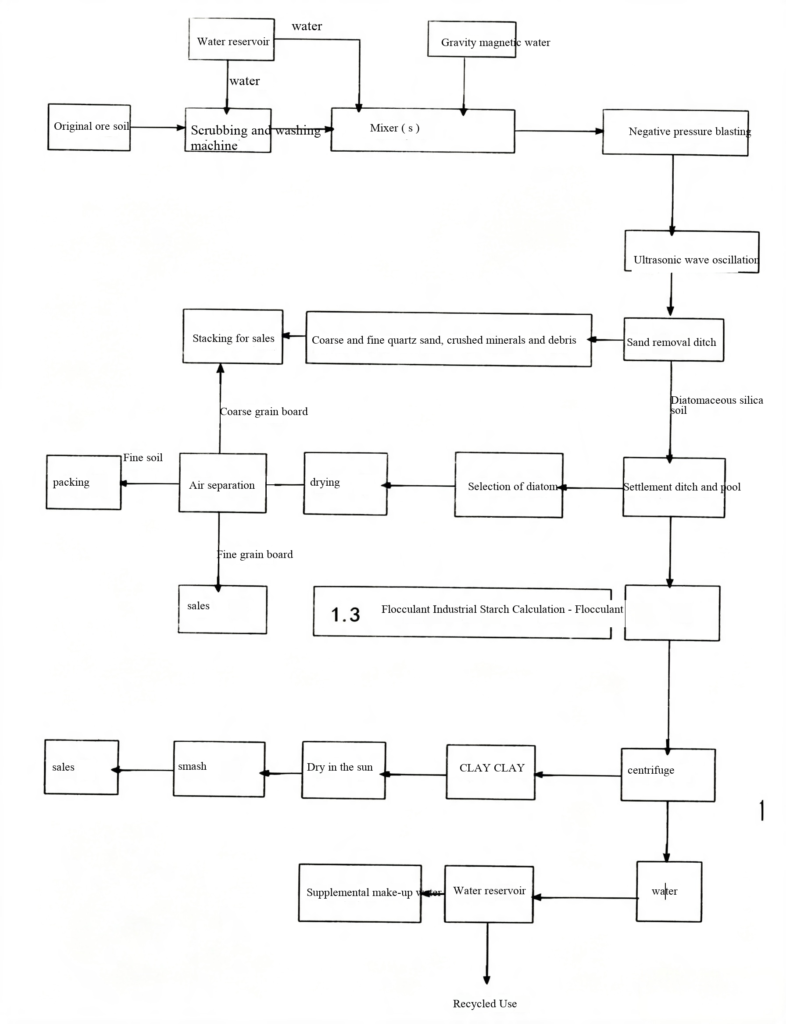
The specific process steps of the present invention are:
Because the process uses heavy magnetic water and employs the negative‑pressure blasting machine and ultrasonic oscillation device, separation of diatoms from other minerals, impurities, clay, etc. is more thorough. Combined with dynamic and static cross sedimentation, diatoms are completely separated from other minerals, impurities, clay, etc. Therefore, the beneficiation rate is high, and the refined diatomite product has a diatom content of 90‑98%. The process is continuous, so efficiency is high, processing capacity is large, no pollutants are discharged, water can be recycled, cost is low, and environmental protection is good. In addition, the invention has small investment and quick returns, so practical application is effective and adaptable.
Figure 1 is a schematic structural view of the negative‑pressure blasting machine of the present invention;
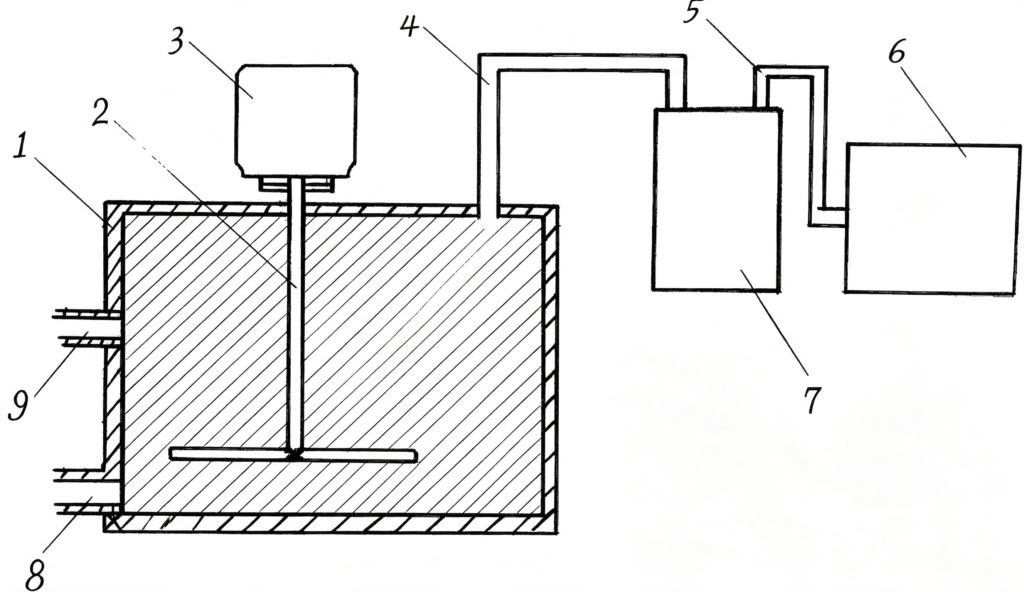
Figure 2 is a schematic structural view of the ultrasonic oscillation device of the present invention;
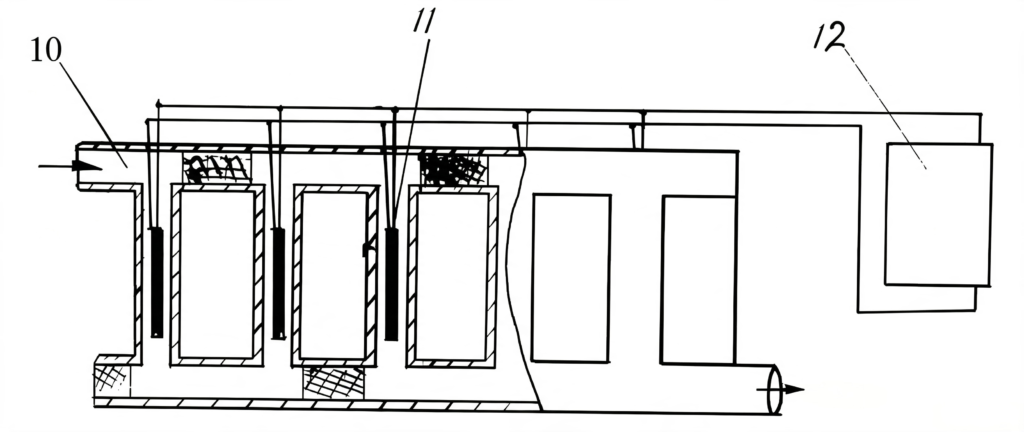
Figure 3 is a process flow chart of the present invention.
In Figure 1: 1 is the body, 2 is the stirrer disposed in the body, 3 is the motor driving the stirrer, 4 is a connecting pipe, one end connected to the top of the body, the other end connected to the top of water storage tank 7, 5 is a connecting pipe, one end connected to the top of water storage tank 7, the other end connected to vacuum pump 6, 8 is the slurry inlet at the bottom of the body, 9 is the slurry outlet in the middle of the body.
In Figure 2: 10 is the trapezoidal pipe, 11 are ultrasonic oscillation rods disposed in the trapezoidal pipe, 12 is the ultrasonic generator connected to oscillation rods 11.
Example
Take Qifeng diatomite ore from Eryuan County, Yunnan Province, with average chemical composition: SiO₂ ~68%, Al₂O₃ ~16%, Fe₂O₃ 5‑9%. Feed the raw ore at a rate of 80 kg/min into the scrubbing machine (water content 40%, dry raw ore 48 kg), add water at 40 kg/min to make the concentration 40%, scrub to a pasty slurry, then send to a stirring machine, add water at 180 kg/min to dilute to 16% concentration, simultaneously add heavy magnetic water at 0.72 kg/min (15% based on dry raw ore), wherein the heavy magnetic water is prepared according to the following ratio:
Sodium metasilicate (20% concentration) : sodium hydroxide (2%) : sodium carbonate (5%) : vegetable alkali (5%) = 4 : 0.5 : 0.5 : 1.
After stirring, feed into the negative‑pressure blasting machine at a flow rate of 400 kg/min, with internal pressure of ‑0.5 atm. The slurry discharged from the machine directly enters the ultrasonic oscillation device with a micro‑oscillation frequency, at the same flow rate of 400 kg/min. Finally, enter the flowing sedimentation channel pond, which comprises 8 channels, each with 16 adjustable baffles at different heights. After the slurry flows through the channels, each channel is discharged for 1 minute alternately, flow rate 0.83 m/min, until complete. Due to baffles of different heights, minerals of different particle sizes and specific gravities settle in each section, eventually separating diatomite from other minerals and impurities. Based on a batch processed in 3 days, total raw ore (40% water) input 345 tons, obtained dry refined diatomite 103 tons, recovery rate 50% (3:1), refined diatomite composition: SiO₂ >80%, Al₂O₃ <9%, Fe₂O₃ <2.5%, bulk density <0.45.
 English English
 Spanish
 Russian
 Arabic
 Swahili
 French
 Turkish
 Portuguese
 Korean
 Japanese
 German
 Italian