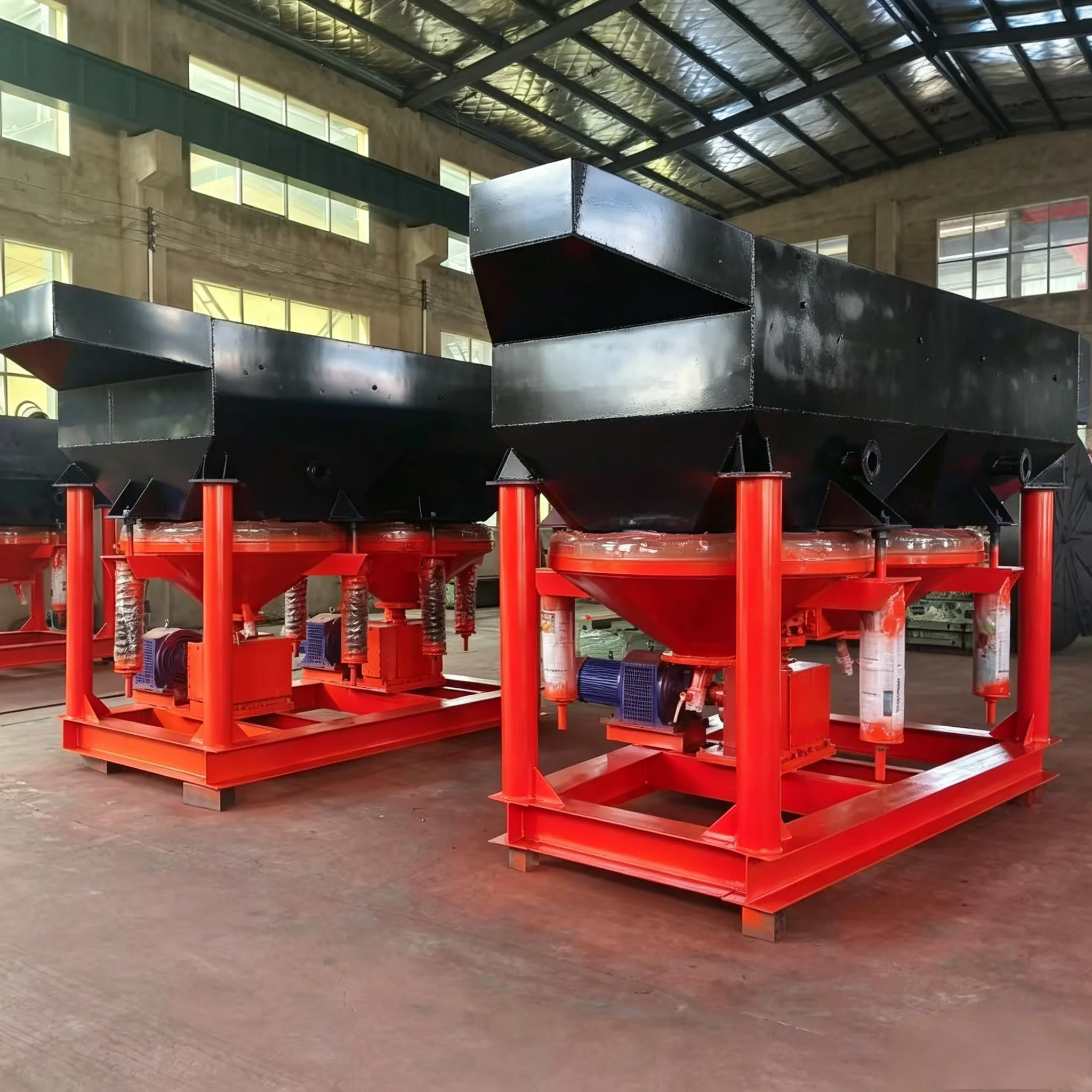
Schablonenmaschine
Jig – Hocheffizienter Schwerkraftkonzentrator – Produktübersicht Ein Jig ist ein Schwerkraft…


Why Can Stabilizing Grinding Fineness Bring Economic Benefits? It’s Not Just About Grinding Finer
In a mineral processing plant, grinding fineness is often viewed merely as a technical index, but in reality, it also affects subsequent flotation, reagent consumption, equipment load, and the overall economic benefits of the entire plant.
Some plants require finer grinding to improve recovery rates, while others hope for shorter grinding times to increase throughput. The real question is: within what range should grinding fineness be controlled to balance throughput, recovery rate, and production costs?
The value of stabilizing grinding fineness is not to blindly grind the ore finer, but to reduce unnecessary fluctuations and ensure that the grinding product consistently meets the requirements of subsequent separation processes.
1. Fluctuations in Grinding Fineness Affect Flotation Performance
One of the main purposes of grinding is to fully liberate valuable minerals from gangue minerals, creating conditions for subsequent separation.
If the grinding product is too coarse, some valuable minerals may not be fully liberated, making them difficult to recover effectively during flotation and potentially increasing the loss of valuable metals in the tailings. If the grinding is too fine, it is not necessarily beneficial either. Over-grinding can increase the slime content and affect mineral separation conditions; for certain ores, it may also lead to problems such as decreased flotation selectivity and increased reagent consumption.
More notably, when grinding fineness fluctuates continuously, the mineral particle size composition faced by the flotation process also changes. Even if the flotation operations and reagent dosages remain unchanged, the flotation indices may still fluctuate.
Therefore, stabilizing grinding fineness helps provide relatively stable feed conditions for flotation. However, whether it can ultimately improve the recovery rate still needs to be judged in combination with ore properties and actual test results.
2. Stabilizing Fineness Can Reduce Unnecessary Grinding Energy Consumption
Grinding is usually one of the most energy-intensive processes in a mineral processing plant.
When grinding fineness is not controlled reasonably, two situations may occur.
One is insufficient grinding, where the product fails to meet the requirements of subsequent separation, necessitating adjustments to production parameters or even further processing through methods like re-grinding.
The other is over-grinding, where minerals that already meet liberation requirements continue to consume energy, causing unnecessary power consumption and equipment wear.
If the particle size of the grinding product can be stably controlled based on ore properties and separation requirements, there is an opportunity to reduce over-grinding and utilize grinding capacity reasonably.
However, there is a prerequisite here: one must not blindly reduce grinding fineness just to lower energy consumption. If a decrease in fineness leads to a significant drop in the recovery rate, the saved electricity costs may far from offset the value of the lost metals.
What truly needs to be compared is the energy consumption per unit of throughput, metal recovery rate, and comprehensive production cost, rather than single-mindedly pursuing one specific index.
3. Stable Fineness May Also Improve Reagent Consumption and Production Indices
Grinding fineness affects the degree of mineral liberation, the surface state of minerals, and the composition of fine particles in the pulp, which in turn affects the effectiveness of flotation reagents.
When fineness fluctuates greatly, operators may need to continuously adjust the dosage of collectors, frothers, or other reagents to adapt to the changing feed conditions.
However, if the real cause stems from unstable grinding-classification, simply increasing reagents may not solve the problem and may instead increase reagent consumption.
Therefore, improving the stability of grinding-classification first, and then adjusting the reagent regime based on flotation results, is often more targeted than blindly increasing reagents.
It should be noted that whether reagent consumption decreases must be verified through actual production data; it does not necessarily decrease just because the fineness is stable.
4. How Does Automation Help Stabilize Grinding Fineness?
Grinding fineness is not an isolated parameter. It is closely related to factors such as feed rate, ore hardness, mill load, pulp density, cyclone pressure, and classification performance.
For example, when the hardness of the raw ore increases, if the feed rate is not adjusted in time, the processing capacity of the mill may be affected, and the product particle size will change accordingly.
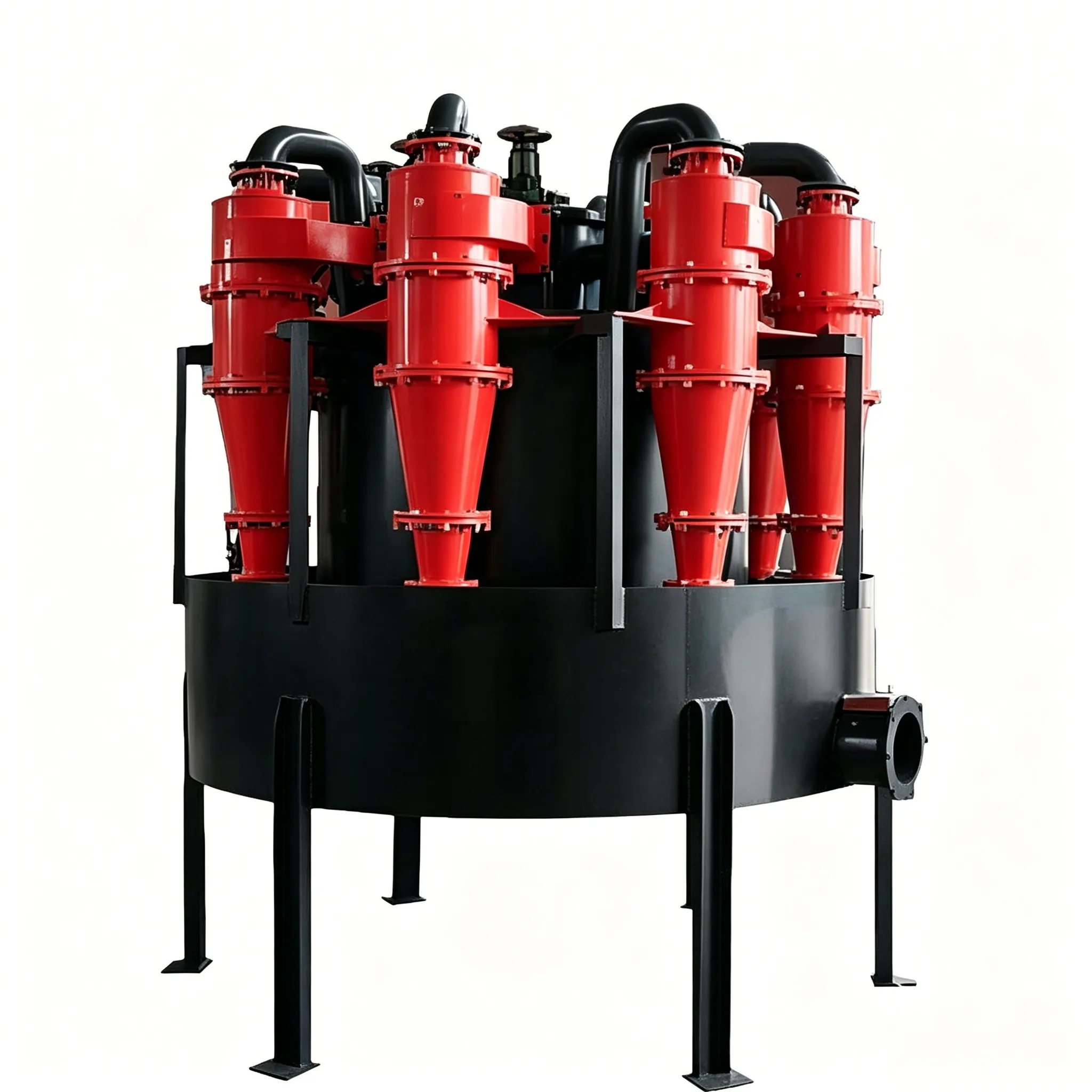
For another example, although the cyclone pressure is within the normal range, if the feed density changes, the apex (spigot) wears out, or the feed distribution is uneven, the overflow particle size may still become too coarse.
以下是该段中文的英文翻译:
Therefore, automation upgrades should not focus solely on mill current or cyclone pressure, but should establish reasonable control relationships based on on-site conditions:
If there is no online particle size analyzer on site for the time being, control can also be gradually improved through standardized sampling, regular testing, and historical trend analysis. The role of an automation system is to record parameter changes and help operators identify problems more promptly, rather than making blind adjustments in the absence of detection evidence.
5. How Should the Economic Benefits of Stabilizing Grinding Fineness Be Calculated?
Suppose a mineral processing plant, through optimized control, reduces the power consumption per unit of ore while the recovery rate does not decrease, or even improves; in that case, it may achieve comprehensive benefits.
The following items can be focused on during evaluation:
For example, if a processing plant treats 3,000 tons of ore per day, and after the upgrade, it saves 0.5 kWh of electricity per ton of ore, then theoretically it can save 1,500 kWh per day. If the actual electricity price is calculated at 0.7 yuan per kWh, the electricity cost saved per day would be approximately 1,050 yuan.
This is only a hypothetical calculation and does not represent the actual benefits of any specific project; the costs of newly added instruments, maintenance, retrofitting, and operation must also be deducted, and it must be verified whether the energy-saving effect can be maintained in the long term.
A truly meaningful economic evaluation should be based on actual production data before and after the upgrade, while also considering the increase or decrease in metal value brought about by changes in the recovery rate.
 English English
 Spanish
 Russian
 Arabic
 Swahili
 French
 Turkish
 Portuguese
 Korean
 Japanese
 German
 Italian