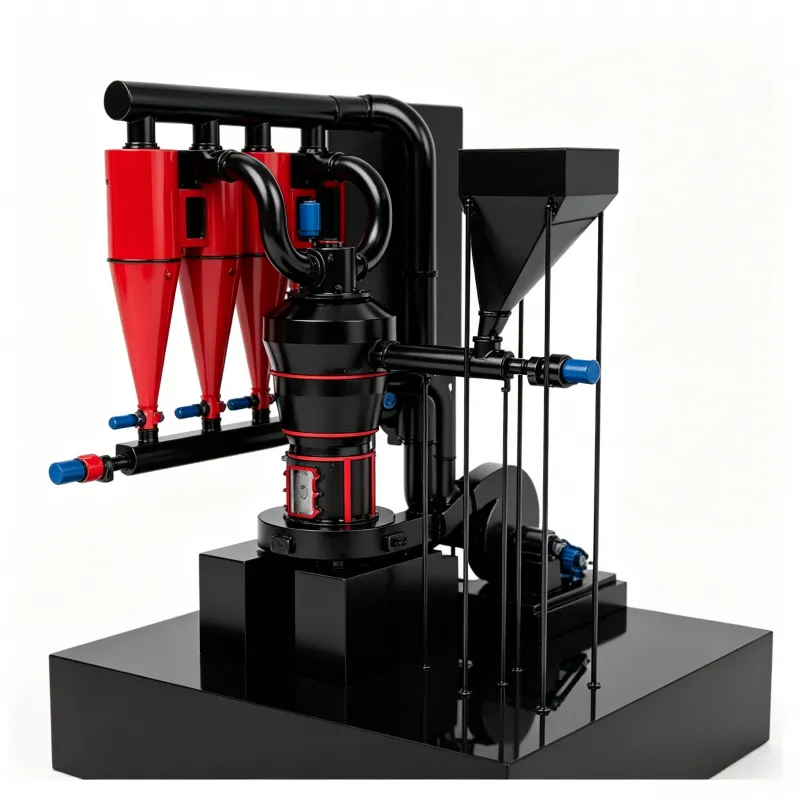
Mulino per calce idrata
Introduzione al mulino per calce idrata (mulino per idrossido di calcio) Il mulino KX per calce idrata…


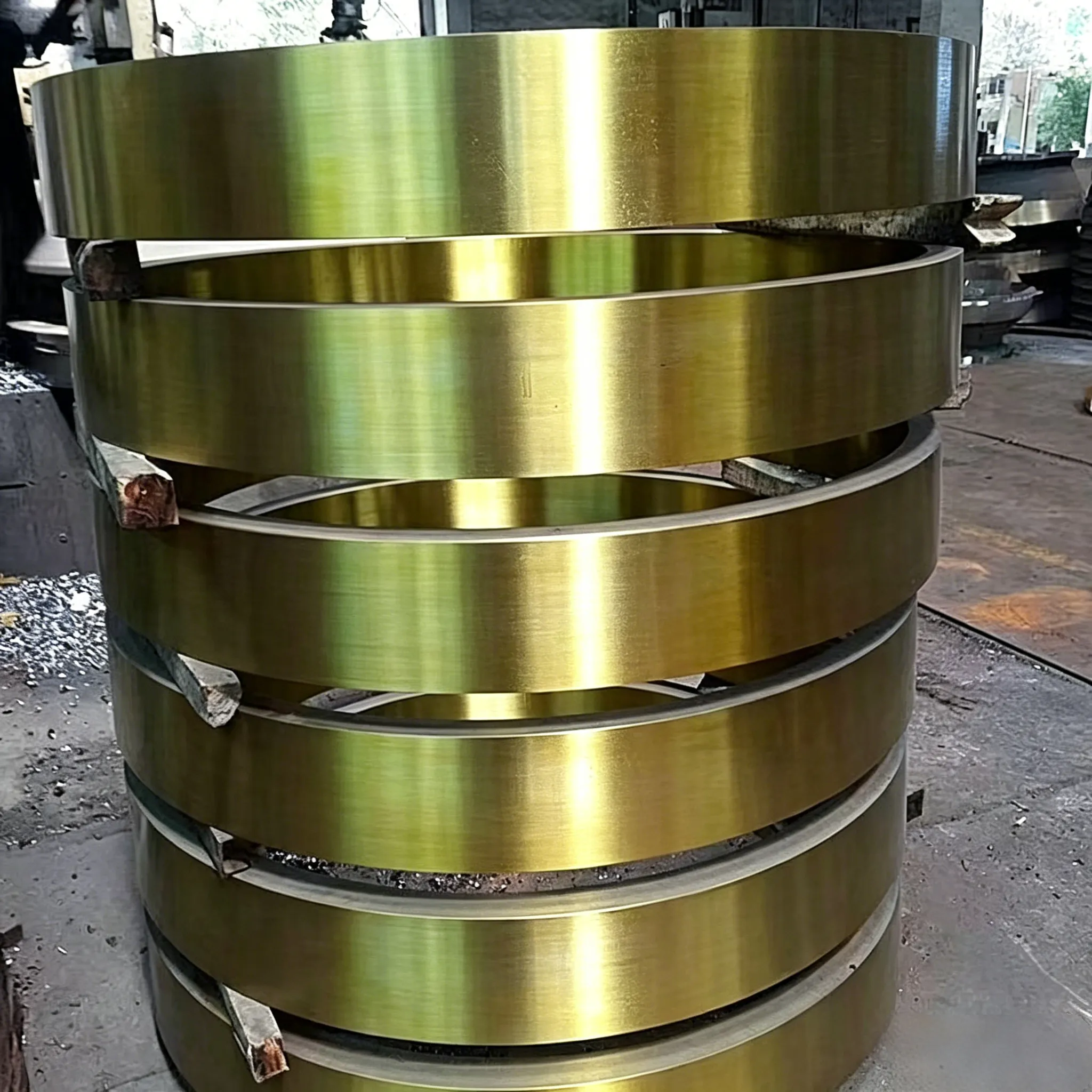
① High Manganese Steel Liners
Chemical composition: w(C) = 0.9%–1.3%, w(Si) = 0.3%–0.8%, w(Mn) = 11.0%–14%, w(P) < 0.1%, w(S) < 0.05%. After water quenching, the casting is pure austenitic high manganese steel, with good impact toughness (>150 J/cm²) and hardness HRC > 45. However, its initial hardness is low (HRC < 20) and can only be significantly increased (up to HRC 45 or above according to tests) under high impact forces. It can be used in the crushing compartment of tube mills, but has a short service life (about 2 years). Due to its low yield strength, it is prone to plastic flow, bulging deformation, and even breaking the liner bolts. It is not suitable for the fine‑grinding compartment (especially the cylpeb compartment) of small tube mills (diameter ≤ 2.2 m), because the grinding media in the fine‑grinding compartment have small unit weight and weak impact force, so the hardness of high manganese steel will not increase sharply, causing rapid liner wear. Diaphragms and grate plates made of high manganese steel are also prone to slot narrowing and blocking.
② High Chromium Cast Iron Rivestimenti
Chemical composition: w(Cr) = 14%–16%, w(Mo) = 2.5%–3.0%, w(C) = 2.4%–4.8% (high‑carbon high‑chromium cast iron 3.2%–3.6%, medium‑carbon high‑chromium cast iron 2.8%–3.2%, low‑carbon high‑chromium cast iron 2.4%–2.8%), w(S) < 0.05%, w(P) < 0.10%. Their performance characteristics include high hardness (as‑cast hardness HRC 51–56, quenched hardness HRC 62–67), good wear resistance (4–6 times that of high manganese steel), good heat resistance (mechanical properties change little during long‑term operation at 400–700°C), and certain corrosion resistance. However, they lack sufficient toughness, have high sensitivity to stress concentration, and are expensive. They are suitable for the second and third compartments of large and medium tube mills (where the stress blocks are smaller and thickness is greater), as well as for all compartments of tube mills with diameter ≤ 2.2 m. The service life can exceed 6 years. Liners with complex structures, thin walls, and large sizes, as well as grate plates, are not suitable.
③ Low Chromium Cast Iron Liners
Containing 2%–3% chromium, with high Rockwell hardness (HRC 48–55). They have the advantages of high hardness and good wear resistance (2–3 times that of high manganese steel), but lack sufficient toughness. They can be used in the fine‑grinding compartment of tube mills. Due to their relatively low price, they are widely adopted.
④ Medium‑Carbon Low‑Alloy Steel Liners
They have high hardness (HRC 42–48), good impact toughness (25–40 J/cm²), no deformation, and wear resistance 1.2–1.5 times that of high manganese steel. They have a wide range of applications and can be used in all compartments of tube mills of various sizes. They are also suitable for manufacturing intermediate diaphragms and grate plates, with a moderate price.
⑤ Medium‑Carbon Multi‑Alloy Steel Liners
This steel is produced by alloying medium‑carbon steel with 4%–6% chromium, 0.4%–0.8% molybdenum, and micro‑elements such as V, Ti, and Re, followed by air quenching and tempering heat treatment. It offers good overall mechanical properties, with a hardness of HRC 48–56, impact toughness αk of 15–25 J/cm², and tensile strength σb ≥ 10 MPa. Used on ordinary stepped liners, angle spiral liners, grooved liners, and ring‑groove hyperboloid liners, its service life is 1–2 times longer than that of high manganese steel liners. This liner has a moderate price and can be used in all compartments of tube mills.
⑥ Low Chromium Alloy Steel Liners
Containing 2%–3% chromium, with a Rockwell hardness of HRC 40–42. They have good impact strength and can be used in the coarse‑grinding compartment of tube mills.
⑦ Low‑Alloy Steel Liners
Containing elements such as Cr and Mo, they offer good hardenability, similar hardness on the surface and interior, high strength, and good toughness. They can be used in all compartments of tube mills.
⑧ High Chromium Alloy Liners
Containing 12%–15% chromium, with a hardness of HRC 50–55, tensile strength of 8.8–11.8 MPa, and impact toughness of 4–10 J/cm². They are suitable for all compartments of tube mills of various sizes, and can also be used to manufacture intermediate diaphragms. Their service life is 5 times that of high manganese steel. When paired with high‑chromium balls, the effect is even better.
⑨ White Cast Iron or Alloy Pig Iron Liners
They have good wear resistance but are brittle, so they can only be used in the cylpeb compartment of small mills. They are better made as brick‑type (embedded) liners without bolt holes, which compensates for their poor impact resistance while retaining their high friction resistance (as cylpebs produce high friction). Their service life is 2–3 times that of high manganese steel, and because their price is much lower than high manganese steel, they are cost‑effective.
⑩ Rubber Liners
The operating temperature should be below 80°C, and they can only be used in wet‑process raw mills. They have the advantages of light weight, easy installation and removal, good wear resistance, long service life (when used in fine‑crushing and fine‑grinding compartments), and low noise.
⑪ Cast Stone Liners (also called diabase liners). They have good wear resistance and corrosion resistance, are light in weight, and do not stick to material. However, they are brittle and only suitable for small ball compartments (ball diameter not exceeding 40 mm) or cylpeb compartments of small tube mills. Their operating temperature should be below 150°C; they are not suitable for drying mills. Their service life is twice that of white cast iron liners, and their price is lower than white cast iron. These liners are fixed by the brick‑laying method.
Among the above liners, the first five types are more commonly used.
① Sufficient hardness is required to ensure high wear resistance under certain impact loads. The hardness of liners in each compartment should increase progressively from the feed end to the discharge end: the hardness of the front‑compartment liners should be HRC 48–50, while that of the middle and rear compartments should be HRC 50–55.
② Good toughness is required to ensure no cracking under certain impact forces. The toughness of liners in each compartment should decrease progressively from the feed end to the discharge end: the impact toughness of the front compartment should be 10–20 J/cm² or higher, while that of the middle and rear compartments should be 5–10 J/cm² (the larger value applies to larger‑diameter mills). To meet both hardness and impact toughness requirements, medium‑ or low‑carbon alloy steel liners are recommended for the first compartment of large tube mills; high‑chromium cast iron liners can be selected for the first compartment of small and medium tube mills; and high‑hardness wear‑resistant cast steel or alloy wear‑resistant cast iron liners are recommended for the second compartment of mills of all sizes. End cover liners and intermediate diaphragms of all types of mills should be cast from medium‑ or low‑carbon alloy steel (with a hardness of HRC 45–52 and impact toughness of 15–25 J/cm²), or made of chromium‑alloyed high manganese steel.
③ The hardness of the liners should match that of the steel balls. Generally, the liner hardness should be HRC 2–3 lower than that of the steel balls.
④ The hardness of the worn liner surface should be 0.8–1.3 times the hardness of the material being ground.
⑤ The casting and heat treatment of the liners should be free from major defects such as pores, slag inclusions, cracks, insufficient quenching, or overheating, which would otherwise affect the liner’s performance.
⑥ The service life should be relatively long (overseas regulations specify more than 20,000 hours), and the price should be reasonable.
⑦ The manufacturer of the liners should be a factory with mature technology, advanced equipment, a complete quality assurance system, and reliable testing facilities.
 English English
 Spanish
 Russian
 Arabic
 Swahili
 French
 Turkish
 Portuguese
 Korean
 Japanese
 German
 Italian