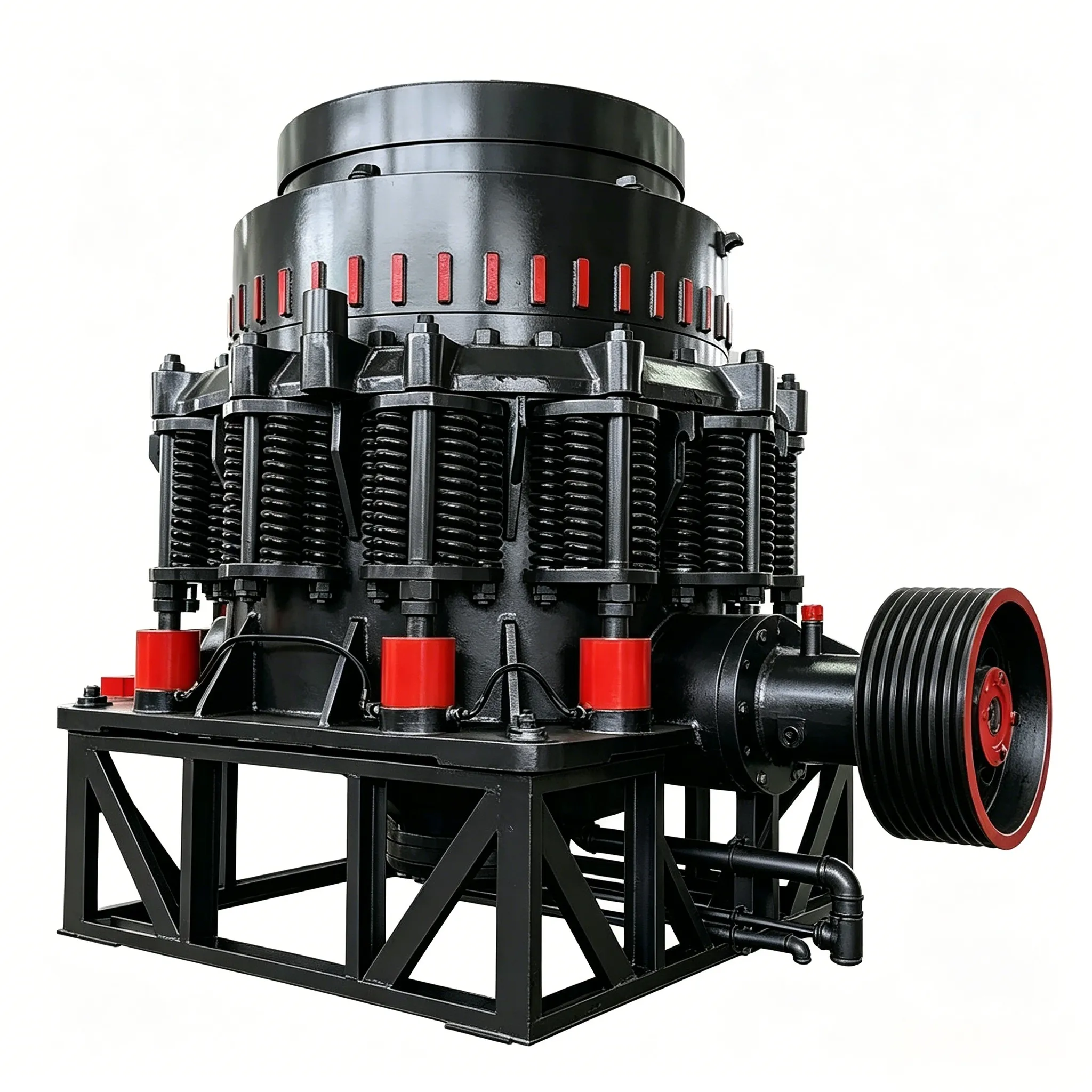
Frantoi a cono
Tipi di frantoi a cono I frantoi a cono sono conosciuti in tutto il mondo come “tipo Symons”…

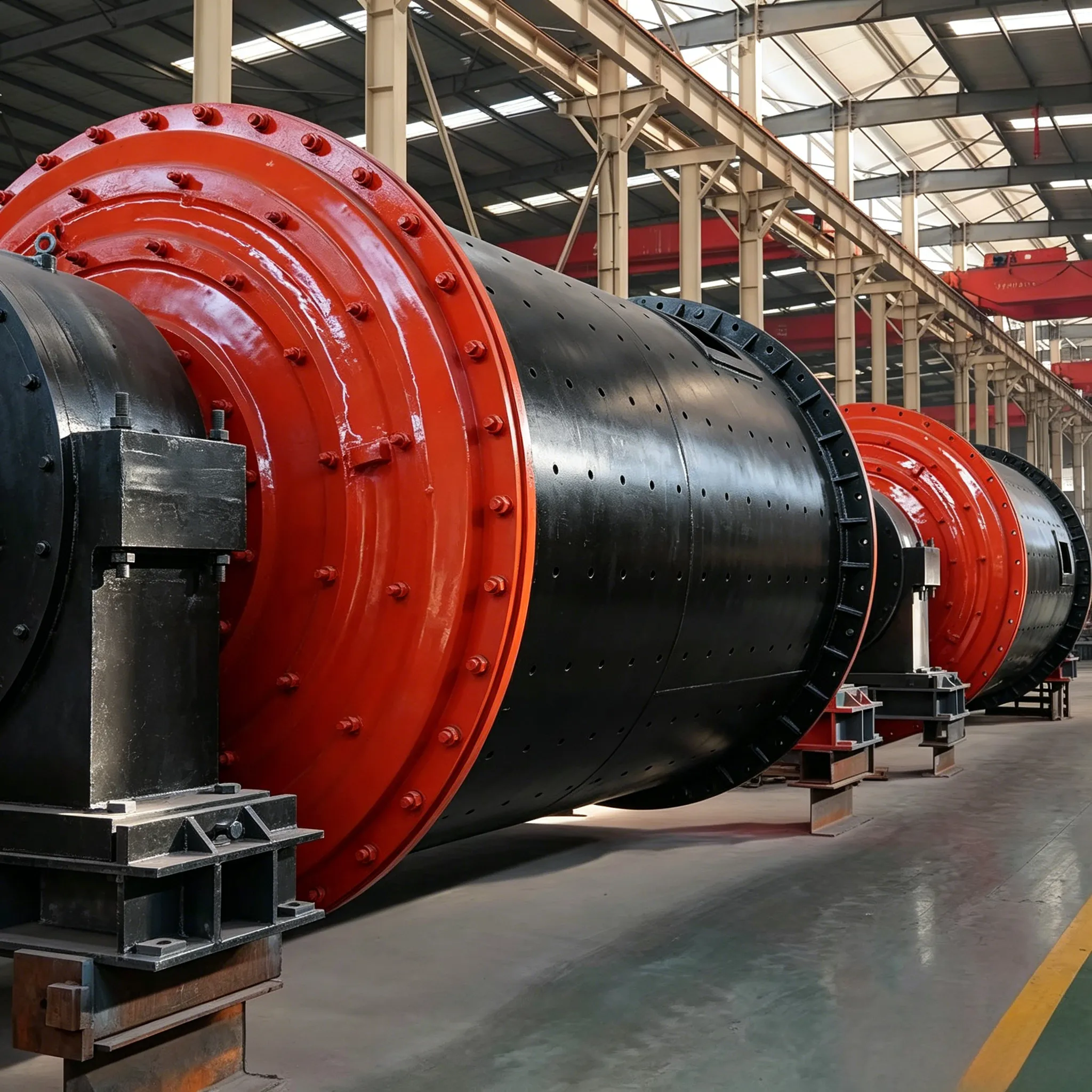
In the gold ore beneficiation process, grinding is often referred to as the “throat of the concentrator.” The choice of grinding equipment directly affects subsequent separation performance and final recovery. Ball mills and wet pan mills are two commonly used grinding devices, each with its own characteristics and suitable for different production scenarios. This article provides a systematic comparison between these two types of equipment from multiple dimensions and offers detailed selection recommendations.
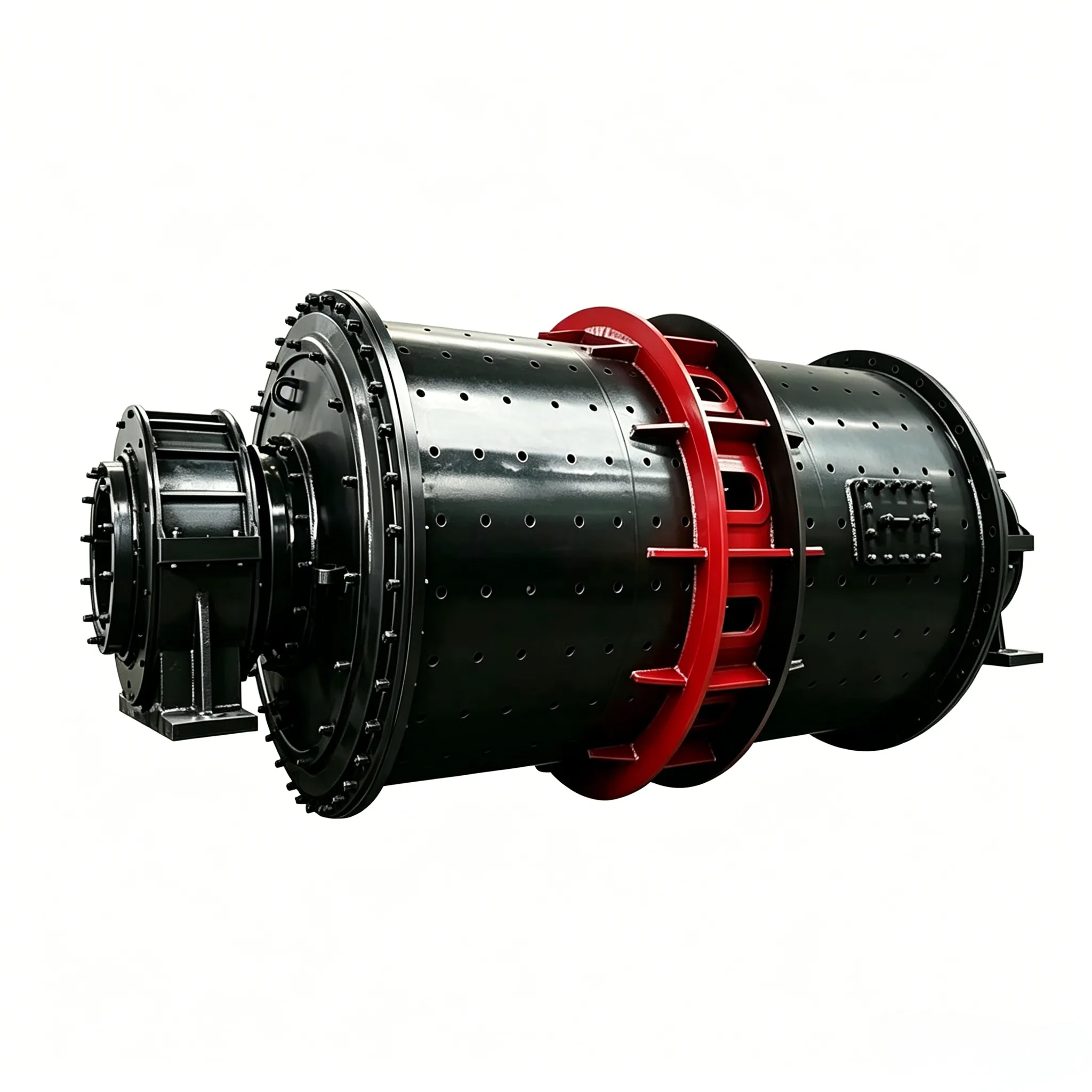
The ball mill is the primary grinding equipment in modern concentrators. With its high efficiency, stability, and controllability, it is the first choice for large and medium‑sized mining enterprises. A ball mill consists of a horizontal shell, hollow shafts for feeding and discharging, and mill heads. The shell is equipped with steel grinding media (balls).
Working principle: The ball mill rotates the shell, causing the steel balls to fall and impact, as well as roll and grind, thereby crushing the ore to the required fineness. Material evenly enters the first chamber of the mill through the feed device. The rotation of the shell generates centrifugal force that lifts the steel balls to a certain height before they fall, impacting and grinding the material. With the aid of a classifier to form a closed‑circuit grinding system, the ball mill can precisely control the grinding fineness, ensuring sufficient liberation of gold minerals.
Vantaggi principali:
The wet pan mill, also known as the edge mill, roller mill, or electric grinder, is a beneficiation device used for further grinding after primary crushing. It operates on a rolling‑type grinding action, achieving mineral liberation through the gravity compression and shearing action of the grinding rollers.
Working principle: The motor transmits power through a reducer and a main vertical shaft to a horizontal shaft, and then via tie rods at both ends of the horizontal shaft to the grinding rollers. The rollers rotate along the horizontal plane (revolving around the main shaft) while simultaneously rotating about their own axes, while the pan remains stationary. The feed material is subjected to tremendous compressive force from the self‑weight of the rollers (up to 2‑5 tonnes per roller), as well as the friction generated by the combined revolution and rotation of the rollers against the pan. The material is thoroughly crushed through repeated compression, kneading, and grinding.
During operation, the wet pan mill also performs mixing and slurry‑making functions, thoroughly blending the material with water. For gold ores, the wet pan mill can clean the gold surfaces, making it easier for mercury to adhere, and the recovery rate of free gold can reach over 95%.
Vantaggi principali:
| Aspetto | Mulino a sfere | Wet Pan Mill |
|---|---|---|
| Core force | Impact + attrition | Compression + shearing |
| Mode of action | Steel balls impact and roll | Rollers revolve and rotate; gravity compression combined with shearing |
| Motion type | Shell rotates to move balls | Rollers revolve around main shaft and rotate on own axes |
| Media | Steel balls (25‑150 mm diameter) | Roller self‑weight (2‑5 tonnes per roller) |
The ball mill relies on the impact and attrition of steel balls to achieve comminution, while the wet pan mill relies on the gravity compression and shearing action of the rollers.
| Aspetto | Mulino a sfere | Wet Pan Mill |
|---|---|---|
| Application range | Broad; can process metallic ores and non‑metallic materials | Mainly for gold ores; also used for silver, lead, zinc ores on a smaller scale |
| Mineral types | Gold, copper, iron, limestone, cement clinker, etc. | Gold, silver, lead, zinc, iron, molybdenum, copper, antimony, etc. |
| Hardness adaptability | Can handle high‑hardness ores | Not suitable for high‑hardness or highly sticky materials |
It is important to note that any ore that can be processed by a ball mill can also be processed by a wet pan mill. However, the wet pan mill cannot replace the ball mill for high‑hardness or large‑scale requirements.
| Aspetto | Mulino a sfere | Wet Pan Mill |
|---|---|---|
| Single‑unit capacity | Several tonnes to hundreds of tonnes/hour | 1‑10 tonnes/hour |
| Suitable scale | Concentratori di grandi dimensioni | Small to medium concentrators, or as pre‑treatment for large gold plants |
| Production mode | Continuous operation | Small‑scale, intermittent operation |
| Configuration | Single large unit | Single unit or multiple units in groups |
The daily capacity of a single wet pan mill ranges from 1.5 to several tens of tonnes. For example, the Ф900 model handles 1.5‑3 t/d, the Ф1200 model handles 80‑120 t/d, and the three‑roller Ф1100 model can process 8‑15 t/d.
| Aspetto | Mulino a sfere | Wet Pan Mill |
|---|---|---|
| Dimensione del mangime | ≤25 mm | ≤100 mm |
| Dimensione dello scarico | Adjustable to 200‑400 mesh or finer | Approximately 200 mesh |
The ball mill, combined with a classifier in closed circuit, can precisely control the grinding fineness; the wet pan mill controls the classification size through a screen installed at the discharge port.
| Aspetto | Mulino a sfere | Wet Pan Mill |
|---|---|---|
| Equipment investment | High; requires complex concrete foundation | Low; no complex foundation needed |
| Power consumption per tonne | Relatively high | 30‑40% lower than ball mill |
| Maintenance cost | Relatively high | Annual maintenance cost only one‑third that of ball mill |
| Wear part life | Più breve | 1‑2 years |
| Installation time | Long; requires professional installation | Short; ready after power connection |
| Aspetto | Mulino a sfere | Wet Pan Mill |
|---|---|---|
| Operating mode | Supports both dry and wet | Mainly wet operation |
| Functional focus | Single grinding function | Integrated grinding + primary concentration |
Choosing the right equipment is not a one‑size‑fits‑all decision. It should be based on a comprehensive assessment of ore properties, production scale, process requirements, investment budget, and other factors.
1. When processing high‑hardness ores
For ores such as iron and copper, the ball mill’s high‑drop impact from steel balls can effectively achieve mineral liberation. The wet pan mill, which relies mainly on gravity compression, is less effective for high‑hardness materials.
2. For large‑scale continuous production
Ball mills have single‑unit capacities ranging from a few tonnes to hundreds of tonnes per hour, meeting the needs of large concentrators. Large ball mills can process tens of thousands of tonnes per day.
3. When a very fine product size is required
Ball mills can produce product sizes as fine as 200‑400 mesh or even finer, suitable for ultra‑fine grinding applications. Wet pan mills typically produce around 200 mesh and cannot meet finer requirements.
4. When supporting equipment is already in place
Ball mills are usually operated in closed circuit with classifiers and other equipment. If the concentrator already has classifiers, flotation cells, and other supporting equipment, a ball mill can achieve optimal system configuration.
5. When dry grinding is required
Ball mills support both dry and wet operation, whereas wet pan mills are primarily wet‑only.
1. When processing gold ores on a small to medium scale
Wet pan mills are primarily designed for gold ores, especially suited for small to medium operations with capacities of 1‑10 tonnes per day. For quartz‑vein gold ores containing coarse gold, the gravity preconcentration effect of the wet pan mill is particularly outstanding.
2. When reducing equipment investment and operating costs
The initial investment for a wet pan mill is far lower than that of a ball mill of the same capacity. It requires no complex concrete foundation and has a short installation time. Power consumption per tonne is 30‑40% lower, and annual maintenance cost is only one‑third of a ball mill’s.
3. For remote mining areas or where power supply is limited
Wet pan mills are easy to install, unrestricted by site conditions, and ready to operate after power connection. They are ideal for remote mines with difficult transportation or insufficient power supply.
4. For small enterprises or individual operators with limited capital
The wet pan mill requires low investment, offers quick returns, and has low production costs, making it an ideal choice for small and medium‑sized mining operations. In some cases, concentrators that previously used ball mills have switched to wet pan mills.
5. When flexible configuration is needed
For smaller investments, a single wet pan mill can operate independently; for higher capacity requirements, multiple units can be arranged in groups.
In practice, the ball mill and wet pan mill are not mutually exclusive; they can be combined to create a complementary process flow.
Typical combination scheme: For quartz‑vein gold ores containing coarse gold, the wet pan mill is used first for gravity preconcentration, recovering over 70% of the coarse gold. The remaining fine material is then sent to the ball mill for fine grinding, followed by flotation or leaching to extract the fine gold.
The advantages of this combined process are:
Start
  │
  ▼
What is the ore hardness?
  │
  ├── High hardness (iron, copper, etc.) ──► Prefer ball mill
  │
  └── Medium‑low hardness (gold, etc.)
        │
        ▼
What is the production scale?
        │
        ├── Large scale (>10 t/h) ──► Prefer ball mill
        │
        └── Small‑medium scale (1‑10 t/h)
              │
              ▼
Is the investment budget sufficient?
              │
              ├── Sufficient ──► Consider ball mill
              │
              └── Limited ──► Prefer wet pan mill
                    │
                    ▼
Does the ore contain coarse gold?
                    │
                    ├── Yes ──► Recommend combined "wet pan mill + ball mill"
                    │
                    └── No ──► Further assess other factors
 English English
 Spanish
 Russian
 Arabic
 Swahili
 French
 Turkish
 Portuguese
 Korean
 Japanese
 German
 Italian