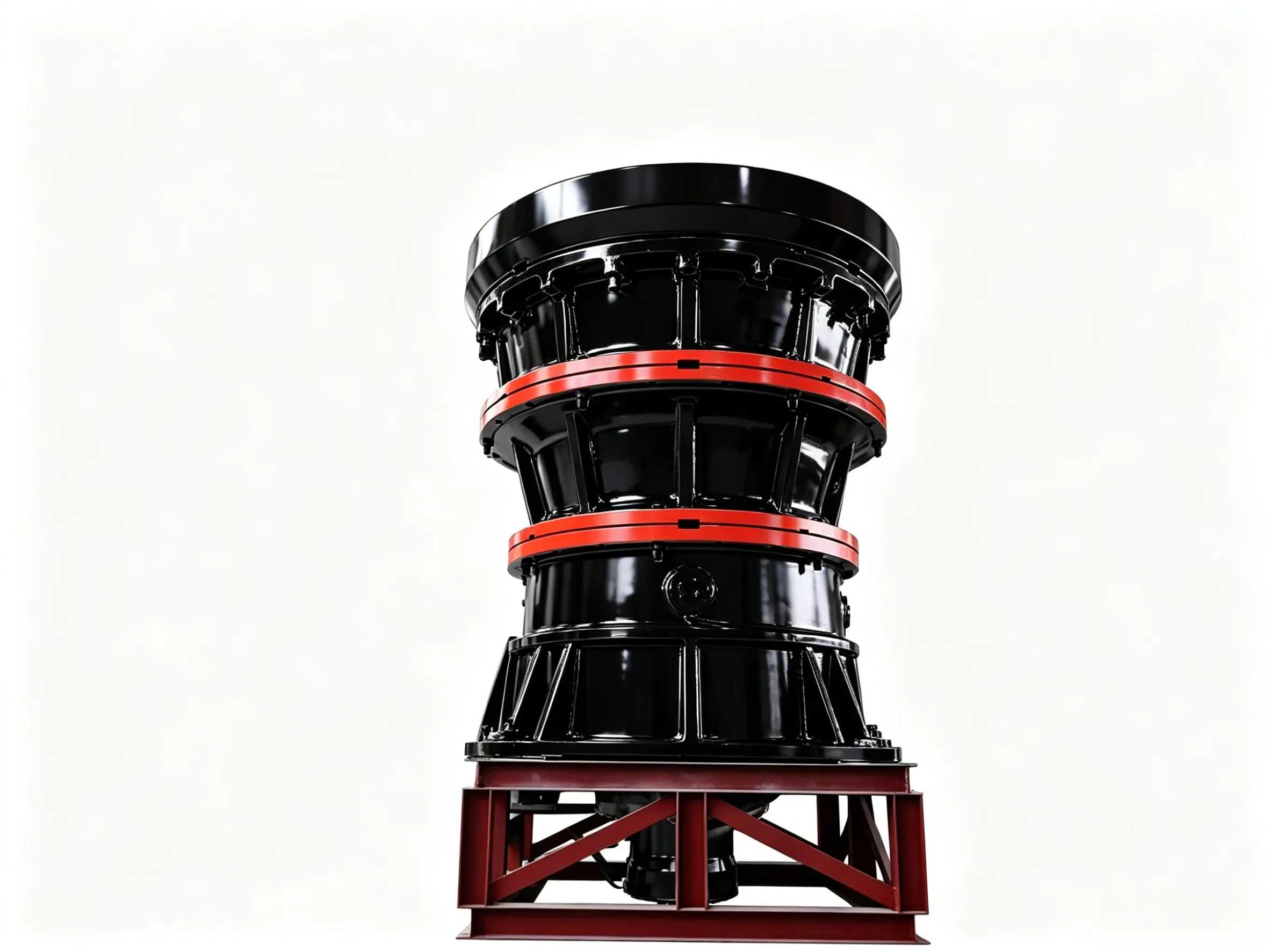
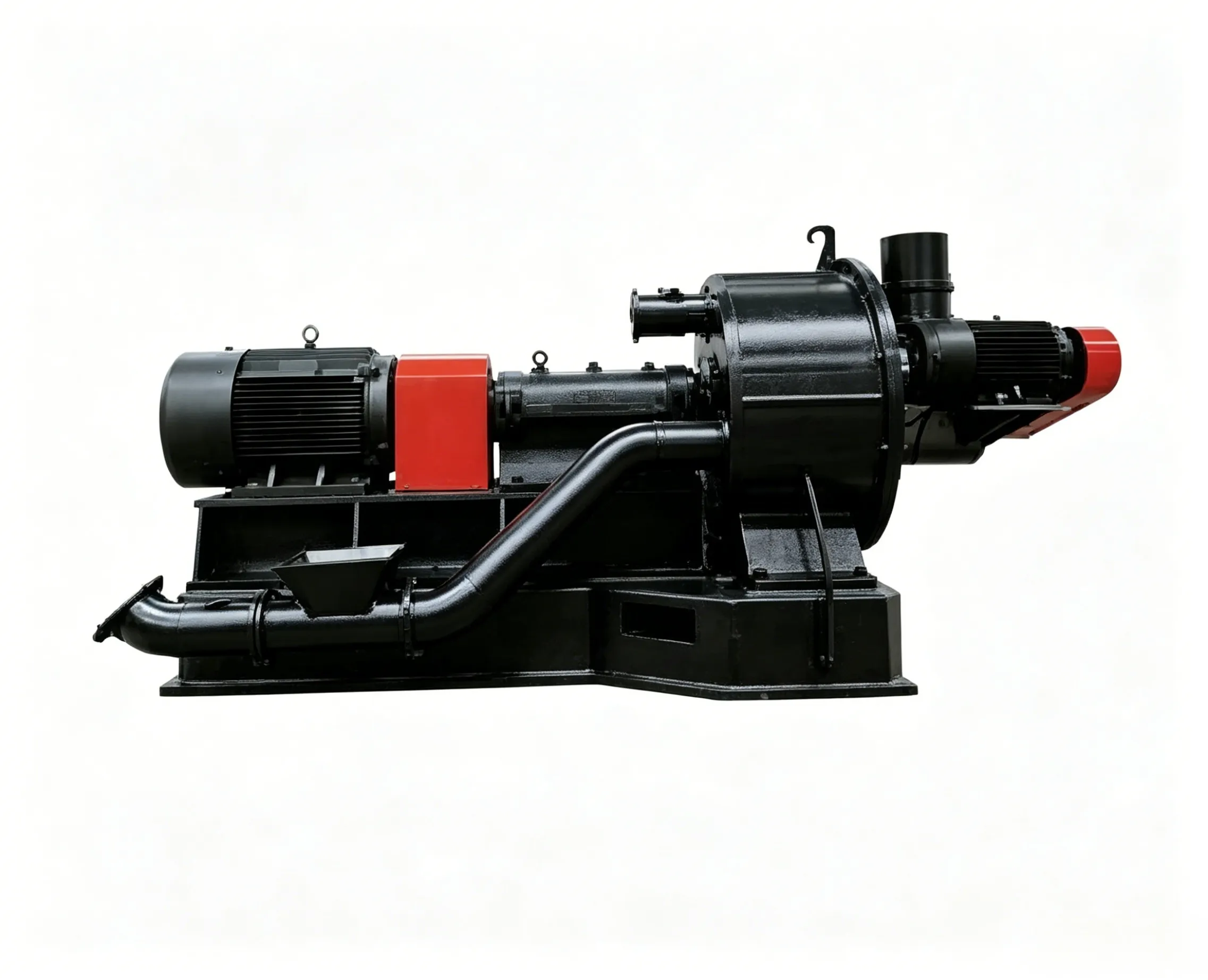
Frantoio giratorio
Tipi di frantoi giratori I frantoi giratori sono utilizzati nell'industria sin da…


Pyrophyllite is a hydrous layered aluminium silicate mineral with the chemical formula Al₂Si₄O₁₀(OH)₂, belonging to the clay mineral group. Its crystal structure is a 2:1 layered type, consisting of alternating aluminium‑oxygen octahedral and silicon‑oxygen tetrahedral sheets, offering high chemical and thermal stability. Pyrophyllite has a fine texture, low hardness (Mohs 1–2), a density of approximately 2.65–2.90 g/cm³, a smooth, soapy feel, and a waxy lustre. It exhibits high oil absorption, strong hiding power, excellent electrical and thermal insulation, and good volume stability at high temperatures, with a refractoriness exceeding 1700°C, making it an excellent industrial mineral raw material.
As a multi‑functional non‑metallic mineral, pyrophyllite plays an important role in building materials, ceramics, chemicals, arts and many other fields owing to its outstanding physical and chemical properties. In recent years, with the rapid development of downstream industries such as fibreglass, refractories and ceramics, the demand for pyrophyllite powder has continued to grow. In 2024, China’s pyrophyllite production reached 8.353 million tons, with a demand of 8.073 million tons, showing a steady upward trend. With technological progress and industrial upgrading, the application fields of pyrophyllite are constantly expanding, and market demand continues to increase.
Pyrophyllite grinding is an important means of achieving high‑value utilisation of this resource. Through grinding, pyrophyllite can be converted into powders of various finenesses, meeting the application requirements of high‑value sectors such as ceramics, fibreglass, refractories, coatings, rubber and plastics.
This plan aims to demonstrate the feasibility of building a pyrophyllite grinding production line. Through rational process design, equipment selection and market positioning, it will achieve efficient development and utilisation of pyrophyllite resources, meeting downstream market demand for pyrophyllite powders of different finenesses.
Based on the different requirements of downstream applications, pyrophyllite grinding products can be divided into the following three grades:
| Product Grade | Fineness Range | Target Market | Main Uses |
|---|---|---|---|
| Coarse powder | 80‑200 mesh (74‑180 μm) | Refractories, ceramics | Refractory bricks, kiln furniture, ceramic bodies |
| Medium‑fine powder | 200‑400 mesh (38‑74 μm) | Fibreglass, papermaking | Fibreglass raw material, paper filler |
| Ultra‑fine powder | 325‑2500 mesh (5‑44 μm) | Coatings, plastics, rubber, chemicals | Functional fillers, catalyst carriers |
Raw ore → Sorting / magnetic separation (impurity removal) → Jaw crusher (coarse crushing) →
Hammer/roller crusher (fine crushing) → Bucket elevator → Storage silo →
Electromagnetic vibrating feeder → Main grinding mill (Mulino Raymond / vertical mill / ultra‑fine mill) →
Classifier (air separator) → Cyclone collector → Pulse dust collector →
Finished product conveying → Finished product silo → Automatic packaging → Warehouse
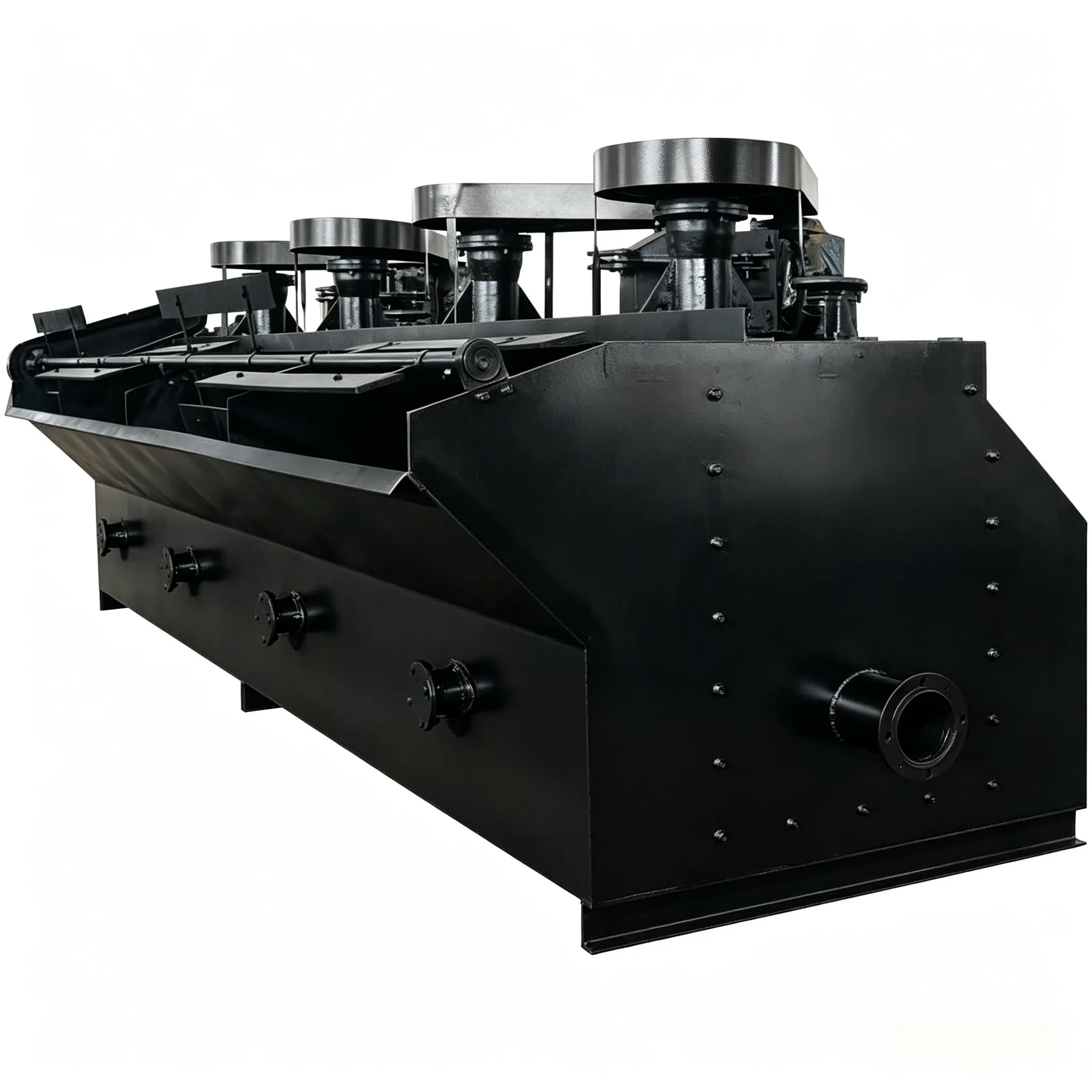
The mined pyrophyllite ore may contain harder impurities such as quartz and corundum. Sorting or magnetic separation before grinding is recommended to protect equipment and improve product purity. For products requiring high whiteness, flotation or chemical bleaching can also be combined for purification.
Large pyrophyllite blocks are first coarsely crushed by a jaw crusher, then further crushed by a hammer or roller crusher to a particle size of 15–30 mm to meet the feed requirements of the grinding mill. Care must be taken during crushing to prevent hard impurities from entering and causing excessive wear.
The crushed qualified material is conveyed by a bucket elevator to a vibrating feeder or intermediate storage silo, ensuring continuous and uniform feeding. A belt weigher with speed control is usually installed below the silo to accurately control the feed rate and ensure stable system operation.
Material is uniformly fed into the grinding chamber of the main mill, where it is crushed by compression and attrition between the grinding rollers and the ring (or between the table and rollers). A classifier is built into the main unit to achieve preliminary separation of coarse and fine particles. Oversized particles that do not meet fineness requirements fall back onto the grinding table for re‑grinding, forming an internal circulating system.
During grinding, an induced‑draft fan directs airflow to carry fine powders out of the chamber through pipelines into a cyclone separator or bag filter. In the airflow, powders of different particle sizes are precisely classified by the air classifier to ensure consistent product fineness.
Qualified pyrophyllite powder is collected by the dust collection system, discharged through a rotary valve, and conveyed by a screw conveyor or bucket elevator to a finished product silo for temporary storage. According to customer requirements, automatic bagging machines or tanker loading can be used for quantitative packaging.
The entire process is equipped with iron removal devices to prevent metallic contamination. Depending on the raw material moisture content, a drying system with a hot‑air furnace can be installed to ensure final product moisture below 1%.
Based on capacity, fineness and process requirements, the commonly used equipment includes:
| Equipment Type | Capacity Range | Product Fineness | Advantages | Suitable Application |
|---|---|---|---|---|
| Mulino Raymond | 1‑50 t/h | 38‑180 μm (80‑400 mesh) | High efficiency, stable operation, easy maintenance, low cost | Medium‑fine powder large‑scale processing |
| Vertical roller mill | 1‑200 t/h | 22‑180 μm | High grinding efficiency, high automation, environmental protection, low noise, strong drying capability | Produzione industriale su larga scala |
| Ultra‑fine vertical mill | 1‑50 t/h | 3‑22 μm (325‑2500 mesh) | Low energy consumption, high classification efficiency, low operating cost | High‑value ultra‑fine powder processing |
| Equipment | Funzione | Note |
|---|---|---|
| Frantoio a mascelle | Coarse crushing | Reduces bulk ore to <30 mm |
| Hammer/roller crusher | Fine crushing | Further reduces to feed size |
| Bucket elevator | Material conveying | Vertical transport of crushed material |
| Electromagnetic vibrating feeder | Uniform feeding | Controls feed rate |
| Classifier (air separator) | Particle size control | Ensures product fineness |
| Pulse dust collector | Dust collection | Meets emission standards |
| Iron removal device | De‑ironing | Prevents metallic contamination |
| Drying system | Moisture control | Controls raw material moisture |
After grinding, fine pyrophyllite powder finds extensive applications in various industrial sectors. The following is a detailed breakdown by field.
Overview: Fibreglass is the largest downstream market for pyrophyllite, accounting for 72% of the total. China’s fibreglass output grew from 4.68 million tons in 2018 to 7.56 million tons in 2024, with a compound annual growth rate of 8.3%, making it the world’s largest fibreglass producer.
Specific applications:
Typical customers: Jushi Group, Taishan Fibreglass and other large fibreglass enterprises
Fineness requirement: Typically 200‑325 mesh
Overview: With a high melting point (refractoriness ≥ 1700°C), pyrophyllite is an excellent refractory raw material.
Specific applications:
Unique advantage: Low coefficient of thermal expansion effectively suppresses volume expansion at high temperatures, improving thermal shock resistance and service life.
Fineness requirement: Typically 80‑200 mesh (coarse powder) to 325 mesh (fine refractories)
Overview: Pyrophyllite is widely used in the ceramics industry due to its high Al₂O₃ content, heat resistance and low shrinkage at high temperatures.
Specific applications:
Fineness requirement: Typically 200‑400 mesh
Overview: Pyrophyllite powder is an important functional filler in the coatings industry.
Specific applications:
Fineness requirement: Typically ≥325 mesh ultra‑fine powder
Overview: Ultra‑fine pyrophyllite powder can serve as a functional filler in plastics and rubber.
Specific applications:
Fineness requirement: Typically ≥800 mesh ultra‑fine powder
Overview: Utilises pyrophyllite’s low hardness, easy pulverisation and chemical stability.
Specific applications:
Fineness requirement: Typically 325‑600 mesh
Overview: Pyrophyllite’s layered structure, low hardness and good electrical/thermal insulation make it an ideal pressure‑transmitting medium and sealing material for high‑pressure diamond synthesis.
Specific applications:
Fineness requirement: High‑purity, specific particle‑size‑distribution fine powder
Overview: Pyrophyllite has broad application prospects in the chemical industry.
Specific applications:
Cosmetics and pharmaceuticals:
Pesticide carriers: Used as carrier for insecticides
Waterproofing materials: Mixed with bitumen to make waterproofing membranes, improving weatherability
Carving and sculpture: High‑purity, aesthetically coloured pyrophyllite (such as Fujian Shoushan stone and Zhejiang Qingtian stone) is an ideal material for traditional seal carving and sculpture
According to market research reports:
Based on industry reference data, investment scales for pyrophyllite processing projects vary significantly with capacity and process:
| Project Scale | Total Investment Reference | Capacity Reference | Note |
|---|---|---|---|
| Small project | RMB 2 million | Annual 15,000 tons | Environmental investment approx. RMB 200,000 |
| Medium project | RMB 12.67 million | Process‑dependent | Investment profit margin –4.11% |
| Medium project | RMB 18.53 million | Process‑dependent | Investment profit margin 37.15% |
| Large project | RMB 42.50 million | Process‑dependent | Payback period 3.91 years |
| Extra‑large project | RMB 78.57 million | Annual 600,000 tons | Investment profit margin 35.58% |
| Mega project | RMB 316.34 million | Annual 600,000 tons | Supporting project for Taishan Fibreglass |
| Cost Item | Approx. Share | Descrizione |
|---|---|---|
| Equipment purchase | 40‑50% | Crushers, mills, classifiers, dust collectors, etc. |
| Civil engineering | 20-30% | Workshops, silos, foundations, etc. |
| Installation | 10‑15% | Equipment erection, piping, etc. |
| Other expenses | 10‑15% | Design, supervision, contingency, etc. |
Revenue sources:
Cost factors:
Breakeven point: Industry reference data show BEP typically between 30% and 42%
| Risk Type | Descrizione | Impact Level |
|---|---|---|
| Market risk | Cyclical fluctuations in downstream fibreglass industry | High |
| Raw material risk | Pyrophyllite resources concentrated in Fujian and Zhejiang; supply stability | Medium |
| Environmental risk | Dust emissions, noise pollution and compliance requirements | Medium |
| Technical risk | Improper equipment selection affecting product quality and efficiency | Medium |
| Competitive risk | Established large enterprises already present (Jushi, Taishan, etc.) | High |
The pyrophyllite grinding project is generally feasible, based on the following:
Choose the appropriate plan based on target market:
General recommendations:
 English English
 Spanish
 Russian
 Arabic
 Swahili
 French
 Turkish
 Portuguese
 Korean
 Japanese
 German
 Italian