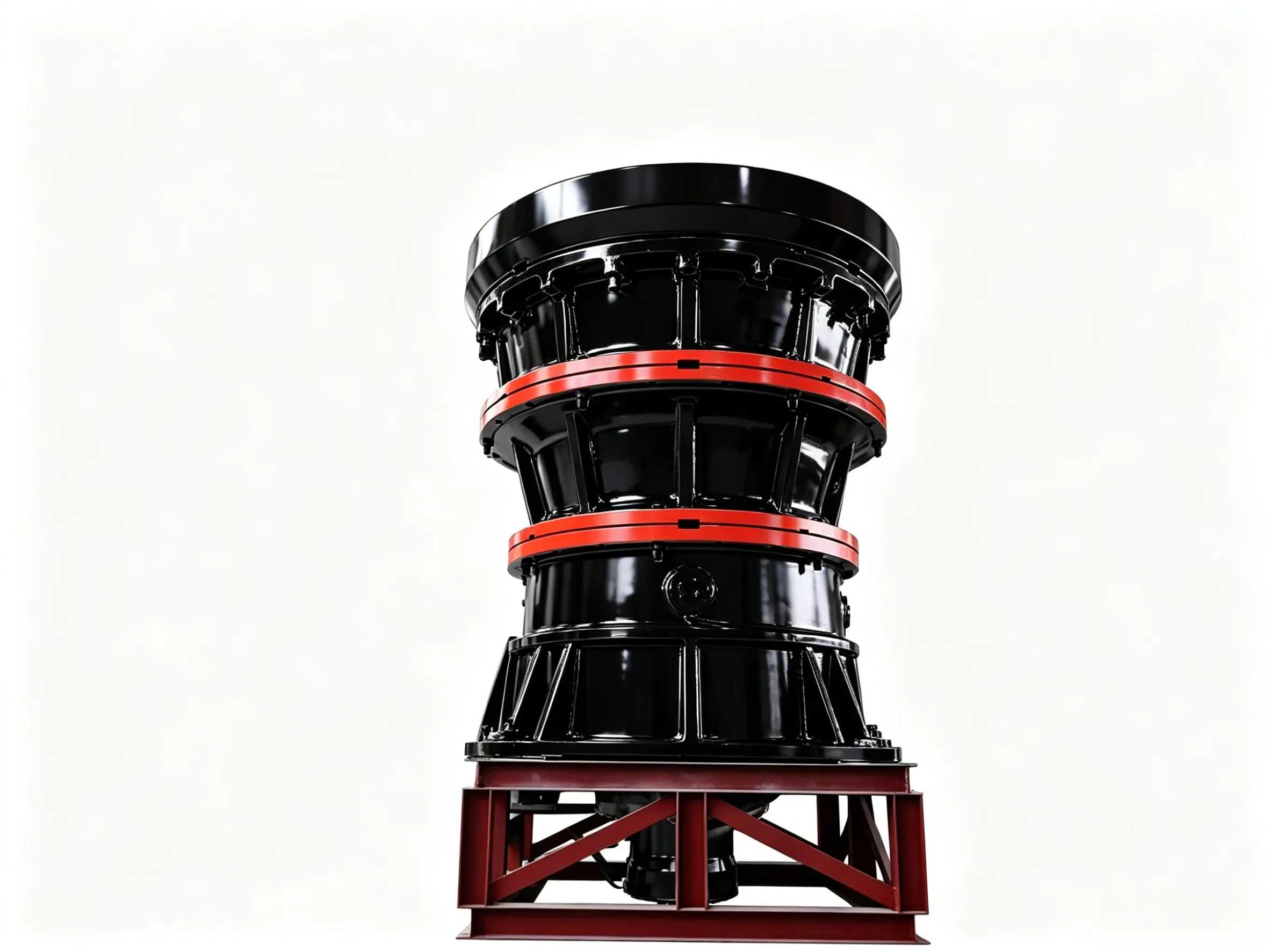
Frantoio giratorio
Tipi di frantoi giratori I frantoi giratori sono utilizzati nell'industria sin da…


Silica powder is an inorganic non-metallic functional filler with SiO₂ as its main component. Thanks to its advantages such as electrical insulation, heat resistance, low thermal expansion, and chemical stability, it is widely used in copper-clad laminates (CCL), epoxy molding compounds (EMC), electronic packaging, special ceramics, and photovoltaics. With the development of the electronic information and new materials industries, silica powder products are upgrading from ordinary filler grade to high-purity and high-performance grades. Among these, metallic impurities such as Fe, Al, Na, K, and Ti affect the electrical properties and stability of materials, and impurity control has become an important factor constraining product quality improvement. High-purity silica powder raw materials are mostly selected from natural quartz ores such as vein quartz and quartzite, or fused silica. Impurities in natural quartz fall into three categories: gangue minerals, gas-liquid inclusions, and isomorphic lattice impurities. Quartz crystals are dense and hard, with some impurities sealed in inclusions and others dissolved in the crystal lattice. A single beneficiation method or simple acid leaching can hardly achieve high purification, so the industry generally adopts a multi-stage combined purification route of raw material pretreatment—physical separation—chemical leaching—thermal strengthening, removing different forms of impurities step by step.
Raw Material Pretreatment
Raw material pretreatment determines the ultimate purity ceiling and processing economics of high-purity silica powder. Inclusions and lattice-bound impurities inside natural quartz hinder the diffusion of leaching reagents into the interior of particles. Without targeted structural modification, the efficiency of subsequent deep impurity removal would drop significantly. Pretreatment mainly consists of raw material selection, calcination–water quenching structural modification, ultrafine comminution, and fine classification.
In the raw material selection stage, vein quartz has a simple mineral composition and high basic grade, but high-grade resources are limited in reserve. High-quality quartzite combines the advantages of purity and reserves and has become an important raw material. Fused silica is mostly used for the production of electronic-grade fused silica powder. The preparation of high-purity silica powder imposes strict requirements on raw material quality: generally, the SiO₂ content of the raw material is required to be above 99.9%, with strictly limited contents of impurity elements such as iron and aluminum.
Calcination–water quenching: Quartz undergoes a crystal phase transition upon high-temperature calcination and is then rapidly water-quenched. The enormous thermal stress generates numerous microcracks inside the particles, causing inclusions within the mineral to crack open and exposing impurities originally sealed inside the crystals. At the same time, the microcracks build mass-transfer channels that facilitate the penetration of subsequent acid solutions into the interior of particles, improve the effectiveness of grinding liberation, and enhance the degree of mineral monomer liberation.
After calcination–water quenching, ultrafine comminution and fine classification are carried out to achieve full mineral monomer liberation and precisely control powder particle size. Commonly used ultrafine comminution equipment includes jet mills, stirred mills, and planetary ball mills. Among these, jet milling can reduce secondary contamination caused by grinding media and is better suited to the requirements of high-purity product preparation. On the one hand, ultrafine comminution can improve the kinetic efficiency of subsequent purification reactions; on the other hand, it avoids the process risks that coarse particles pose for high-end electronic packaging applications, providing a structural basis for subsequent combined physical–chemical purification.
Combined Physical–Chemical Purification
After pretreatment, the quartz powder still retains associated mineral impurities, lattice-type impurities, and trace radioactive elements. In response to the stringent purity requirements for electronic-grade and semiconductor-grade silica powder, the industry has developed a multi-stage synergistic purification system of “physical separation–chemical leaching–thermal strengthening,” which relies on multi-mechanism synergy to reduce impurity content step by step and break through the constraints imposed by crystal structure on impurity migration.
Comparison Table of Purification Technologies
| Purification Stage | Core Technology | Main Removal Targets | Mechanism of Action |
|---|---|---|---|
| Physical Separation | Magnetic separation, flotation, color sorting | Iron- and titanium-bearing magnetic minerals, associated minerals such as feldspar and mica | Separation based on differences in magnetism, surface wettability, or color among minerals |
| Chemical Leaching | Mixed-acid leaching, hot-pressure acid leaching, alkaline leaching | Metallic impurities on particle surfaces and near-surface layers | Utilizing quartz’s resistance to most acids except HF to convert impurities into soluble salts for dissolution |
| Thermal Strengthening | Chlorination roasting | Stubborn impurities in the form of lattice substitutional or interstitial ions | Converting impurities into volatile chlorides to escape at high temperatures |
1) Physical separation purification
Physical separation performs the function of front-end impurity reduction, with the main technical means being magnetic separation, flotation, and color sorting. These processes achieve separation by exploiting differences in the physical properties of minerals, such as magnetism, surface wettability, and color. Magnetic separation mainly removes iron- and titanium-bearing magnetic minerals; flotation separates silicate-associated minerals such as feldspar and mica; color sorting removes discolored impurity particles based on color differences.
Physical purification reduces the majority of total impurities before chemical treatment, lowering subsequent chemical reagent consumption and improving the stability and economics of the entire process. However, physical separation can only remove external associated minerals and cannot eliminate impurities that have already entered the quartz crystal lattice or are sealed inside inclusions, so it is generally used as a front-end purification step.
2) Chemical leaching purification
Chemical leaching exploits the characteristic that quartz resists corrosion by most acids except hydrofluoric acid, converting impurity minerals into soluble salts for selective dissolution. The main processes include mixed-acid leaching, hot-pressure acid leaching, and alkaline leaching treatment.
Conventional mixed-acid leaching is suitable for removing metallic impurities on particle surfaces and near-surface layers, and mixed-acid systems combining multiple acids outperform single-acid systems in impurity removal. For products with higher purity requirements, hot-pressure acid leaching is adopted, relying on high-temperature and high-pressure conditions to strengthen mass transfer and significantly improve the dissolution efficiency of impurities inside particles, further releasing impurities within inclusions. Alkaline leaching, in turn, targets the dissolution treatment of certain specific silicate impurities.
Chemical leaching can efficiently remove impurities exposed on surfaces and within crack channels, but for substitutional and interstitial stubborn impurities dissolved in the quartz crystal lattice, conventional acid leaching can hardly achieve thorough removal.
3) Thermal strengthening purification (chlorination roasting)
Chlorination roasting is a key thermal strengthening technology for the deep removal of stubborn lattice-type impurities. Under high-temperature chlorination atmosphere conditions, metal impurities within the lattice are converted into volatile metal chlorides that escape outward; at the same time, the high temperature brings about the evolution of the quartz crystal structure, promoting the migration of impurities within the lattice toward the particle surface and achieving lattice impurity purification that conventional acid leaching cannot accomplish.
Chlorination roasting can compensate for the shortcomings of chemical leaching by extending the purification target from particle surface impurities to impurities inside the crystal lattice. In addition to metallic impurities, the industry is also gradually paying attention to purification technologies for trace radioactive elements, to meet the production requirements of low-radioactivity silica powder for electronic packaging. Overall, the current development trend of high-purity silica powder purification technology is gradually shifting from the removal of surface impurities toward the deep purification of lattice-type impurities.


 English English
 Spanish
 Russian
 Arabic
 Swahili
 French
 Turkish
 Portuguese
 Korean
 Japanese
 German
 Italian