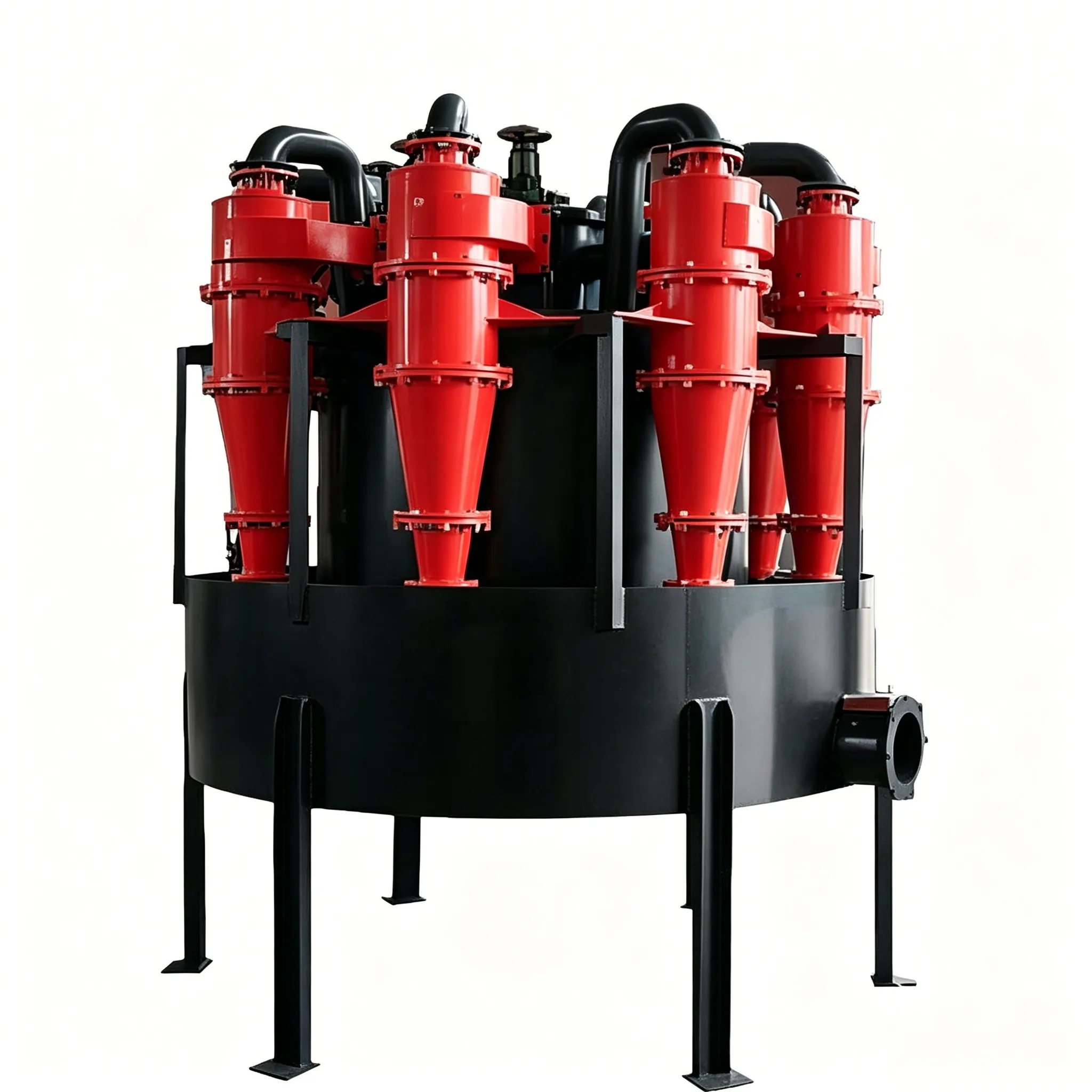
Idrociclone
Idrociclone L'idrociclone è un dispositivo che sfrutta la forza centrifuga per classificare…


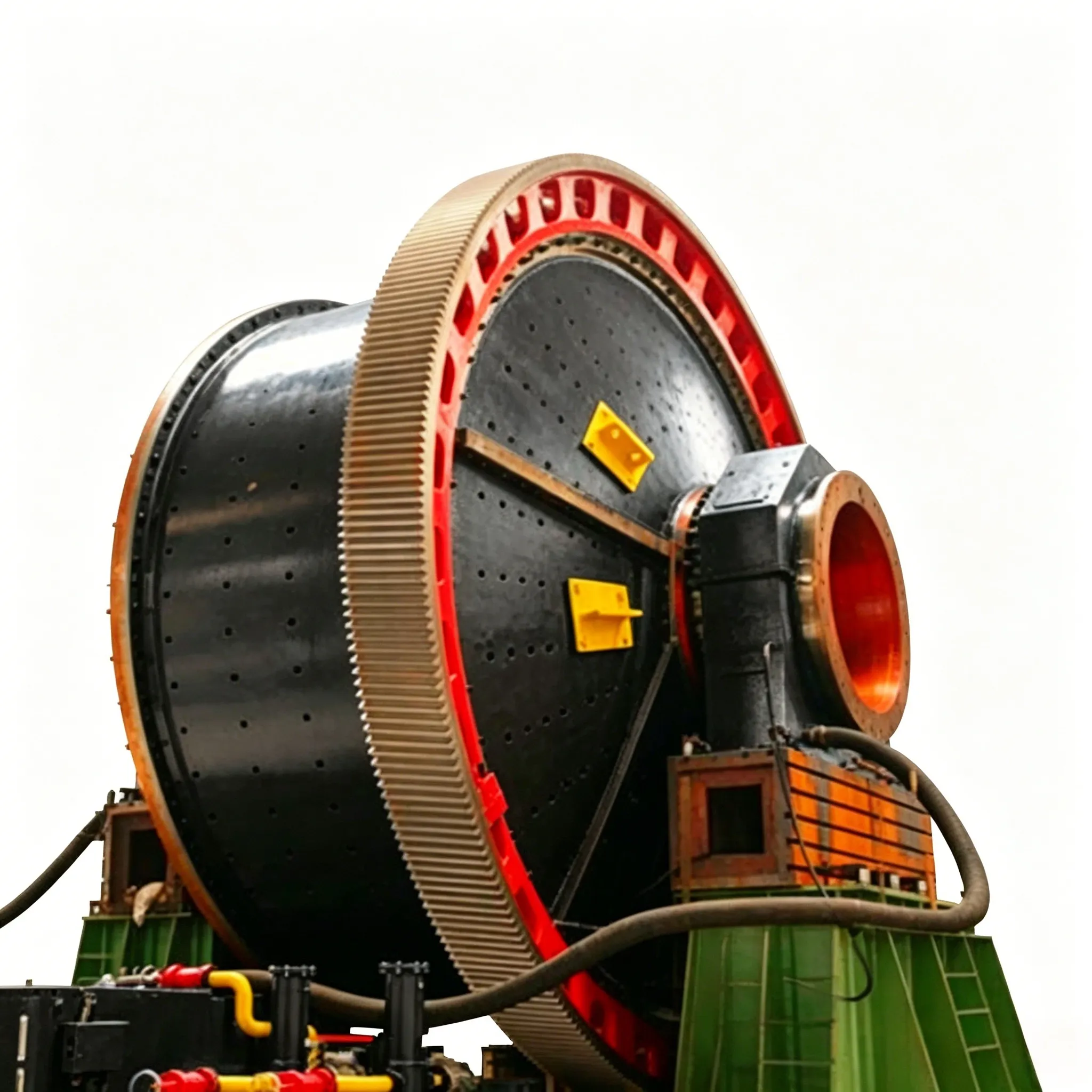
The diameter of the balls loaded into a ball mill depends on many factors, including the particle size, hardness, and density of the material being ground, the diameter and rotational speed of the ball mill, the density of the balls, and the concentration of the slurry. In actual production, it is mainly determined based on the particle size distribution of the material being ground in the mill. The feed to the mill consists of particles of several different sizes. Practice has shown that when processing hard or coarse-grained ores, a larger impact force is required, and larger balls should be added; when the ore is softer, the feed particle size is smaller, and finer grinding is required, grinding should be the main focus, and smaller balls should be added. Of course, the selection of ball diameter is also related to the diameter and rotational speed of the mill; mills with larger diameters and higher rotational speeds can use smaller ball diameters. In short, large pieces of ore require large balls for impact, and small pieces of ore require small balls for grinding. Although many formulas have been proposed regarding the relationship between ore size and the required ball diameter, the grinding process is complex, and each formula has its limitations and significant deviations. The most basic formula is:
D=i³a
Where D is the diameter of the feed ball (mm);
d is the particle size of the material being ground (mm);
i is the particle size distribution coefficient.
For medium-hard ores, the experimental result is i=28, therefore
D=28³√a
Through years of production practice, many mineral processing workers in my country have summarized an empirical formula for the relationship between feed particle size and suitable ball diameter:
D=43.9³a
Based on years of production practice in my country, relevant personnel have summarized the corresponding relationship between ball diameter and feed particle size for medium-hard or relatively hard ores, as shown in Table 3-10.

 English English
 Spanish
 Russian
 Arabic
 Swahili
 French
 Turkish
 Portuguese
 Korean
 Japanese
 German
 Italian