Forno rotativo
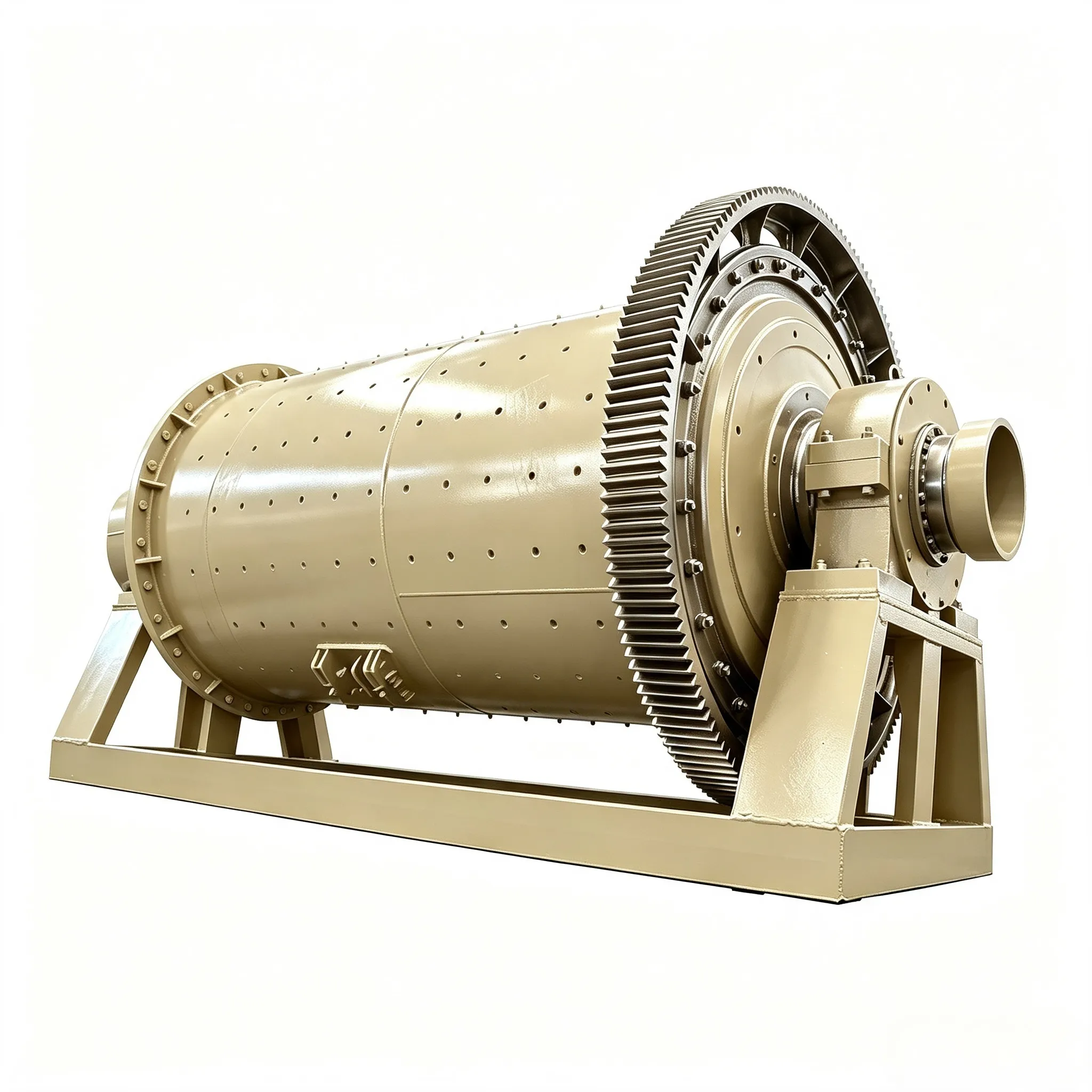
Panoramica del prodotto: Attrezzature fondamentali per la calcinazione industriale. Il forno rotativo è un…

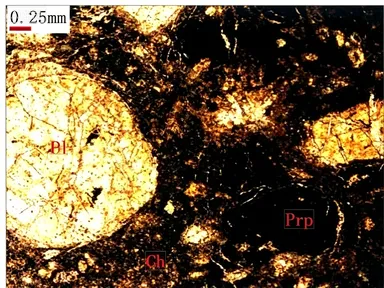
C2-B01 Porphyritic phlogopite kimberlite.
The rock is dark greenish-grey in color, exhibiting a porphyritic texture and a massive–brecciated structure. The phenocrysts are dominated by pyroxene, with minor olivine and phlogopite.
The breccia components include country-rock xenoliths and magmatic rock xenoliths. The exotic country-rock xenoliths are mainly carbonate rocks (marble), white in color, which effervesce vigorously with dilute hydrochloric acid. The clasts are angular to sharply angular, with rounded, elongated, and triangular shapes, varying in size from as small as 2–5 cm to as large as 4–5 cm. Their distribution is uneven; locally, their content can reach up to 10%, with an average of about 5%. The magmatic xenoliths have characteristics identical to those of the groundmass.
The groundmass is primarily composed of serpentine and carbonate minerals.
No diamonds are observed in the rock; only trace amounts of scattered pyrite and minor other minerals are present.
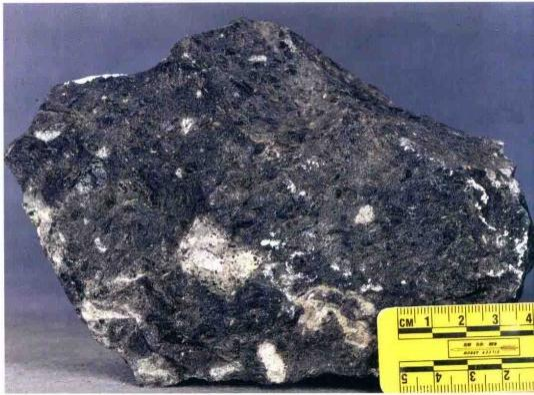
C2-B02 Pyrope-bearing porphyritic kimberlite.
The rock is pale yellowish-white in color, with a secondary loose texture and a brecciated structure. The breccia clasts are all marble, which effervesce vigorously with dilute hydrochloric acid and display a white crystalline texture. The clasts range from 1 to 5 cm in diameter, are angular to subangular, and are externally coated and cemented by earthy calcareous material, giving them a spherule‑like appearance; the clast content is about 30%. The cement is calcareous, mostly in the form of fine earthy particles, and also effervesces vigorously with dilute hydrochloric acid.
Garnet: Dark red to rose red, with greasy luster, mostly occurring as glomerocrysts composed of anhedral grains (possibly pyrope), with grain sizes of 2–3 mm.
This breccia is of secondary leaching origin and does not possess the characteristics of kimberlite. The weathered surface of the rock is grass‑green, which is due to plant moss.
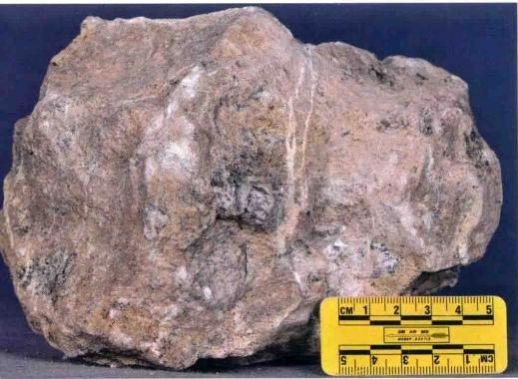
C2-B03 Biotite monzogranite.
The rock is gray to flesh‑red in color, with a medium‑ to coarse‑grained granitic texture and a massive structure. The main mineral constituents are K‑feldspar and quartz, with biotite as a subordinate component.
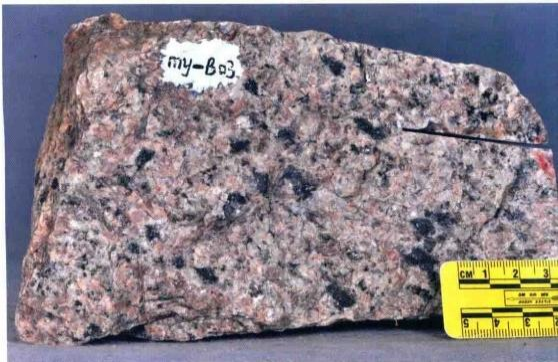
C2-B04 Breccia‑bearing porphyritic kimberlite.
The rock is gray in color, with a fine‑ to very fine‑grained crystalline texture and a massive–spheroidal structure. It consists of two components: spheroidal clasts and groundmass.
The spheroidal clasts are of two types:
The groundmass is dark gray kimberlite, consisting of pyroxene, serpentine, and carbonate minerals, with a fine‑ to very fine‑grained texture.
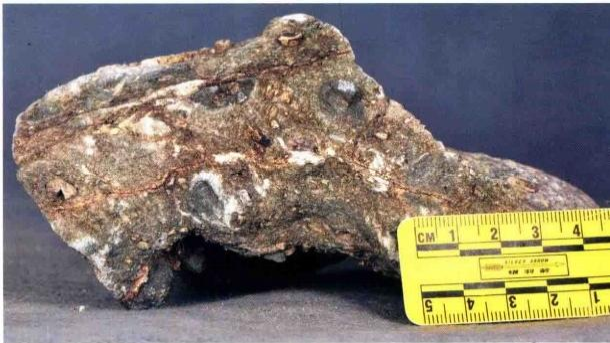
C2‑B05 Kimberlite breccia dominated by limestone clasts.
The rock is gray, with a fine‑ to very fine‑grained texture and a massive–brecciated structure. The clasts are mainly limestone, light gray to light grayish‑white in color, with a microcrystalline texture, and effervesce vigorously with dilute hydrochloric acid. The clast sizes vary greatly; the larger ones can reach 2–3 cm, and these are mostly kimberlite in composition, with some spherulitic clasts still enclosing limestone clast cores. The limestone clasts constitute about 5% of the rock.
The groundmass is dark gray kimberlite with a fine‑ to very fine‑grained crystalline texture. Its mineral composition is mainly serpentine, pyroxene, olivine, etc., with the serpentine derived from alteration of olivine. In addition, the rock is strongly carbonatized; the whole rock effervesces vigorously with dilute hydrochloric acid. The groundmass content is approximately 25%.
Also present are calcite veins filling fractures, with vein widths ranging from 1 to 5 mm.
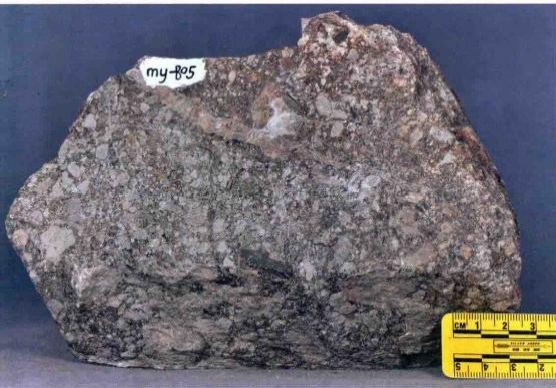
C2‑B06 Kimberlite breccia dominated by granite clasts.
The rock is dark gray to grayish‑black in color, exhibiting a porphyritic texture, a massive structure, and a brecciated structure. The phenocrysts in the kimberlite consist of pyroxene, olivine, and minor garnet (pyrope).
The groundmass is composed of fine‑ to very fine‑grained serpentine, pyroxene, and minor mica, with a content of approximately 60%.
The rock contains breccia clasts of biotite, K‑feldspar, granite, and K‑feldspar crystal fragments. The largest granite clasts measure up to 4 cm × 4 cm, and the K‑feldspar crystal debris ranges from 0.5 to 1 cm in size. The breccia clasts account for 20%–30% of the rock and are cemented by fine‑ to very fine‑grained kimberlite.

C2‑B07 Porphyritic kimberlite.
The rock is dark gray to yellowish‑greenish‑gray in color, with a porphyritic texture and a massive structure. The phenocryst assemblage consists of pyroxene, olivine (altered to serpentine), and garnet.
The total content of the three phenocryst types is 15%–20%.
The groundmass consists of fine‑grained mineral particles, in which phlogopite, serpentine, and carbonatization (microcrystalline calcite) can be observed, accounting for about 80% (effervesces vigorously with dilute hydrochloric acid).
In the rock, hair‑like calcite veins are visible, with vein widths of about 1 mm. The veins are irregular, with frequent branching and rejoining, representing another form of carbonatization.

C2‑B08 Fine‑grained kimberlite.
The rock is dark gray, with a porphyritic texture and a massive structure. The phenocrysts are composed of pyroxene, olivine, and minor garnet, with a total phenocryst content of 15%–20%. The groundmass is fine‑ to very fine‑grained kimberlite, consisting mainly of serpentine, pyroxene, and carbonatized microcrystalline calcite; the serpentine is derived from alteration of olivine and accounts for about 80% of the groundmass.
The porphyritic kimberlite is enveloped by fine‑grained kimberlite, which is gray to dark gray, with a fine‑ to very fine‑grained texture. It is very soft when scratched with a knife and effervesces vigorously and uniformly with dilute hydrochloric acid, indicating that the microcrystalline calcite content in the rock can reach 40%–50%.
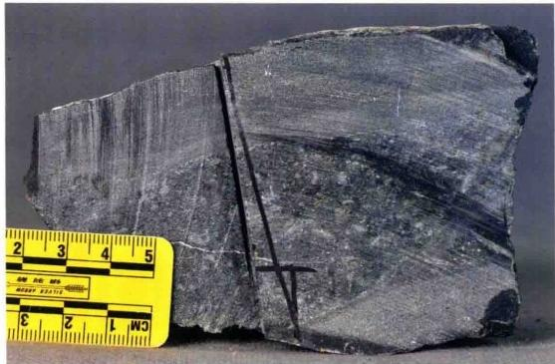
C2‑B09 Porphyritic kimberlite.
The rock is gray to grayish‑green, with a porphyritic texture and a massive–brecciated structure. The breccia clasts are also kimberlite, similar in composition to the groundmass cement, and are mainly composed of serpentine (altered from olivine), pyroxene, and other minerals. The clasts vary greatly in size, ranging from 2–5 mm to 2–5 cm. They are angular, sharply angular, subrounded to rounded to well‑rounded; the rounded and well‑rounded shapes are clearly due to dissolution after fragmentation. Most clasts are strongly serpentinized, some green and some black, and they account for 30%–40% of the rock.
The groundmass is mainly composed of fine‑ to very fine‑grained pyroxene, serpentine, and microcrystalline calcite (formed by carbonatization). Minor pyroxene phenocrysts are visible in the groundmass; they are black, with vitreous luster, and their margins are corroded to smooth shapes, reaching up to about 5 mm in size. The groundmass cement content is 50%–60%.
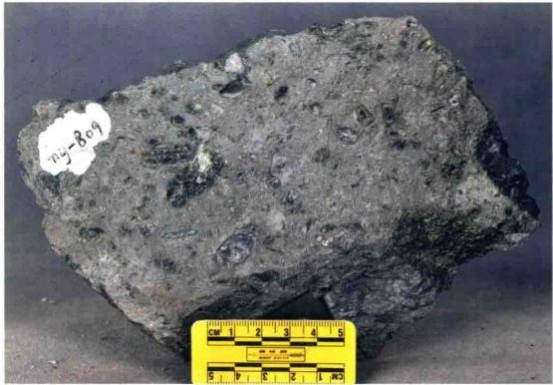
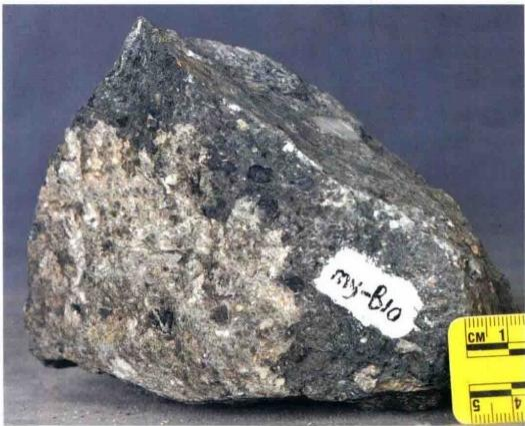
C2‑B10 Polymict fine‑grained kimberlite with country‑rock clasts.
The rock is gray, with a porphyritic texture and a brecciated structure. The clasts in the rock are of two types: limestone and granite.
The total clast content is 30%–40%, with limestone clasts dominant and granite clasts subordinate.
The groundmass cement is porphyritic kimberlite, with phenocrysts of pyroxene and phlogopite. The groundmass is mainly composed of fine‑ to very fine‑grained pyroxene and microcrystalline calcite. The rock effervesces uniformly with dilute hydrochloric acid, indicating relatively strong and even carbonatization; however, serpentinization is not pronounced. The groundmass cement accounts for 60%–70% of the rock.
 English English
 Spanish
 Russian
 Arabic
 Swahili
 French
 Turkish
 Portuguese
 Korean
 Japanese
 German
 Italian