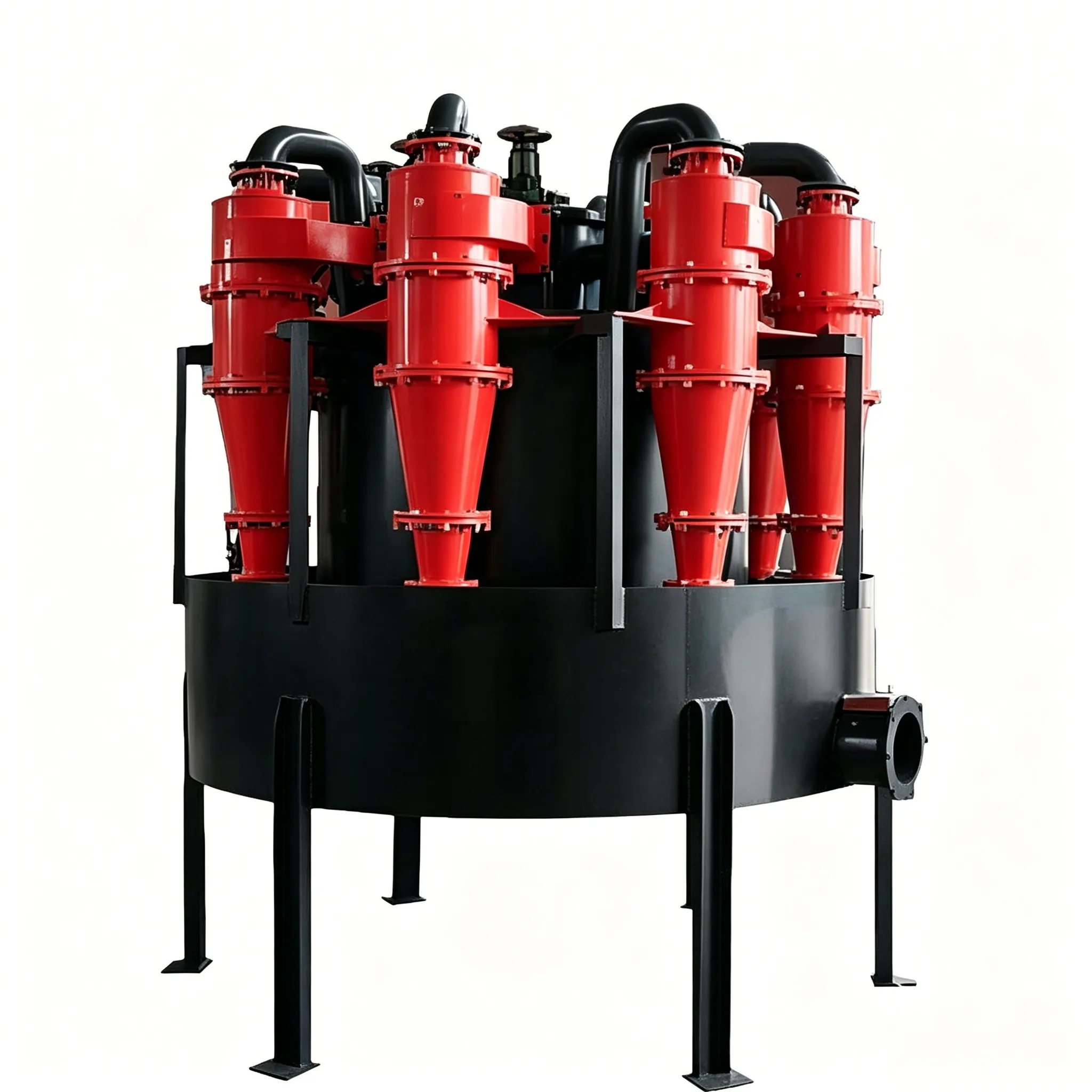
ハイドロサイクロン
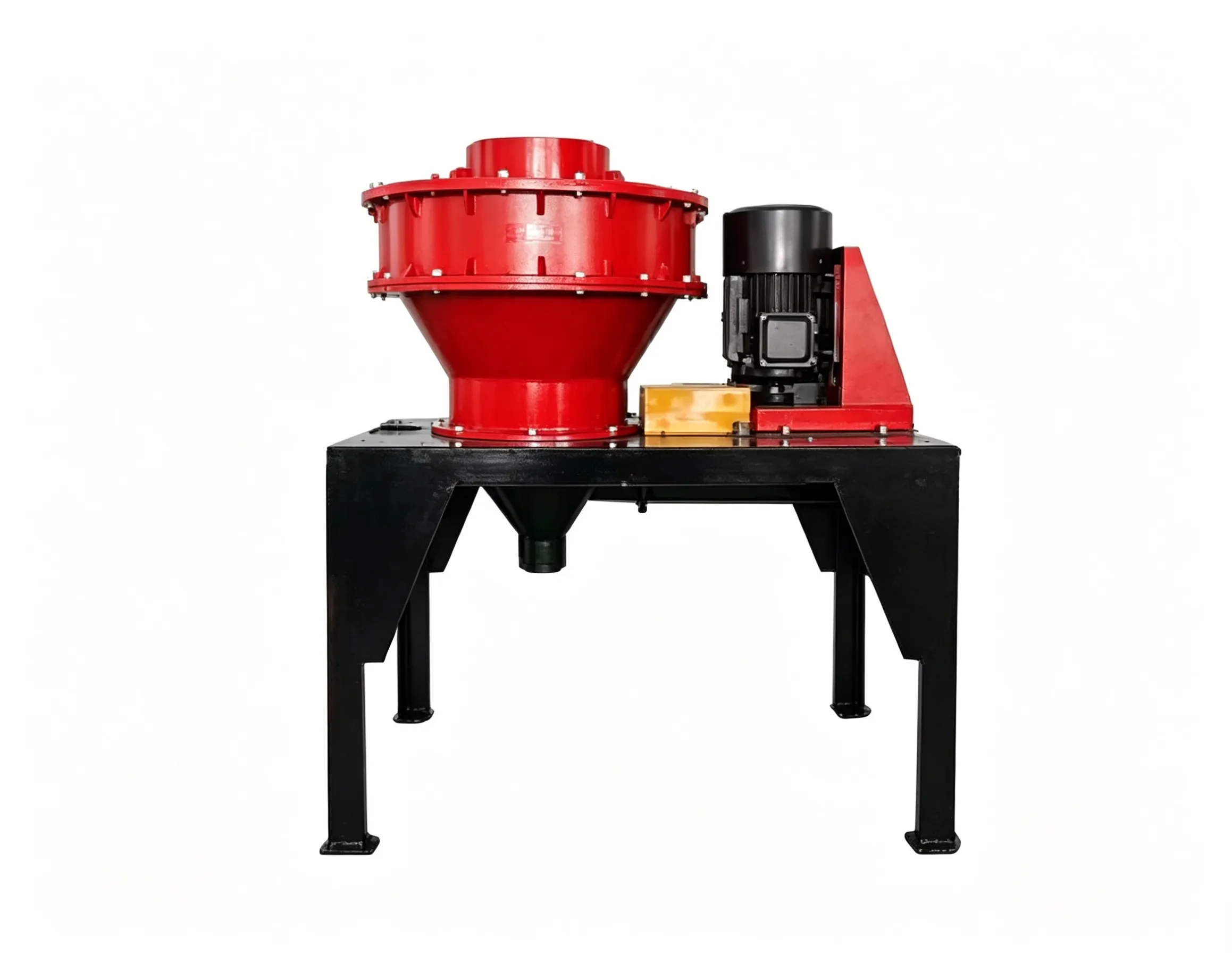
ハイドロサイクロン ハイドロサイクロンは、遠心力を利用して分級を行う装置です…

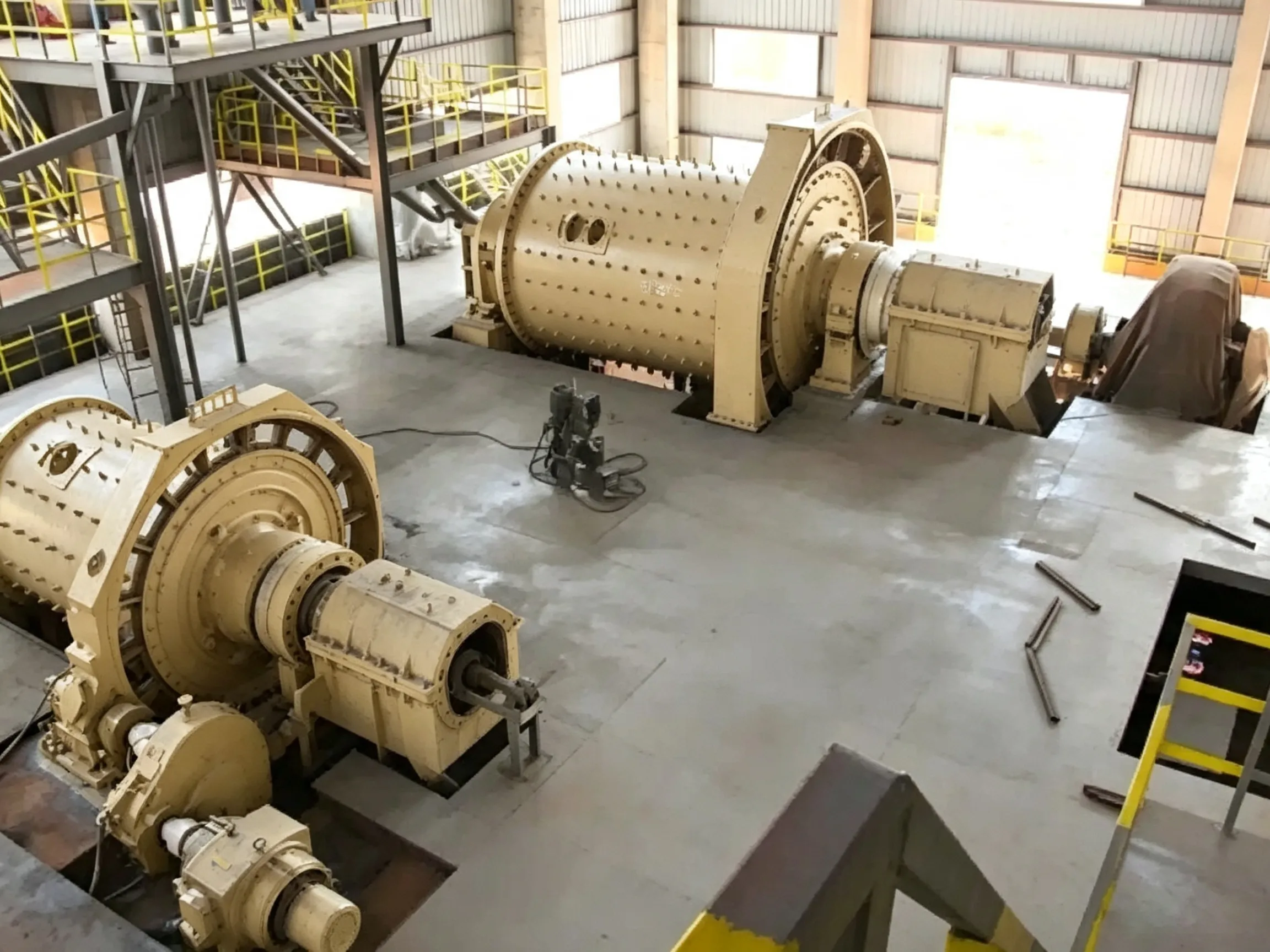
風化型セピオライト粘土の選鉱プロセス
The present invention relates to a beneficiation process for weathered type sepiolite clay, and is particularly applicable to the beneficiation of low‑grade weathered type sepiolite clay with talc, quartz, etc., as the main associated minerals.
Raw weathered type sepiolite clay typically contains other associated minerals, and these impurity minerals must often be removed before the clay can be put into use. Since sepiolite is a fibrous mineral, it readily forms a stable suspension in water under high shear forces, so impurity minerals in sepiolite clay can be removed by natural sedimentation. This has been demonstrated in many laboratories. Japanese Patent JP80047937 also basically uses natural sedimentation to purify minerals of the sepiolite group. However, because the pulp prepared from sepiolite clay has a relatively high viscosity, which increases significantly with increasing sepiolite clay content in the pulp, and because the associated mineral particles are fine, using natural sedimentation to separate associated minerals from sepiolite clay not only requires low pulp concentration but also long settling times and large water consumption. The solids content of the resulting concentrate suspension is generally only 2‑5%. Practice has shown that filtration of such a concentrate suspension is very difficult, thus limiting the widespread industrial application of natural sedimentation.
The object of the present invention is to propose a beneficiation process for weathered type sepiolite clay that uses high pulp concentration for separation, short separation time, simple concentrate dewatering methods, and can be widely used in industrial production.
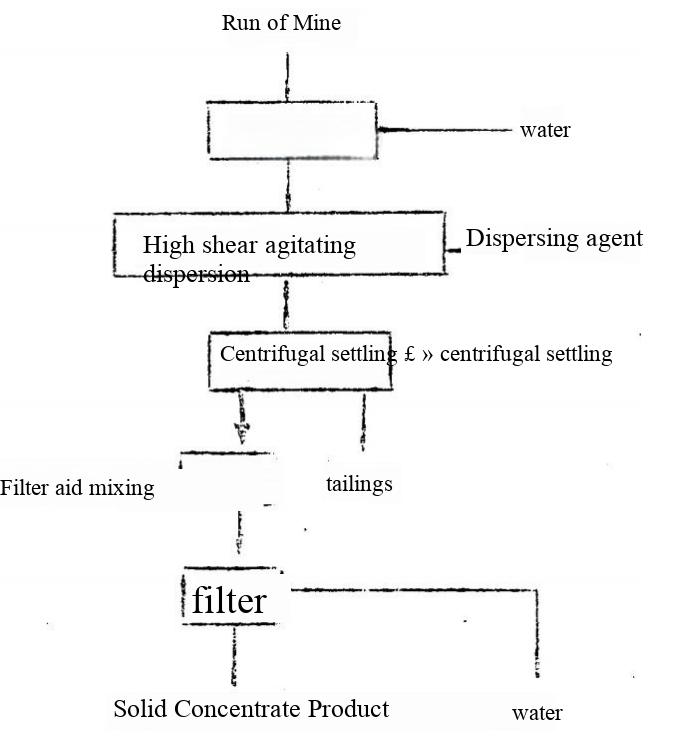
First, the raw weathered type sepiolite clay is mixed with water to prepare a pulp with a solids content of 20‑33%. A dispersant, polyphosphate (generally used in an amount of 0.1‑1.0% of the raw ore weight and added as a solution), is then added. The mixture is stirred in a mixer with relatively high shear force. The linear velocity of the mixer impeller is preferably 8‑28 m/s, and the stirring time should also be controlled—long enough to fully disperse the sepiolite from the impurity minerals in the raw ore, but not so long that the pulp viscosity increases and affects separation efficiency. The well‑dispersed raw pulp is then fed to a centrifuge capable of achieving a separation factor of 500‑3500. Under the action of the centrifugal force field, the impurity minerals in the pulp rapidly settle as tailings, while the sepiolite minerals remain essentially in suspension, thereby achieving separation. The separation time of the pulp in the centrifuge is generally 20‑60 seconds. The sepiolite concentrate suspension (i.e., the concentrate pulp) separated from the centrifuge is mixed with a filter aid, quicklime (generally used in an amount of 1‑3% of the solid concentrate weight and typically added as lime milk), and can then be filtered using a filter press. The resulting filter cake is the solid sepiolite concentrate product. This product still needs to be naturally dried or dried at low temperature and then pulverized to become the final product.
The significant advantages of the present invention are that centrifugal sedimentation is used to separate sepiolite from impurity minerals, resulting in fast separation speed and good separation efficiency. In addition, because the pulp concentration during separation is high, the solids content of the resulting concentrate pulp is also high, reducing the dewatering burden of the concentrate, thereby creating conditions for solving the dewatering problem of sepiolite concentrate pulp in industrial production. The filter aid used in this process greatly improves the filterability of the sepiolite concentrate pulp, so that simple and economical dewatering methods such as plate‑and‑frame filter pressing can be used. The present process is particularly effective for separating weathered type sepiolite clay with talc, quartz, etc., as the main associated minerals. Even for very low‑grade raw ores, a concentrate with a very high sepiolite content can be obtained, thereby enabling the development and utilization of large quantities of low‑grade sepiolite clay resources that previously could not be directly used industrially.
The beneficiation process flowsheet of the present invention is shown in the accompanying drawing.
Embodiments:


 English English
 Spanish
 Russian
 Arabic
 Swahili
 French
 Turkish
 Portuguese
 Korean
 Japanese
 German
 Italian