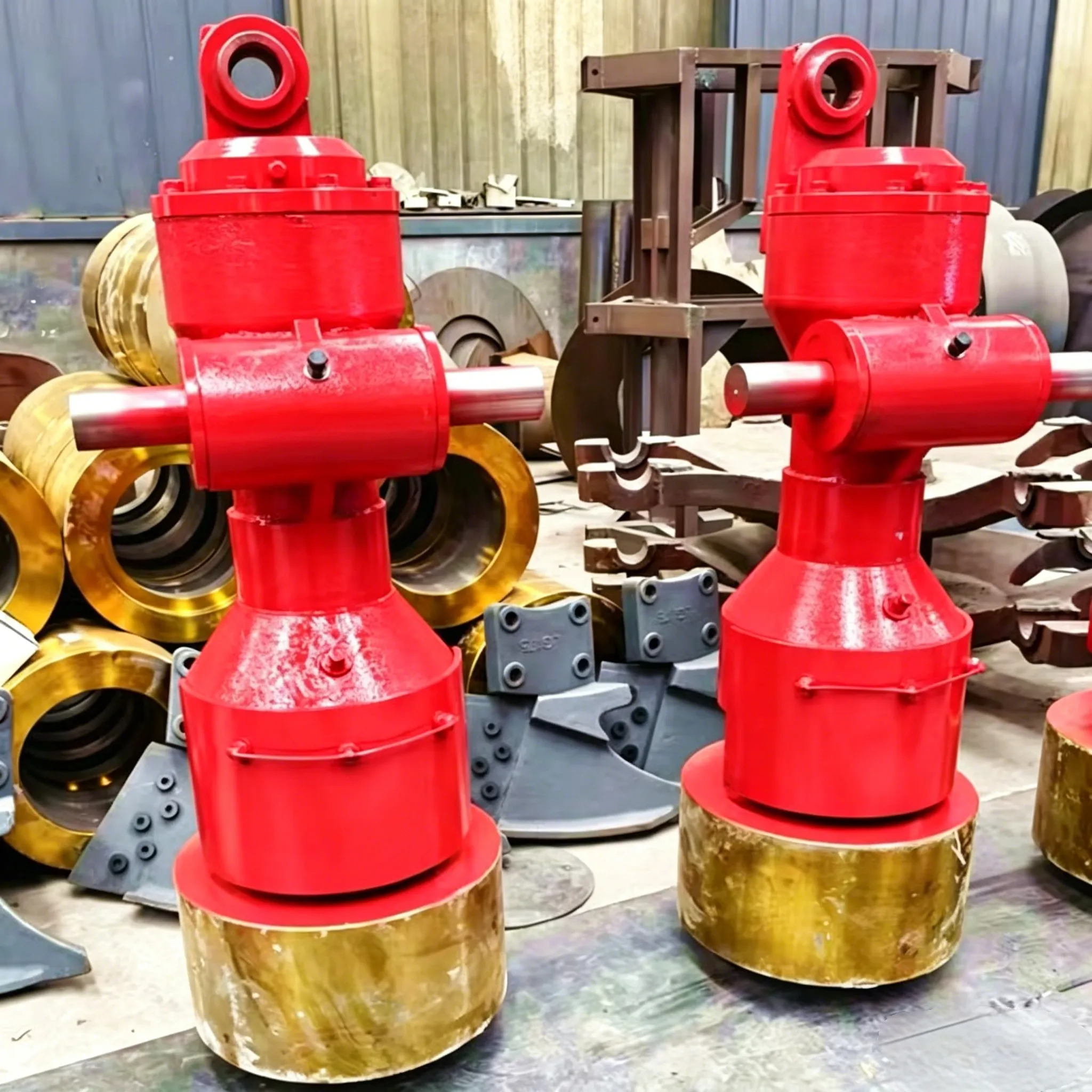
レイモンドミル用粉砕ローラー
1. 製品概要 粉砕ローラーは、……の中核となる動作部品であり、主要な摩耗部品です。

I. Technical Field: The present invention belongs to the technical field of borax ore beneficiation processes, and in particular relates to a borax ore flotation process.
II. Background Art: Borax ores often contain large amounts of impurities such as mud, sand, gypsum, mirabilite, and halite. The beneficiation process of borax ore is the process of removing these large amounts of impurities while leaving the borax concentrate. At present, the widely adopted borax ore beneficiation processes mainly include the direct flotation process with sulfuric acid decomposition and the dry borax ore mixed with acid decomposition flotation process. Both of these methods have disadvantages such as complex processes, difficulty in control, high acid consumption, insufficient reaction of the borax ore, low boron recovery, and high production costs.
III. Summary of the Invention: The object of the present invention is to design a new borax ore flotation process to address the above deficiencies of the prior art. Compared with the existing processes, this new process has the advantages of simple process, easy operation and control, low acid consumption, high boron recovery, and low production costs.
The technical solution is: The borax ore flotation process is characterized in that its process flowsheet comprises water decomposition, acid decomposition, rough flotation, cleaning flotation, and mechanical dewatering to obtain the product. The process conditions are: in the water decomposition step, the solid-to-liquid volume ratio of raw material to water is 1:0.6–4, and the decomposition time is 0.1–5 hours; in the acid decomposition step, the amount of concentrated sulfuric acid added is 10–40% by weight of the total calcium‑magnesium equivalent, and the acid decomposition time is 0.1–2 hours; in the rough flotation and cleaning flotation steps, the flotation agent is concentrated sulfuric acid; in the rough flotation step, the amount of flotation agent added each time is 7–25% by weight of the total calcium‑magnesium equivalent; in the cleaning flotation step, the amount of flotation agent added each time is 4–15% by weight of the total calcium‑magnesium equivalent. The concept of “total calcium‑magnesium equivalent weight percentage” is: first, analyze the calcium and magnesium ion content in the borax ore raw material, determine the contents of calcium and magnesium ions, then calculate the total amount of calcium and magnesium ions per unit volume (cubic meter) or unit weight (ton) of the borax ore raw material. Then, using this total amount of calcium and magnesium ions, convert it entirely on an equivalent basis to the total weight of concentrated sulfuric acid consumed to form calcium sulfate and magnesium sulfate; this is the total calcium‑magnesium equivalent. The total calcium‑magnesium equivalent weight percentage is calculated as a weight percentage; for example, if the total calcium‑magnesium equivalent is 100, the amount of concentrated sulfuric acid or flotation agent added is expressed in parts. For example: if the total calcium‑magnesium equivalent of the borax ore raw material after analysis is 80 kg/m³, and the amount of concentrated sulfuric acid added in the acid decomposition step is selected as 20% by weight of the total calcium‑magnesium equivalent, then the amount of concentrated sulfuric acid to be added in the acid decomposition step is 80 kg/m³ × 20% = 16 kg/m³, i.e., 16 kg of concentrated sulfuric acid should be added per cubic meter of borax ore raw material in the acid decomposition step. The amounts of flotation agent added in the subsequent rough flotation and cleaning flotation steps are also calculated in this manner.
In order to improve boron recovery, the rough flotation step uses at least two stages of rough flotation on the slurry, i.e., the slurry after the first rough flotation is subjected to a second or multiple rough flotations to further recover the boron remaining in the slurry after the previous rough flotation. In order to improve the B₂O₃ content of the borax concentrate product, the cleaning flotation step uses at least two stages of cleaning flotation on the boron‑bearing froth, i.e., the froth after the first cleaning flotation is subjected to a second or multiple cleaning flotations to remove impurity froth remaining after the previous cleaning flotation, thereby improving the grade of the borax product. The water decomposition step is the process of adding a certain amount of water to the low‑grade borax ore raw material, and after soaking for a certain period, causing the raw material to decompose and loosen. The acid decomposition step is the process of adding a certain amount of concentrated sulfuric acid to the slurry after water decomposition to further decompose organic and inorganic substances soluble in this acid, which is beneficial for subsequent rough flotation and improving boron recovery. The rough flotation step is the process of treating the slurry after acid decomposition, which contains large amounts of mud, sand and other impurities, by adding a certain proportion of flotation agent and using flotation means to remove mud, sand and other impurities. Since a single rough flotation can only recover part of the boron product from the slurry, in actual operation, two or multiple rough flotations should be adopted to subject the underflow after the previous rough flotation to further rough flotation to recover the remaining boron product. After combining the boron‑bearing froth products from each rough flotation, they proceed to the next cleaning flotation step. After multiple rough flotations, the underflow can also be subjected to scavenging to further recover the boron product therein. After mechanical separation and dewatering of the scavenged underflow, the aqueous solution can be returned to the water decomposition step for reuse, and the mud cake is discharged as tailings. The cleaning flotation step is the process of adding flotation agent to the combined boron‑bearing froth from rough flotation for flotation. The boron‑bearing froth after each cleaning flotation can be subjected to the next cleaning flotation to increase the boron content in the product. The underflow after each cleaning flotation is returned to the rough flotation step for processing. The mechanical dewatering step is the process of removing moisture from the boron‑bearing froth product after multiple cleaning flotations by mechanical means to obtain the borax concentrate product. The mechanically removed water can be returned to the cleaning flotation step for reuse. The entire process is carried out at normal temperature and pressure.
Compared with the current processes, the process of the present invention has the advantages of simple process, easy control and operation, low acid consumption, low production cost, high boron recovery, and flexible adjustment of the borax concentrate product according to user needs.
IV. Detailed Description of the Embodiments:
例 1: Take 10 m³ of borax ore with a B₂O₃ content of about 4–10%. Analysis shows that the total calcium‑magnesium equivalent per cubic meter of borax ore is 60 kg of concentrated sulfuric acid. In the water decomposition step, 20 m³ of water is added, and the mixture is stirred and soaked for decomposition for 1 hour. In the acid decomposition step, the amount of concentrated sulfuric acid added is selected as 20% by weight of the total calcium‑magnesium equivalent, so the amount should be 10 m³ × 60 kg/m³ × 20% = 120 kg of concentrated sulfuric acid, with an acid decomposition time of 1 hour. In the rough flotation step, the amount of flotation agent added each time is selected as 10% by weight of the total calcium‑magnesium equivalent, so it should be 10 m³ × 60 kg/m³ × 10% = 60 kg of flotation agent. After the first rough flotation, the slurry is subjected to a second rough flotation. In the cleaning flotation step, the amount of flotation agent added each time is selected as 8% by weight of the total calcium‑magnesium equivalent, so it should be 10 m³ × 60 kg/m³ × 8% = 48 kg of concentrated sulfuric acid. After two stages of cleaning flotation on the boron‑bearing froth, centrifugal dewatering is applied to obtain a borax concentrate product with a B₂O₃ content of 30%.
例 2: Take 20 m³ of borax ore with a total calcium‑magnesium equivalent of 10 kg of concentrated sulfuric acid and a B₂O₃ content of 4.8–9.2%, add 30 m³ of water, and soak for decomposition for 2 hours. In the acid decomposition step, the amount of concentrated sulfuric acid added is selected as 30% by weight of the total calcium‑magnesium equivalent, so 420 kg of concentrated sulfuric acid should be added, with an acid decomposition time of 1 hour. In the rough flotation step, the amount of flotation agent added each time is selected as 20% by weight of the total calcium‑magnesium equivalent, so it should be 280 kg. The slurry is subjected to three stages of rough flotation, and the flotation froths are combined. In the cleaning flotation step, the amount of flotation agent added each time is selected as 10% by weight of the total calcium‑magnesium equivalent, so it should be 140 kg. After three stages of cleaning flotation on the boron‑bearing froth and subsequent centrifugal dewatering, a borax concentrate product with 40% B₂O₃ is obtained.
 English English
 Spanish
 Russian
 Arabic
 Swahili
 French
 Turkish
 Portuguese
 Korean
 Japanese
 German
 Italian