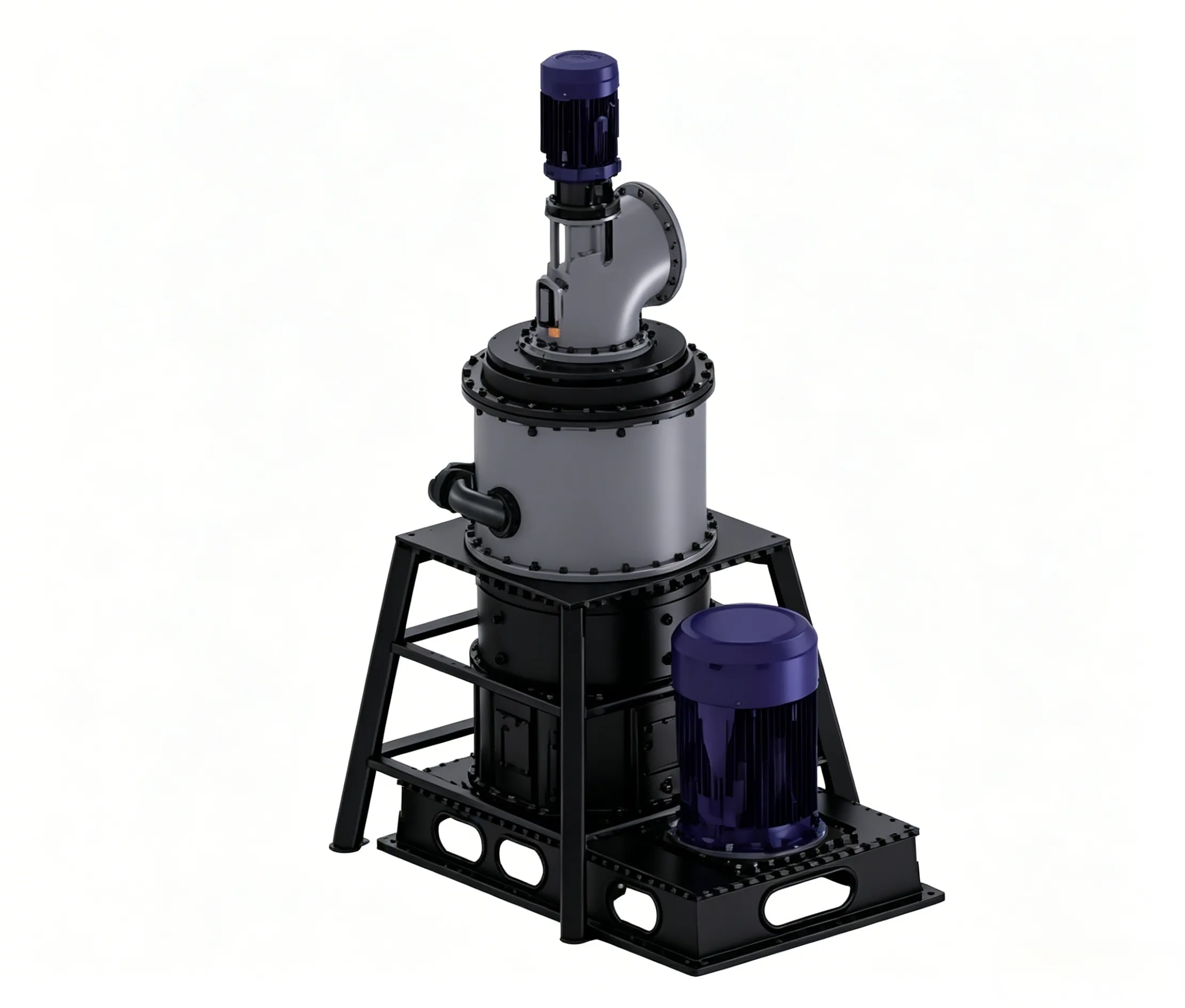
GXMシリーズ 超微粉砕
超微粉砕 本機は、社内で分類された高圧超微粉砕ローラーミルであり、……


Jaw crushers and impact crushers have completely different functional divisions. The jaw crusher is mainly applied for primary coarse crushing, which crushes large raw ore from mines into medium-sized stones. The impact crusher is designed for secondary medium & fine crushing as well as aggregate shaping, producing high-quality standard sand and gravel aggregates that meet national construction specifications. Most sand and gravel production lines adopt the combined configuration of “jaw crusher + impact crusher” in series. Below is a detailed analysis of selection criteria from all dimensions.
表格
| Comparison Item | Jaw Crusher | Impact Crusher |
|---|---|---|
| Process Position in Production Line | Primary Coarse Crushing (The preferred primary crusher) | Secondary/Tertiary Medium & Fine Crushing, Aggregate Shaping |
| Max Feeding Size | 500~1500mm, capable of directly handling oversized blasted raw ore | Generally ≤800mm; only processes medium and small stones after coarse crushing, unable to feed oversized raw ore directly |
| Crushing Principle | Compression crushing: The movable jaw swings reciprocally to squeeze and break stones | Impact crushing: High-speed blow bars repeatedly strike and throw stones to realize fragmentation |
| Applicable Material Hardness | Covers soft, medium-hard and extremely hard materials (granite, basalt, iron ore, construction waste, etc.), compressive strength ≤350MPa | Only suitable for brittle materials with medium hardness or below (limestone, dolomite, coal gangue, construction waste); not allowed for high-hardness & high-silicon ores, which will cause rapid wear of blow bars |
| Adaptability to Wet & Clay Materials | Strong adaptability; high-clay and high-moisture ore rarely causes crushing chamber blockage | Wet sticky materials easily adhere to impact plates and rotors, leading to high failure rates in rainy and muddy working conditions |
| Discharge Size | Coarse materials: 50~350mm, wide discharge range with low adjustment precision | Fine materials: 0~60mm, flexible adjustable range, can directly produce finished sand and gravel |
| Finished Aggregate Shape | High proportion of flaky and elongated particles, poor shape, only suitable for roadbed backfilling and tailings bedding | Cubic aggregate proportion exceeds 95%, regular and rounded shape, meeting the standard of high-grade building aggregates for highways, commercial concrete, etc. |
| Reduction Ratio (Feed Size / Discharge Size) | Small reduction ratio of 4~6; a single unit cannot directly produce fine sand and gravel | Large reduction ratio of 10~15; can process bulk stones into finished aggregates in one pass |
| Single Machine Capacity | 5~1200t/h, stable intermittent operation | 30~800t/h, continuous impact operation with higher discharging efficiency under medium & small capacity |
| Initial Investment Cost | Lower purchase price for the same capacity, low civil construction and installation cost | Slightly higher price than jaw crushers of the same specification, requiring shock absorption and noise reduction foundation |
| Wear Parts & Maintenance | Key wear parts: jaw plates and toggle plates, low spare part cost, easy replacement operable by ordinary maintenance workers | Key wear parts: blow bars and impact plates with relatively high unit price; regular inspection and replacement of blow bars are required when processing hard materials frequently |
| Noise & Dust | High vibration, loud noise and large dust emission | Louder impact noise, requiring matched sealed dust removal equipment |
✅ Must choose Jaw Crusher
Impact crushers have limited feeding size and cannot accept large raw ore blocks; forced feeding will directly jam rotors and damage blow bars.
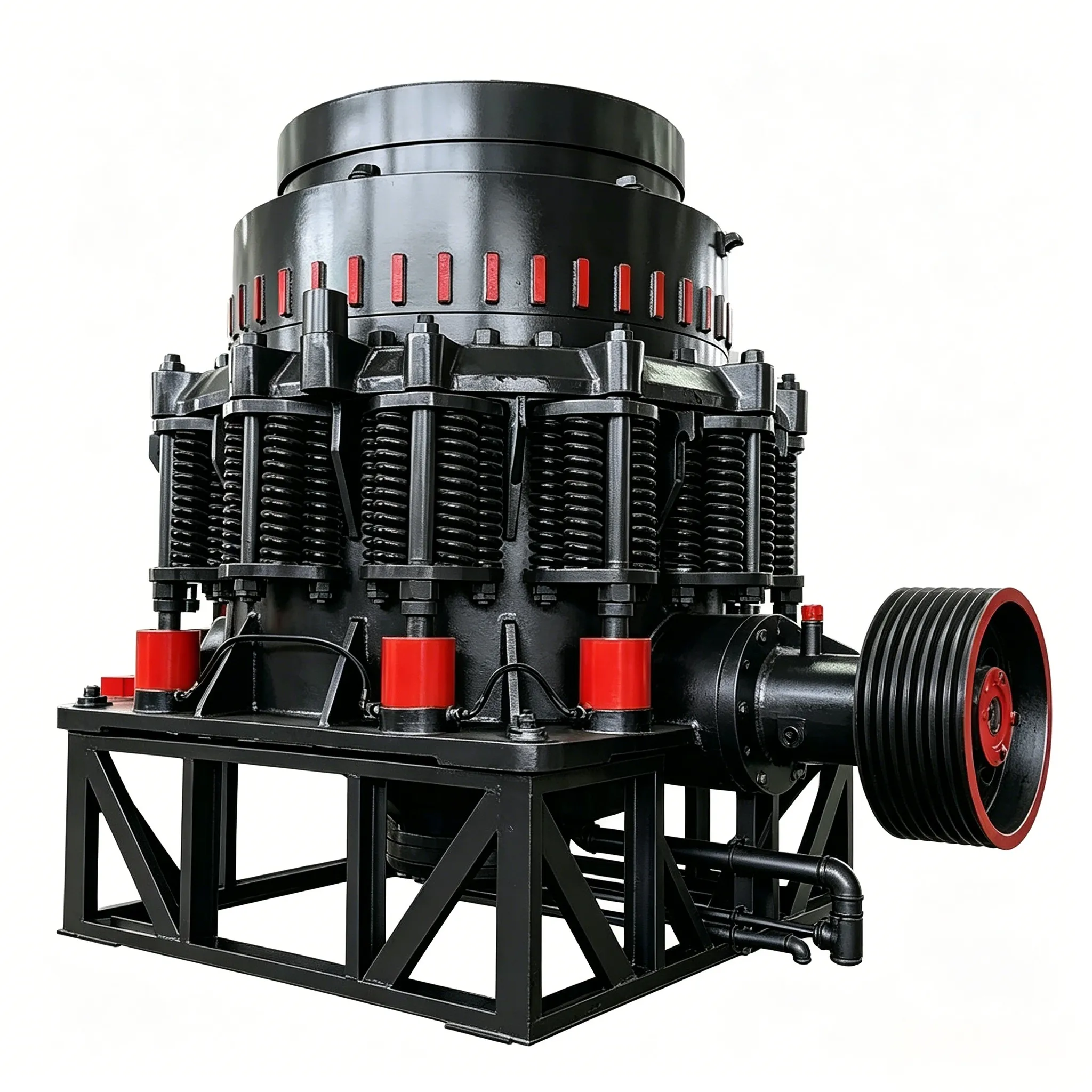
Standard Process: Vibrating Feeder + Jaw Crusher + Belt Conveyor → Impact Crusher / Cone Crusher for secondary crushing.
✅ Prioritize the combination of Jaw Crusher + Impact Crusher
✅ Only use jaw crusher for primary coarse crushing; never adopt impact crusher
Hard rocks will cause rapid wear of blow bars, resulting in operating costs exceeding production profits. Cone crusher is recommended for secondary crushing instead of impact crusher.
✅ Choose Jaw Crusher preferentially
Damp and muddy materials easily block the crushing chamber of impact crushers, while the compression structure of jaw crushers avoids material adhesion to ensure all-weather stable production.
✅ Choose Fine Jaw Crusher
If high-quality aggregates are not required and only coarse filler for road construction is needed, a single fine jaw crusher can complete both coarse and fine crushing with the lowest investment and convenient relocation.
✅ Standard Configuration: Primary Jaw Crusher + Secondary Impact Crusher
The jaw crusher handles large raw materials, and the impact crusher undertakes shaping and classified discharging, which guarantees both high productivity and finished aggregate compliance with national sales standards.
❌ Wrong. Impact crushers have narrow feed openings and weak anti-impact capacity; large hard stones easily jam the equipment. Besides, hard rocks will wear out blow bars in a short period, leading to extremely high long-term operating costs.
❌ Wrong. Impact crushers are only suitable for medium & soft materials. For high-hardness rocks requiring high-quality aggregates, cone crushers shall be adopted for secondary crushing instead of impact crushers.
❌ Wrong. Jaw crushers have higher maximum throughput under the same model specification. The core advantages of impact crushers lie in fine discharge and good aggregate shape rather than pure high capacity.
 English English
 Spanish
 Russian
 Arabic
 Swahili
 French
 Turkish
 Portuguese
 Korean
 Japanese
 German
 Italian