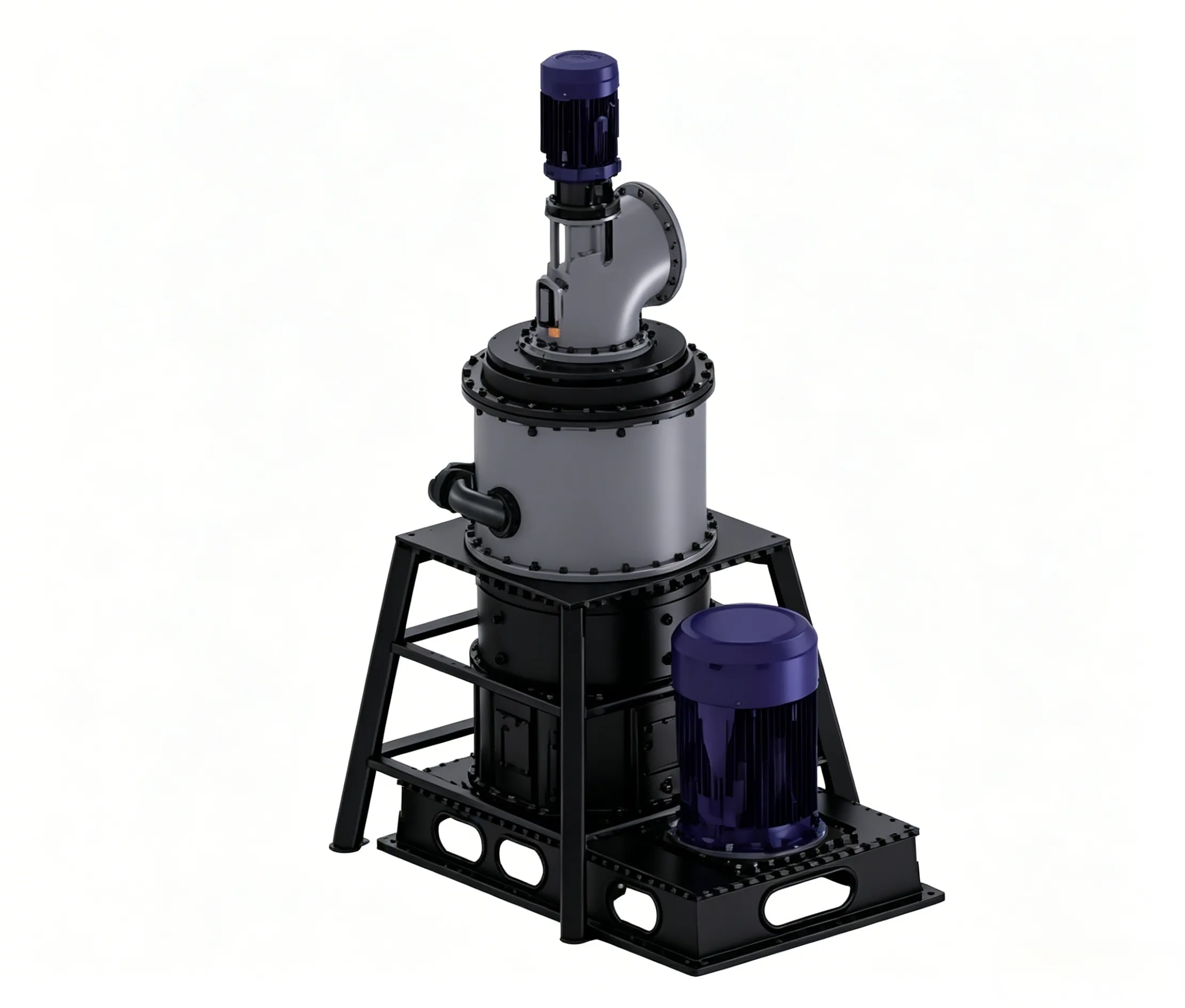
Moagem ultrafina da série GXM
moagem ultrafina Esta máquina é um moinho de rolos ultrafino de alta pressão com classificação interna,…

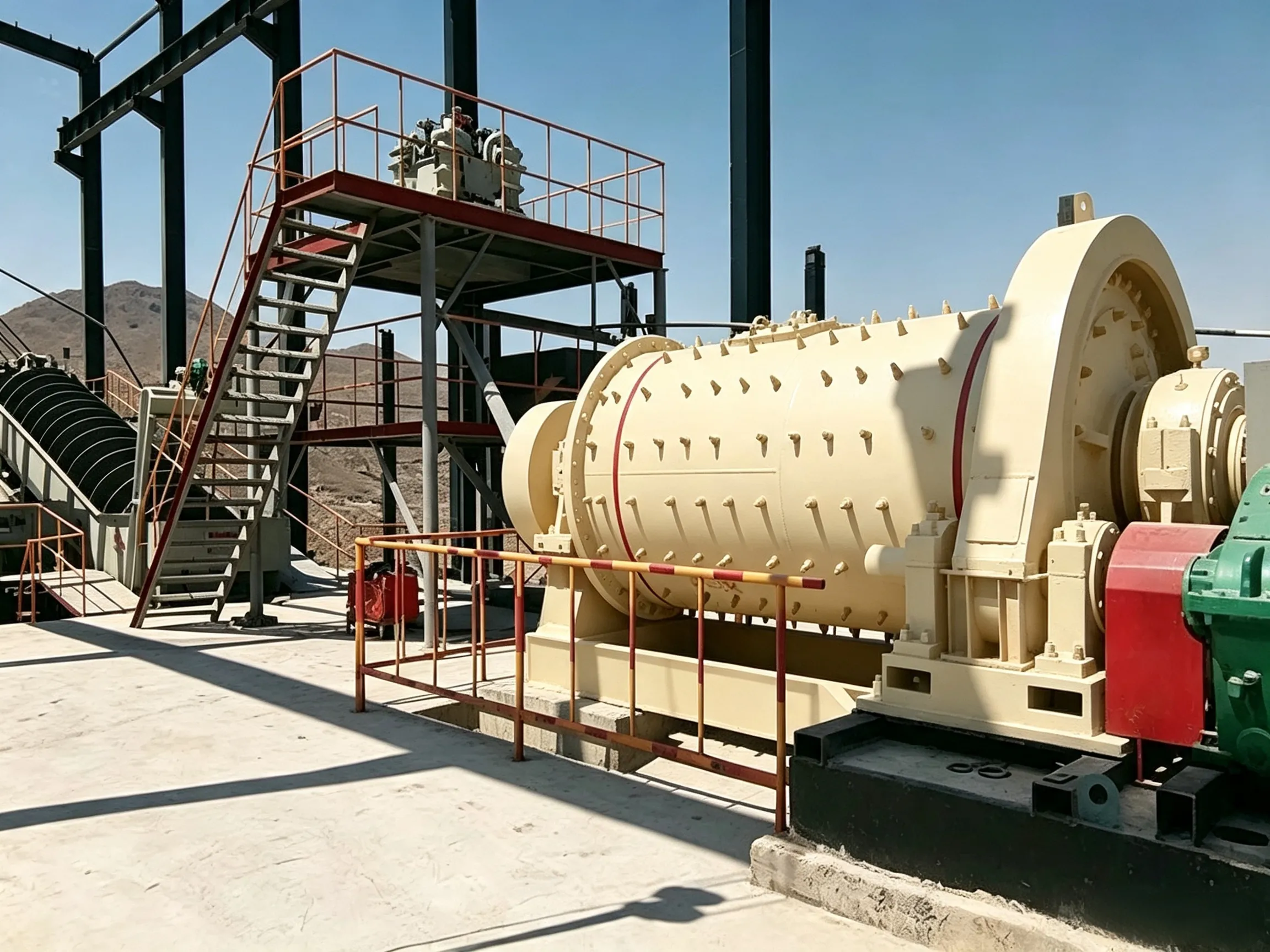
The present invention relates to a method for mineral separation, and in particular to a method for mercury-antimony flotation separation of mercury-antimony paragenetic sulfide ore.
In the background art, current domestic and international industrial separation of mercury and antimony from mercury-antimony paragenetic sulfide ores employs pyrometallurgical methods and combined beneficiation-metallurgy processes. Among them, the process flowsheet of “bulk flotation → bulk concentrate → mercury-antimony separation (with addition of potassium dichromate) → mercury and antimony products” is complex and yields unsatisfactory indices. The “bulk flotation – bulk concentrate distillation separation” method, although giving better indices, involves complicated process and operating conditions and high production costs. The “bulk concentrate – low-temperature roasting (400°C–450°C)” separation method, though with a narrow temperature control range, still causes desulfurization of stibnite, producing antimony oxides, especially high-valent antimony oxides, which complicates the antimony extraction process and increases production costs; moreover, mercury recovery is only 75.7% and antimony recovery only 85.5%. The above several mercury-antimony separation methods generally suffer from drawbacks such as high cost, high energy consumption, environmental pollution, and complex processes.
The object of the present invention is to overcome the above deficiencies in the background art and to provide a method for mercury-antimony flotation separation of mercury-antimony paragenetic sulfide ore. By using this method, the recoveries of mercury and antimony can be effectively improved, the process is simple, and production costs are reduced.
To achieve the above object, the present invention adopts the following technical solution:
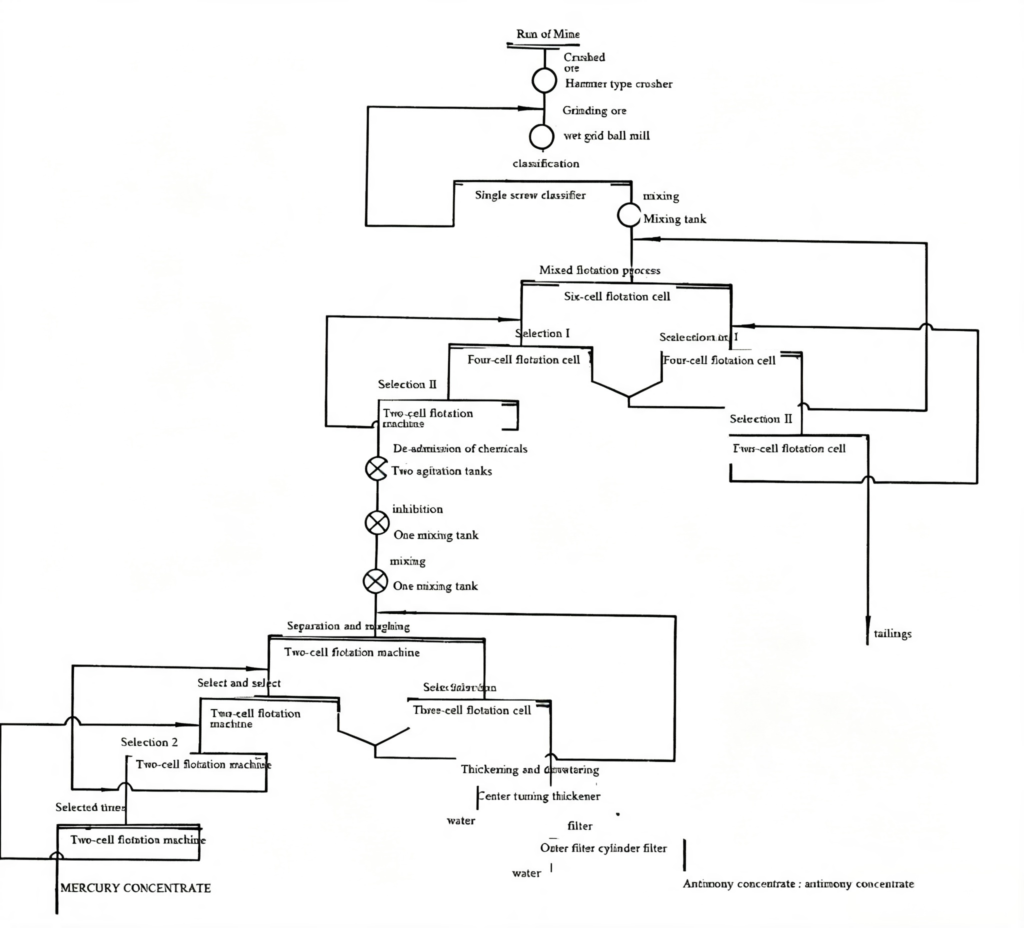
A method for mercury-antimony flotation separation of mercury-antimony paragenetic sulfide ore, characterized in that the method sequentially comprises the following steps: raw ore → crushing → grinding and classification → bulk flotation → bulk concentrate de‑reagenting → selective depression → separation flotation → concentrate dewatering.
The bulk flotation operation may include one stage of roughing, two stages of cleaning, and two stages of scavenging.
The separation flotation operation may include one stage of roughing, three stages of cleaning, and one stage of scavenging.
The reagents used in bulk flotation may include activator, collector, and frother.
The activator used in bulk flotation may be lead nitrate, the collector may be butyl xanthate, and the frother may be pine oil.
In the bulk concentrate de‑reagenting, a de‑reagent agent may be added, the pulp density may be 10%, the dosage of de‑reagent agent may be 250 g/t, and the de‑reagenting time may be 2.5 hours.
In the selective depression, the pulp density may be 10%, the dosage of potassium dichromate may be 1000 g/t, and the depression time may be 1.25 hours.
The raw ore particle size may be 0–50 mm, the crushed ore size may be 1–10 mm, the overflow concentration of grinding and classification may be 30%, and the overflow fineness may be 75% passing -0.074 mm.
The accompanying drawing is a process flowsheet of the present invention.
The present invention will be described in further detail below with reference to the accompanying drawing. Referring to the drawing, the process flowsheet of the mercury-antimony flotation separation method for mercury-antimony paragenetic sulfide ore according to the present invention is: raw ore → crushing → grinding and classification → bulk flotation → bulk concentrate de‑reagenting → selective depression → separation flotation → concentrate dewatering. The individual steps in the process flowsheet are described in further detail below:
Compared with the prior art, the present invention has the following advantages and beneficial effects:
Table 1 Reagent scheme in bulk flotation
| Reagent name / Addition point | Lead nitrate (g/t) | Butyl xanthate (g/t) | Pine oil (g/t) |
|---|---|---|---|
| Roughing (conditioning tank) | 750 | 200 | 50 |
| Scavenging I | 300 | 100 | 25 |
| Scavenging II | 150 | 50 | 10 |
| Cleaning I | / | / | / |
| Cleaning II | / | / | / |
| Cleaning III | / | / | / |
Table 2 Characteristics of beneficiation equipment in bulk flotation cycle
| Palco | Number of cells | Unit cell volume (m³) | Solids content (%) | Flotation time (min) |
|---|---|---|---|---|
| Conditioning tank | 1 | 0.58 | 30 | 13.8 |
| Roughing | 6 | 0.35 | 24.08 | 26 |
| Cleaning I | 4 | 0.35 | 15.45 | / |
| Cleaning II | 2 | 0.35 | 12.50 | / |
| Scavenging I | 4 | 0.35 | 21.08 | 12 |
| Scavenging II | 4 | 0.35 | 20.50 | 15 |
Table 3 Reagent scheme in separation flotation
| Reagent name / Addition point | Butyl xanthate (g/t) | Pine oil (g/t) | Potassium dichromate (g/t) |
|---|---|---|---|
| Roughing (conditioning tank) | 20 | 5 | / |
| Cleaning I | / | / | 500 |
| Cleaning II | / | / | 200 |
| Cleaning III | / | / | / |
| Scavenging | 15 | 3 | / |
Table 4 Characteristics of beneficiation equipment in separation flotation cycle
| Palco | Number of cells | Unit cell volume (m³) | Solids content (%) |
|---|---|---|---|
| Conditioning tank | 1 | 0.58 | 10 |
| Roughing | 2 | 0.35 | 6.27 |
| Cleaning I | 2 | 0.35 | 3.53 |
| Cleaning II | 2 | 0.35 | 3.52 |
| Cleaning III | 2 | 0.35 | 3.39 |
| Scavenging | 3 | 0.35 | 5.26 |

 English English
 Spanish
 Russian
 Arabic
 Swahili
 French
 Turkish
 Portuguese
 Korean
 Japanese
 German
 Italian