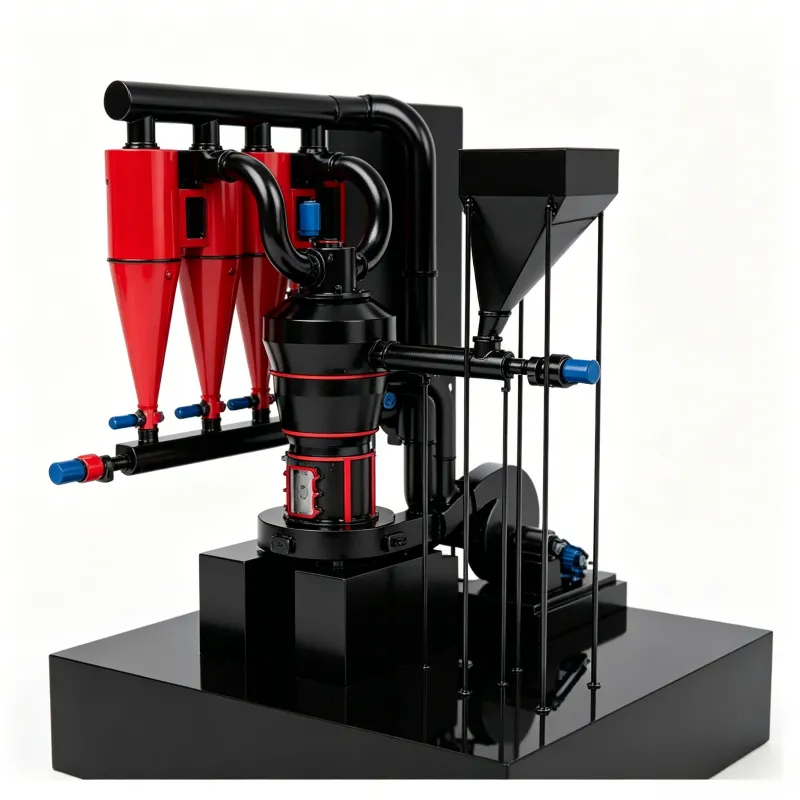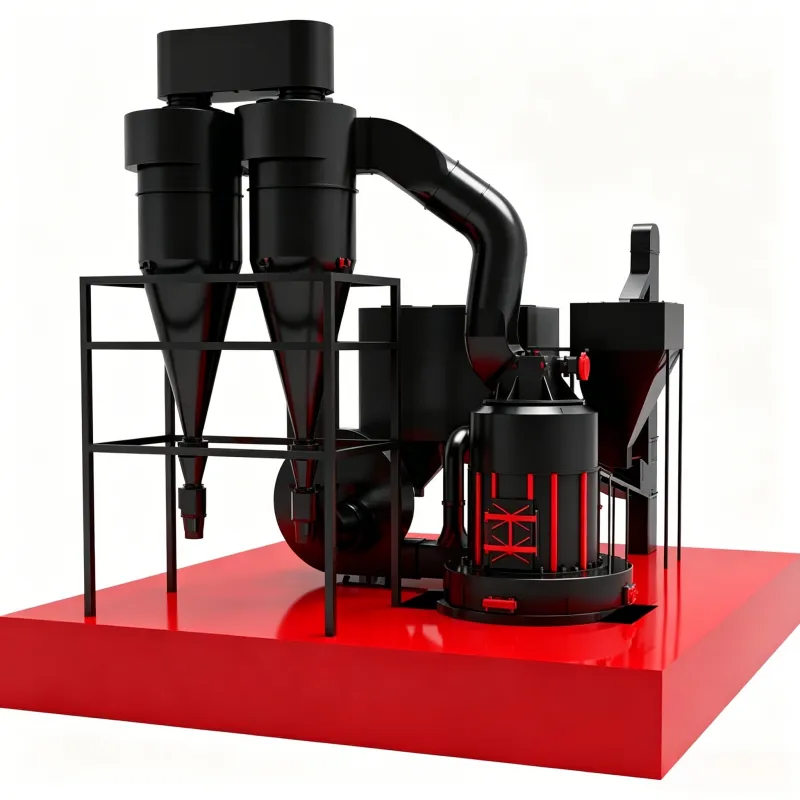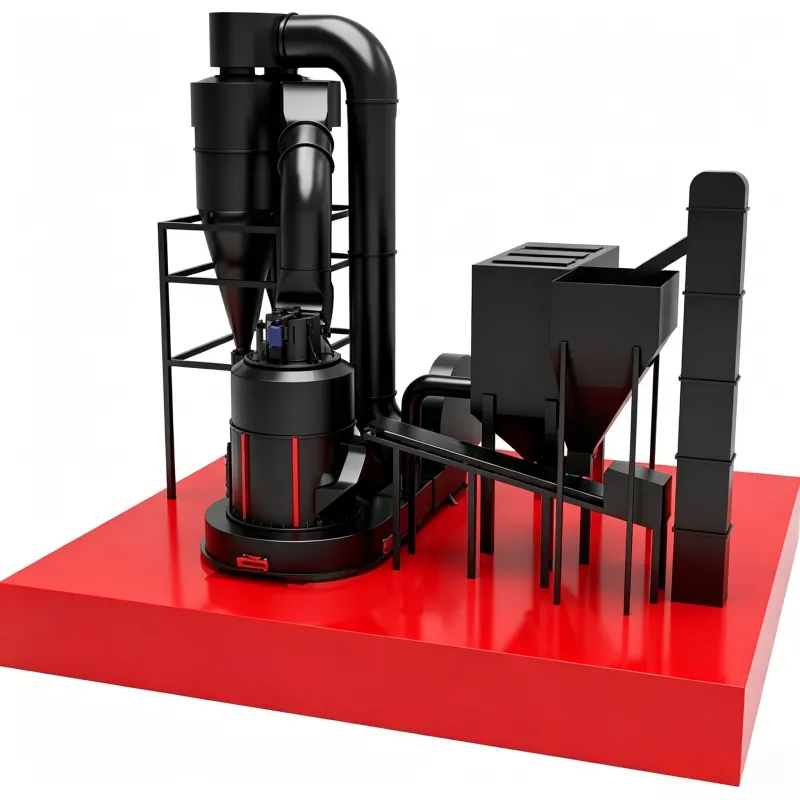
Небольшая мельница Raymond
Введение в малую мельницу Раймонда Малая мельница Раймонда KX является...

The Tungsten Cleaning Plant of Ganzhou Nonferrous Metals Smelter was built in 1954 and put into operation in 1958. It mainly uses dry magnetic separation, gravity tabling‑flotation (shaking table flotation), scheelite tabling‑flotation, flotation, and electrostatic separation to process tungsten‑tin rough concentrates and middlings from small and medium‑sized tungsten mines in southern Jiangxi Province as well as from civilian adits throughout the province. The design capacity is 30 t/d, recovering five metals: tungsten, tin, molybdenum, bismuth, and copper. After more than ninety years of production practice, large quantities of tailings are discharged daily into the tailings dam for storage. These tailings still contain various valuable metallic minerals. To fully utilize mineral resources and achieve resource recovery from the old tailings, the cleaning plant conducted research on comprehensively recovering copper, tungsten, silver, and other valuable metals from the tailings dam, and succeeded in industrial practice.
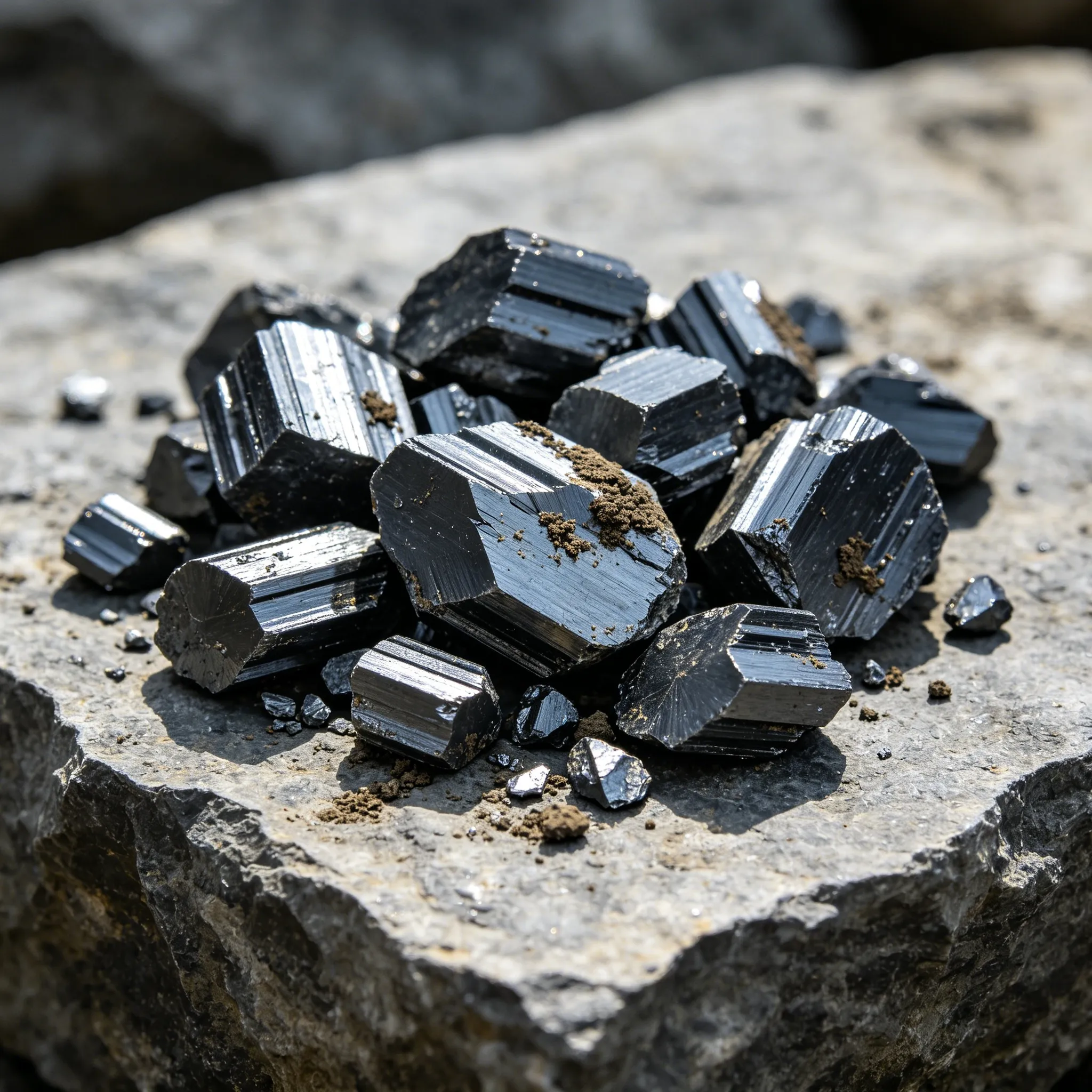
The main metallic minerals in the tailings are chalcopyrite, chalcocite, bismuthinite, wolframite, scheelite, molybdenite, pyrite, arsenopyrite, pyrrhotite, etc. Non‑metallic minerals include quartz, calcite, mica, fluorite, etc. The tailings contain a high proportion of slimes, and the mineral surfaces are slightly oxidized. Copper and bismuth are intergrown and have similar floatability. Wolframite is intergrown with cassiterite and quartz. Precious metal silver is associated with lead‑bismuth‑sulfur minerals. Copper mainly occurs as chalcopyrite in compact form, partially liberated. The particle size of the tailings material is in the range of –0.043 mm to +0.010 mm, and the valuable minerals are essentially liberated. The bulk density of the material is 1.8 g/cm³, and the specific gravity is 2.76 g/cm³. The multi‑element analysis results of the tailings are shown in Table 4‑64. The size analysis results are given in Table 4‑65. Table 4‑65 shows that the material contains a high proportion of fine particles, with the –0.104 mm +0.074 mm fraction accounting for 49.92%, and the valuable metals WO₃ and Cu in this fraction represent 55.41% and 56.08%, respectively. The tailings have high contents of arsenic, iron, sulfur, and bismuth, and these minerals have similar floatability to copper minerals, making it difficult to upgrade the copper grade by flotation.
Table 4‑64 Multi‑element analysis results of tailings (mass fraction / %)
| Cu | WO₃ | Сн | Zn | Би | Scheelite WO₃ | Как | Ag | Fe | SiO₂ | S |
|---|---|---|---|---|---|---|---|---|---|---|
| 2.02 | 5.47 | 1.06 | 3.67 | 1.35 | 2.22 | 2.15 | 0.025 | 8.9 | 30 | 24.08 |
Table 4-65 Material Sieve Analysis Results
| Particle size/mesh | Yield /% | Grade / % | Metal distribution rate /% | |||
| individual | Cumulative | WO₃ | Cu | WO₃ | Cu | |
| +30 | 3.89 | 3.89 | 3.27 | 0.74 | 2.32 | 1.44 |
| -30+40 | 5.54 | 8.43 | 3.91 | 0.81 | 3.25 | 1.83 |
| -40+60 | 7.46 | 15.89 | 3.99 | 1.28 | 5.45 | 4.77 |
| -60+80 | 11.34 | 27.23 | 3.56 | 2.04 | 7.40 | 11.55 |
| -80+120 | 11.02 | 38.25 | 3.20 | 1.78 | 6.46 | 9.80 |
| -120+150 | 2.92 | 41.17 | 3.20 | 2.01 | 1.70 | 2.93 |
| -150+200 | 49.92 | 91.09 | 6.05 | 2.25 | 55.41 | 56.08 |
| -200+300 | 4.86 | 95.95 | 9.54 | 2.15 | 8.50 | 5.21 |
| -300 | 4.05 | 100.00 | 12.81 | 3.16 | 9.51 | 6.39 |
| total | 100.00 | 5.49 | 2.01 | 100.00 | 100.00 | |
Based on small‑scale tests and industrial trials, the production process for tailings re‑processing (see Figure 4‑45) was determined as follows: the tailings are first subjected to de‑slime and de‑reagent treatment, then classified and ground. In flotation, one roughing stage, two scavenging stages, and three cleaning stages produce a copper concentrate. The flotation tailings are then treated on shaking tables to discard gangue minerals such as quartz, followed by low‑intensity magnetic separation to remove iron, and finally sent to a wet high‑intensity magnetic separator to recover a wolframite fine slime concentrate and a scheelite‑cassiterite middling. The wolframite fine slime is sent to the plant’s tungsten hydrometallurgical workshop for APT production, while the copper concentrate is sold externally.
The process conditions for the production flow are shown in Table 4‑66.
Table 4‑66 Process conditions measured during production
| Работа | Process conditions (reagent dosage in g/t of raw ore) |
|---|---|
| De‑reagent | Sodium sulfide 3600 |
| Grinding | –0.074 mm 58%, lime 3800, sodium silicate 2000 |
| Flotation conditioning | Pulp density 30%, sodium sulfite 1400, zinc sulfate 1400, butyl xanthate 120, butyl xanthate ester (or butyl xanthogenate nitrile?) 50 |
| Flotation roughing | Kerosene 30, pine oil 60, pH 8.5–9 |
| Flotation cleaning | Sodium sulfite 1600, zinc sulfate 1600, lime 1000 |
| Flotation scavenging | Butyl xanthate 60, butyl xanthate ester 20 |
| Gravity tailings discard | Pulp density 20%, stroke 12 mm, stroke rate 310 r/min |
| Low‑intensity iron removal | Pulp density 30%, magnetic field intensity 1.15 × 10⁵ A/m |
| Wet high‑intensity magnetic separation | Pulp density 28%, background field intensity 11.19 × 10⁴ A/m, magnetic gap 1.45 mm |
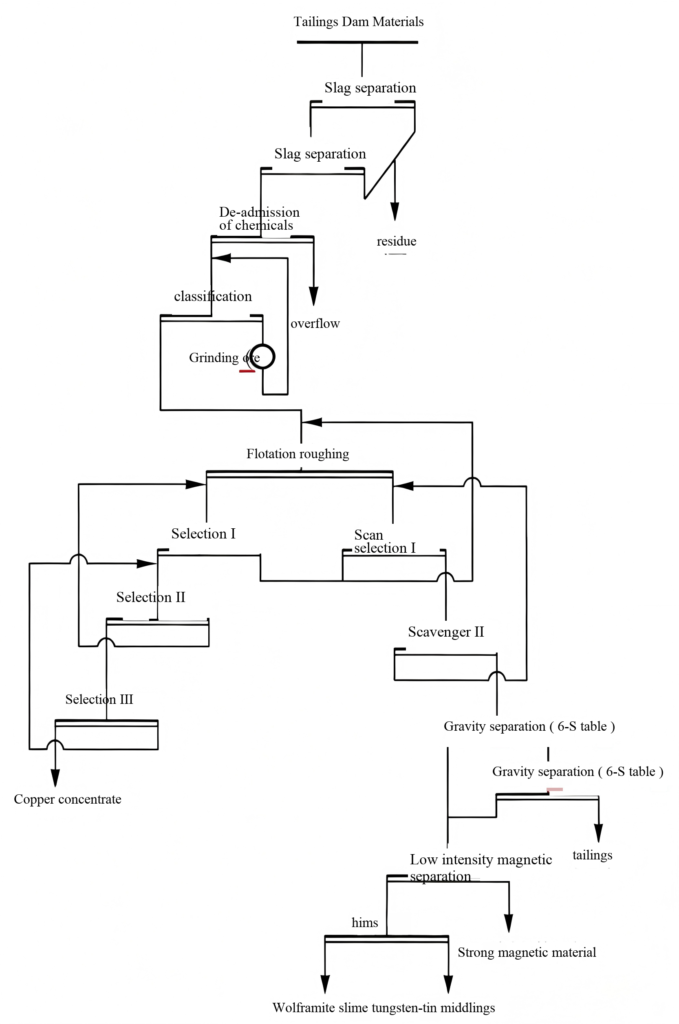
Figure 4‑45 Production practice flowsheet for tailings re‑processing
Production indices are shown in Table 4‑67.
Table 4‑67 Production indices (%)
| Raw ore grade | содержание концентрата | recovery rate | ||||||
| Cu | Ag | WO₃ | copper concentrate | Tungsten fine slime concentrate | Cu | Ag | Wo₃ | |
| Cu | Ag | Wo₃ | ||||||
| 1.99 | 0.032 | 5.57 | 13.41 | 0.1479 | 23.64 | 83.88 | 58.23 | 41.16 |
During the two‑year period from July 1994 to July 1996, a total of 56.2 tonnes of copper metal, 47.6 tonnes of tungsten fine slime metal (WO₃), and 292 kg of silver were recovered.