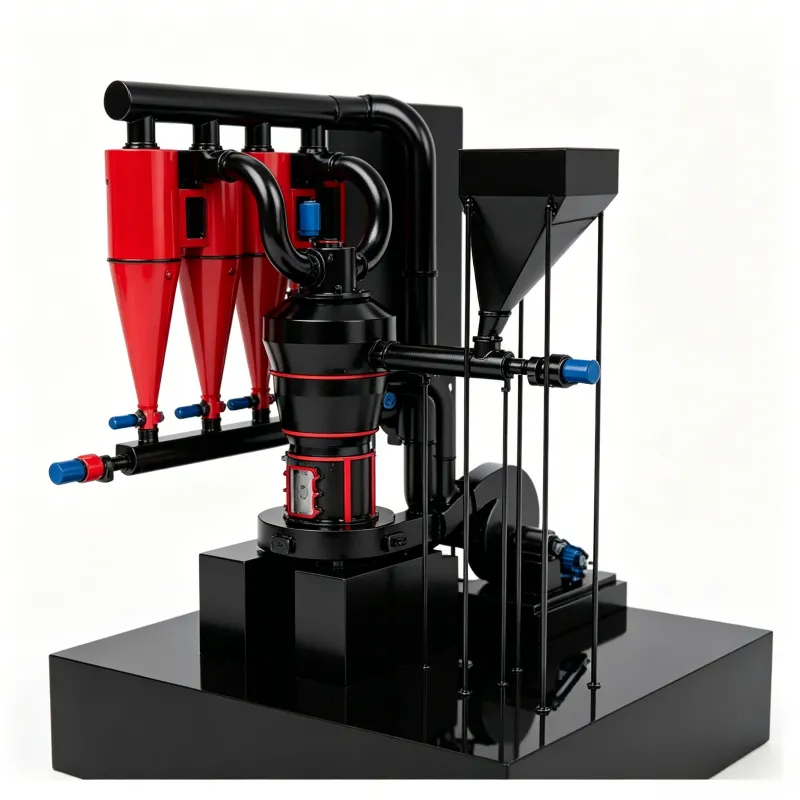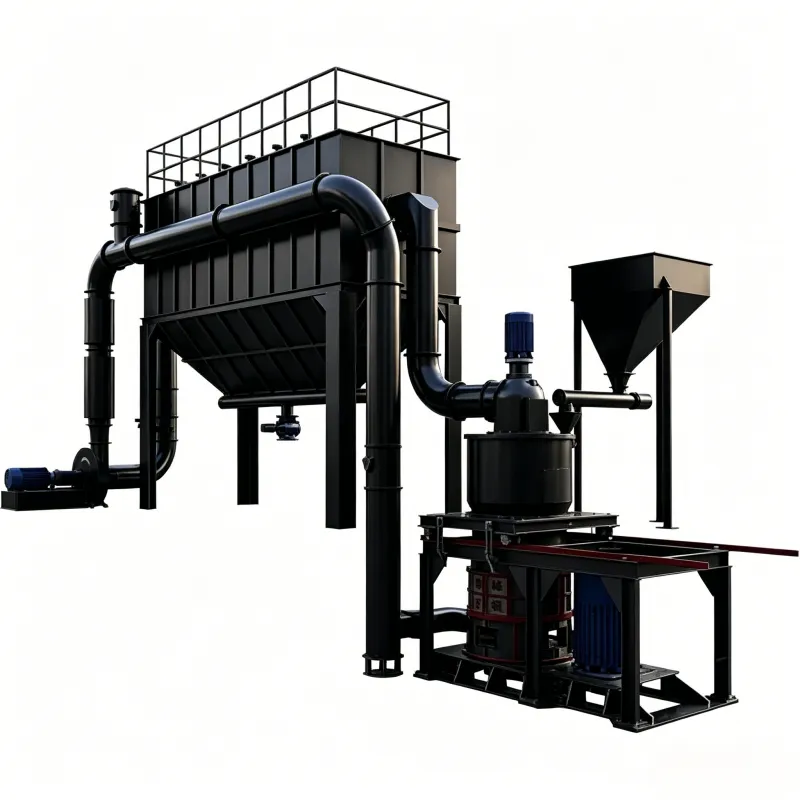
Кольцевая валковая мельница сверхтонкого помола
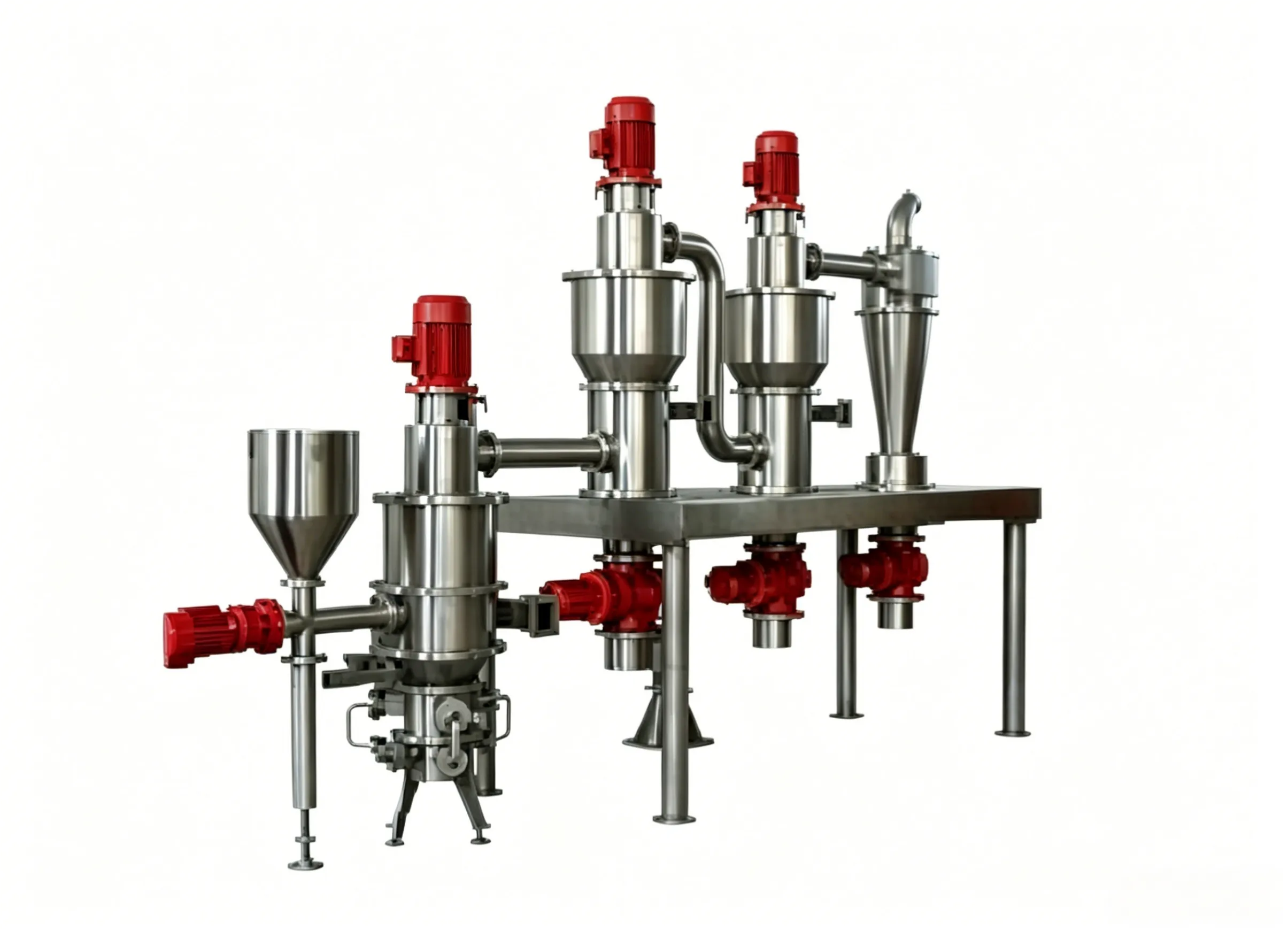
Введение в ультрамелкую кольцевую вальцовую мельницу Ультрамелкая кольцевая вальцовая мельница KXHGM…

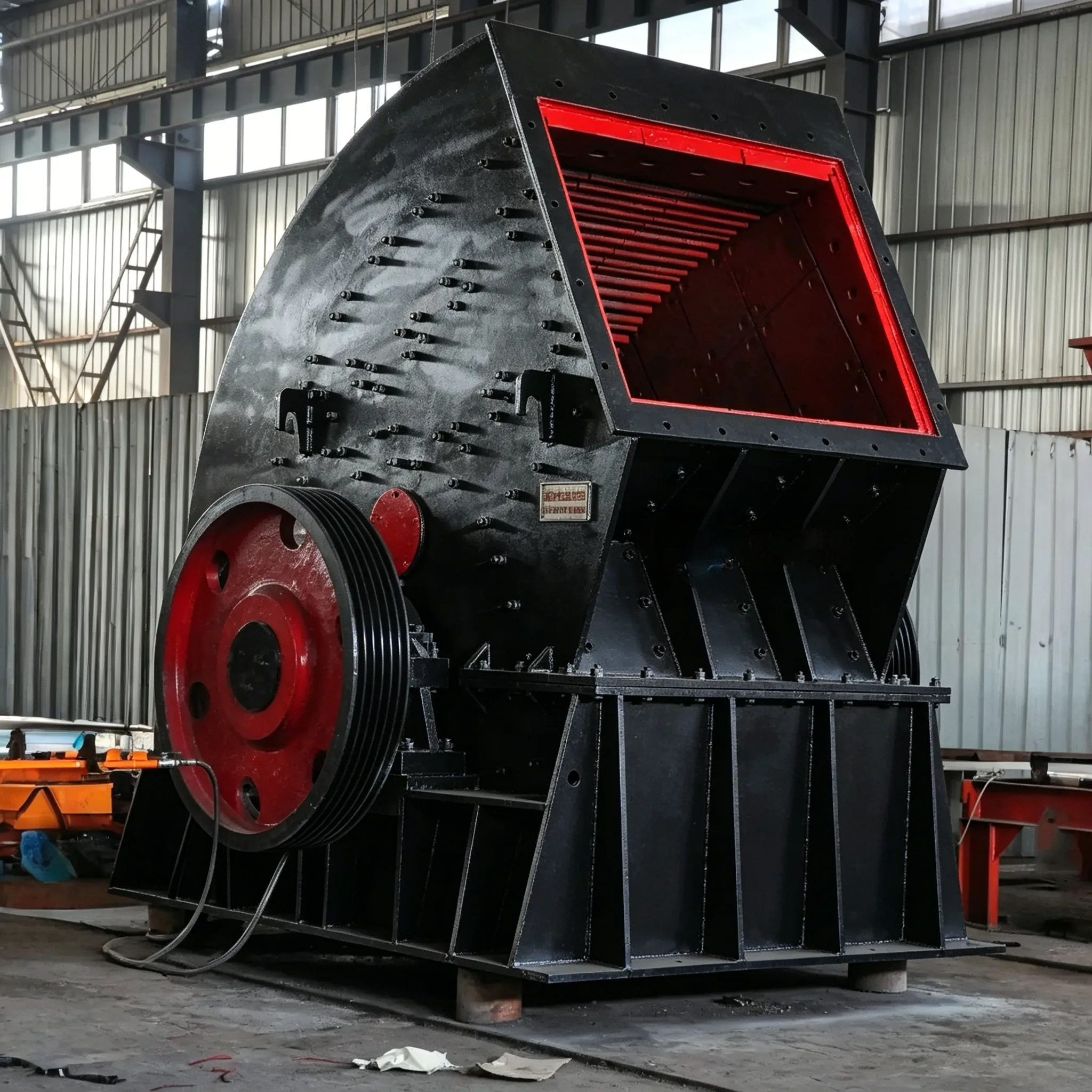
Этот hammer crusher is a machine that operates at high speed and crushes materials by impact. To ensure its normal operation, the rotor must be subjected to a static balance test after assembly or repair. When the rotor stops after rotation, it must not turn back more than 1/10 of a circumference at any position. All parts on the rotor (except the hammers) shall be precisely machined and generally manufactured and assembled to second-class and third-class accuracy. If the center of gravity of the rotor deviates from its geometric centerline (or axis of rotation), static unbalance occurs. If the rotor’s axis of rotation does not coincide with its principal inertial axis, dynamic unbalance occurs. Both types of unbalance cause severe vibration during operation, thereby shortening the service life of parts and causing vibration of the building.
The hammer is a wear part of the hammer crusher. Its main quality indicator is wear resistance. Improving the wear resistance of hammers can reduce downtime for repairs, increase operating rate, and lower repair costs. At present, hammers are mostly made of high manganese steel containing 12%–14% manganese and chromium-containing wear-resistant alloy steel. When crushing hard materials, a layer of cemented carbide 3–4 mm thick or a thin layer of manganese steel sheet may also be welded onto the hammer surface. The hammer shape shown in Figure 5-7a is currently widely used, because its center of gravity is far from the suspension center, giving good crushing effect, and after one side wears out, the other side can be used. For coarse crushing, hammers should be heavy and fewer in number. For medium and fine crushing, hammers should be lighter and more numerous. When manufacturing hammers, efforts shall be made to ensure that all hammers have equal weight, with a deviation less than ±0.5 kg. During installation, the total weight difference between each pair of hammer rows shall be kept within ±0.05 kg. This makes rotor balancing easier and shortens installation and commissioning time.
Hammers wear relatively quickly, and their manufacturing cost is high. Therefore, worn hammers shall be built up with cast iron welding rods to restore their original shape, thereby saving high-quality steel. It should be noted that when replacing hammers, they must be replaced in pairs according to their relative positions; otherwise, rotor imbalance will occur, causing vibration and premature bearing failure.
The clearance between the inner surface of the grate screen and the top of the hammer has a certain influence on product size. During crusher operation, this clearance is generally maintained at 10–20 mm. As the hammers and grate screen wear, this clearance can be adjusted using the adjustment mechanism to control product size uniformity.
Under normal operating conditions, the temperature rise of the rotor shaft bearings shall be below 60°C, and the maximum temperature shall not exceed 70°C. If the temperature exceeds 70°C, stop the machine immediately for inspection and correction. The outer ring of the bearing at the motor end shall be tightly fastened in the vertical and horizontal directions, while a side clearance of 2–5 mm shall be left on each side of the outer ring of the bearing at the other end. A certain clearance shall be maintained between the bearing outer ring and the bearing cap. If oil lubrication is used (oil filled into the bearing housing), add lubricating oil to the bearings every 8 hours of operation. Replace the lubricating oil every three months. After oil change, clean the bearings with clean kerosene, and the oil level in the bearing housing shall be kept at the center of the lowest ball. If grease lubrication is used, tighten the grease cup cap 2–3 times per shift to add a certain amount of grease, and clean the bearings every six months.
It should be noted that the internal clearance of the rolling bearings used in hammer crushers shall be larger than that of normal rolling bearings; otherwise, the bearings will heat up after operation. For example, in a φ1600 mm × 1600 mm hammer crusher using 2G3640 roller bearings, the normal clearance (basic group) is 0.065–0.135 mm. After operation, the bearings heated up. After replacing them with roller bearings having larger clearance (auxiliary group 2), with a clearance of 0.125–0.198 mm, the bearings operated normally.