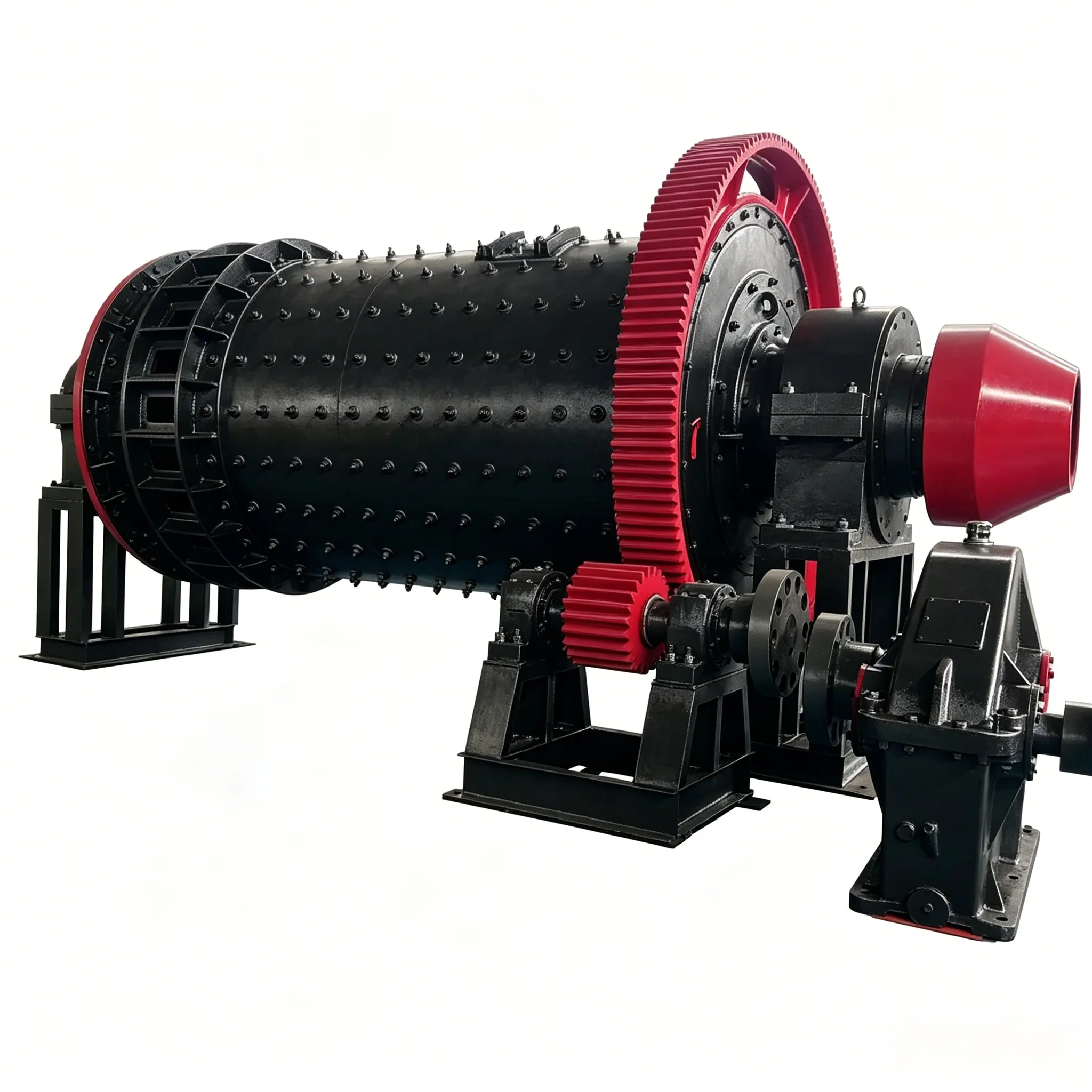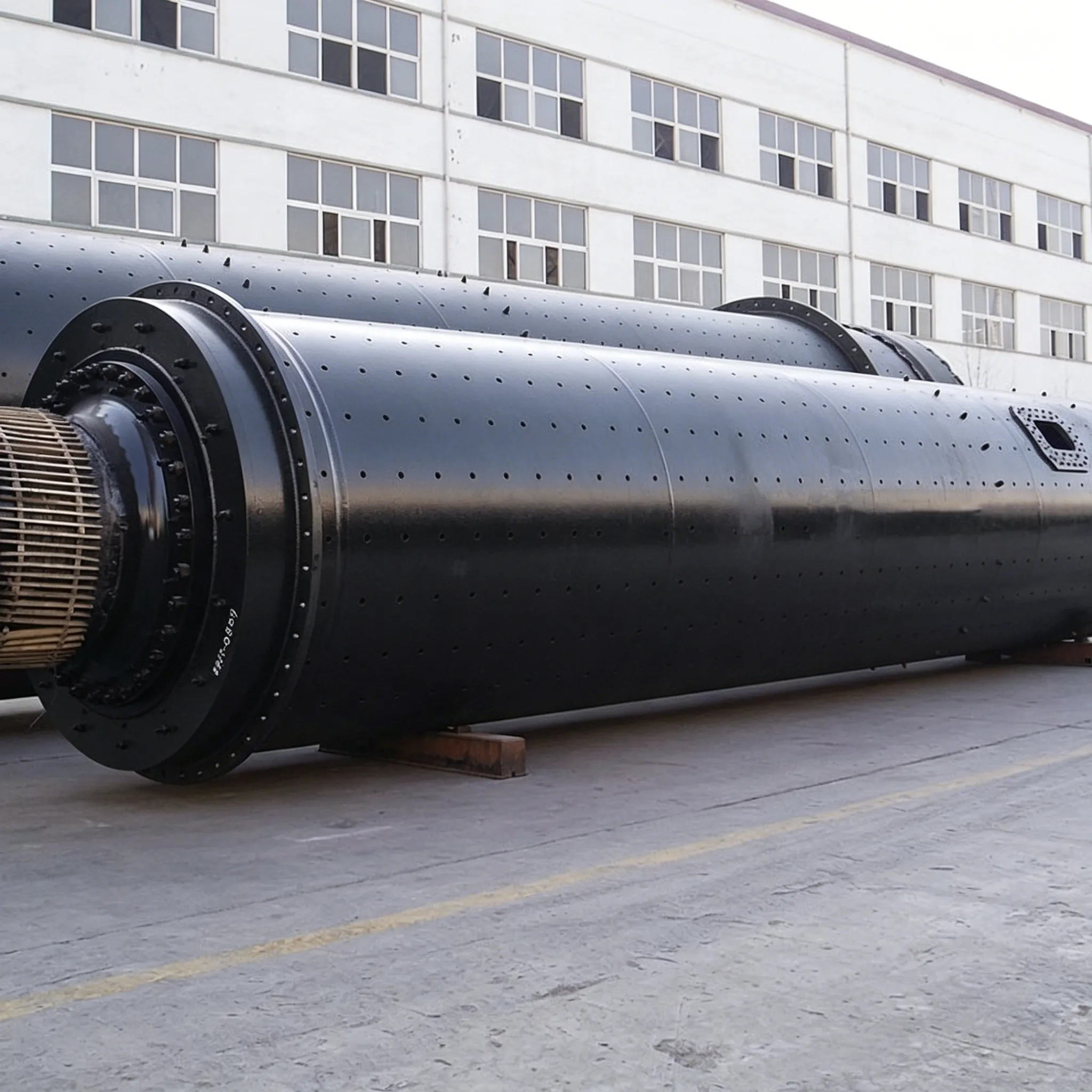
Цементная шаровая мельница
Cement Ball Mill Product Overview The cement ball mill is key equipment…

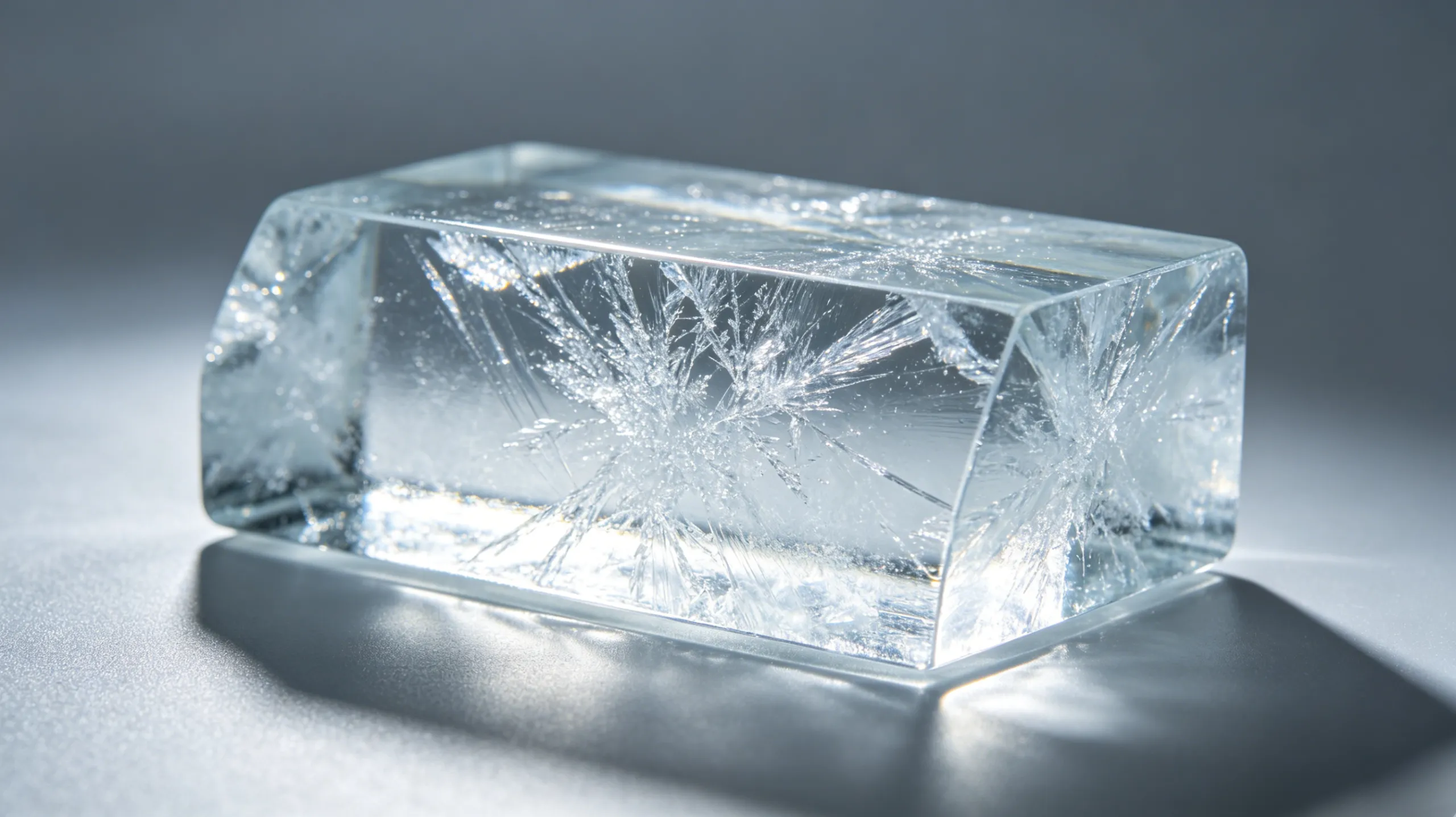
Using iron ore tailings to melt high-grade decorative glass materials is an effective way for comprehensive utilization of tailings and sustainable development of enterprises. Tongji University conducted experimental research on melting decorative glass using high-iron and high-aluminum tailings from Nanjing as the main raw material.
The main raw material is iron tailings, which are light pink in color, powdery, with a fineness of less than 0.589 mm. The main minerals are quartz, feldspar, and sulfide ores, with high iron and aluminum oxide content. The mass fractions of various oxides are shown in Table 5-15. The iron tailings can be used directly after drying without further processing.
Auxiliary raw materials include sandstone, limestone, and dolomite. The sandstone, limestone, and dolomite are finely ground to a particle size of less than 0.589 mm. Quartz sand or silica rock can also be used instead of sandstone.
Table 5-15 Chemical composition of iron tailings (%)
| Компонент | SiO₂ | Al₂O₃ | CaO | MgO | TFe | S |
|---|---|---|---|---|---|---|
| Массовая доля | 30.28 | 10.80 | 9.59 | 2.51 | 15.76 | 1.43 |
The process flow is: raw material preparation → melting → annealing → glass.
The iron tailings and auxiliary raw materials are weighed, screened, and mixed in a certain proportion. The batch is added to the furnace crucible using a high-temperature feeding method at 1000–1200°C, with the remaining batch added in stages. The interval between additions is based on the basic melting of the batch in the crucible. After adding all materials, the furnace temperature is raised to 1400–1450°C and held. During the holding period, the melting condition of the batch in the crucible is determined by front-of-furnace observation, batch picking, and wire drawing. When it is found that the batch in the crucible is completely melted, vitrified, and free of scum, unmelted sand grains, and bubbles, the furnace temperature is lowered by 100–250°C and held for 10–20 min, then the crucible is removed for casting. The molding mold is made of iron plate, with molded dimensions of 70 mm × 70 mm × 10 mm and 100 mm × 10 mm × 10 mm. After 2–3 minutes, the glass is demolded and sent to a muffle furnace for annealing at 520–620°C. The glass is held at this temperature for about 15 minutes, then the power is cut off, and it is allowed to cool naturally in the furnace to 50–100°C before removal. Alternatively, the demolded glass can be directly placed in expanded perlite for annealing using its own residual heat.
Through repeated experiments, the chemical composition of the iron tailings glass was determined to be in the range: SiO₂ 48%–62%, Al₂O₃ 9%–10.3%, CaO 8%–19%, MgO 2%–3%, Fe₂O₃ 18%–20%. The main process parameters for iron tailings glass are: iron tailings dosage (as percentage of batch mass): 70%; auxiliary raw materials: sandstone 10%–30%; limestone 5%–25%; batch melting rate >70%; vitrification temperature 1400–1450°C; forming temperature 1000–1200°C; annealing temperature 520–620°C.
After annealing, the iron tailings glass is jet-black and bright, uniform and consistent without color difference, free of bubbles and blemishes. The surface can be ground and polished; after polishing, it is as smooth as a mirror, with a surface gloss of not less than 115 (natural gloss without polishing is 110). Compared with natural marble and granite (gloss 78–90), this tailings decorative glass is more solemn and elegant. Its physical and chemical properties are even superior to similar materials. Preliminary cost analysis shows that iron tailings decorative glass has good economic benefits, high added value, and promising prospects for development and application.
Tongji University, using high-aluminum, high-iron, sulfur-bearing copper tailings from Jilin region as the main raw material, and based on laboratory research, completed industrial-scale expansion tests for copper tailings decorative glass using a crucible furnace from a glassware factory.
The main raw material for copper tailings decorative glass is copper tailings. Its mineral composition consists mainly of quartz, feldspar, and sulfide ores; it is gray in appearance, with 100% passing 0.589 mm. The chemical composition is shown in Table 5-16, and the sintering properties of copper tailings are shown in Table 5-17. After rapid cooling of the melt, it becomes a mixture of cast stone phase and glass phase filled with bubbles, scum, and unmelted sand grains, with a black color. Auxiliary raw materials are silica sand and calcite.
Table 5-16 Chemical composition of copper tailings (%)
| Компонент | SiO₂ | Al₂O₃ | CaO | MgO | K₂O | Na₂O | Fe₂O₃ | FeO | SO₃ | TiO₂ |
|---|---|---|---|---|---|---|---|---|---|---|
| Массовая доля | 60.40 | 13.24 | 3.79 | 1.18 | 2.40 | 2.48 | 6.00 | 2.46 | 3.90 | 0.45 |
Table 5-17 Sintering properties of copper tailings
| Sintering temperature/°C | 1200–1250 | 1250–1300 | 1300–1350 | 1350–1400 | 1400–1450 |
|---|---|---|---|---|---|
| Sintering condition | Partially sintered | Sintered | Liquid phase begins to appear | Mostly liquid phase | Completely melted, melt very viscous, full of bubbles |
The batching ratio is about 60% copper tailings mixed with about 40% auxiliary materials. The industrial test process flow is basically similar to that of iron tailings decorative glass:
Raw material preparation → feeding → crucible melting → casting, pressing, blow molding → annealing in a batch annealing furnace → cutting, grinding, polishing
The main process parameters are shown in Table 5-18.
Table 5-18 Main process parameters for copper tailings glass melting
| Batch | Batch melting rate/% | Melting temperature/°C | Forming temperature/°C | Crystallization temperature/°C | Annealing temperature/°C |
|---|---|---|---|---|---|
| Copper tailings: ~60% Auxiliary materials: ~40% | 70 | 1350–1450 | 1100–1300 | 860–1000 | 580–640 |
The copper tailings decorative glass is jet-black and bright, free of impurities and bubbles, and can be cut, ground, and polished. After polishing, its surface gloss is not less than 100. Compared with natural marble, it is darker in color and more uniform, offering an elegant, solemn, and generous decorative effect. Its physical and chemical properties meet the technical performance requirements for decorative materials, and its appearance and decorative effect are superior to natural marble. Preliminary cost analysis shows that producing copper tailings decorative glass has good economic benefits and relatively high added value.
Glass-ceramics are materials made from base glass through controlled crystallization, resulting in a uniform distribution of microcrystals and a glass phase. They have low thermal expansion coefficients, high mechanical strength, remarkable corrosion resistance, weathering resistance, and good vibration resistance, and are widely used in architecture, biomedicine, mechanical engineering, electromagnetics, and other fields. The main component of architectural glass-ceramics is SiO₂, and the mass fraction of SiO₂ in metal tailings is generally above 60%, with other components also within the glass-forming range, thus meeting chemical composition requirements.
Research on the development and application of tailings glass-ceramics began internationally as early as the 1920s. Since the 1950s–60s, many countries have successfully achieved widespread application of tailings in the glass industry. In China, research on tailings glass-ceramics began in the 1980s, and by the 1990s, industrial-scale trials had been initiated, led by universities at the forefront of materials science research. Building on advanced international experience, China has made breakthrough progress in the production technology of glass-ceramic decorative panels, successfully solving many problems such as composition design of base glass, glass melting, glass granulation, and control of crystallization ability of glass particles. Key technologies for producing glass-ceramics from various tailings have been mastered, and industrial production has been realized in Tianjin, Guangdong, Inner Mongolia, Hebei, and elsewhere.
The production processes for tailings glass-ceramics include the melting method and the sintering method. In China, the more mature sintering method is commonly used, combining glass, ceramic, and stone processing techniques. This method does not require a glass forming stage, nor does it necessarily need nucleating agents. It yields high product rates, short crystallization times, energy savings, adjustable product thickness, and facilitates the production of shaped slabs and various curved panels with natural stone-like patterns, making it more suitable for industrial production. The specific process flow is: raw material processing → batching and mixing → glass melting → water quenching into granules → sieving → bed placement and mold loading → sintering and leveling → crystallization forming → grinding and polishing → cutting → finished product inspection. The melting process is similar to glass melting; water quenching and crystallization borrow from ceramic technology; and grinding, polishing, and cutting follow stone processing techniques. Auxiliary chemical raw materials such as fluxes, colorants, and sintering aids are all chemically pure reagents used directly. Common nucleating agents for tailings glass-ceramics include ZnO, TiO₂, Cr₂O₃, etc. Alkali metal oxides Na₂O, K₂O, Li₂O are very effective fluxes, and some nucleating agents themselves also have fluxing effects, such as TiO₂. Colorants can be selected from different inorganic substances or metal oxides depending on the desired color. To increase sintering speed and lower sintering temperature, small amounts of halides or various inorganic mixtures can be added as sintering aids.
Based on the composition of iron tailings, tailings glass-ceramics generally belong to the CaO-MgO-Al₂O₃-SiO₂ (CMAS) and CaO-Al₂O₃-SiO₂ (CAS) systems. Different silicate-to-oxygen ratios yield different crystalline phases. When SiO₂ and Al₂O₃ contents are low, silicates with low Si/O ratios (such as wollastonite) tend to form. When SiO₂ and Al₂O₃ contents are high, framework silicates (such as feldspar) tend to form, resulting in a stable glass structure that is difficult to crystallize. To achieve high mechanical strength, good wear resistance, chemical stability, and thermal stability in glass-ceramics made from iron tailings, diopside (CaMg(SiO₃)₂) or wollastonite (β-CaSiO₃) are generally chosen as the main crystalline phases.
Currently in China, iron tailings can only be used to produce dark-colored glass-ceramics, limiting their application range. Research and development on high-iron-content iron tailings glass-ceramics is still in the laboratory stage; only iron tailings decorative glass for architectural decoration has entered industrial trials. Research on iron tailings is also largely limited to high-silica regions and should be extended to medium- and low-silica regions to explore new application areas.
(1) University of Science and Technology Beijing used Damiao iron tailings and waste rock as main raw materials to produce tailings glass-ceramic granite (a type of glass-ceramic). Its compressive strength, flexural strength, gloss, acid/alkali resistance, and other properties meet or exceed those of natural granite. It can be formed into special shapes, has beautiful patterns, and colors can be adjusted according to market demand (e.g., blue colors not found in natural stone can be produced), with minimal color difference.
① Batching: The main chemical component of the glass-ceramic is SiO₂, followed by CaO, Na₂O, Al₂O₃, and small amounts of MgO, K₂O, ZnO, BaO. The main crystalline phases are pyroxene and diopside. The formulation must be optimized based on tailings composition through experiments.
② Melting: Melting temperature about 1450–1500°C, melting time 2–5 hours. Stirring should be uniform; melting complete without residual stones; bubbles fully escaped. Otherwise, the glass-ceramic quality will be affected.
③ Water quenching: The fully melted material is poured into cold water to produce glass particles ≤5 mm.
④ Crystallization: Dried glass particles are spread in refractory molds and heated for crystallization. Before 700–800°C, the heating rate can be faster, around 300°C/h or more. The glass begins to soften and crystallize at 700–800°C; the heating rate should not be too fast (otherwise crystallization is incomplete), about 120–180°C/h. Heating to 1100–1200°C, the glass material becomes semi-molten and the surface levels; hold for 1–2 h. Then slowly cool. The cooling rate should not be too fast, otherwise the product may crack.
⑤ Cutting, grinding, polishing: The product surface after crystallization is already flat but slightly uneven. Using conventional stone cutting, grinding, and polishing equipment, an ideal polished finish can be achieved. Moreover, the grinding thickness is less than that for ordinary stone, so efficiency is higher.
Table 5-19 Properties of tailings glass-ceramic granite
| Property | Значение | Property | Значение |
|---|---|---|---|
| Density/g·cm⁻³ | 2.7 | Gloss | 95 |
| Flexural strength/MPa | 45 | Acid resistance① | No change |
| Compressive strength/MPa | 240 | Alkali resistance② | No change |
| Mohs hardness | 6.5 | Water absorption/% | <0.1 |
① 15mm×15mm×15mm sample, immersed in 3% HCl at 25°C for 650 h, weight loss (%).
② 15mm×15mm×15mm sample, immersed in 3% NaCl at 25°C for 650 h, weight loss (%).
(2) Shenyang Jianzhu University and Northeastern University jointly developed a process using Waitoushan iron tailings and Xincheng gold mine tailings, adding adjusting oxides and appropriate nucleating agents, mixing, melting at 1450°C, then annealing, nucleation, and crystallization heat treatment. Holding for 2 hours at both the nucleation temperature and crystallization temperature, then natural cooling, produces architectural glass-ceramics with diopside as the main crystalline phase. Tailings addition can reach over 65%. Pilot production showed the optimal composition range for metal tailings architectural glass-ceramics is: SiO₂ 50%–60%, Al₂O₃ 6%–9%, CaO 11%–13%, MgO 3%–5%, K₂O 3%–5%, FeO+Fe₂O₃ 2%–8%.
(3) Tian Yingliang et al. analyzed the composition of iron tailings from Miyun County, Beijing. They found the main components were SiO₂, Al₂O₃, Fe₂O₃, with certain amounts of CaO, MgO, Na₂O, K₂O, and high iron content. They decided to add appropriate amounts of CaO and MgO to form a CaO-MgO-Al₂O₃-SiO₂ system glass-ceramic. Adding a small amount of sulfur converted part of the iron into ferrous sulfide, aiding crystallization. The process flow of batching → mixing → melting → water quenching → sieving → bed placement → crystallization → grinding and polishing → cutting → finished product was used to prepare glass-ceramics. The mass fraction of iron tailings reached over 60%. The finished product had a flexural strength of 50.2 MPa and an average microhardness of 675.4, whereas marble and granite have flexural strengths of only 17–19 MPa and average microhardness of 153.6. Thus, this research provides a good pathway for resource utilization of iron tailings.
(4) Zhang Jinrui et al. studied the preparation of glass-ceramics using iron tailings from Tangshan. Based on analyzing tailings composition, they explored glass-ceramic formulations, determined the type and amount of nucleating agents, and selected a suitable heat treatment process. Results showed that composite nucleating agents work better: adding 3% TiO₂ and 1% Cr₂O₃. Nucleation temperature 770°C, holding time 60 min; crystallization temperature 870°C, holding time 60 min; heating rate 5°C/min. The main crystalline phase of the obtained glass-ceramic was diopside, with secondary phases wollastonite and spinel.
Central South University, in collaboration with the Chinese Academy of Geological Sciences, developed a new type of tungsten tailings glass-ceramic through experiments. The process is simple and low-cost. The main raw material is tungsten tailings, with feldspar and limestone as auxiliary materials. The batch is mixed uniformly, placed in a corundum crucible, and melted in a silicon-molybdenum rod resistance furnace. Using 1% Sb₂O₃ (mass fraction, same below) and 4% NH₄NO₃ as fining agents, the feeding temperature is 1200°C, melting temperature 1550°C, held for 2.5 h, then fined at 1580°C for 1.5 h. The molten glass is quenched in water to produce glass granules, which are then naturally spread in refractory molds. To facilitate demolding, the inner surface of the mold is coated with a slurry of quartz sand and kaolin. After mold loading, the material is sent to a furnace for ceramming. Using this process, light yellow glass-ceramic samples of 100 mm × 100 mm × 10 mm were produced, with dense, uniform structure, very few pores, flat, bright appearance without deformation, and surfaces showing natural marble-like patterns. Tests showed that the flexural, compressive, impact strength, and chemical corrosion resistance of this glass-ceramic are excellent, surpassing natural marble and granite.
Kuang Jingzhong et al. used tungsten tailings as the main raw material (55%–75% dosage) without adding nucleating agents, and prepared tungsten tailings glass-ceramic by a casting crystallization method. The main crystalline phase is β-wollastonite. The nucleation and crystallization mechanism is surface nucleation, with simple process and low cost.
Wang Chengyu et al. used tungsten tailings, feldspar, limestone, mirabilite, and soda ash as main raw materials, with fluorite and phosphate rock as nucleating agents, to prepare milky white tungsten tailings glass-ceramics by the melting method. The optimal nucleation temperature is 680–700°C, crystallization temperature 900–950°C, with crystalline phases of wollastonite and apatite.
Gao Shuya et al. at Shaanxi University of Science and Technology used Hanyin gold mine tailings (Shaanxi) and calcite as main raw materials, adding other required materials such as borax, ZnO, Cr₂O₃, Sb₂O₃, etc., to prepare CaO-Al₂O₃-SiO₂ system glass-ceramics by the melting method. Through exploratory experiments, the mass ratio of batch components was determined as: gold tailings 63.5%, calcite 27.1%, borax 4.7%, ZnO 1.6%, Cr₂O₃ 0.8%, Na₂SiF₆ 1.2%, Sb₂O₃ 1.2%.
Raw materials were weighed according to the mass ratio, mixed, ground, and passed through a 60-mesh (0.246 mm) sieve to obtain the batch. Using a silicon carbide rod electric furnace, the batch was held at 1300–1350°C for 4 hours to fully melt the glass with no visible bubbles. The molten glass was then poured onto a preheated stainless steel mold. After forming, the sample was placed in a muffle furnace at 600°C for 1 hour for annealing. The cooled glass sample was processed into strip specimens of 10 mm × 10 mm × 100 mm. Crystallization heat treatment was carried out in a muffle furnace with a heating rate of 3–5°C/min, held at nucleation temperature 820°C for 2 hours, then heated to 890°C and held for 3 hours, then slowly cooled to room temperature to obtain gold tailings glass-ceramic samples. Test results showed that the main crystalline phases of the gold tailings glass-ceramic were pyroxene and diopside solid solution. The product had a flexural strength of 119.2 MPa, thermal expansion coefficient of 69.5×10⁻⁷/°C, and bulk density of 2.81 g/cm³.
Liu Xuan et al. at Shandong Institute of Geological Sciences used Jiaojia gold tailings as the basic raw material to produce glass-ceramics by the sintering method, a simple and controllable technique. In pilot formulations, the maximum tailings utilization rate reached 60%. The main raw materials were gold tailings, limestone, and quartzite. The process flow: raw material processing → batching and mixing → glass melting → water quenching into granules → sieving → bed placement and mold loading → sintering and leveling → crystallization forming → grinding and polishing → cutting → finished product inspection. Final product dimensions were 60–90 mm². The appearance color was normal with distinct patterns, light yellow, and the sample surface had no dense open pores. Physical, chemical, acid, and alkali resistance tests showed all indicators met the industry standard for “architectural decorative glass-ceramics.”
Shen Jie et al. used molybdenum tailings as the main raw material, adding other auxiliary materials, to prepare high-performance glass-ceramics by the melting method. The main raw materials were molybdenum tailings, silica sand, alumina (analytical grade), calcium carbonate (analytical grade), magnesium oxide (analytical grade), potassium carbonate (analytical grade), soda ash, etc., with molybdenum tailings addition at 30%. TiO₂ was selected as the nucleating agent. The crystallization heat treatment schedule is shown in Table 5-20. They prepared glass-ceramic samples meeting national standards; test results are shown in Table 5-21.
Table 5-20 Crystallization heat treatment schedule
| Melting temperature/°C | Annealing temperature/°C | Nucleation temperature/°C | Nucleation time/min | Crystallization temperature/°C | Crystallization time/min |
|---|---|---|---|---|---|
| 1480 | 750 | 750 | 30 | 900 | 180 |
Table 5-21 Sample property test results
| Test item | Measured value | National standard (reference) |
|---|---|---|
| Flexural strength/MPa | 35 | ≥30 |
| Compressive strength/MPa | 128 | 118–540 |
| Mohs hardness | 5.5 | 5–6 |
| Wear resistance/g·cm⁻² | 0.245 | 0.15–0.3 |
| Density/g·cm⁻³ | 2.7 | 2.6–2.7 |
| Acid & alkali resistance | Acid mass loss 0.18%, no appearance change; Alkali mass loss 0.15%, no appearance change | Alkali mass loss ≤0.2%, no appearance change |
Li Zhangda applied for a patent “Glass-ceramic made from molybdenum-containing tailings and method thereof,” disclosing a new method for comprehensive utilization of molybdenum-containing tailings (Mo 0.01%–0.02%) as raw material to produce glass-ceramic products with stable production. The method uses molybdenum-containing tailings to replace tailings, calcium oxide, and nucleating agent additives in the glass-ceramic formulation, with an addition ratio of 40.5%–74.4%. When using molybdenum-containing tailings as raw material, pre-homogenization is required. The traditional production process remains unchanged, and equipment modification is unnecessary, reducing costs by more than 15% while improving product performance and value.
Li Zelin et al. explored the method of producing pure black glass-ceramics using nickel tailings as the main raw material, with iron-magnesium diopside as the main crystalline phase, using a rolling process. The tailings used were nickel tailings from Hongqiling Nickel Mine of Jilin Jien Nickel Industry Co., Ltd., after flotation to recover copper-nickel sulfide ores. The main chemical composition of the tailings is detailed in Table 5-22. Through experiments, the basic formulation for nickel tailings glass-ceramic production was determined as shown in Table 5-23. The suitable glass composition range (wt%) is: SiO₂ 37–39, CaO 13–15, Al₂O₃ 15–18, MgO 13–15, FeO 7.5–9, (K₂O+Na₂O) 3–6, TiO₂ 2–3. The nucleation and crystallization temperatures are 780°C and 900°C, respectively. The prepared glass-ceramic samples had flexural strength of 45.4–98.6 MPa, Mohs surface hardness 6–7, and water absorption 0.
Table 5-22 Main chemical composition of nickel tailings (%)
| Компонент | SiO₂ | Fe₂O₃ | Al₂O₃ | CaO | MgO | SO₃ | LOI | K₂O | Na₂O |
|---|---|---|---|---|---|---|---|---|---|
| Массовая доля | 49.13 | 15.49 | 6.16 | 3.77 | 16.06 | 3.48 | 5.64 | 0.69 | 1.30 |
Table 5-23 Basic formulation for nickel tailings glass-ceramic production
| Raw material | Nickel tailings | Calcium carbonate | Silica sand | Material A | Material B | Nucleating agent |
|---|---|---|---|---|---|---|
| Parts | 55–65 | 5–8 | 7–9 | 14–16 | 6–8 | 2–4 |
Yu Jianchang used niobium-tantalum tailings from Nanping, Fujian as the main raw material, adding natural powdered quartz and limestone, to produce wollastonite-based glass-ceramics by the sintering method. According to experimental analysis, niobium-tantalum tailings are rich in SiO₂, Al₂O₃, and a certain amount of Na₂O, making them suitable for preparing CaO-Al₂O₃-SiO₂ system glass-ceramics with wollastonite as the main crystal phase. Results showed that tailings addition can reach 50%, the appropriate melting temperature is 1450°C, nucleation at 855°C for 3 hours, crystallization at 920°C for 2 hours, yielding a glass-ceramic with crystal grain size of about 100–300 nm, uniform distribution, and crystal phase accounting for 60%. Its physical and chemical properties are superior to ceramic tiles, natural granite, and natural marble. Kuang Jingzhong also conducted experimental research on preparing glass-ceramics using niobium-tantalum tailings as the main raw material. The composite decorative board glass-ceramic prepared from tantalum-niobium tailings had good crystallization, good body-glaze bonding, complete sintering, and a pore-free surface. The utilization rate of tantalum-niobium tailings in glass-ceramic glaze can reach 40%–50%.
Tongji University, in collaboration with Shanghai No.2 Glassware Factory, used Langyashan copper tailings (Anhui) as the main raw material, with silica sand and calcite as auxiliary materials (batching ratio: copper tailings ~60%, auxiliary materials ~40%). After industrial trials, they developed a copper tailings glass-ceramic material that can replace marble, granite, and ceramic tiles, with high strength, wear resistance, and corrosion resistance. Liu Weiping et al. prepared glass-ceramic panels and colored quartz sand from copper tailings with good physical and chemical properties comparable to natural stone.