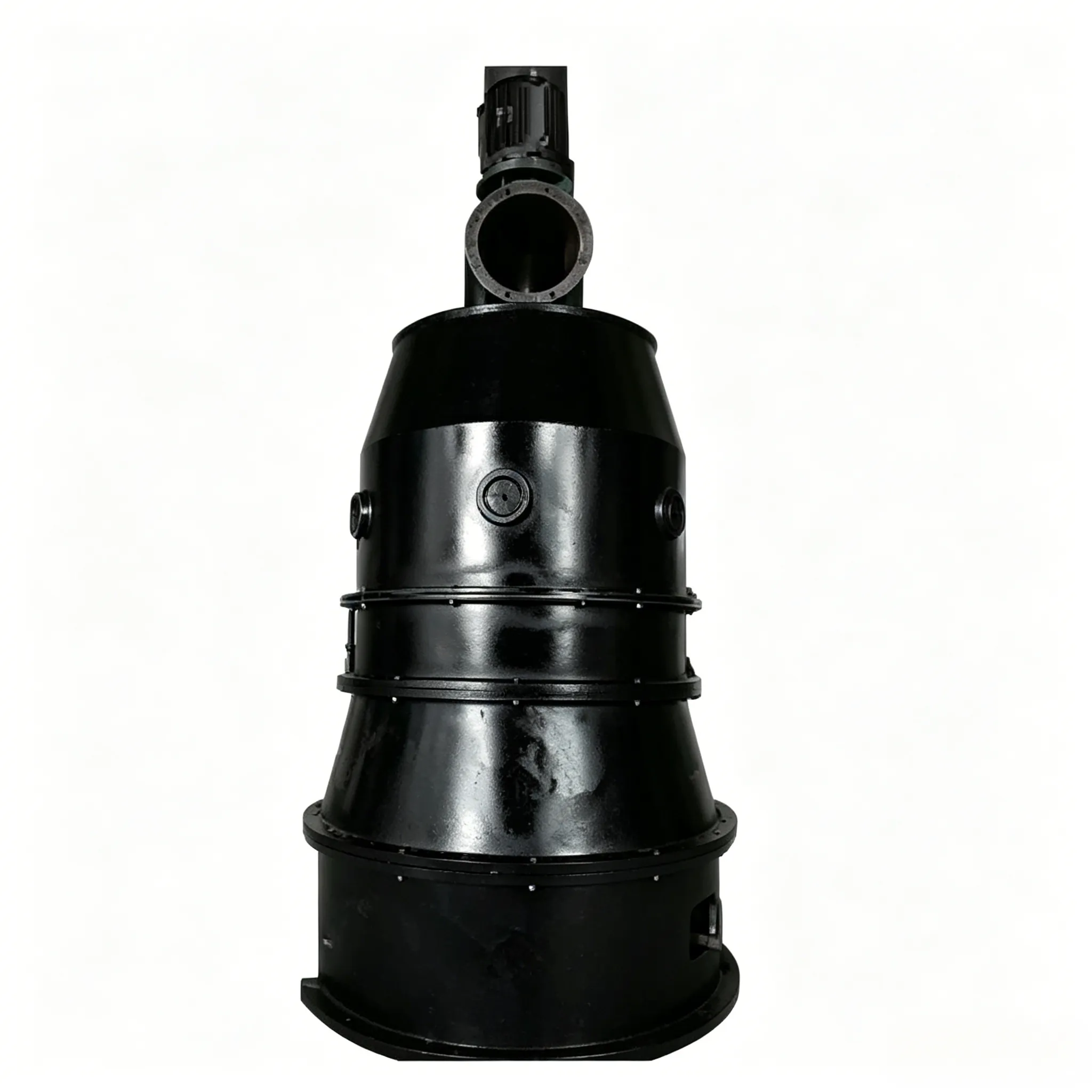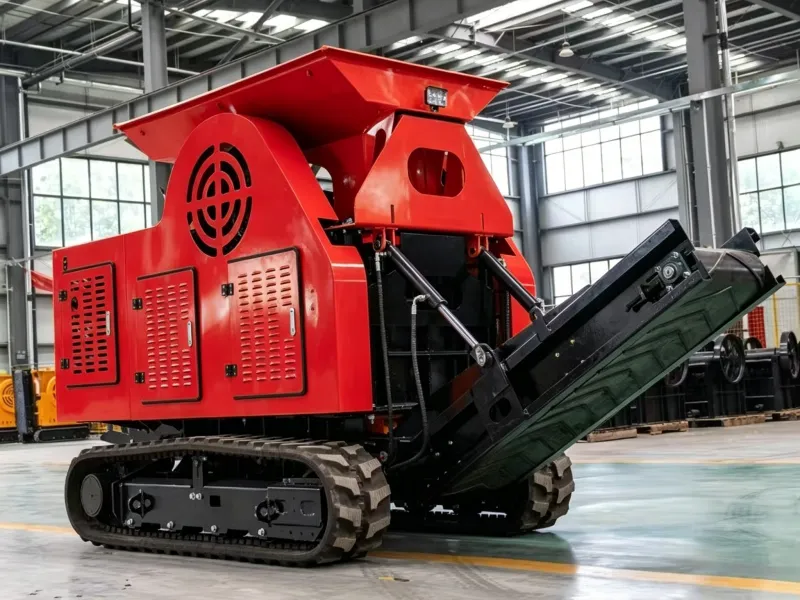
Мини мобильная каменная дробилка
Введение Мини-мобильная щековая дробилка - это очень компактная, установленная на гусеничном ходу дробильная...

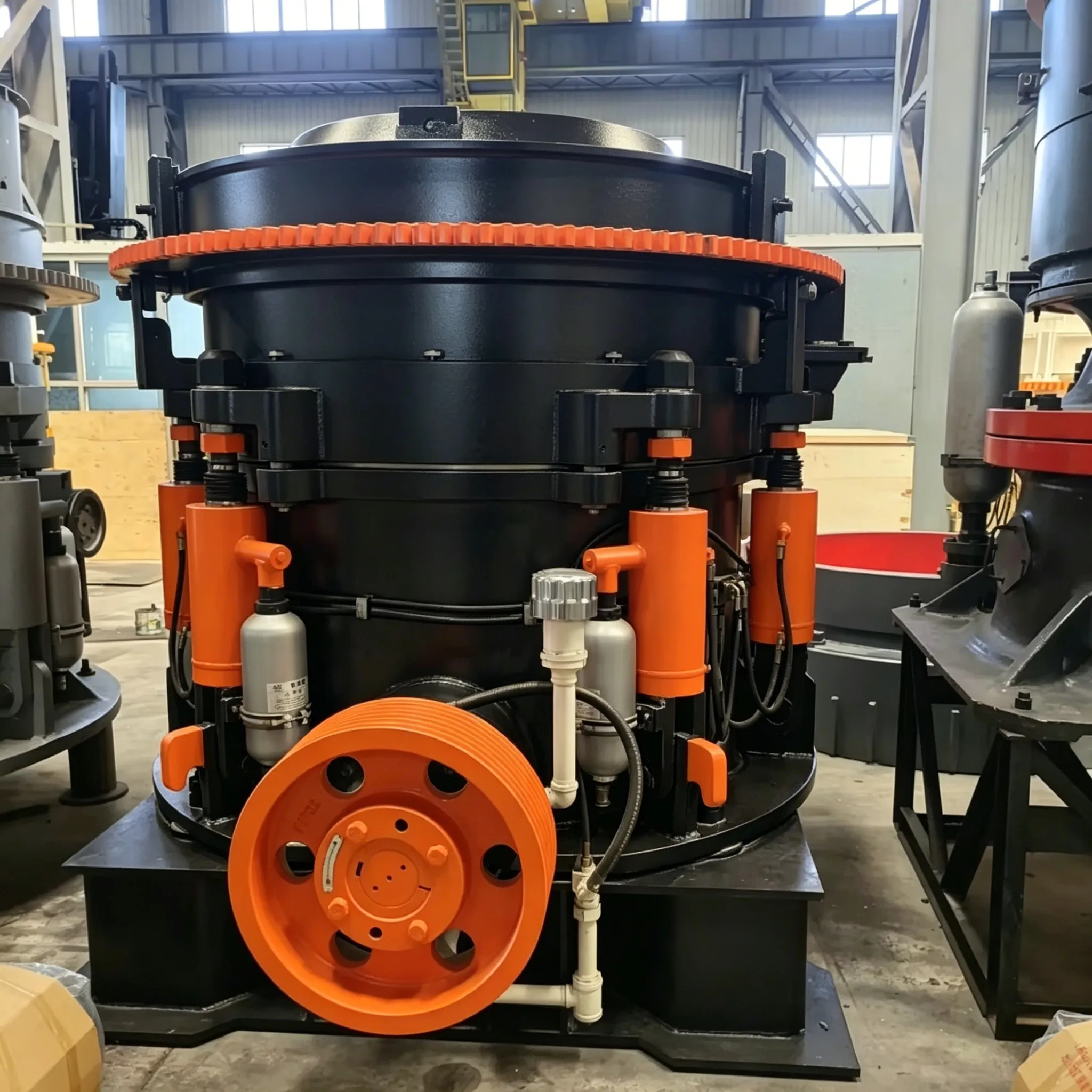
No-Load Test Run
The trial operation of the конусная дробилка shall comply with the following requirements:
(1) The no-load test run of the cone crusher shall be carried out before the components above the adjustment ring are assembled.
(2) For a cone crusher equipped with a safety device, the safety device shall be adjusted and qualified according to the equipment documents before starting.
(3) The no-load test run shall be conducted in both forward and reverse directions, each for not less than 2 hours.
(4) The temperature of sliding bearings shall not exceed 70°C, and the temperature of rolling bearings shall not exceed 80°C.
(5) The self-rotation speed of the crushing cone shall comply with the equipment documents.
After the no-load test run, disassembly inspection shall be carried out. The bowl shell, bushings, and thrust bearing washers under the eccentric bushing shall show no signs of scoring, burning, spalling, or grinding.
Load Test Run
The load test run must be carried out only after the no-load test run has been fully qualified. The load test run is performed under feeding conditions to inspect the items checked during the no-load test run. The test run shall meet the following requirements:
(1) The load test run shall be a continuous normal operation for two days and nights (short stops for inspection are allowed). The feed shall be gradually increased from half load to full load. In addition, all requirements of the no-load test run shall be checked and met.
(2) The feeding position shall be correct (refer to the installation of the feeding part), and the ore shall be evenly distributed in the crushing chamber.
(3) In the absence of tramp iron, the support sleeve shall not jump; in the event of tramp iron, it shall be discharged smoothly.
(4) During normal crushing, the crusher shall not have violent vibration or abnormal noise.
4.8 Use of Cone Crusher
4.8.1 Startup
Before starting, the following inspections must be carried out:
(1) For a newly installed crusher that has not been tested, manually or with a crane, turn the crusher 2–3 revolutions before starting to avoid collision accidents.
(2) The cone crusher shall not be started under load (i.e., with ore or other material in the crushing chamber). Starting under load may cause electrical tripping or damage to components. Therefore, check whether there is any ore or iron block in the crushing chamber.
(3) To ensure a qualified product size, check the width of the discharge opening (especially after new installation or repair).
(4) Check whether various electrical interlocking devices and audible signals are correct and functional.
(5) Check the oil level and oil temperature in the oil tank. If the oil temperature is below 20°C, do not start the machine; use an electric heater or hot water/steam to heat the oil.
(6) Check the oil pressure of the locking cylinder. The crusher can only be started when the adjustment ring is in the locked state (for crushers with fixed tooth plates, check whether the fixing bolts on the tooth plate and adjustment ring are tight).
Only after the above inspections have been performed and no faults are found, start the crusher according to the following procedure:
Start the oil pump and check the oil pressure. The oil pressure shall be 0.05–0.15 MPa. The cooling water pressure shall be slightly lower than the oil pressure (generally 0.025–0.05 MPa lower) to prevent water from leaking into the oil.
After the oil pump has run normally for 3–5 minutes, issue the start signal as specified, then start the crusher. Let the crusher idle for 1–2 minutes; if everything is normal, feeding can begin.
Работа
After feeding, during loaded operation, the operator must observe and pay attention to the following items for correct operation:
(1) Feed must be uniform, and the particle size shall meet the requirements.
(2) Constantly monitor discharge and transportation to avoid blockages that could cause accidents.
(3) Frequently check the oil pump, cooler, filter, oil quantity, and oil temperature. The return oil temperature shall not exceed 60°C.
(4) Check the drainage of the water seal dust prevention system. If there is no water, do not operate the crusher.
(5) Pay attention to the oil pressure of the locking cylinder. The adjustment ring must be in the locked state during operation.
(6) Regularly check liner wear, especially the liner fixing bolts on the adjustment ring. If they become loose, the liner may loosen. After new liners are installed, stop and retighten them after 24 hours of operation.
Завершение работы
The shutdown sequence is as follows:
(1) After stopping the feed, the crusher shall continue to run until all ore remaining in the crushing chamber has been processed, then stop the crusher (to prepare for the next no-load start).
(2) Stop the crusher.
(3) Stop the oil pump and the discharge conveying equipment.
(4) When the room temperature is below 0°C, drain the water from the water seal after shutdown to prevent freezing.
Adjustment of Discharge Opening
During crushing, the liners are constantly worn, causing the discharge opening to gradually increase. To ensure a certain product size, the discharge opening must be adjusted continuously.
If the adjustment ring threads are clogged with ore fines or lack lubricant, making rotation difficult, under the condition that the locking ring is loosened, feed a small amount of ore and let the crusher run for a short time. This will make it easy to rotate the adjustment ring.
After adjustment, the discharge opening size can be measured by using a lead ball attached to a wire and passing it through the crushing chamber to the discharge opening. For newly machined liners, measuring at one point is sufficient; for un-machined or worn liners, measure at 6–8 points. The discharge opening shall not be smaller than the specified range. After the discharge opening reaches the required size, lock the adjustment ring using the locking cylinder; otherwise, do not start the crusher.
Adjustment of Springs
The locking springs on the cone crusher serve both to generate the normal crushing force and as a safety device to protect the crusher from damage when tramp iron passes through. Therefore, the spring tightness (compressed height) shall be adjusted within the range specified by the manufacturer, and each set of springs shall be adjusted to the same tightness. If the springs have the specified tightness but the support sleeve still jumps frequently, the cause must be identified. Do not simply tighten the springs further. Excessive compression of the springs reduces their safety compression stroke and increases the load on components. When non-crushable material enters, it may cause damage to important components such as the spring screw rod and the main shaft.
If the springs have normal tightness but the support sleeve still jumps frequently, the causes (apart from tramp iron entry) may include uneven or excessive feed, excessive fines in the feed, a too-small discharge opening, or wet feed blocking the discharge opening. After inspection, address the specific cause. If the ore is too hard and the spring strength is insufficient, the resulting jumping indicates that the machine performance does not match the operating conditions (ore type), and adjustment shall be made promptly.
Feed and Discharge
The ore fed into the crusher shall be evenly distributed into the crushing chamber.
The maximum feed size shall not exceed 85% of the feed opening size; otherwise, both production capacity and liner wear will be adversely affected. Large blocks may stay at the feed opening for a long time, causing severe wear to the upper liners. Sometimes ore may get stuck between the feed hopper and the “neck” of the distributing plate, subjecting the main shaft to excessive bending moment, which may cause breakage of the upper end of the main shaft.
To prevent the crusher from being clogged with fines and to fully utilize its capacity, fines in the feed should be screened out in advance, especially for fine crushing, where pre-screening is even more necessary.
To avoid accidents caused by the crusher becoming full of ore, the operator shall pay attention to the electrical interlock between the feed conveying equipment and the crusher. That is, the feed conveying equipment cannot start unless the crusher is already running; if the crusher stops, the feed conveying equipment also stops.
While feeding, attention must also be paid to discharge and transportation. If discharged material accumulates under the crusher, it may lift the crusher and cause a major accident. Therefore, if a blockage is found, stop the machine immediately.
The discharge conveying equipment is also electrically interlocked with the crusher. If the discharge conveying equipment does not start first, the crusher cannot start; if the discharge conveying equipment suddenly stops, the crusher shall also stop automatically, thereby preventing accumulation of discharged material. Therefore, regularly check these interlocking devices to ensure reliable operation.
Faults During Operation, Causes, and Remedies
Common faults during cone crusher operation, their causes, and corresponding remedies are listed in Table 4-13.
Table 4-13 Crusher faults, causes, and remedies
| Fault | Cause | Remedy |
|---|---|---|
| 1. No oil flow in the oil flow indicator; oil pump runs but oil pressure is below 0.05 MPa | (1) Oil temperature is too low; (2) Oil circuit valve not fully opened; (3) Oil pump malfunction | (1) Heat the oil; (2) Check oil circuit valve; (3) Repair or replace oil pump |
| 2. Excessive pressure difference across the filter | Filter clogged | Clean the filter when pressure difference exceeds 0.04 MPa |
| 3. Oil pressure rises and oil temperature also rises | Oil pipe or internal oil passage blocked | Stop the machine, locate the blockage, and eliminate it |
| 4. Oil temperature exceeds 60°C but oil pressure does not rise | Problem with rotating friction parts inside the machine | Stop the machine, inspect friction surfaces such as bowl shell, bushings, thrust washers, identify the cause, and eliminate it |
| Fault | Cause | Remedy |
|---|---|---|
| 5. Oil level in tank drops significantly (noticeable decrease) | (1) Oil leakage from bottom cover of machine; (2) Oil leakage from drive shaft flange; (3) Oil return groove on bowl bearing housing or shell blocked, causing oil leakage from dust seal device | For (1) and (2): stop machine and tighten bolts or replace gaskets; For (3): stop machine, inspect and clean oil passage and groove, adjust oil quantity, then replenish oil |
| 6. Oil inlet and outlet temperatures of cooler are the same | (1) No cooling water; (2) Cooling water temperature too high; (3) Cooling water pipe blocked | (1) Supply cooling water; (2) Check water temperature and take cooling measures; (3) Clean the cooler |
| 7. Water in oil, oil level in tank rises | (1) Water pressure in cooler higher than oil pressure; (2) Cooler leaks; (3) Water supply to water seal too high; (4) Return water pipe blocked | (1) Adjust water pressure to slightly lower than oil pressure; (2) Check and repair leaks; (3) Adjust water supply; (4) Clean return water pipe |
| 8. Oil in water seal drainage, oil temperature not rising | Bowl shell, oil baffle ring, or oil groove blocked | Clean oil groove and return oil pipe |
| 9. Crusher vibrates frequently | (1) Uneven or excessive feed; (2) Excessive fines or moisture in feed, small discharge opening causing blockage; (3) Insufficient spring tightness | For (1) and (2): feed correctly; For (3): tighten springs within specified range |
| 10. Violent impact sound, support sleeve jumps up, then normal operation | Non-crushable material entered crushing chamber (tramp iron), often causes component damage | Take measures to remove tramp iron |
| 11. Crackling sound when crushing ore | Liner loose | Tighten bolts or re-pour zinc alloy |
| 12. Strong vibration, moving cone rotates very fast | Main shaft seized due to: (1) Lack of oil or dirty oil between main shaft and tapered bushing; (2) Moving cone sinks due to bowl shell wear or manufacturing defect; (3) Incorrect clearance between main shaft and tapered bushing | Stop machine, inspect, identify the cause and address accordingly |
| 13. Crusher stops suddenly under load | (1) Oil temperature too high, oil level or pressure too low, triggering relay; (2) Oil pump or other interlocked equipment fails; (3) External power interruption; (4) Large non-crushable material enters crushing chamber and jams crusher | For (1) and (2): check oil temperature, level, pressure and interlocked equipment, identify and eliminate faults; (3) Open electrical switch, clear ore from crushing chamber, wait for power recovery, then restart as per procedure; (4) Use gas cutting to remove non-crushable material jammed in crushing chamber |