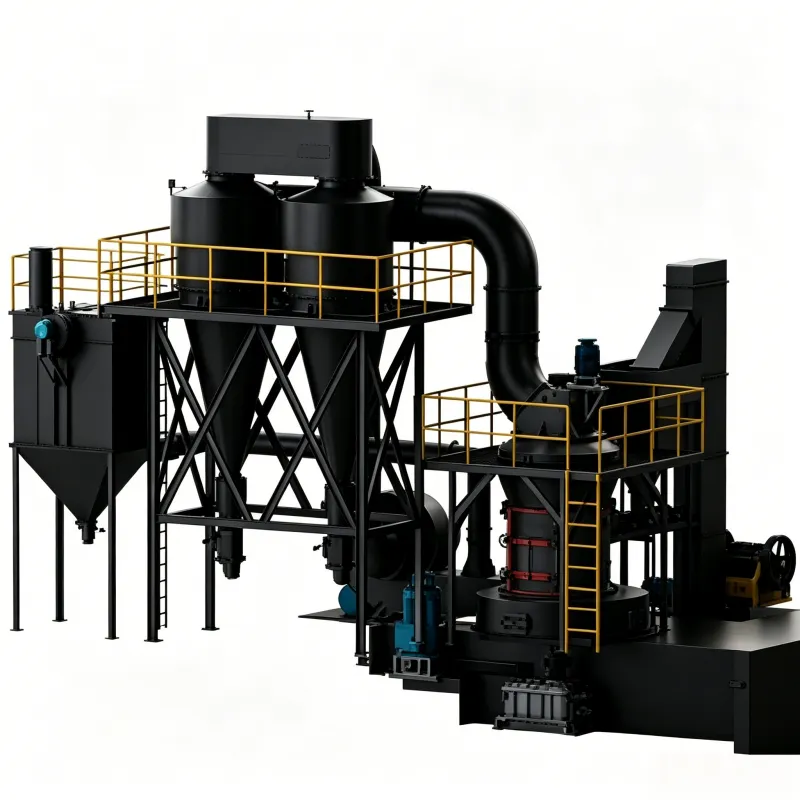
KX Raymond Değirmeni
Raymond Değirmeni’ne Giriş Kx Raymond Değirmeni, temel bir üründür…


With the growing demand for industrial solid waste resource utilization, deep processing of slag (including blast furnace slag, steel slag, nickel slag, etc.) has become a key development direction in the building materials industry. The slag powder dikey silindirli değirmen (VRM) production line, as the current mainstream grinding process, is leading the industry transformation with its integrated, high-efficiency, and intelligent advantages. This article provides a detailed analysis of the process scheme, technical features, and application prospects of the slag powder VRM production line.
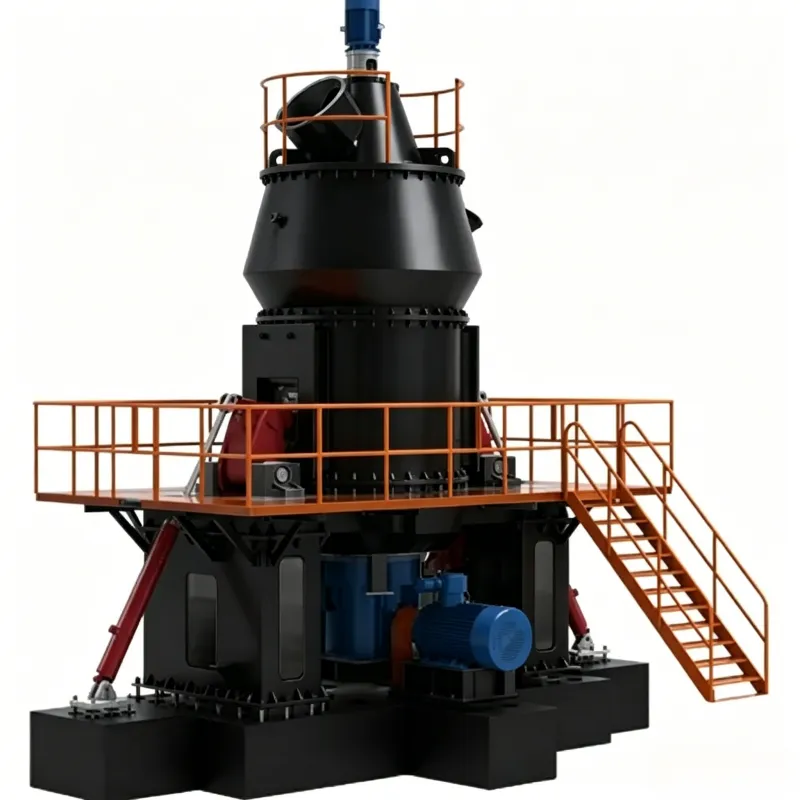
A slag powder VRM production line uses the dikey silindirli değirmen as the core equipment to grind granulated blast furnace slag, steel slag, nickel slag, and other industrial wastes into fine powder with controlled fineness and high reactivity. Ground granulated blast furnace slag (GGBFS) has high reactivity and latent hydraulic properties. When added to cement or concrete in certain proportions, it not only replaces cement on an equal basis but also significantly improves concrete properties such as workability, plasticity, and heat of hydration.
The VRM system integrates crushing, drying, grinding, and classifying into one unit. Compared with traditional ball mill systems, it offers remarkable advantages in energy consumption, environmental protection, and automation.
The overall process adopts an integrated flow of “crushing – drying – grinding – classifying – collection – storage”. The key stages are as follows:
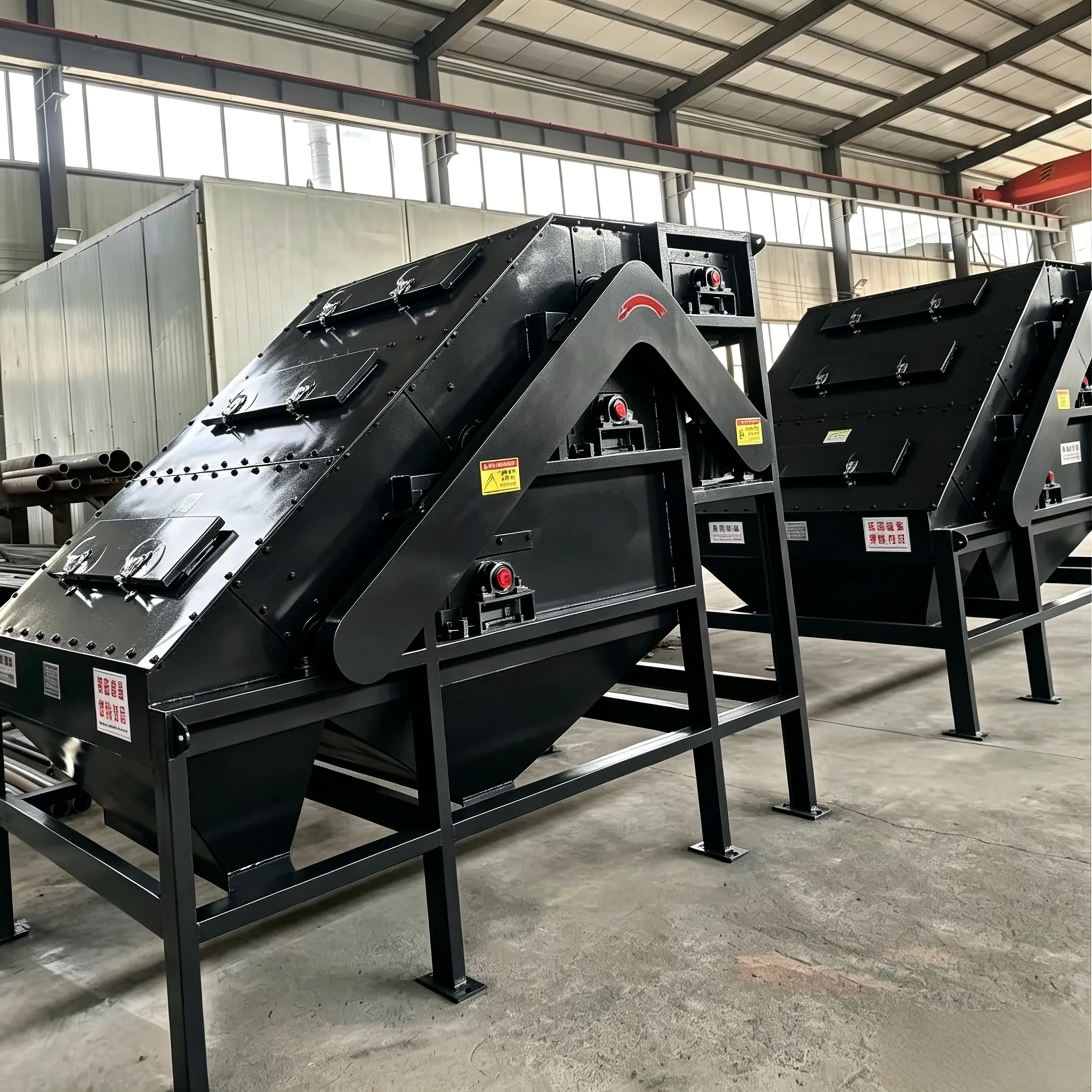
Raw slag is delivered to the plant by truck, unloaded into a receiving hopper, and transported via belt conveyor to the raw material storage shed. The stacked slag is then fed by a front-end loader onto a belt conveyor. During conveying, the slag passes through a magnetic separator and a vibrating screen to remove tramp iron and oversized particles, preventing damage to the VRM. The pre-treated material then goes through a weighing bin and bucket elevator into the vertical roller mill for grinding.
Large slag lumps must be crushed first, with the feed size generally controlled to ≤30 mm for optimal grinding. If the raw material moisture content is high (typically >8%), it should be pre-dried in a rotary dryer to reduce the inlet moisture to ≤6%, thereby improving grinding efficiency.
Grinding is the heart of the process. Material enters the mill through an air-lock feeding device and falls onto the center of the rotating grinding table. The constant-speed rotating table uses merkezkaç kuvveti to distribute the material evenly outward, forming a stable material bed of a certain thickness. The material is simultaneously subjected to high-pressure compression and shearing by multiple grinding rollers, achieving size reduction.
At the same time, hot gas is introduced from the bottom or side of the mill to dry the material concurrently with grinding. The system is equipped with an automatic loading control system that dynamically adjusts the grinding pressure based on parameters such as bed thickness, vibration level, and power consumption, ensuring stable operation.
After grinding, the material is carried by the hot gas rising through the nozzle ring around the table edge. The air stream lifts the fine particles to the high-efficiency classifier mounted at the top of the mill. Qualified fine powder (meeting fineness requirements) is discharged with the exhaust gas; coarse particles fall back onto the grinding table for regrinding. Some larger coarse particles are discharged into the external circulation system, where they are de-ironed and then returned to the mill.
The dust-laden gas enters a high-efficiency bag filter (pulse-jet dust collector) for gas-solid separation. The collected slag powder is conveyed by air slides and bucket elevators into finished product silos for storage. The cleaned exhaust gas can achieve a dust emission concentration as low as ≤10 mg/Nm³, far exceeding national standards.
The finished slag powder is stored in large steel silos or concrete bins. Bottom-mounted bulk loaders or bagging machines are installed to allow bulk or bagged delivery according to customer requirements.
VRM, parçacıklar arası yatak öğütme prensibi, enerji tüketimini 20%–30% compared with traditional ball mills. System power consumption is only about 36–42 kWh/t of powder, whereas ball mill systems typically consume up to 80 kWh/t.
The VRM system requires only five main subsystems: feeding, vertical roller mill, external circulation, product collection, and product conveying. In contrast, a traditional ball mill system needs seven subsystems, with more equipment and complex interconnections.
The entire production line uses fully enclosed conveying and negative-pressure dust collection, minimizing dust emissions. The system availability rate is as high as 93%–97%, significantly better than the 85%–90% of ball mill systems.
VRM sistemi 30%’den fazla daha az zemin alanı kaplar than a ball mill system – a critical advantage for plants with limited land resources.
The production line employs a DCS (Distributed Control System) for remote monitoring, automatic start/stop, fault alarming, and data logging, greatly reducing manual intervention.
The system can handle slags with varying composition, particle size, and moisture content. Product fineness can be flexibly controlled by adjusting air flow, gas temperature, grinding pressure, and other parameters.
Key equipment for a slag powder VRM production line includes: belt feeder + vibrating screen + vertical roller mill + hot gas generator + dust collector + finished product silos. Different production scales require different VRM models:
| Ölçek | Annual Capacity | Typical Models |
|---|---|---|
| Küçük ve orta ölçekli | 60,000–300,000 t | LM series, HRM series |
| Orta | 300,000–600,000 t | GRMS series, PFRMS32 |
| Büyük | 600,000–1.5 million t | TRMS series, LGMS series |
Large VRM units have high single-machine capacities. For example, a 2-million-t/year ultra-large slag powder system offers significant economies of scale compared with multiple smaller systems.
The slag powder VRM production line is equipped with comprehensive environmental and safety facilities:
The slag powder VRM production line can process various industrial solid wastes, including granulated blast furnace slag (water slag), steel slag, nickel slag, manganese slag, and more. The finished slag powder is widely used in:
With the advancement of China’s “dual carbon” strategy and the deepening of circular economy policies, the market for slag resource utilization is promising. Take, for example, a 600,000 t/year GGBFS demonstration line built by Xinxiang Great Wall Machinery: with a total investment of RMB 50 million, the investment was fully recovered within just two years.
 English English
 Spanish
 Russian
 Arabic
 Swahili
 French
 Turkish
 Portuguese
 Korean
 Japanese
 German
 Italian