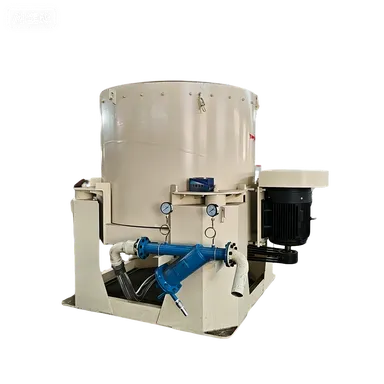
Zentrifugalkonzentrator
Zentrifugalkonzentrator – Hocheffizienter Schwerkraftkonzentrator für Feinpartikel – Produktübersicht Der Zentrifugalkonzentrator…

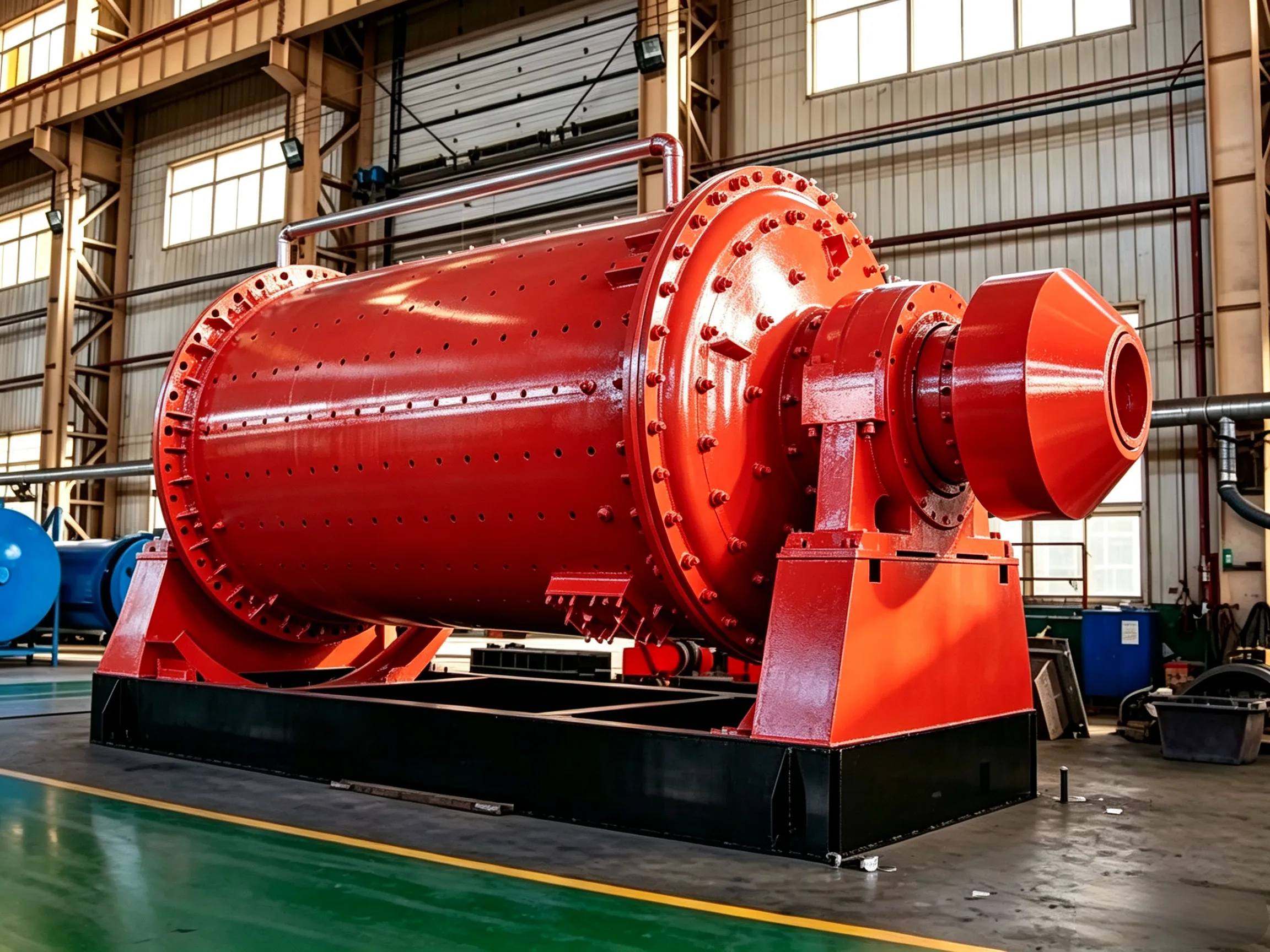
When a Kugelmühle is used for primary grinding, industrial practice shows that the feed should be controlled by using 2–3 stages of crushing combined with screening to strictly limit the maximum size of the new feed. For large and medium‑sized concentrators, the maximum feed size is controlled to 10–12 mm; however, for small plants using only two stages of crushing, the maximum size may be as high as 25–30 mm. When only a single stage of crushing is used, the feed size must be closely controlled by the mining operation, and the feed may be somewhat coarser. The general principles for selecting grinding media size are: (1) The harder the ore and the coarser the feed, the larger the grinding media should be, in order to provide greater impact breakage. (2) When treating soft and fine materials, smaller media should be used to enhance attrition grinding. (3) When the feed contains a wide range of particle sizes, a mixture of different ball diameters should be used to accommodate the non‑uniformity of the ore properties and the operating conditions. Generally, the ball charge volume is 40%–50%, but for large ball mills the ball charge may be lower, possibly as low as 30%–35%.
As shown in Figure 6‑6, within the normal operating range of primary ball milling and for the same required product fineness:
(1) The coarser the feed size, the higher the energy consumption of the ball mill and the lower its throughput.
(2) The finer the feed size, the higher the mill throughput. This is mainly because finer feed particles have a shorter residence time in the mill and pass through more rapidly.
(3) When the grinding product is relatively coarse, the mill productivity changes more significantly with feed size, with a maximum variation of about 15%.
(4) When the grinding product is finer, the change in mill productivity with feed size is less pronounced, generally not exceeding 10%.
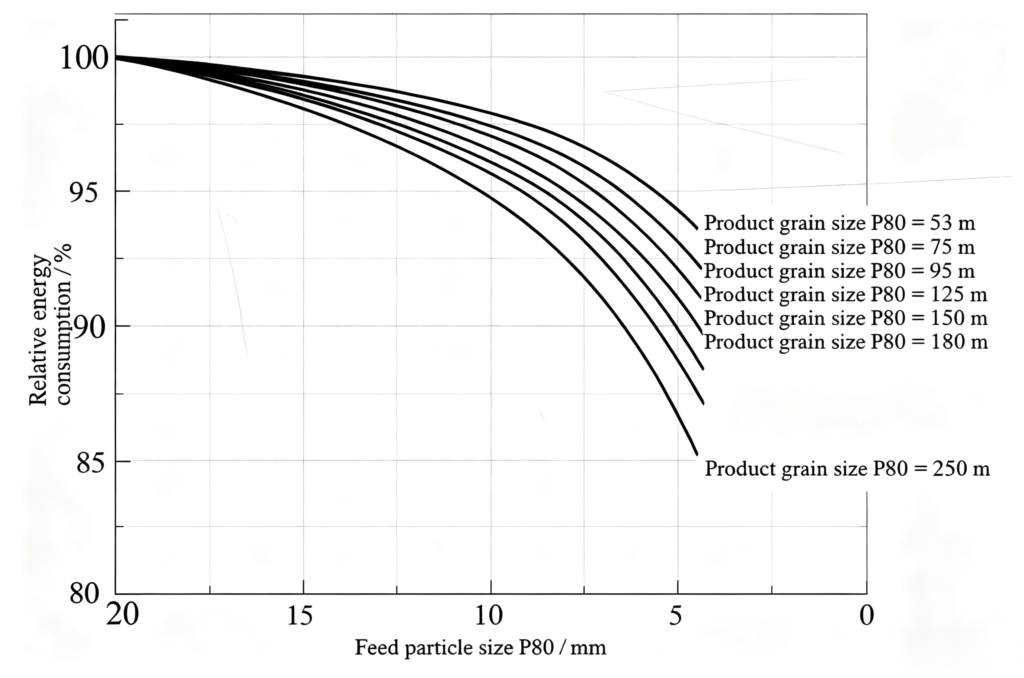
Figure 6‑6 Effect of feed size on energy consumption
(Based on Bond ball mill work index calculation)
The larger the concentrator scale, the more significant the economic benefit of reducing the grinding feed size. For example, in a large‑scale plant (e.g., 10 million tonnes per year), when the final crushing product size is reduced from 20–0 mm to 10–0 mm, the crushing capacity decreases by about one‑third, but the ball mill capacity can increase by about 15%, resulting in substantial savings in equipment investment and in the specific power consumption for crushing and grinding per tonne of ore.
However, in a concentrator, the feed to the grinding circuit is the final product of the crushing circuit. Reducing the mill feed size means that the crushing circuit must produce a finer product, which inevitably increases the overall reduction ratio of the crushing circuit, makes the flowsheet more complex, and raises costs. Conversely, increasing the mill feed size lowers crushing costs but increases grinding costs. Therefore, especially in regions where labour and maintenance costs are relatively high, the determination of the optimum mill feed size should be based on a comprehensive consideration to minimise the total cost of crushing and grinding. Typically, when deciding the appropriate mill feed size, the plant scale is the primary factor, along with the equipment performance and crushing flowsheet used in the crushing circuit.
Hence, even for ball mills, where steel grinding media are predominant, there still exists a reasonable and optimal feed size to be determined.
 English English
 Spanish
 Russian
 Arabic
 Swahili
 French
 Turkish
 Portuguese
 Korean
 Japanese
 German
 Italian