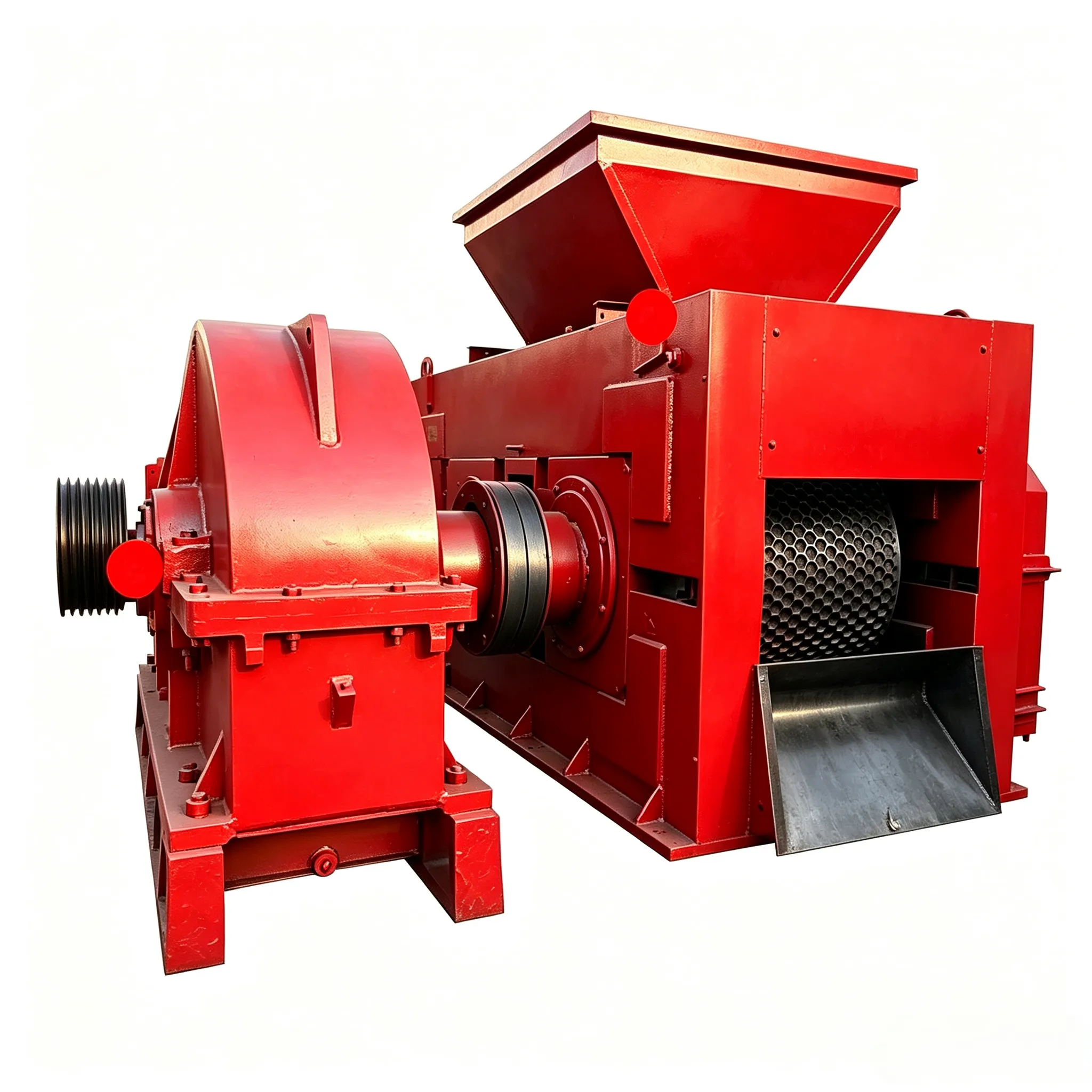
Brikettiermaschine
Produktübersicht Brikettiermaschinen sind Industrieanlagen, die zum Verdichten von pulverförmigem oder…


When a Raymond-Mühle produces abnormal noise, it is usually the equipment sending a “distress signal.” The source and solution largely depend on where the noise comes from – most commonly the main unit or the fan.
Below is a detailed analysis of causes and solutions for abnormal noise from different parts of the mill.
The main unit is the most frequent source of abnormal noise, typically manifesting as intense vibration, impact sounds, or scraping noises.
| Mögliche Ursache | Detailed Explanation | Lösung |
|---|---|---|
| Feeding issues | 1. Too little or no feed: The mill runs idle, causing the grinding rollers to directly contact the grinding ring. 2. Uneven feed size: Too fine a feed allows roller‑ring contact; too coarse a feed creates excessive impact force. | Adjust the feeder to ensure continuous, uniform, and appropriate feeding. Control the feed particle size according to material hardness. |
| Material problems | 1. Material too hard: Exceeds the mill’s grinding capacity, causing strong impact and vibration. 2. Foreign objects entering: Hard objects (e.g., metal) entering the grinding chamber can damage internal parts. | Keep material hardness within the mill’s allowable range. Stop immediately, inspect and remove any foreign objects. It is advisable to install a magnetic separator or metal detector at the feed inlet. |
| Wear or damage to core components | 1. Worn grinding rollers and rings: Long‑term use leads to uneven wear (out‑of‑round), causing unstable operation. 2. Damaged bearings: e.g., main shaft bearings or roller bearings. 3. Rollers not rotating or seized: Caused by dust ingress, poor lubrication, or damaged oil seals. | Replace severely worn rollers and rings in time. Stop and replace damaged bearings. Dismantle and overhaul the roller assembly, and replace oil seals. |
| Connection and fastening issues | 1. Loose anchor bolts: Caused by operational vibration. 2. Loose grinding ring. 3. Loose internal parts: e.g., bolts connecting the spider frame and rollers. 4. Coupling issues: Misalignment or lack of clearance between the main unit and the reducer coupling. | Regularly inspect and tighten all bolts. Tighten the grinding ring. Stop and tighten internal bolts. Re‑align the coupling and adjust clearance. |
| Installation and foundation problems | Weak foundation: An inadequately installed foundation causes vibration and noise during operation. | Reinforce the foundation. |
| Scraper issues | Severely worn scrapers: They cannot effectively pick up material, leading to idle grinding between rollers and rings, or uneven material build‑up. | Inspect and replace worn scrapers. Also check the gap between the scraper plate and the housing (typically 5‑10 mm). |
The fan is another source of noise, usually heard as vibration or an unbalanced rotating sound.
| Mögliche Ursache | Detailed Explanation | Lösung |
|---|---|---|
| Blade problems | 1. Excessive powder build‑up on blades: Material dust adheres to the blades, upsetting dynamic balance. 2. Uneven blade wear: Long‑term use causes uneven blade wear, leading to imbalance. | Regularly clean powder deposits from blades. Replace severely worn blades. |
| Loose connections | Loose anchor bolts: Similar to the main unit, loose fan foundation bolts can also cause vibration and noise. | Check and tighten the fan’s anchor bolts. |
When abnormal noise occurs, follow these steps for a rapid check:
In summary, the key to resolving noise issues in a Raymond mill lies in frequent inspection, careful observation, and proper maintenance. If the cause cannot be identified using the above methods, it is advisable to contact the equipment manufacturer or a professional technician for further assistance.
 English English
 Spanish
 Russian
 Arabic
 Swahili
 French
 Turkish
 Portuguese
 Korean
 Japanese
 German
 Italian