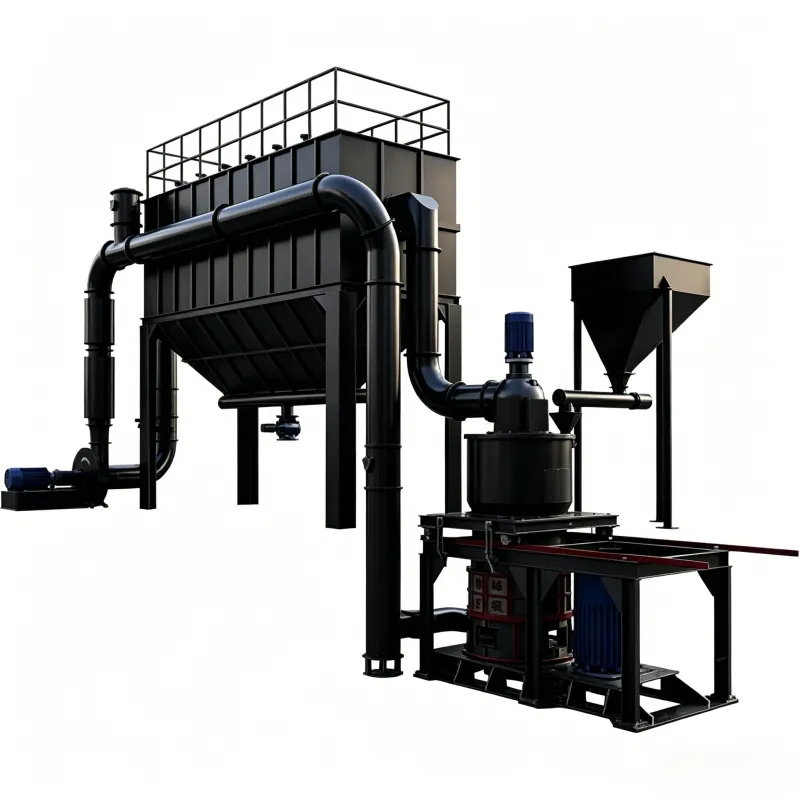
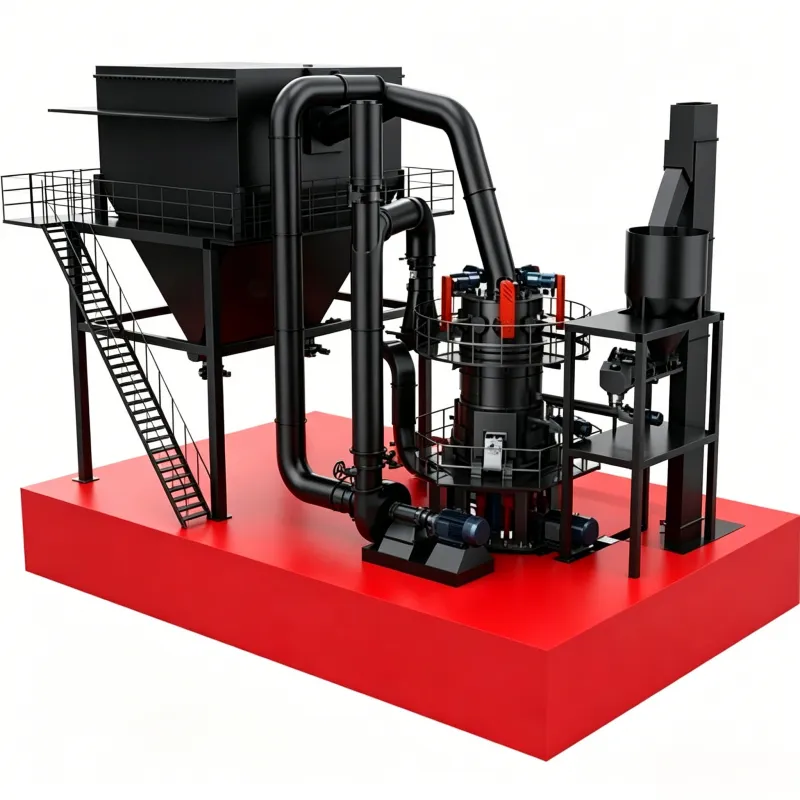
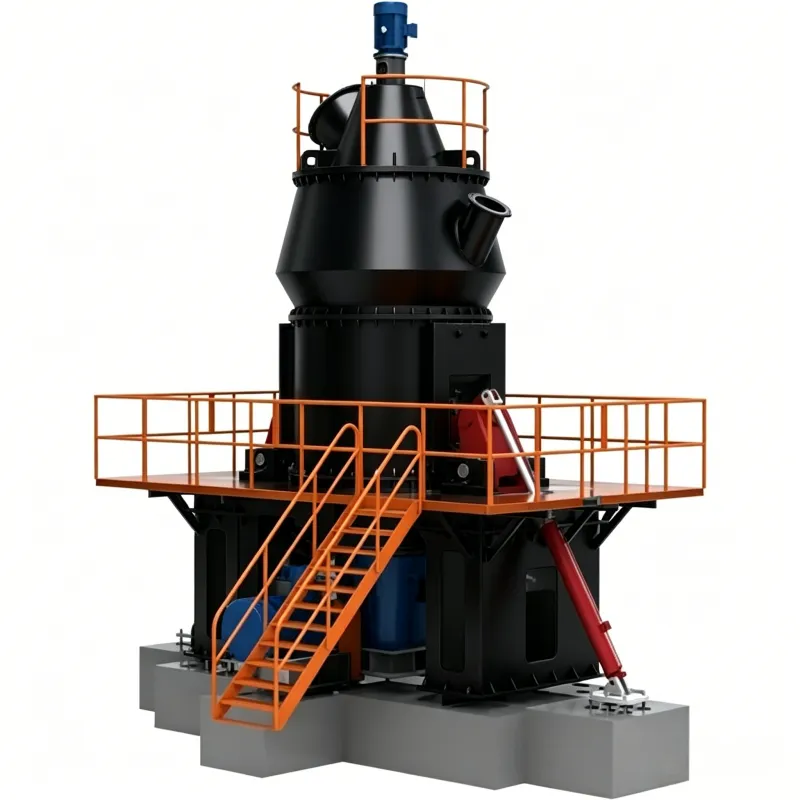
Mulino a rulli ad anello ultrafine
Introduzione al mulino a rulli ad anello ultrafine Il mulino a rulli ad anello ultrafine KXHGM…


Field of the Invention
The present invention relates to ore beneficiation methods, and in particular to a beneficiation method for phosphate ore.
Background of the Invention
Phosphate ore is the primary raw material for producing phosphate fertilizers, yellow phosphorus, phosphoric acid, and phosphates. Its grade must meet certain requirements in the production of various products. Especially for the production of yellow phosphorus and high‑efficiency NPK compound fertilizers, the phosphate ore must be of relatively high grade and contain minimal clay and impurities. In the past, a large amount of raw phosphate ore from Yunnan Province was directly transported to manufacturers using transportation means. The manufacturers then had to perform desliming and separation treatments, discarding clay and low‑grade portions. This caused tremendous waste both in resource utilization and in transportation.
To address this issue, in recent years Yunnan Province has developed a water scrubbing desliming technology, which involves agitating the ore with water to separate mud and sand from the ore. However, the water scrubbing desliming technology has the following disadvantages: (1) high equipment investment—various water scrubbing and auxiliary equipment are expensive, and constructing a tailings pond also requires significant investment, especially as the technical requirements for seepage control dams are strict and costly; (2) relatively complex process—the process steps for water scrubbing desliming are relatively numerous and the operation is complicated; (3) it requires a large amount of water resources for scrubbing, electric power for pumping water, and substantial land resources for building tailings ponds; (4) there is emission of waste—the tailings pond contains large amounts of sludge with residual minerals that must be discharged.
Objective of the Invention
In view of the existing problems of the water scrubbing process, the objective of the present invention is to provide a dry scrubbing desliming process, which features low investment, simple operation, high resource utilization, and no waste emissions.
Sintesi dell'invenzione
The implementation scheme of the present invention is as follows: low‑magnesium weathered phosphate ore is crushed and directly fed into a linear vibrating screen of the required size. Through vibration and friction, mud and impurities are removed, and the ore is simultaneously screened, thereby obtaining phosphate concentrate of good quality.
Detailed Description of the Embodiments
Below, a further detailed description is provided based on the embodiment shown in the accompanying drawing of the present specification.
Figure 1 is a process flow diagram of the present invention.
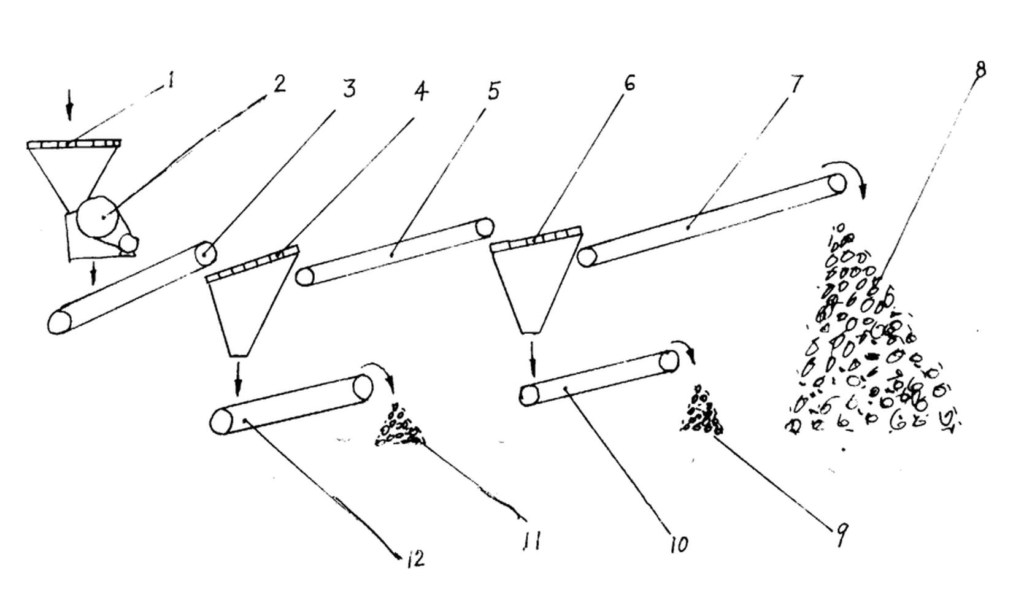
The phosphate ore mined from a low‑magnesium weathered zone is fed into a jaw crusher (2). A grizzly screen (1) is installed above the crusher, with a screen aperture of 200 mm. Ore that cannot pass through must be pre‑crushed to below 200 mm. The discharge particle size of the jaw crusher is controlled to below 50 mm. The discharged material falls onto a belt conveyor (3) and is sent to a linear vibrating screen (4) for the first screening and desliming, with a screen aperture of 0.5 mm or less. Ore with a particle size greater than 0.5 mm is sent to a belt conveyor (5); ore fines smaller than 0.5 mm, together with most of the mud and sand removed by vibration friction, fall onto a belt conveyor (12) and are stockpiled as fine ore (11) with a P₂O₅ content below 30%. The ore on belt conveyor (5) is then sent to a linear vibrating screen (6) for a second scrubbing, screening, and desliming, with a screen aperture of 5 mm. At this stage, the amount of mud and sand in the ore has already become very small. The 0.5‑5 mm ore particles fall onto a belt conveyor (10) and are stockpiled as fine concentrate (9) with a P₂O₅ content above 30%, which can be used as raw material for single superphosphate plants. The ore particles larger than 5 mm are sent via belt conveyor (7) to a finished product storage bin. The resulting lump concentrate (8) with a particle size of 5‑50 mm, having had most of its mud and sand impurities removed, can have a P₂O₅ content as high as 32% or more, making it suitable for manufacturers with higher raw material quality requirements.
The dry scrubbing method of the present invention uses equipment that is relatively low‑cost and easy to operate, and does not require the construction of a tailings pond. Therefore, it can save substantial investment, with the investment cost being only about 20% of that of the water scrubbing process. The process is relatively simple, easy to master, and requires fewer operators. It does not require large amounts of water or large tracts of land for tailings ponds, thus saving significant water resources, electricity, and land, providing good economic benefits. Moreover, since no tailings pond is needed, there is no wastewater discharge.

 English English
 Spanish
 Russian
 Arabic
 Swahili
 French
 Turkish
 Portuguese
 Korean
 Japanese
 German
 Italian