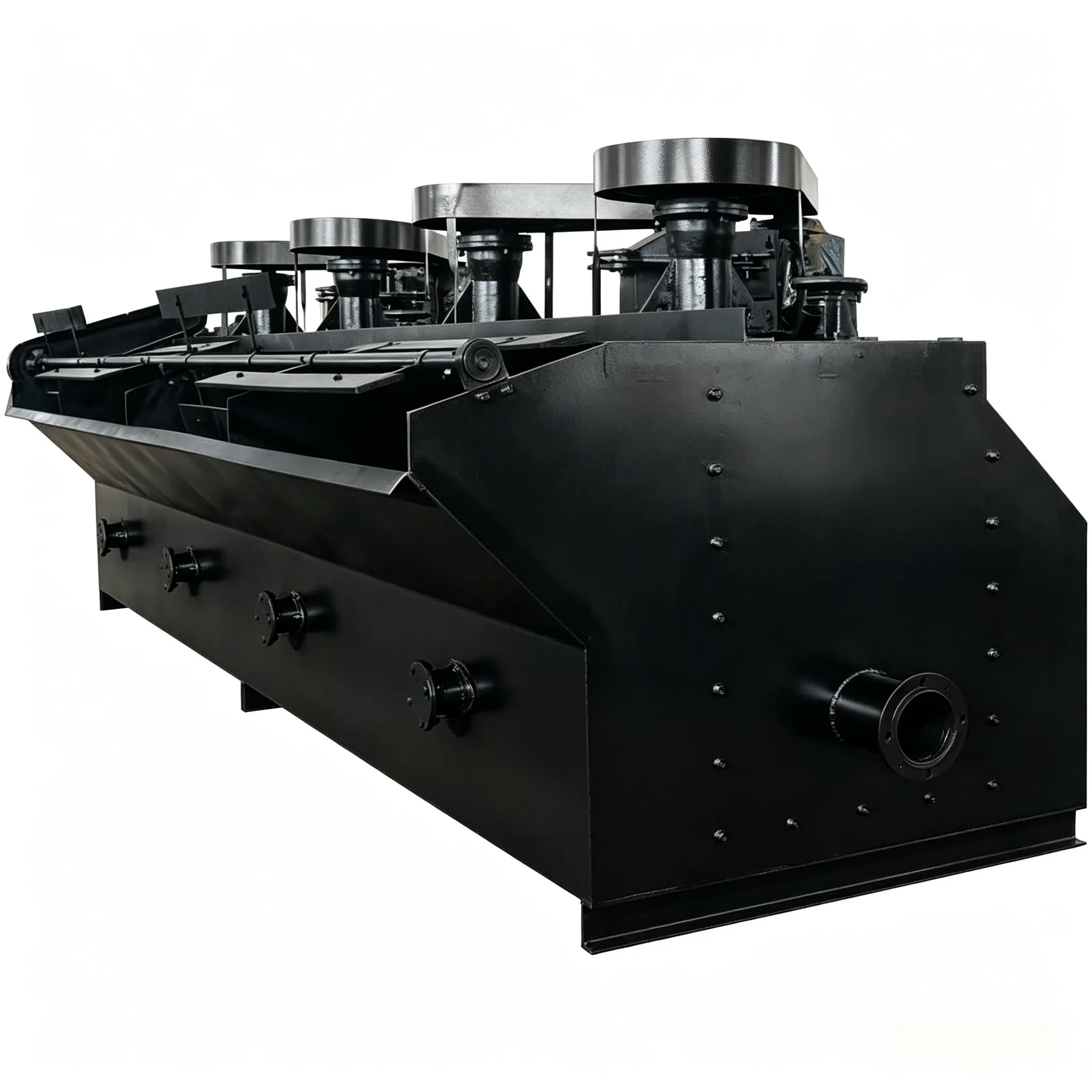
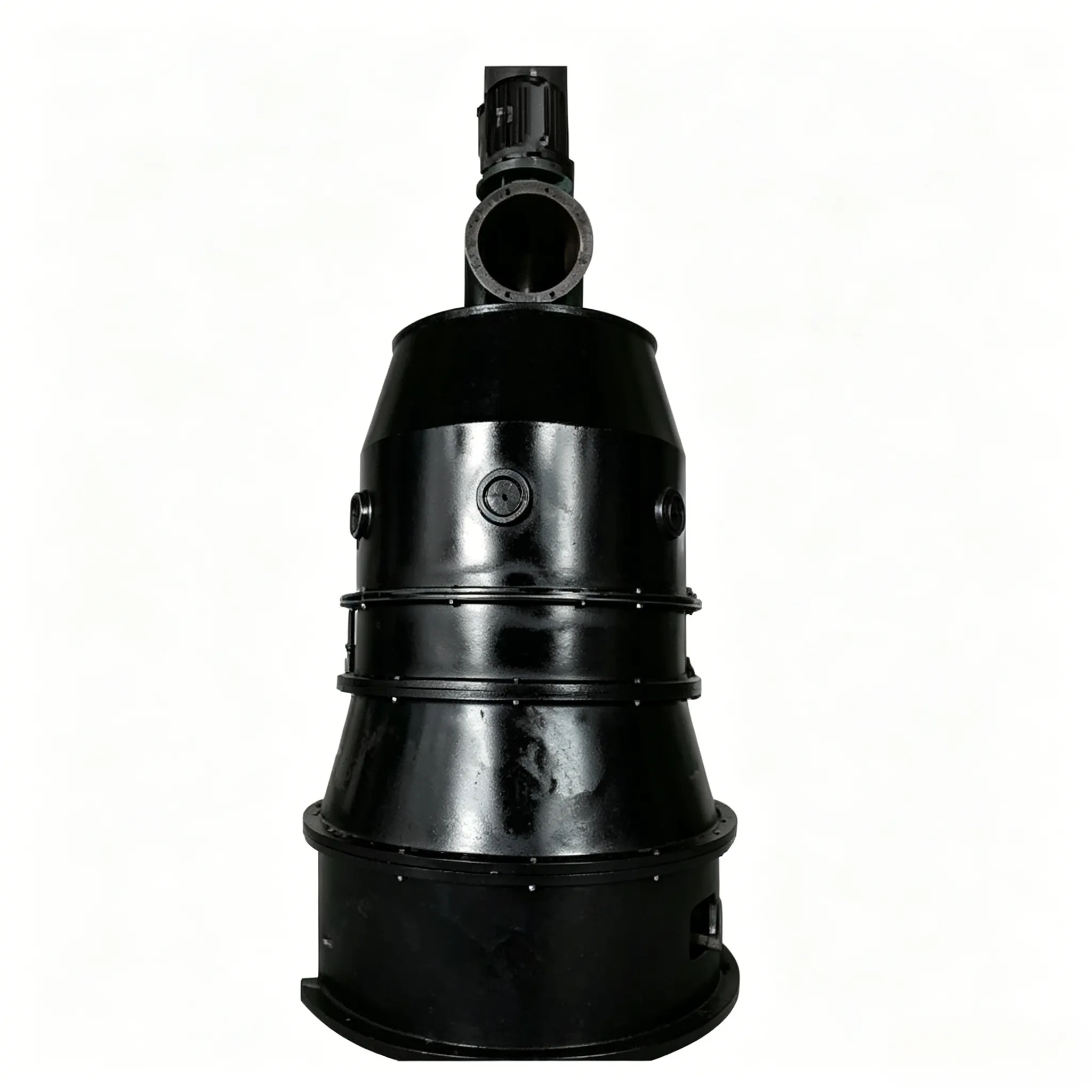
Macchina di flottazione SF
Macchine di flottazione SF e BF e l'unità combinata SF + JJF. Inizialmente,…


1. A process for improving the flotation index of complex copper sulfide ores, characterized in that an air‑suction mixing tank is additionally installed between a classifier and a mixing tank before flotation; in said air‑suction mixing tank, air is used and the stirring time is controlled to adjust the pulp potential of the copper sulfide ore; isoamyl xanthate and a sulfur‑nitrogen ester (thionocarbamate) are used as selective collectors and frothers for copper minerals; and preferential rapid flotation of copper minerals is carried out, comprising the following steps:
A. Flotation reagent formulation:
In the copper flotation operation, lime is used to control the grinding and flotation pulp pH in the range of 7.5–14; in the air‑suction mixing tank, air is introduced and the stirring time is controlled for 10–30 minutes to adjust the pulp potential of the copper sulfide ore, maintaining the pulp potential at ≥100 mV versus the calomel reference electrode; isoamyl xanthate at 10–20 g/t; sulfur‑nitrogen ester (thionocarbamate) as collector and frother at 30–40 g/t;
B. Addition points and methods of reagents:
Lime and isoamyl xanthate are added in the ball mill; the sulfur‑nitrogen ester is added in the mixing tank before flotation;
C. Flotation process flowsheet:
Only one stage of roughing, one stage of scavenging, and one to two stages of cleaning are used to obtain a copper concentrate.
2. The process for improving the flotation index of complex copper sulfide ores according to claim 1, characterized in that lime and isoamyl xanthate are added in the ball mill; after the pulp enters the air‑suction mixing tank, air is introduced and the stirring time is controlled to adjust the pulp potential of the copper sulfide ore; under the oxidizing action of oxygen in the air, the pulp potential gradually rises from about –300 mV during grinding to 100 mV, and finally is controlled to be ≥100 mV; in this process, the optimum potentials of all types of copper sulfide minerals fall within this range; when each copper sulfide mineral reaches its optimum potential, a small amount of isoamyl xanthate can achieve optimal mineralization with it; then the sulfur‑nitrogen ester is added in the mixing tank before flotation as a supplementary collector and frother, thereby accelerating the flotation rate of copper and allowing rapid scraping during copper roughing.
3. The process for improving the flotation index of complex copper sulfide ores according to claim 1, characterized in that the pH is adjusted with lime in the range of 7.5–12, isoamyl xanthate is used at 10–20 g/t, and sulfur‑nitrogen ester (thionocarbamate) is used as collector and frother at 30–40 g/t.
Settore tecnico
The present invention relates to a process for effectively improving the beneficiation index of complex copper sulfide ores.
Immagini di sfondo
Electrochemical conditioning can significantly improve the selectivity of the flotation process and is suitable for the separation flotation of polymetallic ores and bulk concentrates. The effective combination of electrochemistry and novel, efficient flotation reagents is a new approach to solving the flotation separation of complex sulfide ores. The separation of lead and zinc minerals has essentially solved the control of pulp potential and has played a significant role in industrial production. However, for copper sulfide ores, because copper minerals are more diverse than lead minerals, and each copper mineral has its own optimum flotation potential, previous potential‑controlled flotation for copper sulfides could only control the optimum potential of one major copper mineral. Problems such as the difficulty of automatic control of pulp potential and chemical addition remain, and the technique has rarely been applied industrially. To solve this problem, there is an urgent need to seek a simple method for potential control of copper ores.
Sintesi dell'invenzione
One object of the present invention is to provide an efficient beneficiation technology for copper sulfide ores that can significantly improve the recovery index of copper minerals.
Another object of the present invention is to provide a reagent scheme and implementation method for copper sulfide flotation that, while improving the recovery of copper minerals, reduces reagent consumption, lowers production costs, and lessens environmental pressure.
Yet another object of the present invention is to provide a flotation flowsheet and configuration that are easy to operate and have a simplified structure, thereby saving investment and reducing energy consumption.
The technical solution adopted by the present invention to solve the technical problems is as follows: To achieve the above objects, the present invention adopts the following technical solution: A process for improving the flotation index of complex copper sulfide ores, wherein an air‑suction mixing tank is added between the classifier and the mixing tank before flotation. In this air‑suction mixing tank, air is used and the stirring time is controlled to adjust the pulp potential of the copper sulfide ore. Isoamyl xanthate and a sulfur‑nitrogen ester (thionocarbamate) are used as selective collectors and frothers for copper minerals. A preferential rapid flotation of copper minerals is carried out, comprising the following steps:
A. Flotation reagent formulation
In the copper flotation operation, lime is used to control the grinding and flotation pulp pH in the range of 7.5–14. In the air‑suction mixing tank, air is introduced and the stirring time is controlled (10–30 minutes) to adjust the pulp potential of the copper sulfide ore, maintaining the pulp potential at ≥100 mV (versus the calomel reference electrode). The dosage of isoamyl xanthate is 10–20 g/t; the sulfur‑nitrogen ester (thionocarbamate) is used as a collector/frother at a dosage of 30–40 g/t.
B. Addition points and methods of reagents
Lime and isoamyl xanthate are added in the ball mill; the sulfur‑nitrogen ester is added in the mixing tank before flotation.
C. Flotation process flowsheet
Only one stage of roughing, one stage of scavenging, and one stage of secondary cleaning are used to obtain a copper concentrate.
In the above process for improving the flotation index of complex copper sulfide ores, lime and isoamyl xanthate are added in the ball mill. After the pulp enters the air‑suction mixing tank, air is introduced and the stirring time is controlled to adjust the pulp potential. Under the oxidizing action of oxygen in the air, the pulp potential gradually rises from about –300 mV (during grinding) to 100 mV, and finally is controlled to be ≥100 mV. In this process, the optimum potentials of all types of copper sulfide minerals fall within this range. When each copper sulfide reaches its optimum potential, a small amount of isoamyl xanthate can achieve optimum mineralization. Then, the sulfur‑nitrogen ester is added in the mixing tank before flotation as a supplementary collector and frother, thereby accelerating the flotation rate of copper and allowing rapid scraping during copper roughing.
In the above process, the pH is adjusted with lime in the range of 7.5–12, the isoamyl xanthate dosage is 10–20 g/t, and the sulfur‑nitrogen ester dosage (as collector/frother) is 30–40 g/t.
Advantages of the Invention
The process flowsheet of this new flotation technology for copper sulfide ores is consistent with the conventional full‑preferential flotation flowsheet, i.e., still full‑preferential flotation of copper minerals. The difference lies in the use of air‑controlled stirring time to adjust the pulp potential. By regulating various factors including conventional flotation operation parameters, the flotation index and performance of copper minerals are improved, enabling fast and highly selective flotation separation of complex sulfide minerals. There are two key points: first, the main regulation and control of conventional flotation operating parameters such as pulp pH, collector type, dosage and addition method, flotation time, and flotation circuit structure; second, no external electrodes or additional chemical reagents are used; only oxygen in the air is used as the oxidizing agent, and the pulp potential is adjusted by controlling the stirring time. Compared with conventional flotation processes, the present flotation technology can: (1) improve the separation index, generally increasing the metal recovery of copper minerals by 5 to 40 percentage points on average, while also obtaining a higher concentrate grade; (2) simplify the flowsheet structure; the flotation time is only about two‑thirds of that required by conventional flotation, saving equipment investment and reducing energy consumption. The present process technology allows each copper mineral to interact with reagents and undergo rapid flotation separation under its optimum potential condition. The potential control method is simpler and more stable than previous copper potential control methods, so the flowsheet can be greatly shortened. The number of scavenging stages can be reduced to one or even eliminated, and overall the equipment volume can be reduced by about one‑third; (3) reduce reagent consumption and lower production costs. Copper collectors can be reduced by about three‑quarters to two‑thirds; (4) stable operation: within the pH range of 7.5–14, the flotation of copper minerals is little affected, and changes in ore properties have little effect on the separation.
When treating copper sulfide ores under the same conditions using the present process technology and conventional flotation technology, the present technology exhibits significant advantages in terms of copper flotation index, reagent consumption, flowsheet structure, and energy consumption, with obvious economic and social benefits.
Brief Description of the Drawings
The present invention is further described in detail below with reference to specific embodiments.
Figure 1 is the conventional process test flowsheet and conditions.
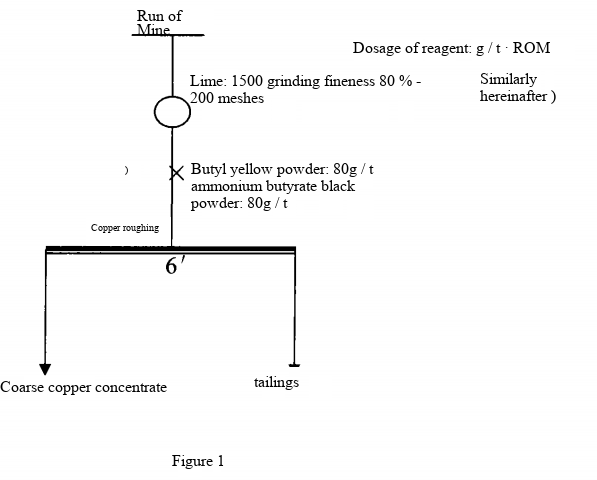
Figure 2 is the new process test flowsheet and conditions of the present invention.

Detailed Description of the Embodiments
The technical solution adopted by the present invention to solve the technical problems is as follows: To achieve the above objects, the present invention adopts the following technical solution:
An efficient beneficiation technology for copper sulfide ores, characterized by the following technical conditions and formulation: (1) an air‑suction mixing tank is added between the classifier and the mixing tank before flotation; in this air‑suction mixing tank, air is used and the stirring time is controlled to adjust the pulp potential of the copper sulfide ore; (2) isoamyl xanthate and a sulfur‑nitrogen ester (thionocarbamate) are used as selective collectors/frothers for copper minerals; (3) preferential rapid flotation of copper minerals is carried out.
A flotation reagent scheme and implementation method for efficiently improving the metal recovery index of copper sulfide ores: the reagent scheme is as follows: in the copper flotation operation, lime is used to control the grinding and flotation pulp pH in the range of 7.5–14; in the air‑suction mixing tank, air is introduced and the stirring time is controlled to adjust the pulp potential, with a final pulp potential of ≥100 mV (versus the calomel reference electrode); isoamyl xanthate at 10–20 g/t; sulfur‑nitrogen ester (thionocarbamate) as collector/frother at 30–40 g/t; lime and isoamyl xanthate are added in the ball mill, and the sulfur‑nitrogen ester is added in the mixing tank before flotation.
A flotation circuit configuration with convenient potential control for efficiently improving the metal flotation recovery index of copper sulfide ores. The flotation process flowsheet is shown in Figure 2.
Examples 1 to 4
Examples 1 to 4 used copper ores containing multiple copper minerals. The mineral composition was as follows: metallic minerals mainly included pyrrhotite, chalcopyrite, chalcocite, bornite, pyrite, colloform pyrite, sphalerite, followed by native bismuth, bismuthinite, stannite, marcasite, with minor and trace amounts of rutile, digenite, cubanite, hessite, limonite, hematite, molybdenite, etc.; non‑metallic minerals mainly included quartz, carbonates, chlorite, epidote, sericite, sphene, zircon, etc.
From the results of the original mineral phase analysis, the copper minerals included primary and secondary copper sulfides, with copper oxides accounting for only 1–3% of the total minerals, so the ore was essentially unaffected by oxidation. From the perspective of mineral composition, the recovery of this ore is mainly influenced by secondary copper and particle size. The theoretical copper recoveries for Examples 1 to 4 were approximately 96.45%, 97.30%, 96.20%, and 91.00%, respectively.
| Traditional crafts | New process | ||
| Reality Shi Example 1 | Ore grade | Copper 1.20, Lead 0.74, Zinc 1.02, Sulfur 17.78, Iron 32.39 | |
| Drug consumption | lime: 1500 grams/tonButyl xanthate: 80 g/tonButanamine black powder: 80 grams/ton | lime: 1500 g/tonIsoamyl xanthate: 10-20 g/tonThionitrile ester: 30~40 grams/ton | |
| Copper recovery rate | 90.30% | 96.36% | |
| Reality Shi Example 2 | Ore grade | Copper 1.02, Lead 0.54, Zinc 0.24, Sulfur 13.06, Iron 25.13 | |
| Drug consumption | lime: 1500 grams/tonButyl xanthate: 80 g/tonAmmonium black powder: 80 grams/ton | lime: 1500 g/tonIsoamyl xanthate: 10-20 g/tonThionitrile ester: 30~40 grams/ton | |
| Copper recovery rate | 91.95% | 97.24% | |
| Esempio 3 | Ore grade | Copper 0.75, Lead 0.25, Zinc 0.08, Sulfur 9.59, Iron 22.96 | |
| Drug consumption | lime: 1500 grams/tonButyl xanthate: 80 g/tonButanol black powder: 80 grams/ton | lime: 1500 g/tonIsoamyl xanthate: 10-20 g/tonThionitrile ester: 30~40 grams/ton | |
| Copper recovery rate | 89.1% | 95.9% | |
| Reality Shi Example 4 | Ore grade | Copper 0.32 | |
| Drug consumption | lime: 1500 grams/tonButyl xanthate: 80 g/tonButanol black powder: 80 grams/ton | lime: 1500 g/tonIsoamyl xanthate: 10-20 g/tonThionitrile ester: 30~40 grams/ton | |
| Copper recovery rate | 48.82% | 90.49% | |
Results of main element analysis in Examples 1-4
In Examples 1 to 4, ore samples of different properties were respectively used for comparative beneficiation tests. In the new beneficiation process, the ore was crushed, and lime and isoamyl xanthate were added during grinding to adjust the pH value. When the grinding fineness reached –200 mesh, the pulp was stirred in the newly added air‑suction mixing tank, and the pulp potential of the copper sulfide ore was adjusted by controlling the stirring time. Then, isoamyl xanthate and a sulfur‑nitrogen ester (thionocarbamate) were used as selective collectors and frothers for copper minerals, and preferential rapid flotation of copper minerals was carried out during the flotation process. After roughing and cleaning of the copper minerals, the number of scavenging stages could be reduced to one or even eliminated.
For Examples 1 to 4, using the process of the present invention and the conventional process, the test flowsheets and conditions of the new process and the conventional process are shown in Figures 1 and 2, respectively. The comparison of test results for Examples 1 to 4 is presented in Table 1. It can be seen that under the new process conditions of the present invention, the copper recoveries were 96.36%, 97.24%, 95.90%, and 90.49%, respectively, which are essentially consistent with their respective theoretical recoveries. Compared with the conventional process conditions, the copper recoveries under the new process conditions of the present invention were increased by 6.06, 5.29, 6.80, and 41.67 percentage points, respectively; reagent consumption was reduced by 100–120 g/t, and the number of scavenging stages could be reduced to one or even eliminated.

 English English
 Spanish
 Russian
 Arabic
 Swahili
 French
 Turkish
 Portuguese
 Korean
 Japanese
 German
 Italian