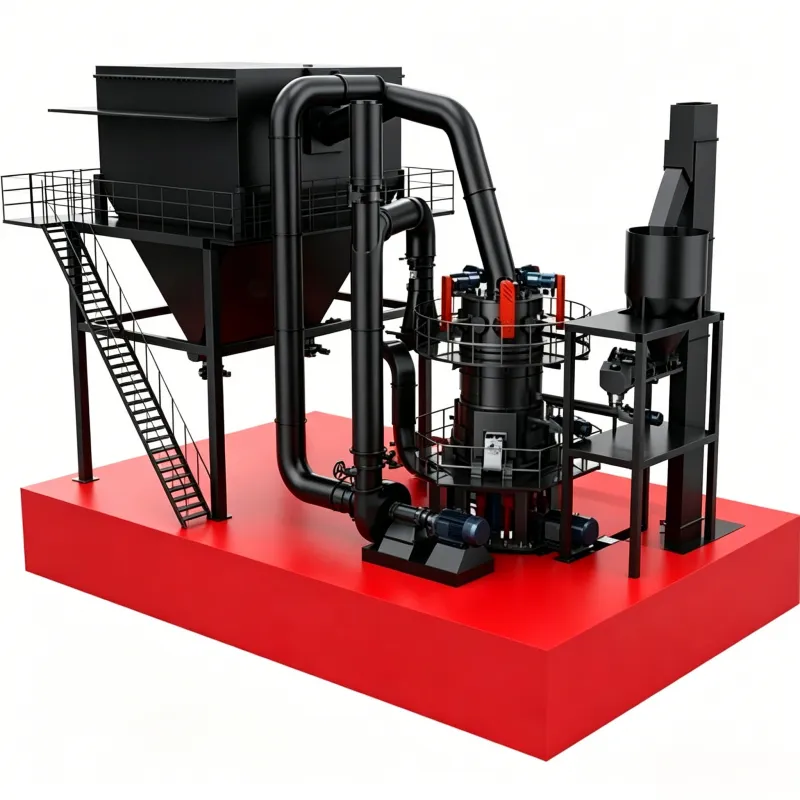
Mulino a rulli verticale ultrafine
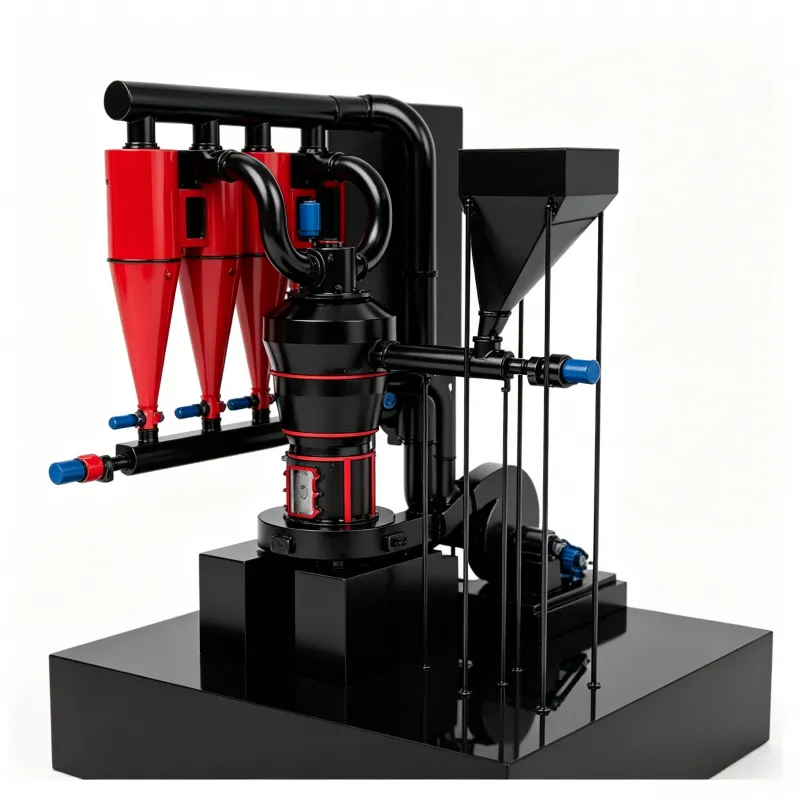
Introduzione al mulino a rulli verticale ultrafine Il mulino a rulli verticale ultrafine KXLM…


In the production of prebaked anodes for aluminium electrolysis, green anode grinding is one of the core processes that determines product quality. Although the fine powder accounts for only about 30% of the dry materials, its specific surface area represents over 90% of the total mix surface area, playing a decisive role in the binder dosage. This article provides a comprehensive analysis of the green anode grinding process flow, core equipment selection, and quality control technologies.
Green anode manufacturing is a key process flow in carbon anode production, mainly consisting of the crushing and screening system, grinding system, mixing and kneading system, and forming and cooling system. The grinding system further pulverises the 6–0 mm crushed fines from petroleum coke, spent anodes, and other raw materials into finer powder, which is used to fill the voids between aggregate particles.
The fine powder serves two primary functions in the green anode: first, filling the voids between calcined coke particles, e second, using its large specific surface area to adsorb binder, acting as a bonding bridge between various particles. Studies have shown that what binds the aggregate particles of different sizes together is not pure pitch, but rather a cementitious material composed of pitch and fine powder with a certain structure. Therefore, the fine powder is an essential component of the prebaked anode system; without proper attention to the powder, high‑quality anodes cannot be produced.
The complete green anode grinding process includes the following key stages:
Petroleum coke (or spent anode material) is fed separately by electromagnetic vibrating feeders, then conveyed by belt conveyors and bucket elevators to vibrating screens for screening. Material with a particle size larger than 12 mm is returned to the intermediate bin, then fed by an electromagnetic vibrating feeder into a crusher for medium crushing before being re‑screened.
Materials with particle sizes of 12–6 mm and 6–3 mm can either be sent directly to the respective batching bins or returned to the crusher for further medium‑fine crushing to below 3 mm, allowing flexible adjustment for production.
Materials of 6–3 mm and 3–0 mm are fed into the grinding mill to be pulverised into powder. The main sources of fine powder include:
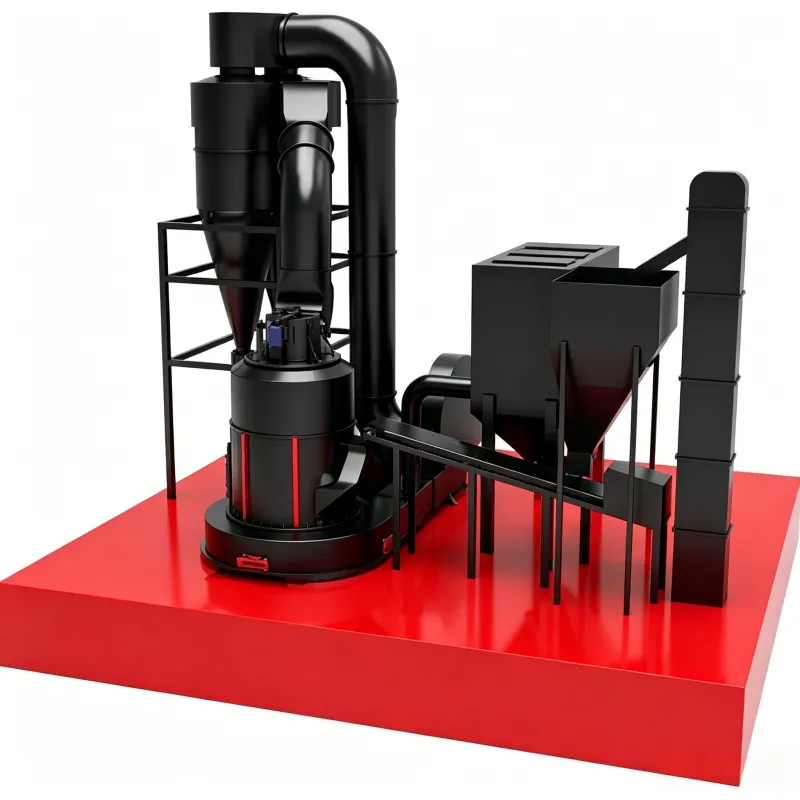
One carbon company uses four 6R4427 Raymond mills for green anode grinding. Material is fed quantitatively by electromagnetic vibrating feeders into the mills. The dust‑laden air from the mills passes through air classifiers; coarse particles are separated and returned to the mills for regrinding, while qualified fine powder is collected by cyclone collectors and sent to the powder batching silo. The circulating air is returned to the mills by fans for recycling, while excess air generated during grinding is purified and discharged to the atmosphere.
In addition to being used for batching, part of the fine powder is also used as an adsorbent for pitch fumes during the mixing, kneading, and forming processes, after which it enters the mixing and kneading section directly.
Currently, the main grinding equipment used in carbon plants for producing prebaked anode powder includes Raymond mills, ball mills, and vertical roller mills. During the early plant design stage, the choice of grinding equipment should be based on production capacity, investment budget, and process flow requirements.
The Raymond mill is the most widely used and recognised equipment in the green anode grinding process. Its working principle is: the main motor at the lower part drives the grinding elements to rotate along the roller ring on the inner wall of the barrel. The material to be ground is distributed between the roller ring and the grinding elements and is crushed by compression, achieving pulverisation.
Advantages: mature technology, simple structure, easy maintenance, moderate investment.
The ball mill is a traditional grinding device. Some companies use φ2.1×3.7 m air‑swept mills equipped with coarse powder separators, cyclone dust collectors, and reverse‑air bag filters to prepare and collect powder. The purity of the ball‑milled powder directly affects the pitch dosage in the anode production recipe, thereby influencing the mixing and kneading quality of the paste.
However, some plants face issues such as unreasonable design and equipment selection, resulting in the coarse powder separator failing to perform its classification function, difficulty in controlling and adjusting ball‑milled powder purity, poor uniformity of the powder, and low system capacity, which seriously affects the stability and rationality of the forming recipe.
Advantages: strong adaptability, can handle harder materials, relatively low investment.
Vertical roller mill (VRM) technology has been gradually promoted and applied in the prebaked anode industry in recent years. The VRM uses the interparticle bed grinding principle, with unit energy consumption about 20%–30% lower than that of a ball mill. In addition, the grinding process has a short residence time, avoiding over‑grinding and resulting in a uniform particle size distribution.
Vantaggi principali:
Equipment selection principle: If the production is mainly dry, emphasises energy saving and environmental protection, and pursues high efficiency and precise fineness control, the VRM should be prioritised. If wet operation is required, corrosive materials are involved, or initial investment is limited, the ball mill remains a reliable choice.
Il Blaine value (specific surface area) is a key parameter for measuring powder fineness. The Blaine value of the powder has a significant impact on the paste recipe and the mixing and kneading process. Studies have shown that improvements in green anode and prebaked anode bulk density and air permeability are closely related to the Blaine value.
However, when the proportion of ultrafine powder in the mix exceeds 50%, the anode’s compressive strength, electrical conductivity, thermal conductivity, and other properties can be negatively affected. Therefore, precise control of the Blaine value is critical to ensuring anode quality.
Powder purity directly affects the mixing and kneading quality of the paste, which in turn influences the appearance quality and physical and chemical indicators of the anode blocks. Traditional powder testing methods are mostly offline and intermittent, failing to meet the requirements of accuracy, timeliness, and continuity.
Latest technological breakthroughs:
In addition to Blaine value control, particle size distribution control of the powder also offers certain technical advantages. A reasonable particle size gradation can effectively improve the filling effect and bonding performance of the powder.
Transition from the traditional mode of manual sampling, screening, and manual mill speed adjustment to an intelligent mode featuring automatic online detection and automatic closed‑loop control. After the implementation of an innovative project at one enterprise, 24‑hour continuous online monitoring was achieved. By precisely controlling the particle size composition of the ball‑milled powder and stabilising powder purity, the pitch dosage was reduced by 0.2%, the green anode qualification rate increased by 0.3%, and the first‑grade product rate of baked anodes improved by 5%.
To address issues such as poor classification efficiency and difficult purity control in traditional ball mill systems, measures such as adding air classification systems to the mills and applying computer‑based fuzzy control to the feed system can effectively improve powder quality.
Green anode quality is influenced by multiple factors including pre‑heating, mixing and kneading, paste cooling, forming, and the process recipe. The grinding process must work closely with upstream and downstream operations to achieve coordinated optimisation across the entire production flow.
The green anode grinding process is a core technological link in the production of prebaked anodes for aluminium smelting. Though small in quantity, the fine powder affects virtually every aspect of anode quality. From the mature traditional solution of the Mulino Raymond, to the widely used mulino a sfere, and the energy‑efficient breakthrough of the vertical roller mill, equipment selection should be tailored to each plant’s specific conditions. Meanwhile, continuous advances in technologies such as precise Blaine value control, online powder purity detection, and intelligent automatic regulation are driving the green anode grinding process towards higher quality, lower energy consumption, and greater intelligence.
 English English
 Spanish
 Russian
 Arabic
 Swahili
 French
 Turkish
 Portuguese
 Korean
 Japanese
 German
 Italian