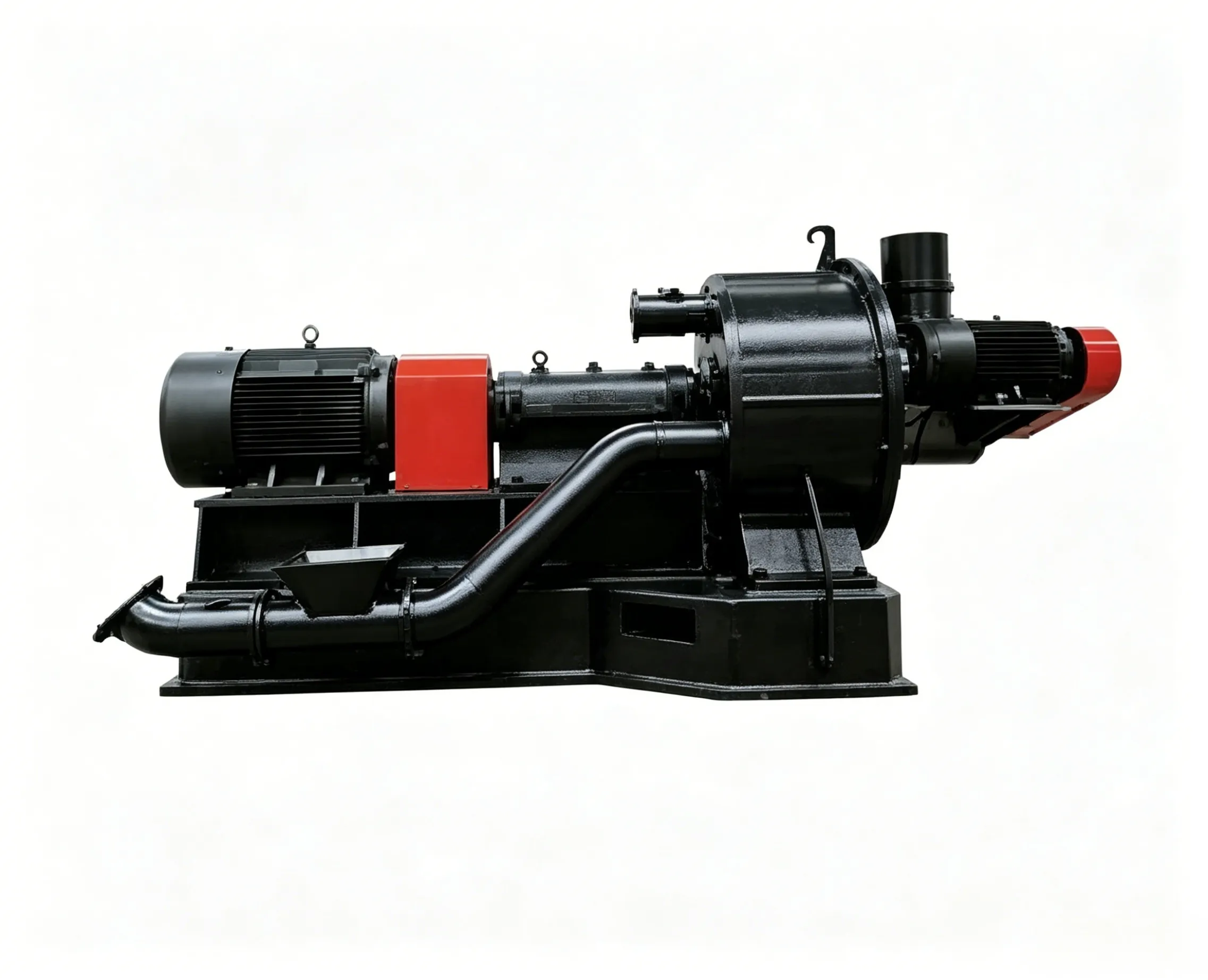
Mulino a impatto ultra-micro serie SCR
Mulino a urto ultra-micro serie SCR Il mulino a urto serie SCR è un mulino per la frantumazione ultrafine…

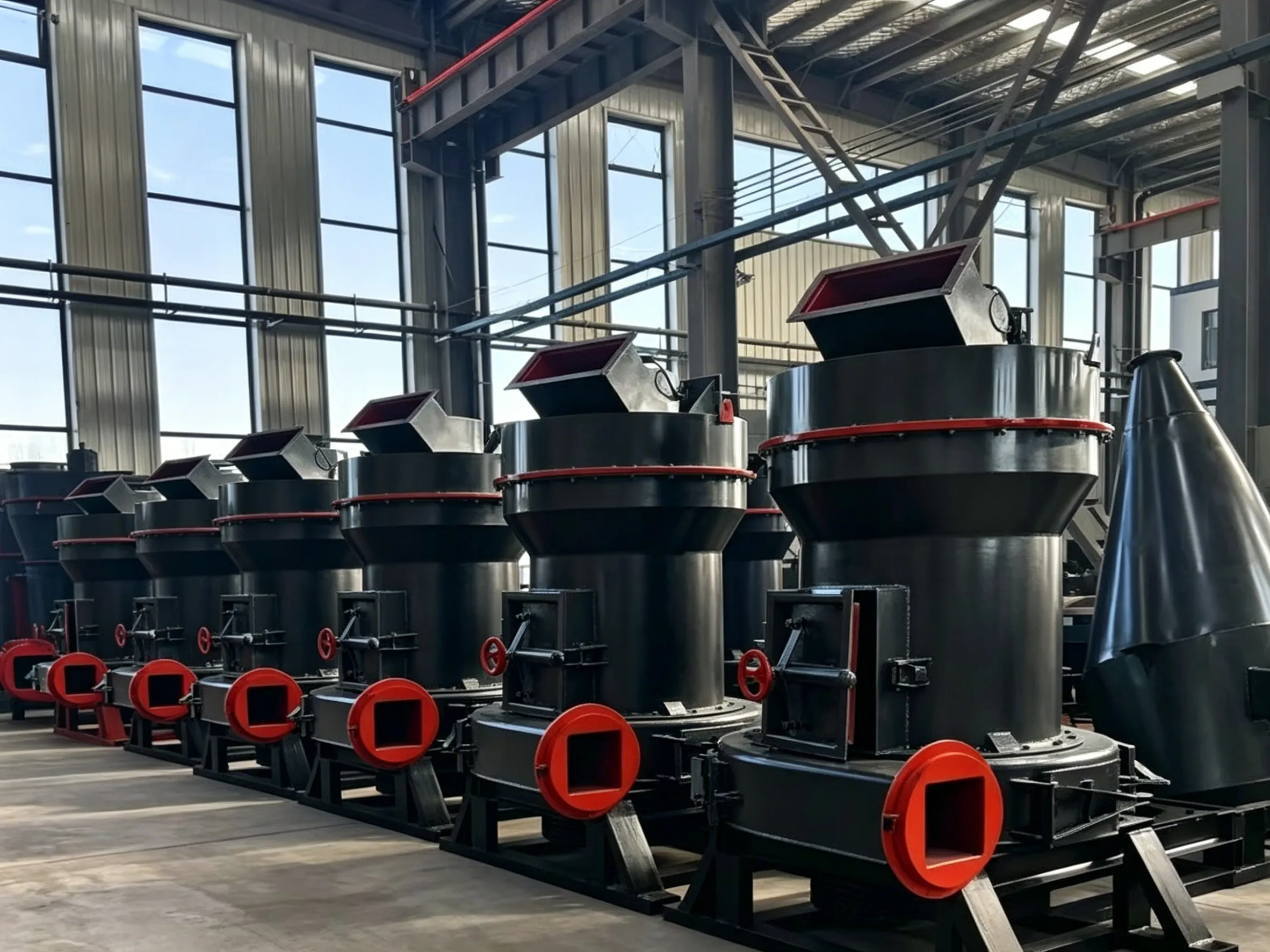
Barite (also known as natural barium sulfate) is an important non‑metallic mineral raw material with the chemical formula BaSO₄. It possesses excellent properties including high density (4.2–4.5 g/cm³), strong chemical inertness, good stability, acid and alkali resistance, and the ability to absorb X‑rays and gamma rays. Barite has a wide range of applications in petroleum drilling, chemicals, coatings, plastics, rubber, papermaking, pharmaceuticals, and many other fields, with over 2,000 recorded uses.
The global barite market has been growing steadily. In 2024, the global barite market sales reached approximately US$2.51 billion, and it is projected to reach US$3.69 billion by 2033. Other reports indicate that the global barite powder market was about US$1.538 billion in 2024 and is expected to reach US$2.098 billion by 2031. The Chinese market is also maintaining rapid growth, offering broad prospects.
Barite has a Mohs hardness of 3–3.5, making it relatively easy to grind and highly suitable for processing with Raymond mills. Using Raymond mills to grind barite is an effective way to convert barite resources into high‑value‑added industrial raw materials.
| Property | Parametro |
|---|---|
| Main component | BaSO₄ (barium sulfate) |
| Mohs hardness | 3–3.5 |
| Densità | 4.2–4.5 g/cm³ |
| Colour | White, greyish white, light yellow, etc. |
| Chemical properties | Strong inertness, good stability, acid/alkali resistant |
| Special property | Absorbs X‑rays and gamma rays |
Basic requirements for barite powder processing:
The Raymond mill (pendulum roller mill) mainly consists of the mainframe, hopper, classifier, cyclone collector, ductwork, pulse bag filter, and electrical control system. The process is as follows:
Material is lifted by a bucket elevator to the hopper, then uniformly and quantitatively fed by an electromagnetic vibrating feeder into the grinding chamber. Inside the mainframe, the roller assembly suspended on the plum blossom frame rotates around the central shaft. Under centrifugal force, the rollers swing outward and press tightly against the grinding ring. A plough blade scoops up the material and feeds it between the rollers and the ring, where it is crushed by rolling action. The ground powder is carried upward by air flow from the blower to the classifier for separation. Fines meeting the fineness requirement are carried into the cyclone collector for collection, while oversize particles are returned to the mill for re‑grinding.
Barite fully meets the operating conditions of Raymond mills:
| Condition | Barite Property | Verdict |
|---|---|---|
| Mohs hardness ≤9.3 | 3–3.5 | ✅ Fully suitable |
| Moisture <8% (can be dried to <6%) | Dried to <6% | ✅ Fully suitable |
| Non‑flammable and non‑explosive | Inert mineral | ✅ Fully suitable |
| Feed size ≤30 mm | Can be crushed to ≤30 mm | ✅ Fully suitable |
Depending on product fineness, barite grinding can be divided into coarse powder production e ultra‑fine powder production.
Barite run‑of‑mine
       ↓
Hand sorting / optical sorting (removal of impurities)
       ↓
Jaw crusher (primary crushing to 50–100 mm)
       ↓
Cone / impact crusher (secondary crushing to ≤20–25 mm)
       ↓
Vibrating screen (screening; oversize returned to crusher)
       ↓
Drying (moisture reduced to <6%)
       ↓
Storage hopper
       ↓
Electromagnetic vibrating feeder (uniform feeding)
       ↓
Raymond mill (grinding)
       ↓
Turbo classifier (classification)
       ↓
Qualified fine powder → Cyclone collector → Packaging
Oversize particles → Return to mill for re‑grinding
       ↓
Pulse bag filter (collection efficiency ≥99%)
(1) Pre‑treatment / Beneficiation
Select barite ore with BaSO₄ content ≥90% and density ≥4.1 g/cm³, and remove impurities by hand sorting or optical sorting. If the raw ore moisture exceeds 5%, it must first be dried to <1% moisture, and an iron remover should be used to remove metallic iron impurities to improve product whiteness.
(2) Crushing
Two‑stage crushing: “primary + secondary”. A jaw crusher reduces large lumps to 50–100 mm, then a cone crusher or impact crusher further reduces the material to ≤20–25 mm. After crushing, the material is screened through a vibrating screen (20 mm mesh). The undersize goes to grinding, and the oversize is returned for re‑crushing. A bag filter is installed in the crushing area to control dust emissions.
(3) Drying
If the incoming material has high moisture (e.g., about 10%), hot air drying is required to reduce moisture to below 6% before grinding. The material is conveyed through a drying tunnel and then stored.
(4) Grinding
The dried material is fed into the mill hopper by a loader, then quantitatively fed by an electromagnetic vibrating feeder into the grinding chamber. The material is crushed by the rollers, and the air flow from the blower carries the fine powder to the classifier. Qualified powder enters the collection system, while coarse particles are returned for regrinding.
(5) Classification and Collection
After grinding, the material is classified by a high‑efficiency air classifier (rotor type) with classification efficiency ≥90%. Qualified fines are carried by air into the dust collector for separation, while coarse particles are returned to the mill.
(6) Purification and Post‑treatment (optional)
To improve whiteness, acid washing and bleaching can be performed. Use 1.5–2.0 mol/L citric acid solution at 80–95°C with stirring for 2–4 hours to remove iron, manganese, and other impurities. The slurry is then separated by filter press, washed with hot water to pH 6–7, and dried to moisture <0.5%. For enhanced compatibility with organic polymers, surface modification may also be applied.
(7) Packaging and Storage
The finished powder is weighed and packaged by an automatic packing machine, and stored in a dry, ventilated finished‑product warehouse to prevent moisture absorption. Closed vehicles should be used for transport to avoid contamination.
The Raymond mill grinding line has a compact three‑dimensional structure, small footprint, and strong system integration. From raw material preparation to grinding to final packaging, it forms an independent production system. The finished powder is uniform in fineness, with a screening pass rate of 99%. The entire grinding system is enclosed, operates under negative pressure, and is equipped with a pulse bag filter to ensure dust emissions meet standards.
| No. | Equipment | Specification / Model | Funzione |
|---|---|---|---|
| 1 | Frantoio a mascelle | PE series | Primary crushing to 50–100 mm |
| 2 | Cone / impact crusher | Selected based on capacity | Secondary crushing to ≤20–25 mm |
| 3 | Vaglio vibrante | 20 mm mesh | Screening / classification |
| 4 | Drying equipment | Rotary dryer / fluidised bed | Reduce moisture to <6% |
| 5 | Bucket elevator | Selected based on capacity | Material lifting |
| 6 | Storage hopper | Steel structure, with level indicator | Material buffering |
| 7 | Electromagnetic vibrating feeder | GZ series | Uniform and quantitative feeding |
| 8 | Mulino Raymond | Selected based on capacity | Grinding |
| 9 | Turbo classifier | Built‑in / external | Particle size classification |
| 10 | Cyclone collector | Selected based on air volume | Gas‑solid separation |
| 11 | Pulse bag filter | Selected based on air volume | Dust collection / environmental protection |
| 12 | High‑pressure blower | Selected based on air volume | Air conveying |
| 13 | Electrical control system | PLC automatic control | Centralised control |
Raymond mills are suitable for producing 200–325 mesh powder, with feed size ≤25 mm and capacity 1–30 t/h.
| Modello | Dimensioni del mangime (mm) | Product Fineness (mm) | Capacità (t/h) | Installed Power (kW) | Suitable Scale |
|---|---|---|---|---|---|
| HC1000 | ≤30 | 0.038–0.18 | 1–12 | 85 | Small |
| Conventional R‑type | ≤30 | 0.038–0.18 | 20–40 | 92 | Medium |
| HC2000 | ≤30 | 0.038–0.18 | 6–25 | 144 | Large |
| HC large type | ≤30 | 0.038–0.18 | 15–45 | — | Large |
For products requiring higher fineness, ultra‑fine Raymond mills or ring roller mills can be selected:
| Product Type | Fineness Range | Attrezzatura consigliata | Typical Application |
|---|---|---|---|
| Coarse powder | 200–325 mesh | Mulino Raymond | Petroleum drilling mud weighting agent |
| Fine powder | 325–1250 mesh | Mulino a rulli ad anello | Paint, plastic, rubber fillers |
| Ultra‑fine powder | 1250–3500 mesh | Ultra‑fine Raymond mill | High‑grade coatings, pharmaceuticals, cosmetics |
| Applicazione | Fineness Requirement | Purity Requirement | Density Requirement |
|---|---|---|---|
| Petroleum drilling | 200 or 325 mesh pass rate ≥97% | BaSO₄ ≥95% | >4.2 |
| Paint/plastic filler | 500–2000 mesh | BaSO₄ ≥98% | — |
| Rubber filler | 325–800 mesh | BaSO₄ ≥98% | — |
| Pharmaceutical/cosmetic | High‑whiteness ultra‑fine powder | High purity | — |
Establish a quality control system to regularly test product fineness, whiteness, density, purity, and other indicators. The whole production process should be equipped with dust removal and noise reduction facilities. Crushing and grinding sections operate under negative pressure in enclosed conditions to ensure a safe and environmentally friendly workshop.
Barite powder (natural barium sulfate) possesses high density, strong chemical inertness, good stability, acid/alkali resistance, and the ability to absorb harmful rays. It is widely used in the following fields:
This is the largest and most core application, accounting for approximately 85%–90% of total barite production. Drilling fluid weighting agents represent about 78% of the global barite market.
Barite is ground into fine powder (typically 200 mesh or 325 mesh, density >4.2) and added to drilling mud. Its high density increases the hydrostatic pressure of the drilling fluid to balance formation pressure, preventing blowouts, while also carrying cuttings, cooling, and lubricating the drill bit.
Barite is an important raw material for extracting barium and producing a series of barium salts such as barium carbonate, barium chloride, barium hydroxide, and barium nitrate. These salts are widely used in:
Barite powder is used as a filler in paints and coatings to increase film thickness, strength, and durability. Specific functions include:
Barite powder serves as a functional filler in plastics:
Barite powder is widely used as a filler e reinforcing agent in rubber:
High‑fineness barite powder is used in papermaking:
Barite can absorb X‑rays and gamma rays, making it an important radiation shielding material:
| Application Field | Share / Importance | Key Requirements |
|---|---|---|
| Petroleum drilling fluid weighting agent | ~85–90% | 325 mesh, density >4.2, BaSO₄ ≥95% |
| Chemicals (barium salt production) | Significant | High purity |
| Paint / coating filler | Extensive | ≥500 mesh, high whiteness |
| Plastic filler | Growing | High fineness, high whiteness |
| Rubber filler / reinforcing agent | Importante | 325–800 mesh, BaSO₄ ≥98% |
| Paper filler | Importante | High fineness |
| Radiation shielding | Special purpose | High density |
| Pharmaceutical / cosmetic | Emerging | Ultra‑fine, high purity |
Investment for a barite grinding plant varies depending on production scale, equipment selection, factory construction, and environmental requirements.
| Scale | Total Investment (10,000 RMB) | Capacity Reference | Scenario applicativo |
|---|---|---|---|
| Small line | 50–100 | 10,000–20,000 t/year | Small / medium processing plant |
| Small‑medium line | 100–500 | 50,000 t/year | Scale production |
| Large line | >1000 | >100,000 t/year | Large‑scale powder processing enterprises |
Equipment Investment Reference:
| Equipment Item | Investment Range (10,000 RMB) |
|---|---|
| Core grinding equipment (e.g., LM vertical mill) | 80–120 |
| Auxiliary equipment (crushers, elevators, feeders, etc.) | 30–60 |
| Pulse bag filter | 5–20 |
| Finished product silo and packaging system | 10–30 |
| Factory building (1000–2000 m²) | 30–100 |
| Power infrastructure | 10–40 |
| Installation and commissioning | 10–15% of equipment cost |
| Environmental approval and acceptance | 5–15 |
| Initial working capital | 30–50 |
Typical Examples:
Main operating costs include:
Raymond mills have relatively low equipment prices (starting from over 100,000 RMB), simple maintenance, and controllable wear‑part replacement costs. High‑quality mills with optimised grinding chamber designs and roller materials can significantly improve wear resistance and reduce the frequency of wear‑part replacement, leading to lower long‑term operating costs.
The Raymond mill system operates under negative pressure and is equipped with a pulse bag filter. The air‑classification circuit circulates internally between the fan, cyclone, ducting, and fan, so very little dust is emitted. Excess air is collected by the dust collector and purified by the pulse bag filter before discharge.
The mainframe can be equipped with vibration‑damping devices to reduce noise and vibration. The integral base structure provides robust stability.
| Risk Factor | Descrizione | Mitigation Measures |
|---|---|---|
| Raw material supply | Unstable supply or price fluctuations of barite ore | Sign long‑term agreements with multiple mines; maintain raw material stockpiles |
| Market risk | Price fluctuations, especially affected by the oil industry | Develop multi‑grade products (coarse, fine, ultra‑fine) to diversify market risk |
| Environmental risk | Dust emissions failing to meet standards | Install high‑efficiency pulse bag filters to ensure ≥99% collection efficiency |
| Equipment risk | Breakdowns affecting production | Choose reputable brands; maintain spare parts inventory; establish preventive maintenance |
| Technical risk | Unstable product quality | Train operators; establish a quality control system |


 English English
 Spanish
 Russian
 Arabic
 Swahili
 French
 Turkish
 Portuguese
 Korean
 Japanese
 German
 Italian