Come ottimizzare le prestazioni di un mulino a sfere per la macinazione fine?
Come ottimizzare le prestazioni di un mulino a sfere per la macinazione fine?
Luglio 6th, 2026
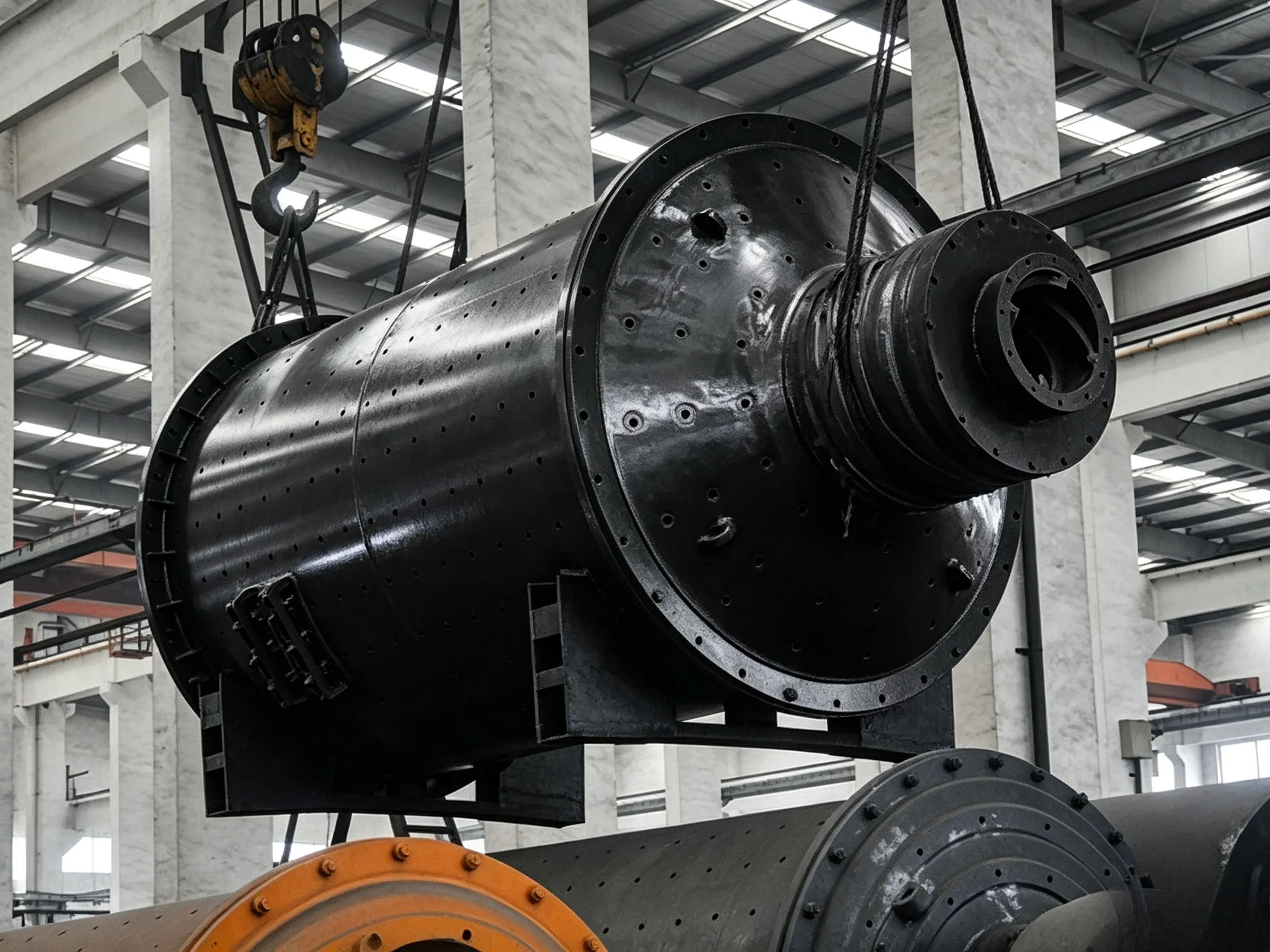
Optimizing a mulino a sfere for fine grinding is a multi-faceted challenge. The goal is to achieve the desired particle size while minimizing energy consumption and maximizing throughput. Here’s a comprehensive guide based on current industry practices and research.
1. Optimize Grinding Media
The grinding media (balls) are the primary tools of the mill. Their size, composition, and distribution are critical.
Ball Size & Gradation: This is arguably the most impactful parameter. The optimal ball size depends on the feed particle size.
Coarse Grinding: Use larger balls (e.g., Φ100-120mm) for high-impact breakage of large particles.
Fine Grinding: Use smaller balls (e.g., Φ20-40mm) to increase the surface area for abrasion and attrition, which is more effective for producing fine particles. Smaller diameter balls generally yield higher efficiency for fine grinding due to increased contact points.
Multi-Level Mixing: A single ball size is rarely optimal. A mix of sizes is best. One study found an optimal ratio of Φ60:Φ50:Φ30 = 25%:35%:40% for a specific application, significantly improving the grinding rate. A common rule of thumb is a (small on both ends, large in the middle) distribution (e.g., 30% large, 50% medium, 20% small) to balance coarse and fine grinding.
Media Material: While steel balls are common, using ceramic balls can significantly reduce over-grinding and optimize the particle size distribution of the product-.
Ball Filling Ratio: This is the volume of the mill occupied by the grinding media.
The typical range is 30-50% of the mill volume-.
More specifically, for hard ores, a filling rate of 25-30% is often optimal, while for softer materials, 20-25% may be better.
One optimization study found an ideal media filling ratio of 25%.
Importante: Increasing the filling rate improves grinding but also increases energy consumption. A 5% increase in filling can raise energy use by 8-12%.
2. Fine-Tune Operational Parameters
Beyond the media itself, how the mill is operated has a massive effect.
Mill Speed: This is a critical control point.
The optimal speed is typically between 65-80% of the critical speed (the speed at which the charge centrifuges against the mill shell).
More specifically, running the mill at 75-78% of critical speed is often cited as the optimal range.
In stirred ball mills, increasing the stirrer speed enhances the kinetic energy of the media, leading to more efficient comminution. One study achieved the finest particles (100% ~1 μm) at a maximum stirrer speed of 500 rpm.
Slurry Density (Solid Concentration): The ratio of solids to liquid in the mill.
This is a key parameter, especially in wet grinding.
An excessively high density can make the slurry too viscous, cushioning the impact of the balls and reducing efficiency.
Conversely, too low a density reduces the number of particle interactions.
An optimal solid concentration of 33.3% was found in one study for fine grinding of copper ore, while another found 75% to be optimal in a different context. The best value depends on the material.
Material-to-Ball Ratio: The ratio of the mass of feed material to the mass of grinding media.
An optimal material ball ratio of 0.4 was identified in one study. This means for every 1 kg of material, you use 2.5 kg of balls.
Grinding Time: Longer grinding times generally produce finer particles, but with diminishing returns.
Extended grinding can lead to over-grinding, which wastes energy and can create problematic ultra-fine particles.
The optimal time must be determined experimentally for each material. In one case, 17 hours was required to achieve 1 μm particles.
3. Leverage Grinding Aids and Additives
Grinding aids are chemicals that can significantly improve efficiency.
Funzione: They work by reducing particle agglomeration, improving material flowability, and protecting the balls and liners.
Wet Grinding: Adding a small amount (e.g., 0.03%) of a chemical like triethanolamine can reduce slurry viscosity, improving flow and reducing energy consumption by 12-18%.
Macinazione a secco: Using agents like fumed silica (0.01%-0.05%) can prevent powder from caking and improve efficiency.
Other Agents: Polymeric dispersants can also have a pronounced beneficial effect on grinding efficiency, particularly at high solid concentrations-.
Mill Liners: The liner protects the mill shell and influences the motion of the grinding media.
Upgrading to composite liners (e.g., high-chromium cast iron with rubber) can reduce weight and friction, extending liner life.
Using a wave-shaped liner design can improve the trajectory of the balls for more efficient impact.
High-Efficiency Motor: Replacing a traditional motor with a high-efficiency permanent magnet synchronous motor (which can be over 96% efficient vs. 85-90% for traditional motors) can lead to substantial energy savings.
Classification System: In a closed-circuit mill, upgrading the classifier can have a big impact.
Using a high-frequency fine screen instead of a spiral classifier can reduce the amount of material circulating back to the mill (the circulating load) by up to 20%, lowering overall energy consumption.
5. Implement Advanced Control and Monitoring
Moving from reactive to proactive control can unlock significant gains.
Real-Time Monitoring: Install sensors for current and on-line particle size analyzers. This allows you to adjust the feed rate and mill speed dynamically.
Predictive Modeling: Use tools like Discrete Element Method (DEM) simulations to model the motion of the balls and optimize parameters like ball size distribution and liner design without costly physical trials.
Statistical Optimization: Methods like Response Surface Methodology (RSM) can be used to systematically investigate the interaction between multiple parameters (e.g., ore quantity, water addition, media proportion) and find the true global optimum. One study used RSM to reduce energy consumption by 3.76%, saving an estimated $214,000 annually for a mid-sized plant.
💎 Summary of Key Optimization Targets
Parametro
Typical/Optimal Range
Impatto
Ball Size (Fine Grinding)
Φ20-40mm
Increases surface area for abrasion, better for fines-
Ball Filling Ratio
25-35%
Balances grinding action with energy consumption
Mill Speed
75-78% of critical speed
Maximizes cataracting and grinding action
Slurry Density
33.3% – 75% solids
Optimizes viscosity for particle-media interaction
Material-to-Ball Ratio
~0.4
Ensures sufficient media for the amount of feed
A holistic approach that combines these strategies—from media optimization to advanced controls—is the most effective way to enhance fine grinding performance, reduce costs, and improve product quality.


 English
 Spanish
 Russian
 Arabic
 Swahili
 French
 Turkish
 Portuguese
 Korean
 Japanese
 German
 Italian