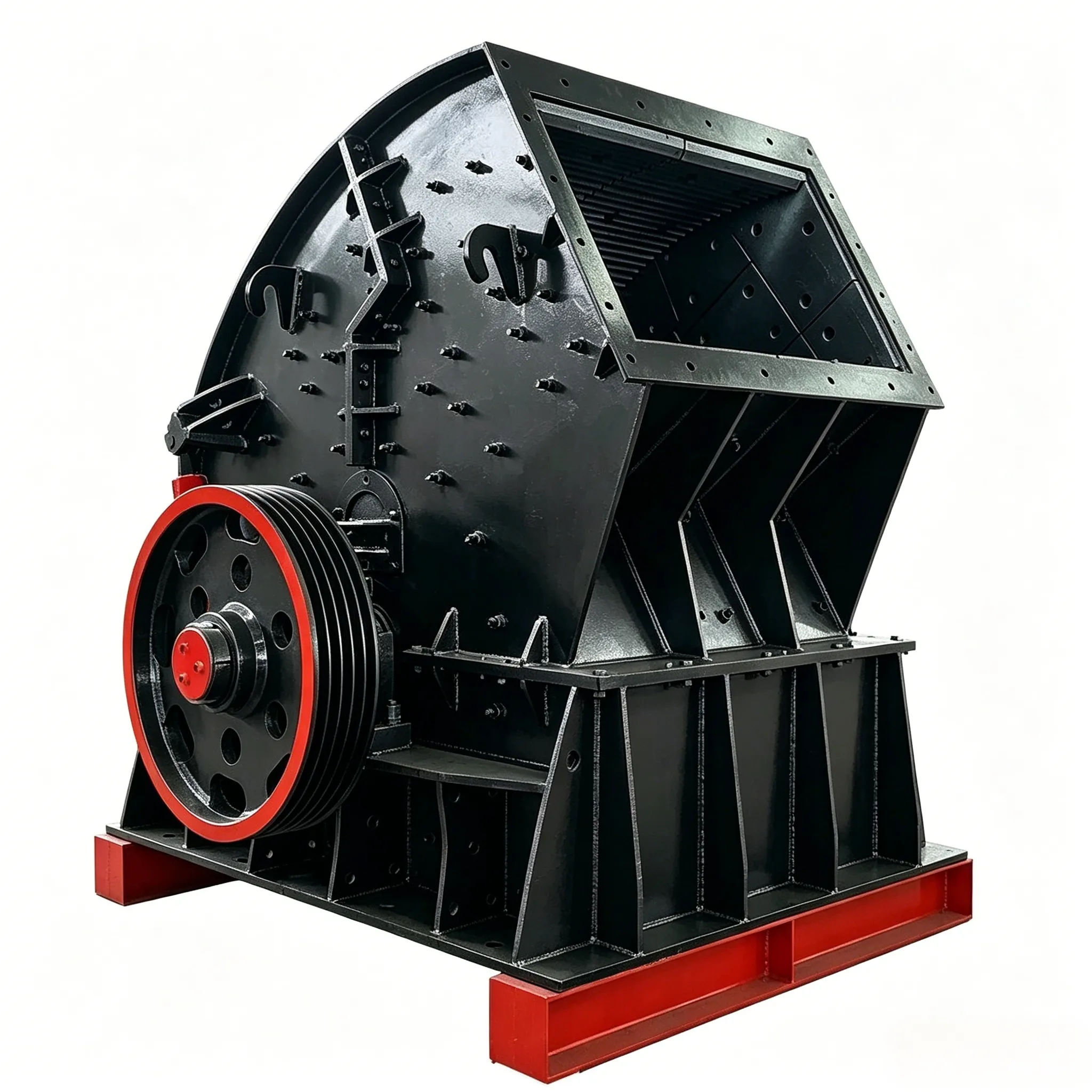
Frantoi a martelli
Tipi di frantoi a martelli. Fin dalla sua introduzione nel 1924, il frantoio a martelli…


The present invention relates to a new process for purifying magnesite by flotation, and is particularly suitable for producing high‑quality magnesite concentrate from high‑silicon, high‑calcium low‑grade magnesite ores.
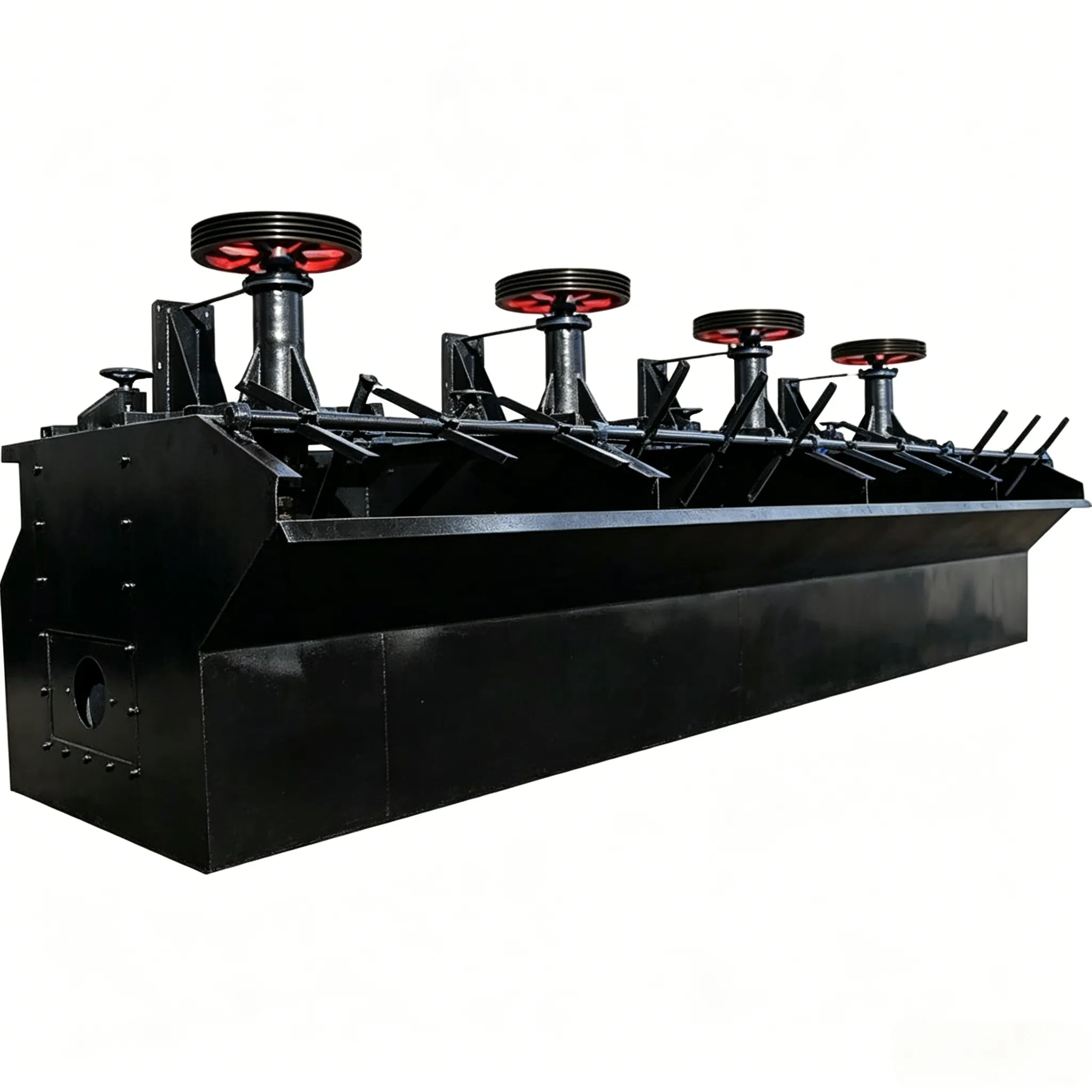
Low‑grade magnesite ores of the high‑silicon, high‑calcium type are usually purified by flotation. This method consists of a combination of reverse flotation and direct flotation. After the ore is ground to the required fineness, silicate minerals such as talc are first floated out with fatty amines and No. 2 flotation oil. The pulp in the cell is then conditioned with depressants and pH regulators such as sodium hexametaphosphate, sodium silicate, soda ash, etc., and then magnesite minerals are floated out with oleic acid collectors. Although this method can produce high‑quality magnesite concentrate, it uses a relatively large variety of flotation reagents, with high total reagent consumption, and the amines and sodium hexametaphosphate used can cause water pollution and difficulties in concentrate filtration and thickening.
The new magnesite flotation process of the present invention comprises a direct flotation flowsheet with reverse flotation as a pre‑concentration step. Its reagent scheme is simple, with fewer reagent types, reduced from the original five or six to three, and eliminates the expensive amine collectors and depressants such as sodium hexametaphosphate that affect water quality and filtration performance. That is, in the reverse flotation pre‑concentration step, only No. 2 oil is used to float easily floatable talc and other fine gangue minerals; in the magnesite flotation step, the optimum dosage of sodium silicate is adjusted to depress dolomite, calcite, and remaining silicate minerals, and by adjusting the impeller speed and aeration of the flotation cell to modify the froth structure, the optimum separation effect is achieved.
This flotation process involves only three conventional, non‑toxic reagents: No. 2 oil, sodium silicate, and oleic acid.
The present invention is realized as follows: High‑silicon, high‑calcium low‑grade magnesite ore is placed in a ball mill and ground to the fineness required for flotation. The ground ore is transferred to a laboratory‑type single‑cell flotation machine. No. 2 oil is added at 100–150 g/t, conditioned for 2 minutes, and aerated to float out a talc rough concentrate, which can be further cleaned to obtain a talc concentrate. Sodium silicate at 800–1300 g/t is added to the product remaining in the cell, conditioned for 5 minutes, then oleic acid at 160–280 g/t is added, conditioned for 3 minutes, and aerated to float out a magnesite rough concentrate, which can be further cleaned several times to obtain magnesite concentrates with different MgO contents.
The above reagent dosages are the ranges applicable to the materials to which the present invention is directed; the optimum ranges vary with the ore.
By adopting the process of the present invention, treating off‑grade high‑silicon, high‑calcium ores from a certain location in Liaoning can yield a concentrate with a yield of ≥ 30% and MgO ≥ 47%. After calcination, the produced chemical‑grade magnesite (with a chemical composition of 98% ±) and the calcined magnesite have MgO contents of >95% and >85%, respectively, with an overall MgO recovery of approximately 95%. When treating normal‑grade ores, the calcined MgO content obtained is >98%.
The advantages of the present invention are: simple process, easy operation, fewer reagent types, and a straightforward process flow. Using this new process to treat off‑grade ores can produce high‑grade magnesite products, with considerable economic benefits.
The accompanying drawing is a process flowsheet of the magnesite flotation process.

Description of the Drawing: ① Ball mill; ② No. 2 oil addition point; ③ Talc roughing; ④ Talc cleaning; ⑤ Sodium silicate addition point; ⑥ Oleic acid addition point; ⑦ Magnesite roughing; ⑧, ⑨ Magnesite cleaning I; ⑩ Magnesite cleaning II; ⑪ Magnesite cleaning III; ⑫ Magnesite concentrate.
Embodiments:
Esempio 1: A high‑silicon, high‑calcium low‑grade magnesite ore from a certain location in Liaoning, with its chemical composition shown in Table 1, was crushed to 2–0 mm. For each test, 300 g of ore was used. Grinding was carried out in a laboratory XMQ‑67 ball mill with the addition of 150 ml of water for 4 minutes and 9 seconds, achieving a grinding fineness of 80% passing -0.076 mm. Flotation was performed in an XFD‑type single‑cell flotation machine with a volume of 1 liter, according to the flowsheet shown in the drawing. The reagent regime, process parameters, and separation results are listed in Table 2 (the rough concentrate was not subjected to cleaning).
Table 1: Chemical composition of low‑grade magnesite ore from a certain location
| element | Mg0 | CaO | SiO2 | Fe2O3 | Al 2o 3 |
| % | 42.50 | 1.15 | 6.14 | 0.24 | 0.40 |
Example 2: High-calcium magnesium ore from Caidi, Liaoning Province, its chemical composition is shown in Table 3. (Original ore) Crush to 2-0 mm, use 3.00 g per test, using laboratory XMQ -67 type balls .
State, add water 150 The ore fineness was 0.076 mm , with a travel time of 4 minutes and 51 seconds. occupy 85 % , In XFD The single-tank sludge separator has a volume of 1 liter and the flow path is as follows: The medicines, processes, copper content, and other specialties of the ancient Chinese medicine are listed in section 4.
Tabella 3:Chemical composition of raw calcium magnesite ore from a certain location
| element | Mg0 | Ca0 | Sio2 | Fe2O3 | Al2O3 |
| % | 46.21 | 1.65 | 0.97 | 0.30 | 0.22 |
Table 2: Results of Magnesite roughing test
| Dosage per ton of pesticide | inflation volume point Rotation number point | prodotto | Yield % | ore grade % | return receive Rate % | ||||
| Mg0 | CaO | SiO2 | Mg0 | Ca0 | Si02 | ||||
| Water glass Glass 800 Oil acid 200 | 4 2200 | Concentrati | 6 6.0 6 | 47.00 | 0.83 | 0.32 | 66.89 | 47.86 | 28.90 |
| Residui di lavorazione | 33.94 | 45.29 | 1.76 | 1.98 | 38.1 | 52.14 | 76.10 | ||
| Mangimi minerali | 100.00 | 46.419 | 1.145 | 0.889 | 100.00 | 100.00 | 100.00 | ||
| Water glass 1000 Oil acid 160 | 4 2200 | Concentrati | 59.67 | 47.09 | 0.77 | 0.33 | 60.54 | 89.58 | 21.82 |
| Residui di lavorazione | 40.88 | 45.48 | 1.74 | 1.75 | 39.46 | 60.47 | 78.18 | ||
| Mangimi minerali | 100.00 | 46.417 | 1.16 | 0.908 | 100.00 | 100.00 | 100.00 | ||
| Water glass 1200 Oil acid 240 | 4 2200 | Concentrati | 64.48 | 47.28 | 0.76 | 0.35 | 65.82 | 48.40 | 25.28 |
| Residui di lavorazione | 35.52 | 45.52 | 1.80 | 1.88 | 34.68 | 56.60 | 74.72 | ||
| Mangimi minerali | 100.00 | 46.628 | 1.129 | 0.894 | 100.00 | 100.00 | 100.00 | ||
Table 4: Results of Magnesite Floating Test
| Dosageg/ton | inflation volumeLift/point | Produce | Produce Rate % | Ore grade % | return receive Rate % | ||||
| revolutions Share/point | Mg0 | Cao | Si 0 2 | Mg0 | CaO | SiO2 | |||
| Water glass 1200 oil acid 160 | 4 | Secondary Refining of Ore | 43.54 | 47.44 | 0.73 | 0.075 | 44.36 | 19.76 | 4.88 |
| Secondary Refinement of Tailings | 6.68 | 46.63 | 1.43 | 0.38 | 6.69 | 5.97 | 3.32 | ||
| One-time tailings refining | 18.17 | 46.83 | 2.44 | 0.58 | 18.27 | 27.53 | 18.92 | ||
| roughing tailings | 31.61 | 45.20 | 2.38 | 1.87 | 30.68 | 46.74 | 78.88 | ||
| Give mine | 100.00 | 46.567 | 1.609 | 0.754 | 100.00 | 100.00 | 100.00 | ||
| Water glass 1200 oil acid 200 | 2200 | Secondary Refining of Ore | 56.35 | 47.11 | 0.79 | 0.081 | 57.02 | 27.7 | 6.10 |
| Secondary Refinement of Tailings | 4.49 | 46.59 | 1.35 | 0.45 | 4.49 | 3.80 | 2.85 | ||
| One-time tailings refining | 12.87 | 46.69 | 2.09 | 0.67 | 12.91 | 16.75 | 11.4 | ||
| roughing tailings | 26.29 | 45.31 | 3.16 | 2.29 | 25.58 | 51.74 | 79.84 | ||
| Give mine | 100.00 | 46.559 | 1.606 | 0.754 | 100.00 | 100.00 | 100.00 | ||
 English English
 Spanish
 Russian
 Arabic
 Swahili
 French
 Turkish
 Portuguese
 Korean
 Japanese
 German
 Italian