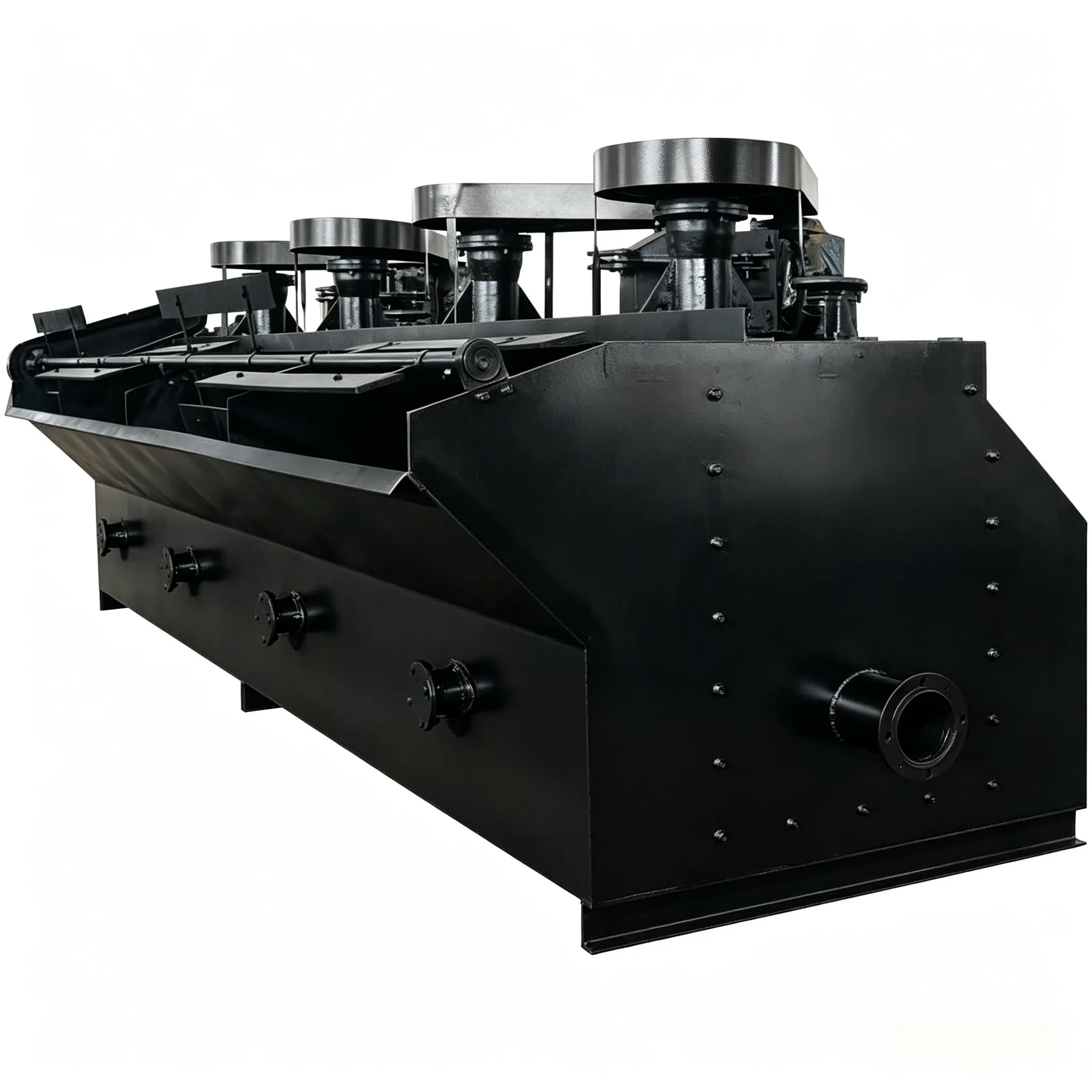
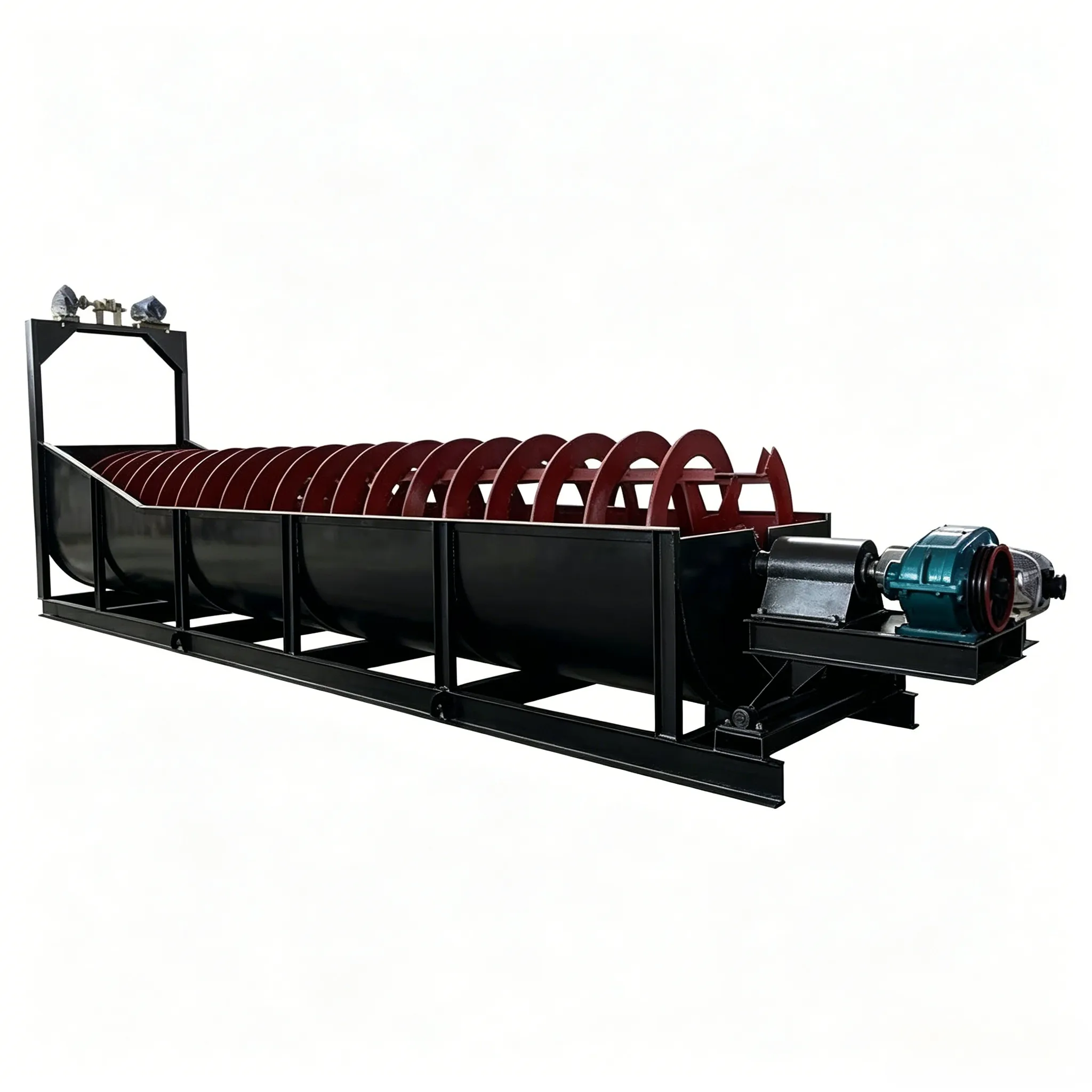
Macchina di flottazione SF
Macchine di flottazione SF e BF e l'unità combinata SF + JJF. Inizialmente,…

In SAG mills, the steel ball charge tends to dominate the ore breakage process, and therefore the grinding action contributed by the (coarse) ore itself is reduced. Currently, the conventional SAG milling circuits are the SABC and SAB processes, which have no fine particle recirculation. In addition, a current trend in SAG milling is the use of higher ball charge levels; under these conditions, the coarse or large ore particles play only a minor role as grinding media. In practice, these coarse particles often become a burden on the grinding circuit. This is particularly true when the SAG mill ball charge exceeds 10%, where reducing the feed size can alleviate this burden. As shown in Figure 6‑7, the largest particles tend to accumulate inside the SAG mill, causing the mill charge to exceed its limiting capacity, which also indicates the difficulty of breaking these large particles within the SAG mill. At the same time, the mill power draw increases with increasing mill charge. According to conventional AG mill control practice, to maintain the mill charge and power within acceptable limits, the throughput must be reduced. As illustrated in Figure 6‑8, increasing the amount of fine material can substantially increase mill throughput. However, simulation results indicate that these observed phenomena are not always valid. When the SAG mill ball charge is low (e.g., less than 10%), the optimum feed size F80 for maximum mill power has a significant effect on throughput, because a portion of the grinding action is still provided by the ore particles themselves. Therefore, under such conditions, the new feed F80 and the ball charge level interact and influence each other. However, at relatively high ball charge levels (say, 10% or higher), a high new feed F80 is detrimental, as shown in Figure 6‑9, where the breakage rates of individual size fractions decrease as the feed size becomes coarser.
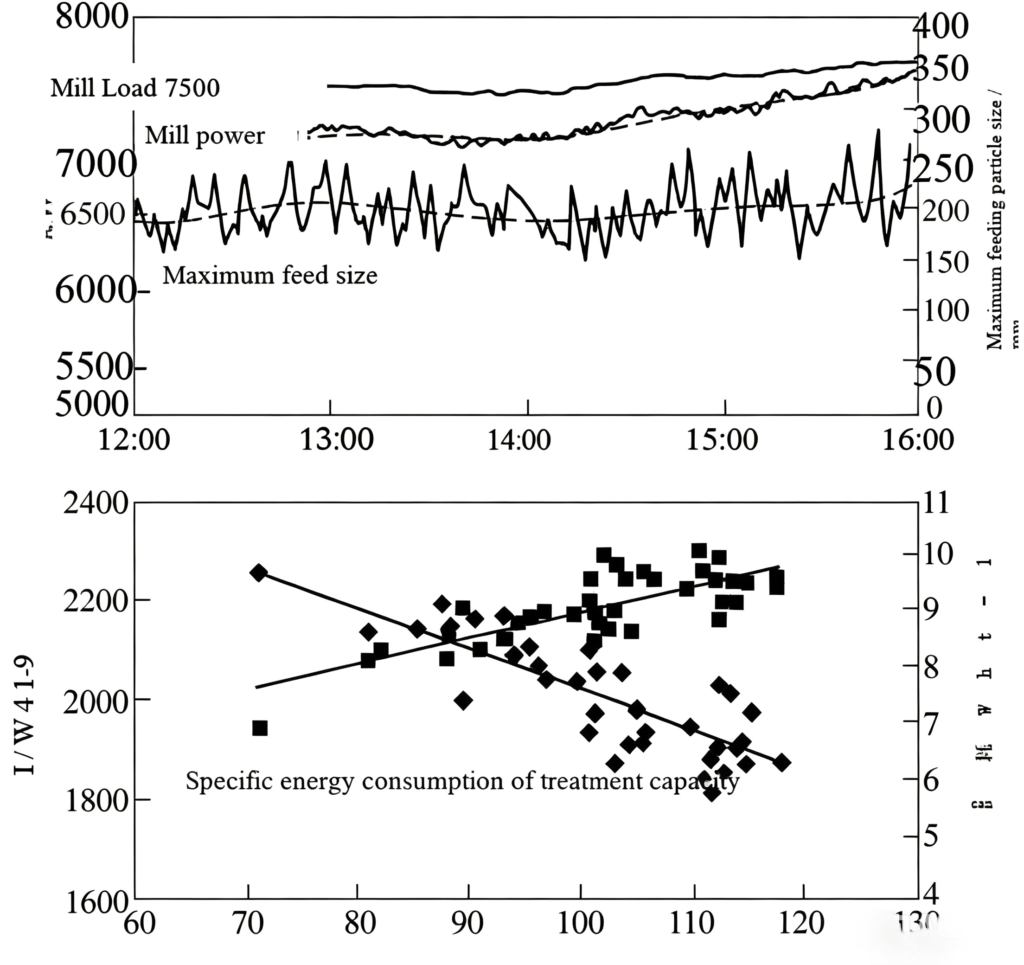
Figure 6‑7 Dynamic variation of SAG mill grinding behaviour with feed particle size (P80/mm)
Figure 6‑8 Effect of the content of material finer than 25.4 mm (1 in) on mill production data

Feed material finer than 25.4 mm (1 in) content: 1%
Figure 6‑8 Response of SAG mill to fines content in the feed
Through on‑line image‑based particle size analysis systems, it is now possible to study the effect of different size fractions in the new feed on SAG milling performance⁸⁹, for example the fine fraction (–50 mm), the intermediate fraction (+50–125 mm), and the coarse fraction (+125 mm). The higher the fines content in the feed, the more beneficial it is for increasing SAG mill throughput. Other studies have found that the amount of intermediate‑size particles, such as the –100+30 mm fraction, has a more pronounced effect on SAG mill capacity than simply using the F80 of the feed as an indicator. This has led to the consideration of using secondary crushing to break these intermediate‑size particles. Especially when processing hard ores (e.g., Bond ball mill work index greater than 15 kWh/t), optimising blasting practices to improve the size characteristics of the ore can maximise SAG mill throughput. As shown in Figure 6‑10, the general principles for increasing SAG mill throughput are:
(1) Minimise the size of the largest particles as much as possible.
(2) Minimise the amount of intermediate‑size particles (e.g., the 25–75 mm fraction).
(3) Maximise the amount of fines, i.e. the –10 mm fraction.
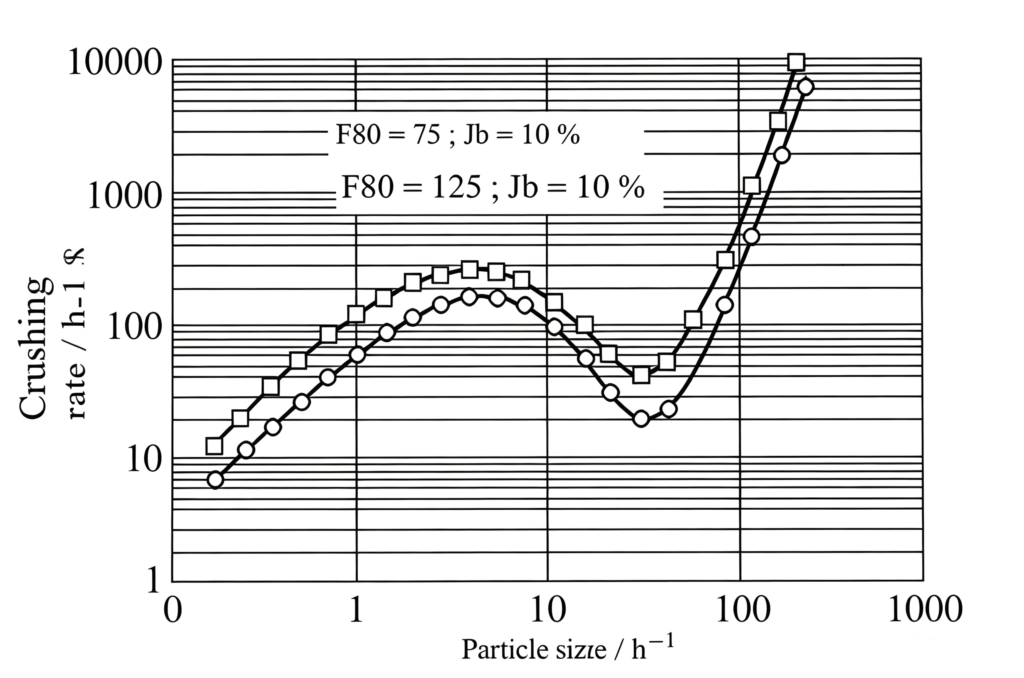
Figure 6‑9 Effect of new feed P80 on the breakage rates of individual size fractions in a SAG mill

Figure 6‑10 Preferred particle size distribution of new feed for SAG milling of hard ore
“The observed phenomena are consistent with the large‑scale decline in SAG mill throughput as the stockpile level of the natural conical stockpile decreases, as shown in Figure 6‑11. Generally, a saddle‑shaped (i.e., bimodal) particle size distribution, with abundant fines and coarse fractions and a scarcity of intermediate sizes, is suitable for SAG milling.”
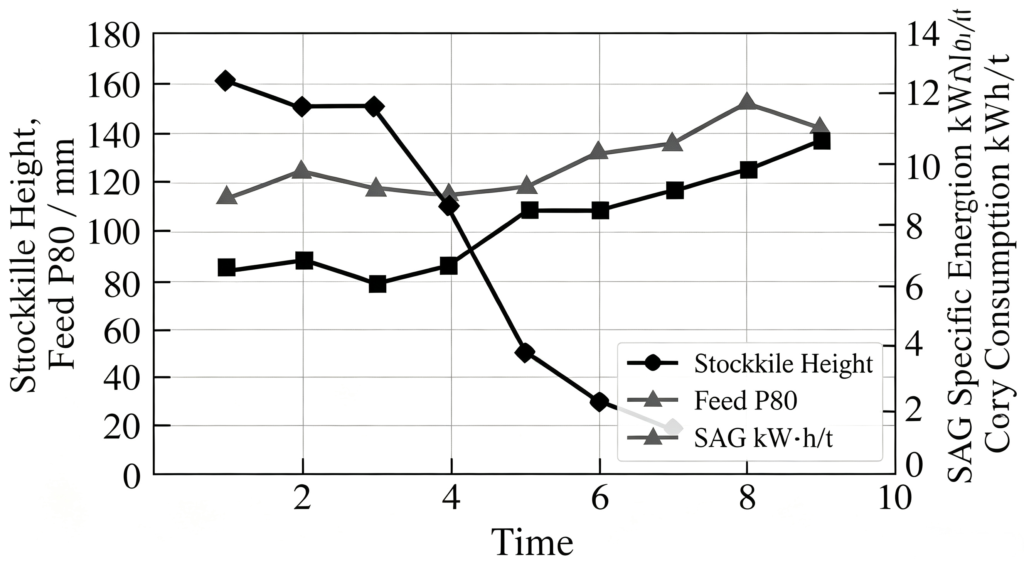
Figure 6‑11 Changes in SAG mill behavior during the decline of the new feed stockpile level
Meanwhile, in production practice, when the SAG mill operates at high power and/or high charge level, operators tend to add more steel balls, which further increases the dominance of steel grinding media. In short, if the concentrator’s SAG mill is operated in this manner, both the feed size and the dominance of steel grinding media will change, which may distort the production data showing that reducing feed size increases SAG mill throughput, or cause the effect to be overestimated.
At the same time, if the operating parameters and SAG mill liner configuration are not adjusted when the feed size is reduced, this will lead to a decrease in the SAG mill charge level and an increase in pebble circulating load. A low SAG mill charge level increases the risk of liner damage.
Table 6‑1 lists industrial cases where SAG mill capacity was increased by adjusting the feed size. These industrial practice data show that the extent of capacity increase depends on ore hardness. The general rules for the improvement in grinding capacity by adjusting feed size are as follows:
(1) When the ore has a Bond ball mill work index of less than 8–10 kWh/t, i.e., soft ore, the capacity increase is minimal or even negative.
(2) When the Bond ball mill work index is 10–15 kWh/t, i.e., medium‑hard ore, the capacity increase is 10%–15%.
(3) When the Bond ball mill work index is greater than 15 kWh/t, i.e., hard ore, the capacity increase is more than 15%.
 English English
 Spanish
 Russian
 Arabic
 Swahili
 French
 Turkish
 Portuguese
 Korean
 Japanese
 German
 Italian