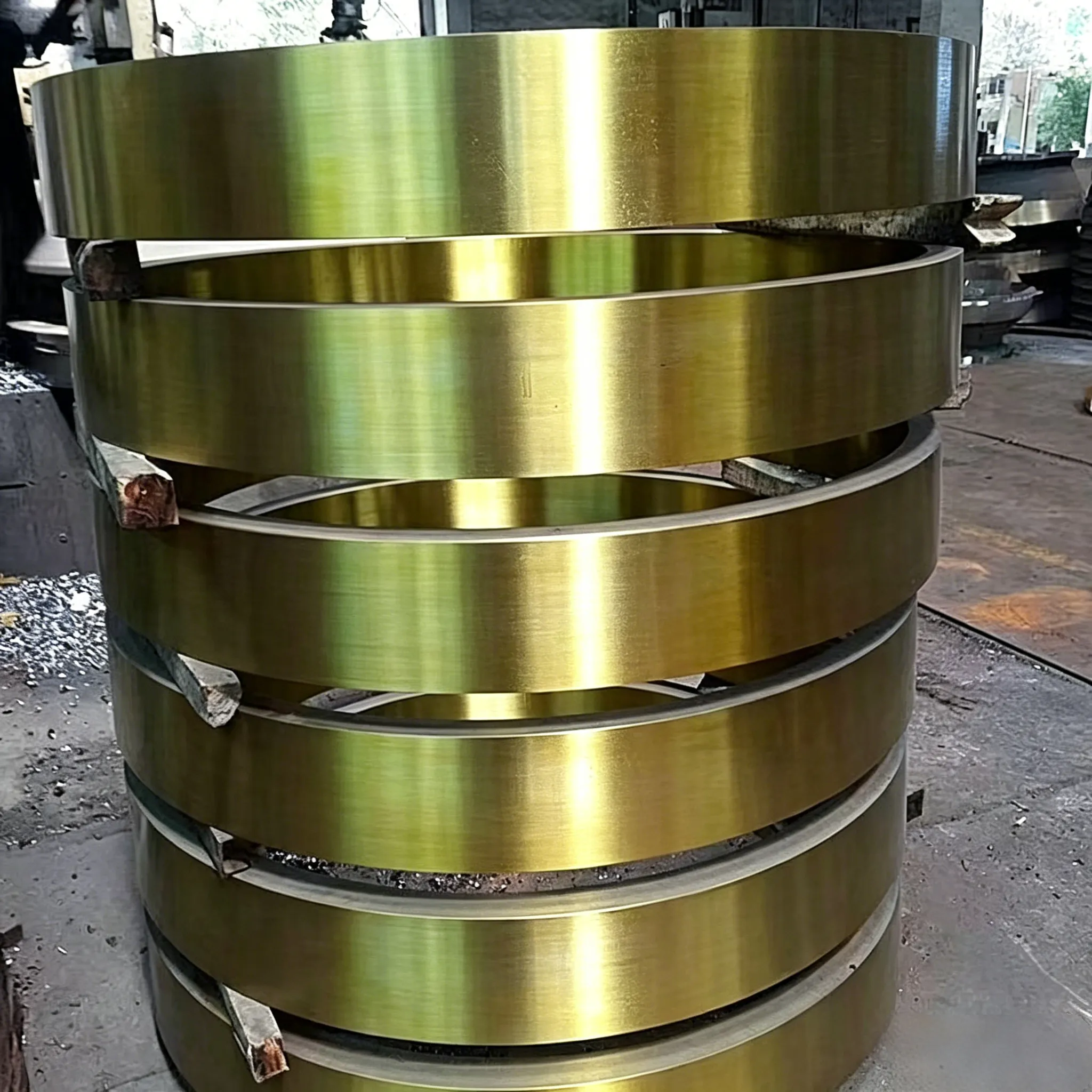
Anello di macinazione per mulino Raymond
Anello di macinazione Raymond Mill – Pagina completa con i dettagli del prodotto 1. Panoramica del prodotto…


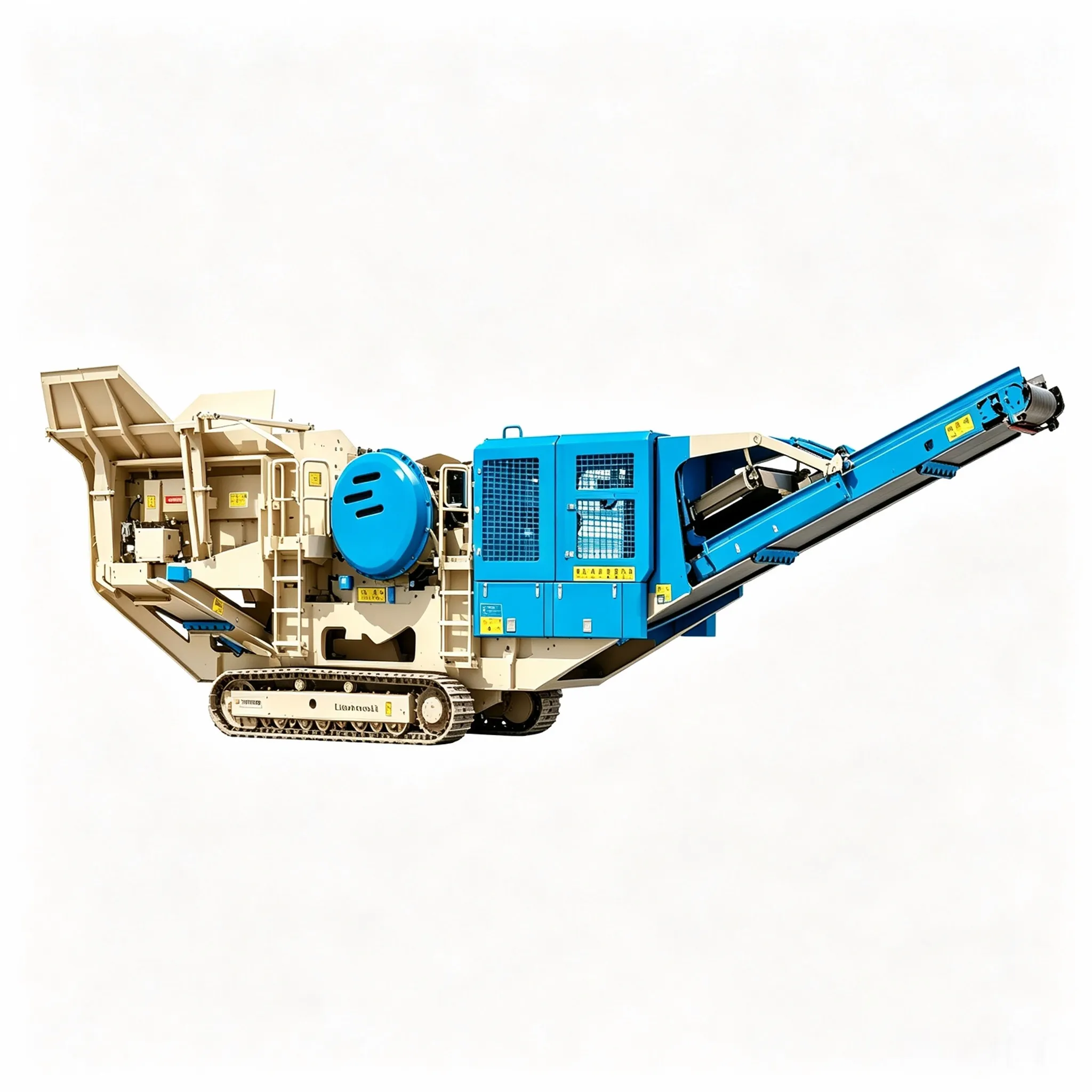
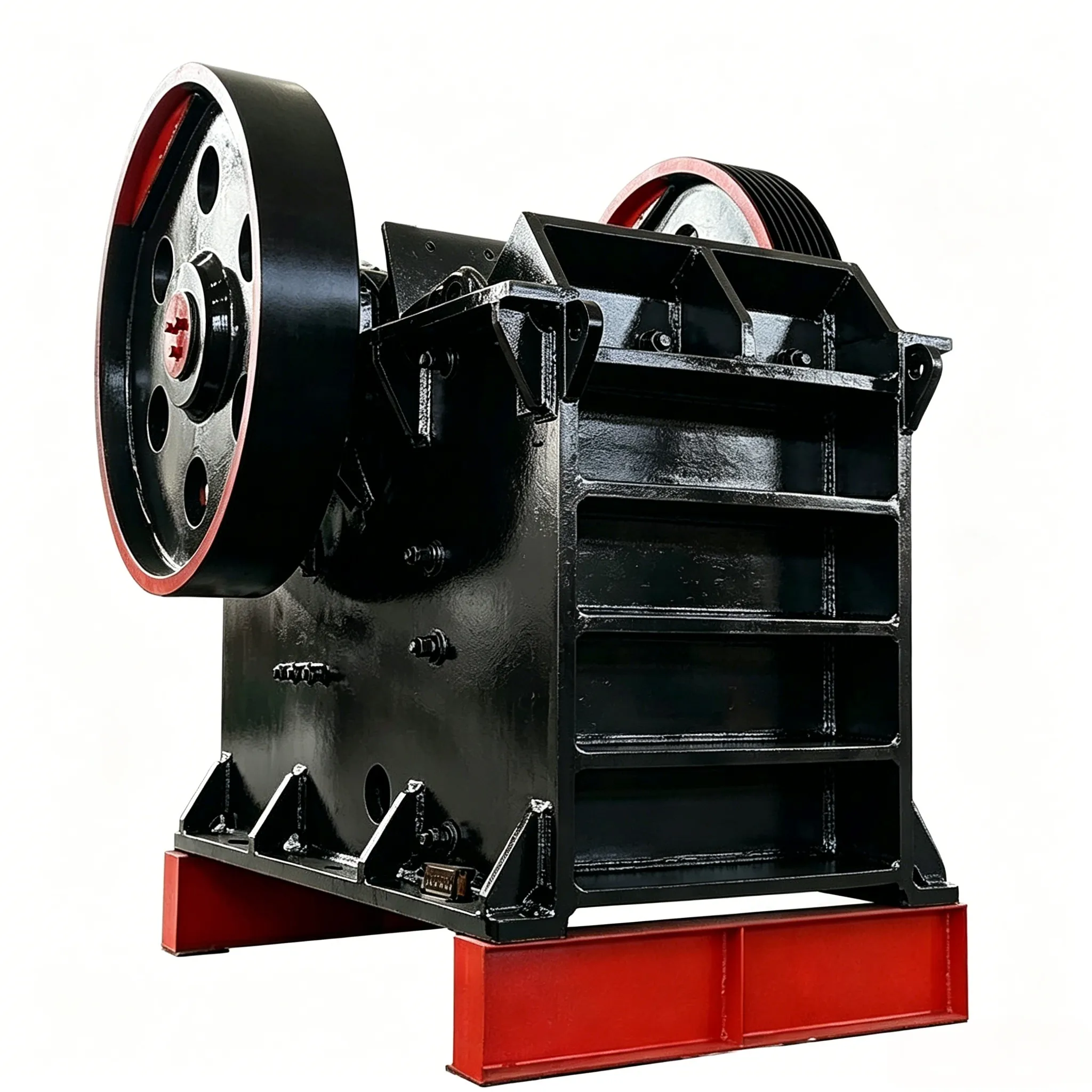
An frantoio a urto is a type of secondary or tertiary crushing machine that uses impact force to break rocks and minerals. Unlike a jaw crusher or cone crusher, which crush materials by compression, an impact crusher breaks materials by high-speed collision with a rotating rotor and impact plates.
Impact crushers are widely used in:
Common materials processed:
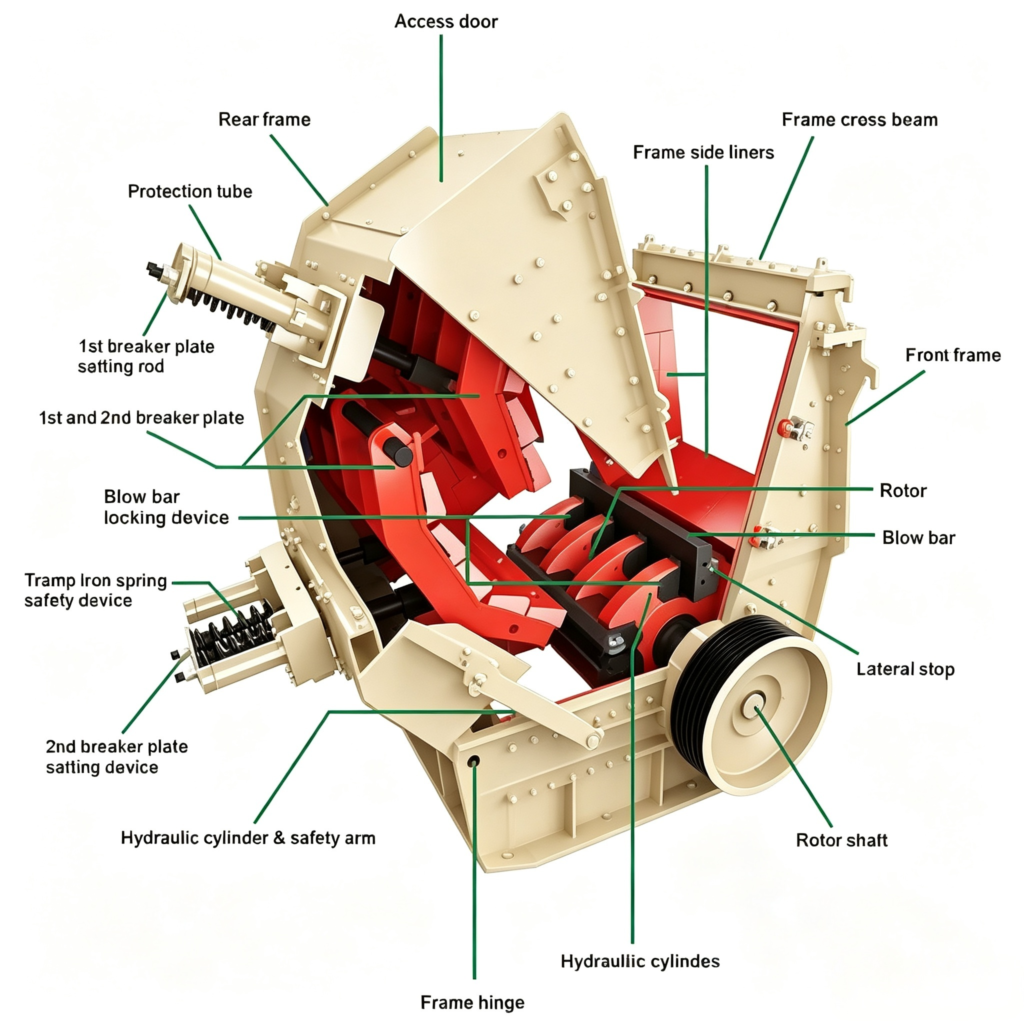
The rotor is the heart of an impact crusher.
Function:
The rotor usually contains:
Blow bars are wear-resistant bars mounted on the rotor.
Quando il rotore gira:
Common materials:
Impact plates are fixed inside the crushing chamber.
Their functions:
The crushing chamber is where the material reduction happens.
It contains:
The space between rotor and impact plates determines the final product size.
Raw material enters from the top.
Esempio:
Large stone
300 mm
   ↓
Impact Crusher
   ↓
20-40 mm productThe crushed material leaves through the bottom.
The discharge size can be adjusted by:

Large rocks enter the crusher through the feed opening.
Esempio:
Raw limestone
500 mm
↓
The electric motor drives the rotor.
Typical rotor speed:
500–1000 rpm
The blow bars rotate at high speed.
↓
The blow bars hit the material with strong impact force.
The rock is:
↓
The broken pieces hit the impact plates.
They are crushed again by:
↓
When the material reaches the required size:
              Feed Material
                   ↓

        ┌──────────────────┐
        │                  │
        │    ↻ Rotor       │
        │   [Blow Bars]    │
        │       ↓          │
        │      ★★★         │
        │                  │
        │  Impact Plates   │
        │      /\/\/\      │
        └────────┬─────────┘
                 ↓

          Crushed Product
The most common type.
Structure:
Applicazioni:
Vantaggi:
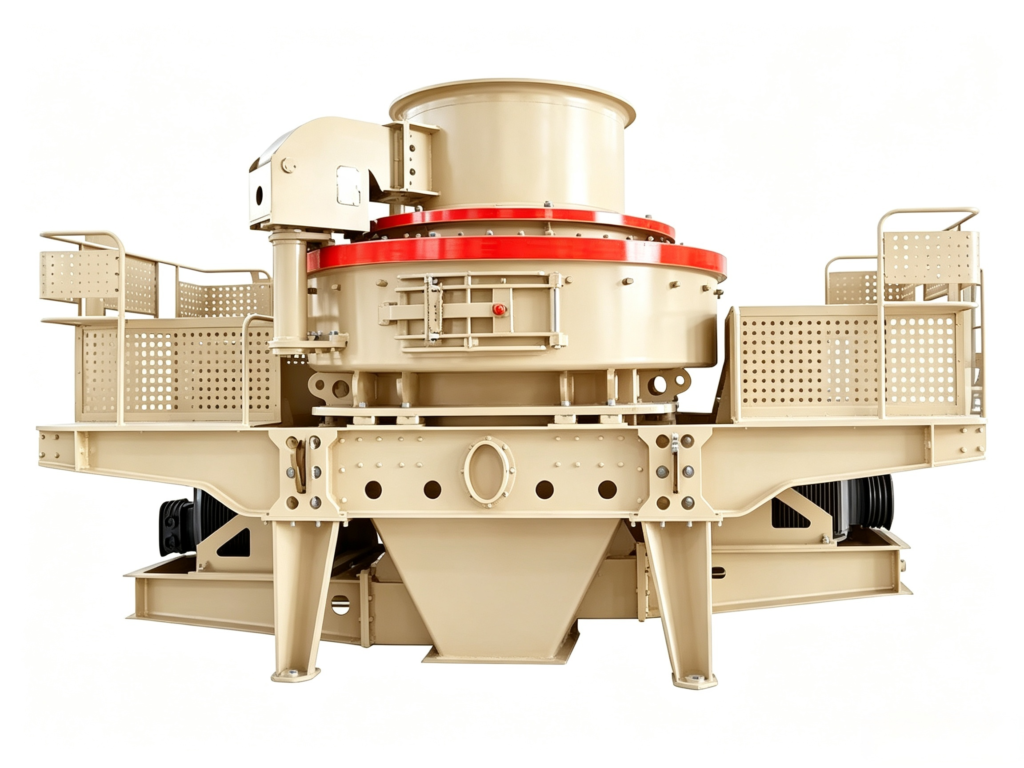
Material enters the center of a high-speed rotor and is thrown outward.
Crushing methods:
Applicazioni:
Vantaggi:
Typical crushing ratio:
10:1 to 30:1
A single impact crusher can significantly reduce material size.
Compared with compression crushers:
Impact crushing uses:
This gives high productivity for suitable materials.
Output size can be controlled by:
Main wear parts:
They need regular replacement.
Best for:
Less suitable for:
Because crushing depends on high-speed impact, it generally requires more energy than compression crushers.
| Caratteristica | Impact Crusher | Frantoio a martelli |
|---|---|---|
| Metodo di frantumazione | Impatto | Impatto |
| Main crushing part | Blow bars | Teste di martello |
| Rotor speed | Medium-high | High |
| Product shape | Better cubic shape | More fine powder |
| Capacità | Più alto | Medium |
| Wear rate | High | Very high |
| Best materials | Limestone, aggregate, concrete | Coal, gypsum, soft materials |
A typical aggregate production line:
Large Rock
    ↓
Jaw Crusher
    ↓
Impact Crusher
    ↓
Vibrating Screen
    ↓
Finished Aggregate
A typical mining line:
Ore
 ↓
Primary Crusher
 ↓
Impact Crusher
 ↓
Ball Mill
 ↓
Mineral Separation
 English English
 Spanish
 Russian
 Arabic
 Swahili
 French
 Turkish
 Portuguese
 Korean
 Japanese
 German
 Italian