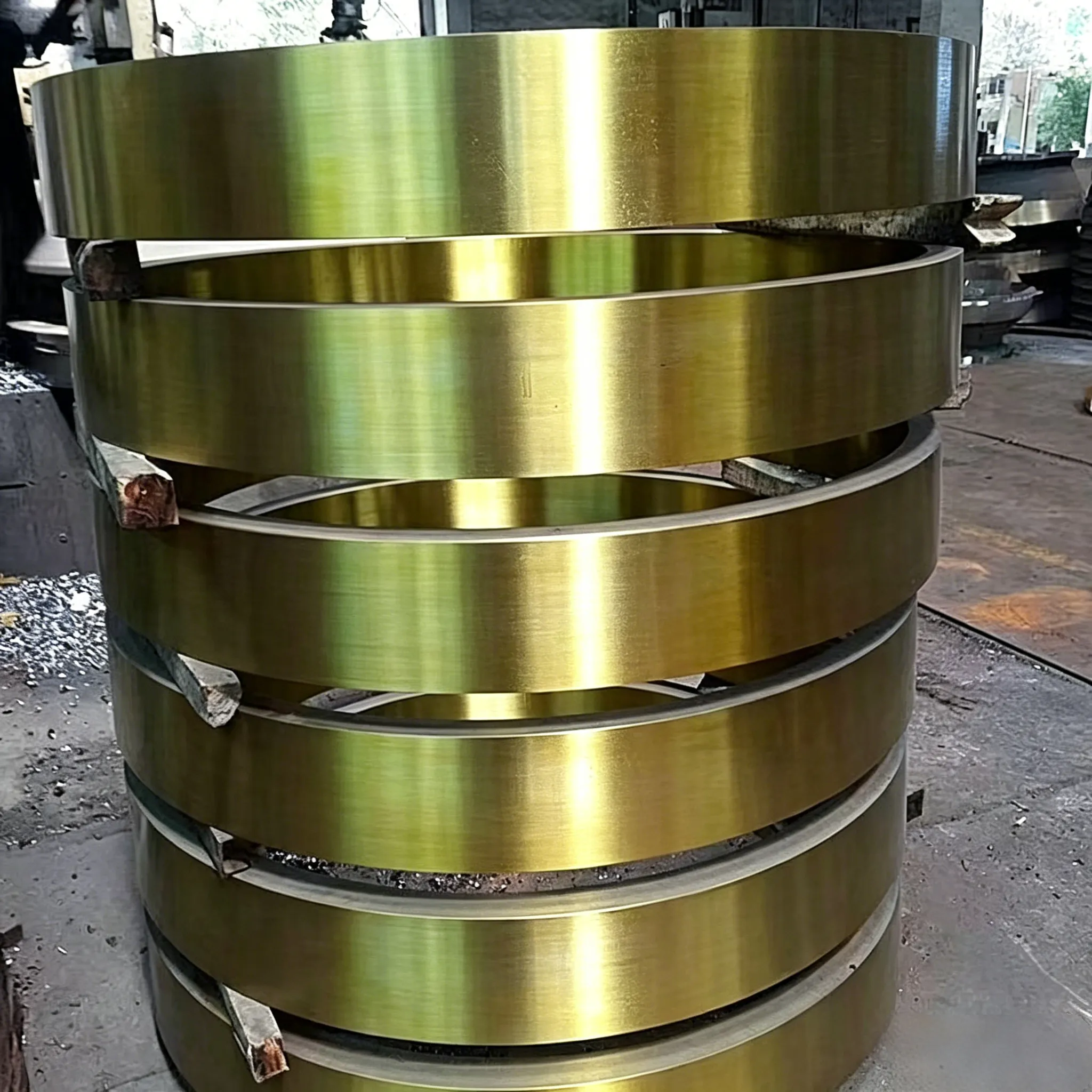
レイモンドミル用粉砕リング
レイモンドミル用粉砕リング – 製品詳細ページ(全編) 1. 製品概要…


技術分野: The present invention relates to a beneficiation method, in particular to a beryl ore beneficiation method.
背景アート: Beryl is a silicate mineral, mostly produced in pegmatite deposits, and is mainly used for producing the rare metal beryllium and its compounds. Beryllium and its compounds are important raw materials for many sectors of the national economy. For example, beryllium‑copper alloys have the advantages of high hardness, high strength and good thermal conductivity, and are important materials for the electronics, electrical and automotive industries; beryllium oxide has good thermal conductivity and low electrical conductivity, making it suitable for radiators and electrical insulators used in the manufacture of microprocessors, radar and transistor devices; metallic beryllium has the advantages of high melting point, low density, high specific strength, resistance to oxidation at room temperature, low expansion coefficient, good dimensional stability, etc., and is widely used as structural material in the aerospace industry, as shielding material in nuclear reactors, and for preparing neutron sources, thus it has become an important “space metal”. Existing beryl beneficiation methods are mostly acid or alkali processes, and mostly use strong acids or strong alkalis for separation, and even require heating, water washing, and dewatering during the beneficiation process, as well as pre‑removal of magnetic minerals and easily floatable minerals. These methods not only have complex processes, long process flowsheets, large equipment investment, high energy consumption, and low economic benefits; moreover, strong acids or strong alkalis cause significant corrosion to equipment, directly affecting the service life of the equipment and increasing operating costs. More seriously, strong acids or strong alkalis also cause great environmental pollution. In addition, in today’s society where mineral resources are increasingly scarce, how to fully and effectively utilize low‑grade lean ores or tailings is also an important subject of research. Therefore, it is necessary to improve the existing technology to meet the requirements of industrial production and ecological environment.
発明の概要: The object of the present invention is to overcome the deficiencies of the prior art and to provide a method that has a simple process, short flowsheet, no environmental pollution, low operating costs, high yield, and can produce beryllium concentrate from lean ores or tailings.
The present invention achieves the above object through the following technical solutions: it includes gravity concentration of tailings or lean ores and fluorite flotation, characterized in that the following components are added to the ore:
Sodium carbonate 300‑800 g/t, collector 400‑1300 g/t,
sodium silicate 200–1200 g/t, sodium hydroxide 50–300 g/t, aluminum sulfate 250–1000 g/t, iron salt 100–600 g/t, frother 10–30 g/t, and cationic collector 50–200 g/t. After fluorite flotation, beryl reverse flotation is carried out to obtain a beryllium oxide concentrate.
The specific process steps of the present invention are as follows:
In the process method of the present invention, the collector is oxidized paraffin soap or oleic acid. The frother is pine oil. The iron salt is ferric chloride, ferric sulfate, or ferrous sulfate. The cationic collector is a primary amine, secondary amine, or ether diamine having 10–18 carbon atoms.
Compared with the prior art, the present invention has the following advantages and beneficial effects:
Therefore, the present invention provides a new breakthrough in the flotation of beryl from pegmatite deposits, fundamentally solving many problems in the practical production and application of such deposits, and allowing full and effective utilization of valuable mineral resources.
Figure 1 is the process flowsheet of the present invention.

The present invention is further described below with reference to embodiments.
例 1
The discarded tailings from the Hutiaoxia Tungsten Mine in Zhongdian County, Yunnan Province, China, were selected as raw material. The chemical composition of the tailings was: WO₃ > 0.73%, BeO > 1.3%, CaF₂ > 42.4%, Al₂O₃ 2.4%, CaO 4.6%, gangue containing quartz 43.42%, mica 2%, calcite 8.2%, organic matter 3.5%, pyrite 15%, and trace amounts of other minerals. The specific process steps were:
The octadecyl amine used in steps 4 and 5 was a primary amine containing 18 carbon atoms.
The grades and recoveries of the obtained beryllium oxide concentrate, tungsten concentrate, and fluorite concentrate were as follows:
| 製品 | Grade (%) | Recovery (%) |
|---|---|---|
| BeO | 9.62 | 72.47 |
| WO₃ | 70.81 | 72.86 |
| CaF₂ | 97.40 | 84.90 |
The following table shows the reagent dosages for each step in Examples 2, 3, and 4. The process steps and methods were the same as in Example 1. Example 2 represents the reagent dosages used in a scale‑up test, in which a total of 500 tonnes of tungsten tailings were processed, yielding the following indices:
| 製品 | Grade (%) | Recovery (%) |
|---|---|---|
| BeO | 8.70 | 65 |
| WO₃ | 65.00 | 50 |
| CaF₂ | 97.80 | 62 |
Reagent dosages for Examples 2, 3, and 4 (g/t):
| ステップ | 試薬 | 例 2 | 例 3 | 例 4 |
|---|---|---|---|---|
| Step 2 | Sodium carbonate | 400 | 800 | 600 |
| Sodium silicate | 1200 | 150 | 300 | |
| Aluminum sulfate | 800 | 200 | 100 | |
| Oxidized paraffin soap | 600 | 400 | 800 | |
| Step 3 | Oxidized paraffin soap | 200 | 200 | 100 |
| Frother (pine oil) | 20 | 20 | 25 | |
| Step 4 | Sodium hydroxide | 180 | 300 | 100 |
| Ferric chloride | 500 | 600 | 200 | |
| Octadecyl amine | 160 | 200 | 100 | |
| Frother (pine oil) | 20 | 15 | 12 | |
| Step 5 | Octadecyl amine | 40 | 40 | 60 |
| Frother (pine oil) | 10 | 8 | 10 |

 English English
 Spanish
 Russian
 Arabic
 Swahili
 French
 Turkish
 Portuguese
 Korean
 Japanese
 German
 Italian