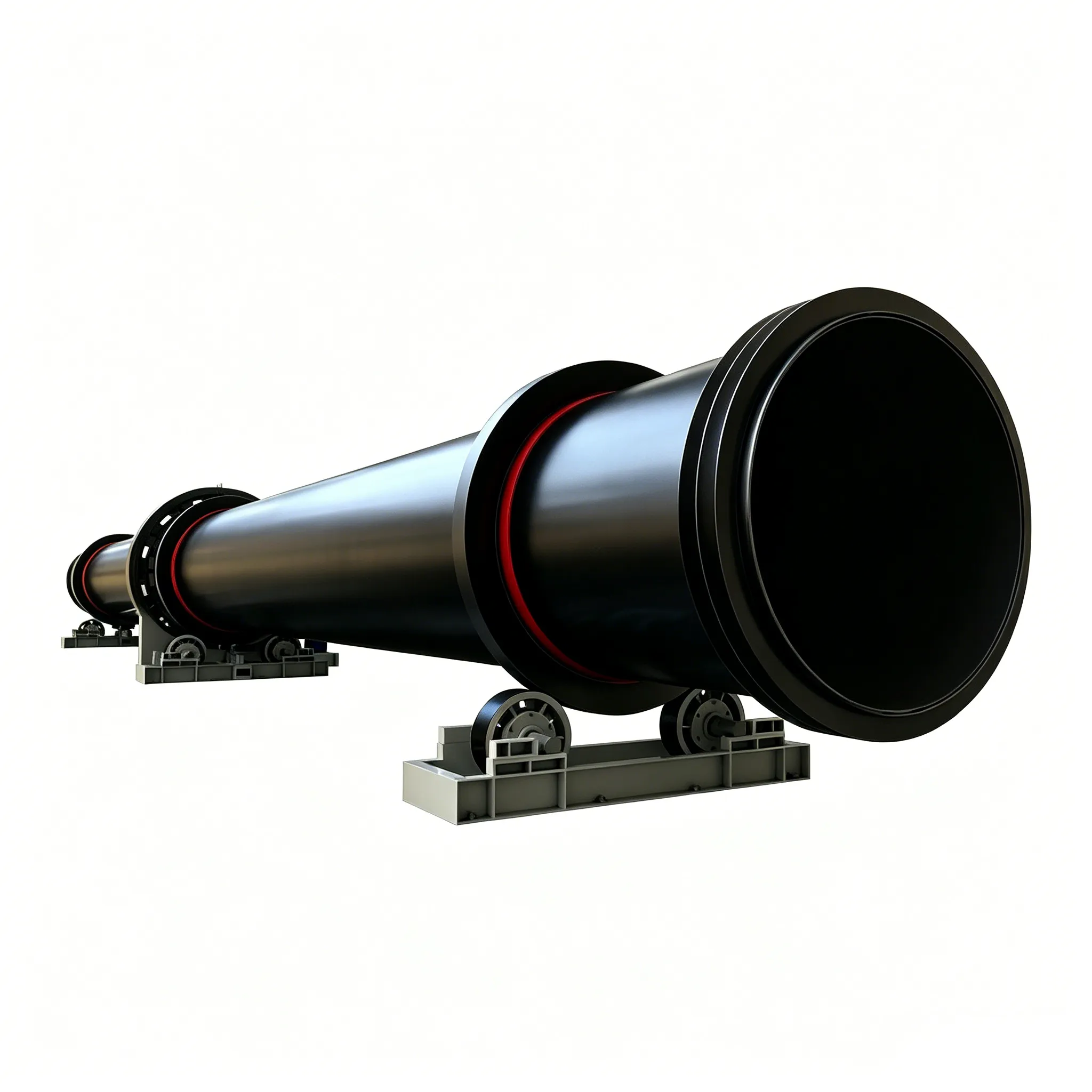
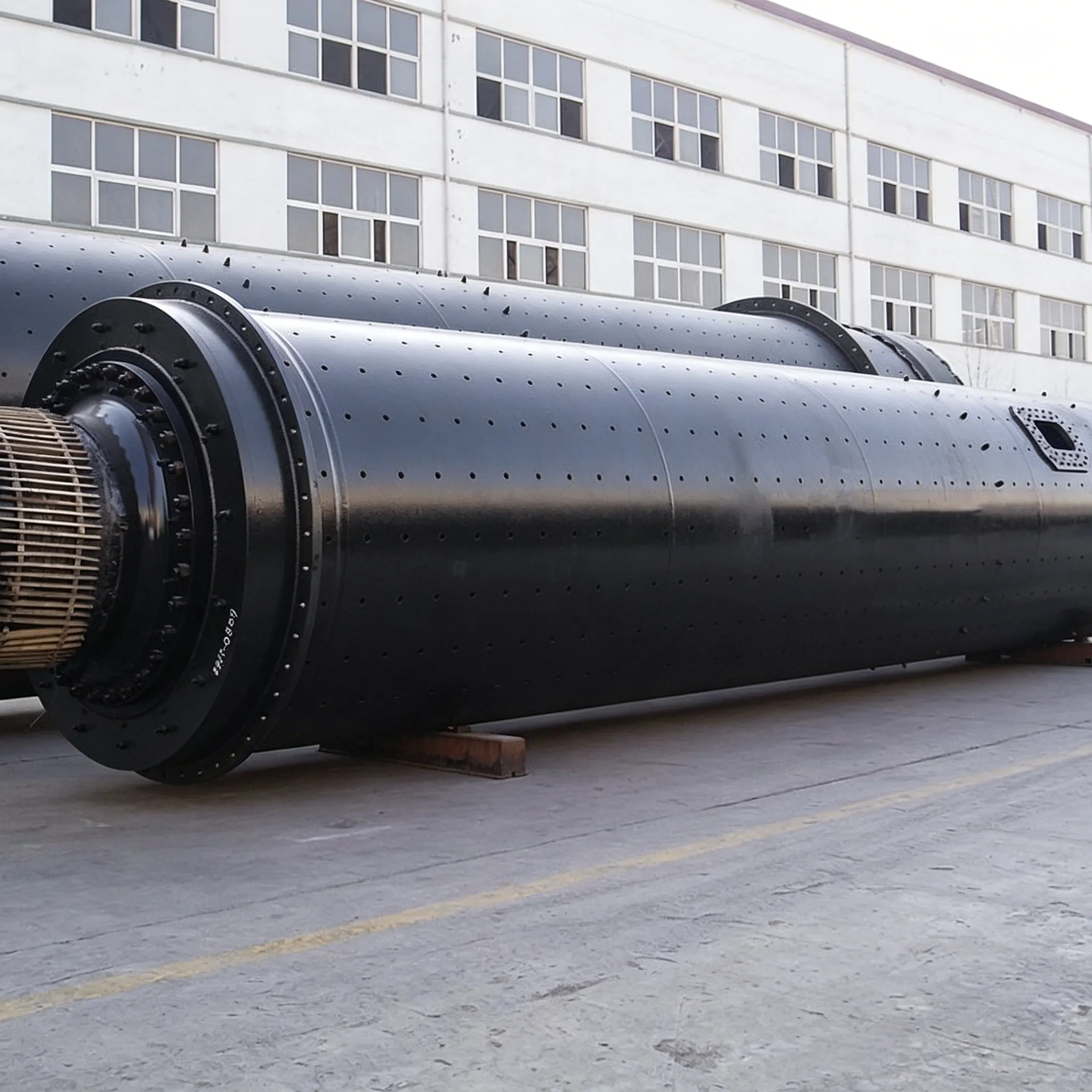
ロータリーキルン
製品概要:工業用焼成の主要設備 ロータリーキルンは…

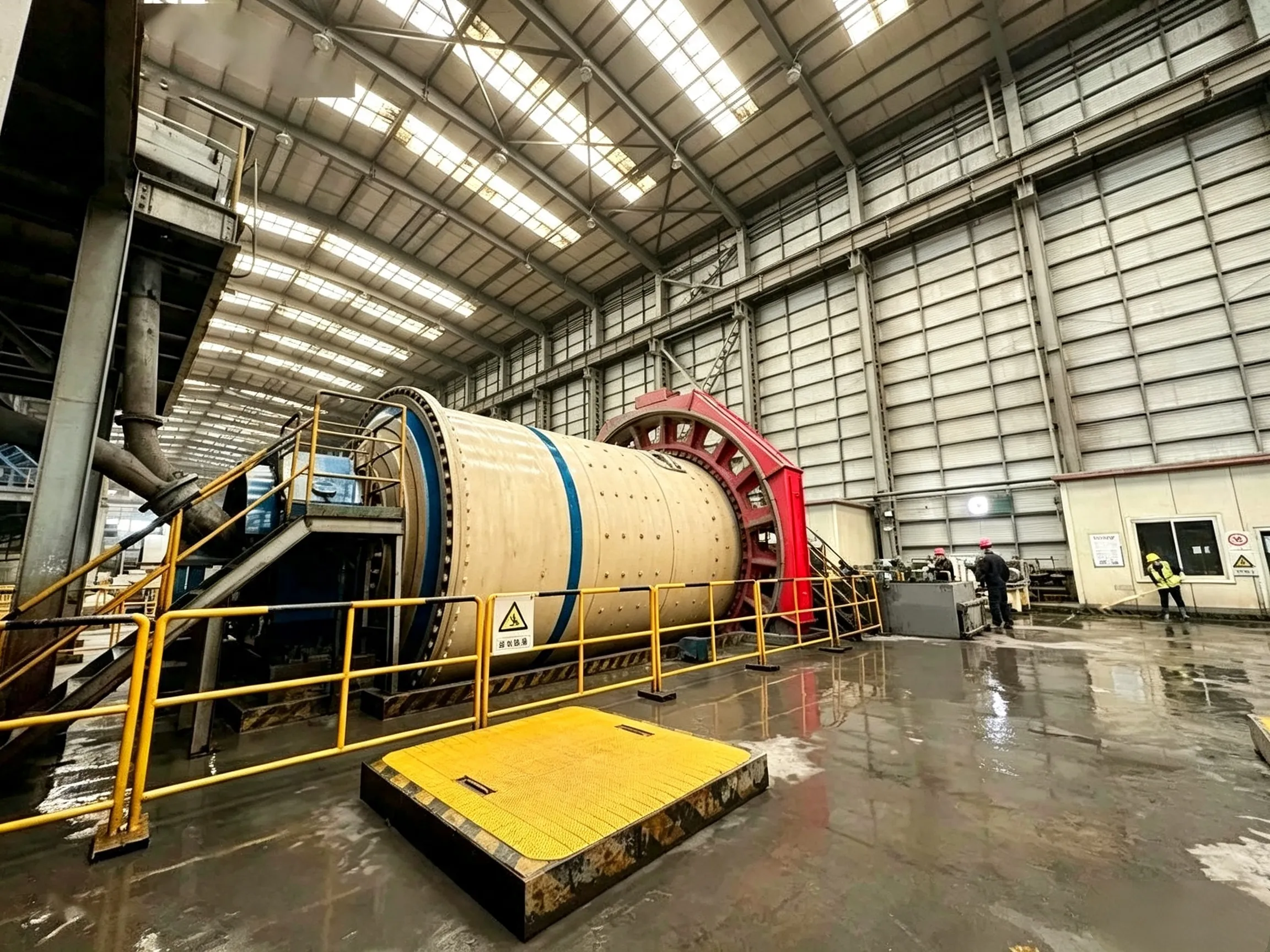
微細選鉱 – 「磁力・重力濃縮機」による選鉱プロセス
The present invention relates to a beneficiation process for magnetite ores (including various natural magnetite ores and artificial magnetite ores mainly composed of strongly magnetic iron minerals), and in particular to a beneficiation process employing fine screening and regrinding.
In the current magnetic separation processes for magnetite, there are continuous grinding and continuous separation, as well as stage grinding and stage separation. The grinding circuit can be one-stage, two-stage, or three-stage grinding, with two-stage and three-stage grinding being the most common. The number of grinding stages is determined by the grain size of the magnetic mineral crystals and the required final concentrate grade. Generally speaking, finer crystal grain size and higher concentrate grade requirements necessitate more grinding stages. The fine screen–regrind process flow is shown in Figure 1. After one or two stages of grinding and separation, the magnetic minerals become a rough concentrate. The rough concentrate is screened by a first‑stage inclined plane fine screen. The undersize product becomes the final concentrate, while the oversize product enters a magnetic thickener. The concentrate from the magnetic thickener is subjected to a third stage of grinding, and the discharge from the third‑stage grinding is screened by a magnetic separator and a second‑stage inclined plane fine screen. The undersize is the final concentrate, and the oversize returns to the thickener and enters the third‑stage grinding, forming a closed grinding circuit—this is the fine screen–regrind process. Although this process significantly improves the concentrate grade for iron ores with fine crystal grain sizes, the low screening efficiency of the inclined plane fine screen causes already liberated magnetite particles to enter the regrind circuit. This results in a large circulating load, high energy consumption, and deteriorating performance indicators. Therefore, in recent years, continuous improvements have been made to the inclined plane fine screen—from nylon sieve‑plate impact‑vibration fine screens to high‑frequency vibrating fine screens. Although these improvements have contributed to higher screening efficiency, the efficiency is still not ideal. At the same time, a large amount of liberated iron minerals in the circulating load is overground, causing the iron concentrate to be too fine, leading to difficulties in filtration, high metal losses, and high production costs.
The object of the present invention is to provide a device that prevents liberated iron minerals and rich intergrown iron minerals on the oversize from entering the subsequent grinding stage, and enables a reasonable return of middlings, thereby reducing the number of grinding stages and mills, lowering energy consumption, improving the particle size composition of the concentrate, and reducing filtration moisture in a magnetite ore fine screening – “magnetic‑gravity concentrator” beneficiation process.
In order to achieve the above object, the present invention adopts the following process flow: after the rough concentrate from the preceding grinding and separation stages is screened by an inclined plane fine screen, the oversize product, instead of proceeding to the subsequent grinding stage, directly enters a “magnetic‑gravity concentrator” for separation. The iron concentrate is discharged from the bottom of the “magnetic‑gravity concentrator” and, together with the undersize from the inclined plane fine screen, constitutes the qualified iron concentrate. The tailings from the “magnetic‑gravity concentrator” are discharged from the overflow launder at the top of the “magnetic‑gravity concentrator” and enter a magnetic thickener. The thickened concentrate is then returned to the preceding grinding and separation stage of the rough concentrate, forming a closed‑circuit cycle.
Compared with the prior art, the present invention has the advantages of a simple process flow, high separation efficiency, high recovery, reduced number of grinding stages and mills, improved particle size composition of the magnetite concentrate, increased filtration efficiency, energy savings, significant economic benefits, and the ability to obtain a high‑grade magnetic iron mineral concentrate with TFe > 65.5%.
Figure 1 is a process flow diagram of the conventional magnetite ore inclined plane fine screen–regrind process.

Figure 2 is a process flow diagram of the magnetite ore fine screening – “magnetic‑gravity concentrator” beneficiation process adopted by the present invention.

The present invention is further described below with reference to the accompanying drawings.
The process flow of the invention is as follows: the rough concentrate from the preceding grinding and separation stages is screened by an inclined plane fine screen. The oversize product does not enter the subsequent grinding stage but directly enters a “magnetic‑gravity concentrator” for separation. To realize the beneficiation flow of the present invention, a “magnetic‑gravity concentrator” is employed. After the rough concentrate is screened by the inclined plane fine screen, the undersize is the iron concentrate, and the oversize is fed from the top feed hopper into the “magnetic‑gravity concentrator”. Inside the “magnetic‑gravity concentrator”, the magnetite mineral particles settle downward under the combined action of their own weight, a low magnetic field force, and the impact of an upward water current, and are discharged from the bottom, forming a qualified iron concentrate together with the undersize product. Meanwhile, the gangue and locked particles are driven by the impact of the upward water current fed tangentially from the bottom and are discharged from the overflow launder at the top of the “magnetic‑gravity concentrator” into a magnetic thickener. The thickened concentrate is returned to the preceding grinding and separation stage of the rough concentrate, forming a closed‑circuit circulating system. Because the process flow of the present invention is simple, the middlings can be reasonably returned, the number of grinding stages and mills is reduced, the particle size composition of the magnetite concentrate is improved, filtration efficiency is increased, energy is saved, and consumption is lowered—all of which meet the needs of industrial production.


 English English
 Spanish
 Russian
 Arabic
 Swahili
 French
 Turkish
 Portuguese
 Korean
 Japanese
 German
 Italian