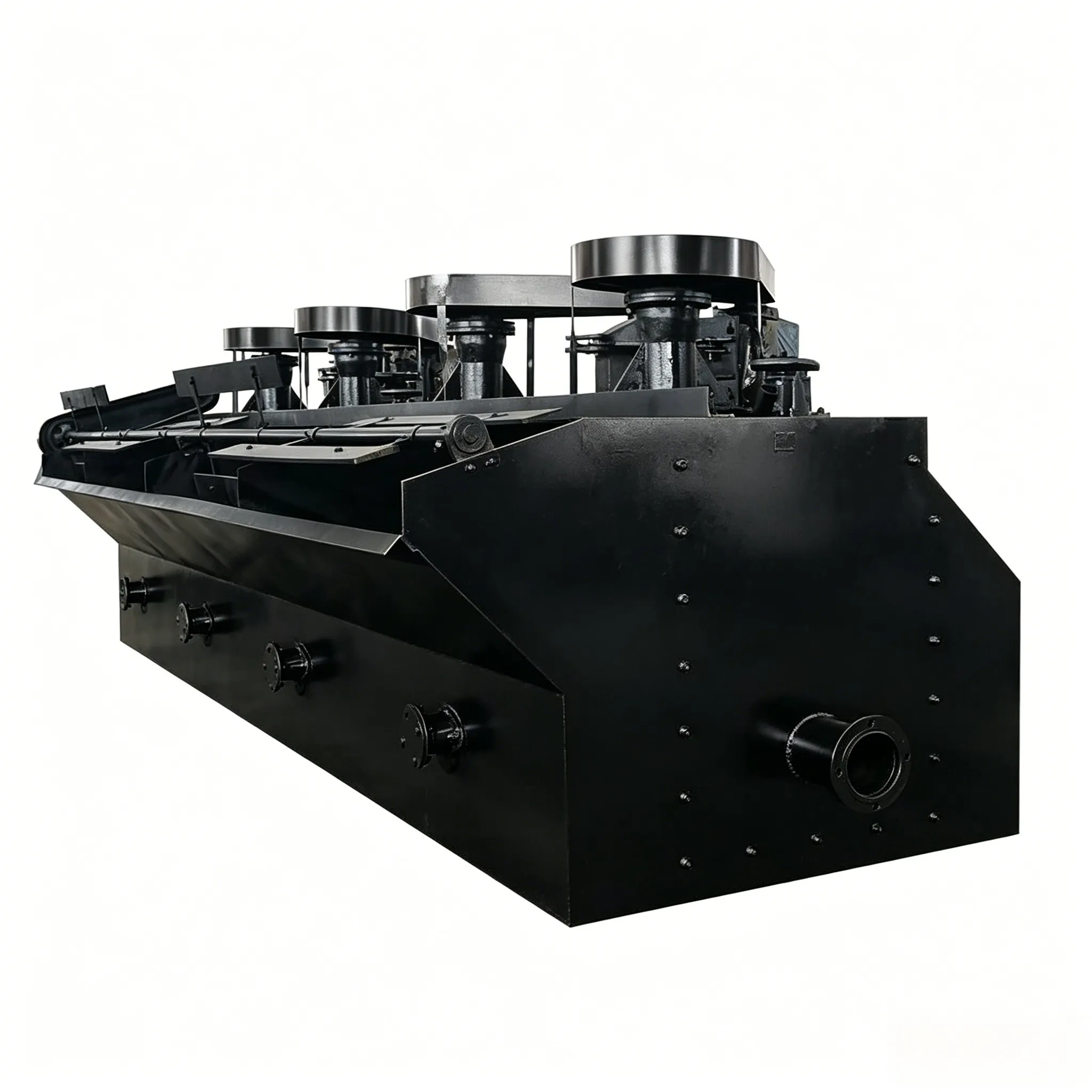
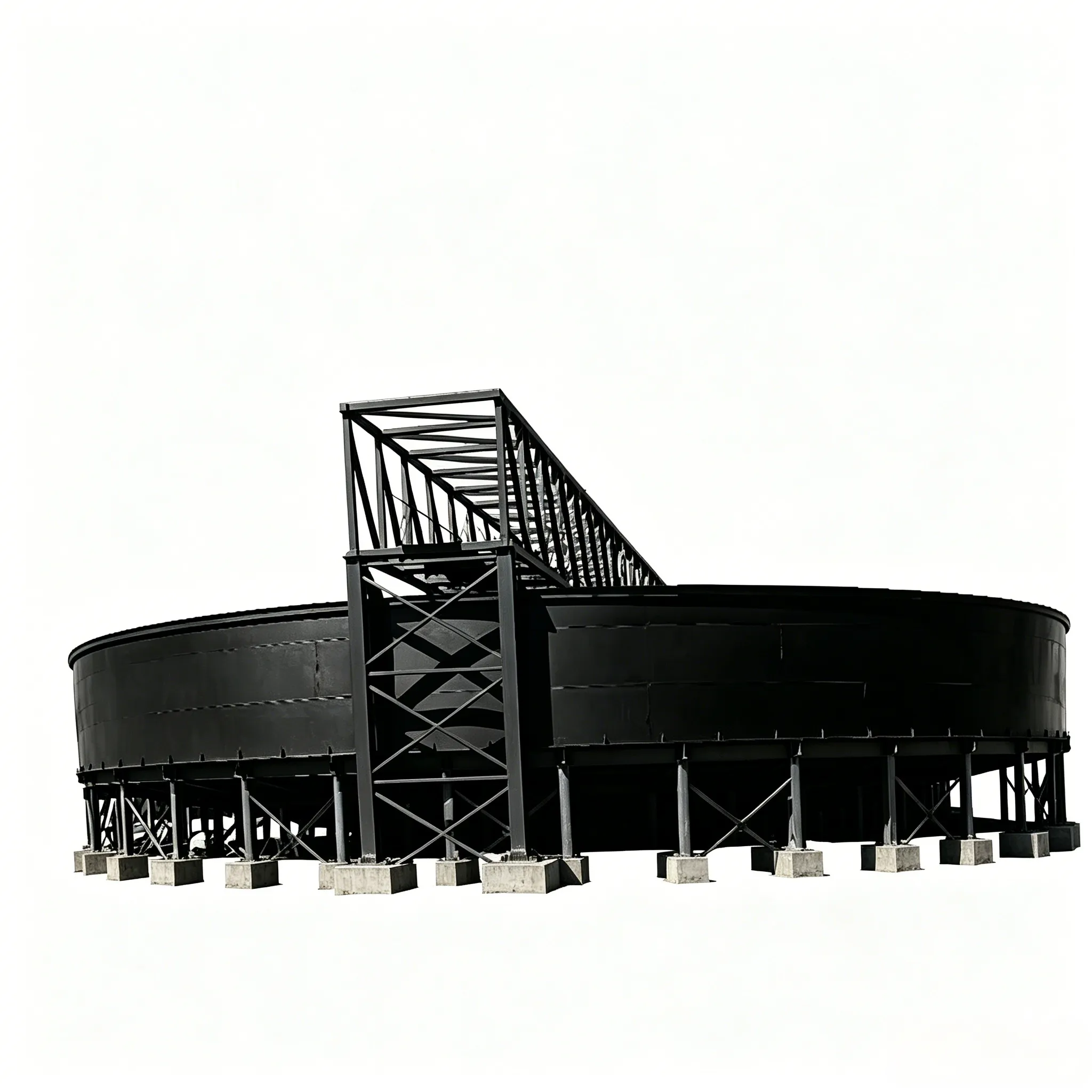
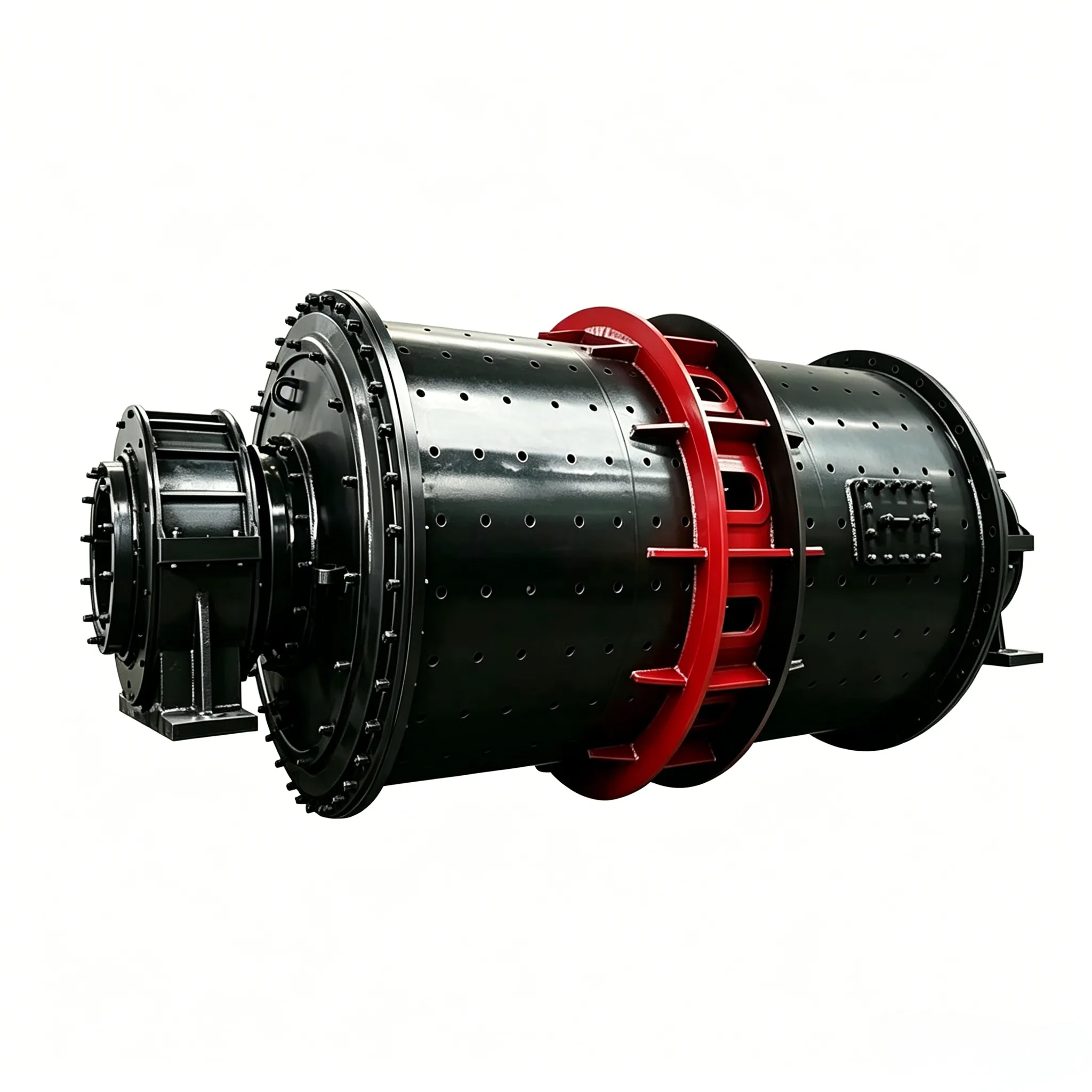
XJZ浮選機
XJZ型浮選機 には、何千台もの旧式のXJ型浮選機が……


単斜晶系のパイロトイトおよび方鉛鉱の浮選分離に関する新規プロセス
技術分野
The present invention relates to a novel process for flotation separation of monoclinic pyrrhotite and galena.
背景アート
Pyrrhotite is a widely distributed iron sulfide mineral that can coexist with many minerals. Due to varying degrees of iron atom deficiency, it not only changes in composition but also deviates in structure; its structure can transform from a hexagonal system to a monoclinic system. This results in different flotation behaviors of different pyrrhotites in solution. As the structure evolves from hexagonal to monoclinic, its floatability gradually improves from poor to good. Therefore, monoclinic pyrrhotite has very good floatability, making its separation from other minerals difficult. The depression of pyrrhotite and its separation from other minerals are regarded as a hot topic and a challenge in the mineral processing field.
発明の概要
The object of the present invention is to provide a novel process for flotation separation of monoclinic pyrrhotite and galena. By using this process, the flotation recovery of galena can reach over 90%, while that of monoclinic pyrrhotite is below 10%, thereby achieving separation of the two minerals.
The object of the present invention can be achieved by the following measures:
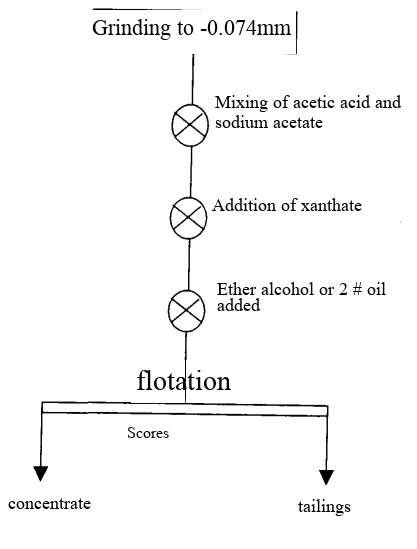
(1) Grinding the ore to a certain particle size;
(2) Adjusting the pulp pH using acetic acid and sodium acetate;
(3) Adding collector and frother to float galena, thereby achieving separation of the two minerals.
Specifically, the following conditions can be adopted:
The advantages of the present invention are: using this process, the flotation recovery of galena can reach over 90%, while that of monoclinic pyrrhotite is below 10%, thus achieving effective separation of the two minerals.
Figure 1 is a schematic flow diagram of the process for separating monoclinic pyrrhotite and galena provided by the present invention.
例 1
The ore was ground to –0.074 mm. The pulp pH was adjusted to 4.0 using acetic acid and sodium acetate and stirred for 5 minutes. The collector, sodium butyl xanthate, was added to achieve a concentration of 2×10⁻⁴ mol/L, and the pulp was stirred for 2 minutes. The frother, butyl ether alcohol, was added at a dosage of 10 mg/L, and the pulp was stirred for 2 minutes. Flotation was carried out for 9 minutes. The flotation separation results are shown in Table 1.
Table 1 Flotation separation results of the mixed ore at pulp pH 4.0
| 製品 | Yield (%) | Grade (%) | Grade (%) | Recovery (%) | Recovery (%) |
|---|---|---|---|---|---|
| Pb | Fe | Pb | Fe | ||
| 集中する | 48.60 | 73.83 | 5.16 | 95.35 | 8.20 |
| Tailings | 51.40 | 3.40 | 54.60 | 4.65 | 91.80 |
| Mixed ore | 100.00 | 37.63 | 30.57 | 100.00 | 100.00 |
例 2
The ore was ground to –0.074 mm. The pulp pH was adjusted to 4.67 using acetic acid and sodium acetate and stirred for 5 minutes. The collector, sodium butyl xanthate, was added to achieve a concentration of 2×10⁻⁴ mol/L, and the pulp was stirred for 2 minutes. The frother, butyl ether alcohol, was added at a dosage of 10 mg/L, and the pulp was stirred for 2 minutes. Flotation was carried out for 9 minutes. The flotation separation results are shown in Table 2.
Table 2 Flotation separation results of the mixed ore at pulp pH 4.67
| 製品 | Yield (%) | Grade (%) | Grade (%) | Recovery (%) | Recovery (%) |
|---|---|---|---|---|---|
| Pb | Fe | Pb | Fe | ||
| 集中する | 48.57 | 73.85 | 3.85 | 95.32 | 6.12 |
| Tailings | 51.43 | 3.42 | 55.81 | 4.68 | 93.88 |
| Mixed ore | 100.00 | 37.63 | 30.57 | 100.00 | 100.00 |
例 3
The ore was ground to –0.074 mm. The pulp pH was adjusted to 5.0 using acetic acid and sodium acetate and stirred for 5 minutes. The collector, sodium butyl xanthate, was added to achieve a concentration of 2×10⁻⁴ mol/L, and the pulp was stirred for 2 minutes. The frother, butyl ether alcohol, was added at a dosage of 10 mg/L, and the pulp was stirred for 2 minutes. Flotation was carried out for 9 minutes. The flotation separation results are shown in Table 3.
Table 3 Flotation separation results of the mixed ore at pulp pH 5.0
| 製品 | Yield (%) | Grade (%) | Grade (%) | Recovery (%) | Recovery (%) |
|---|---|---|---|---|---|
| Pb | Fe | Pb | Fe | ||
| 集中する | 47.60 | 73.62 | 5.93 | 93.12 | 9.24 |
| Tailings | 52.40 | 4.94 | 52.95 | 6.88 | 90.76 |
| Mixed ore | 100.00 | 37.63 | 30.57 | 100.00 | 100.00 |
例 4
The ore was ground to –0.074 mm. The pulp pH was adjusted to 3.6 using acetic acid and sodium acetate and stirred for 5 minutes. The collector, sodium butyl xanthate, was added to achieve a concentration of 2×10⁻⁴ mol/L, and the pulp was stirred for 2 minutes. The frother, ethyl ether alcohol, was added at a dosage of 12 mg/L, and the pulp was stirred for 2 minutes. Flotation was carried out for 9 minutes. The flotation separation results are shown in Table 4.
Table 4 Flotation separation results of the mixed ore at pulp pH 3.6
| 製品 | Yield (%) | Grade (%) | Grade (%) | Recovery (%) | Recovery (%) |
|---|---|---|---|---|---|
| Pb | Fe | Pb | Fe | ||
| 集中する | 48.06 | 72.30 | 5.32 | 92.34 | 8.36 |
| Tailings | 51.94 | 5.55 | 53.93 | 7.66 | 91.64 |
| Mixed ore | 100.00 | 37.63 | 30.57 | 100.00 | 100.00 |

 English English
 Spanish
 Russian
 Arabic
 Swahili
 French
 Turkish
 Portuguese
 Korean
 Japanese
 German
 Italian