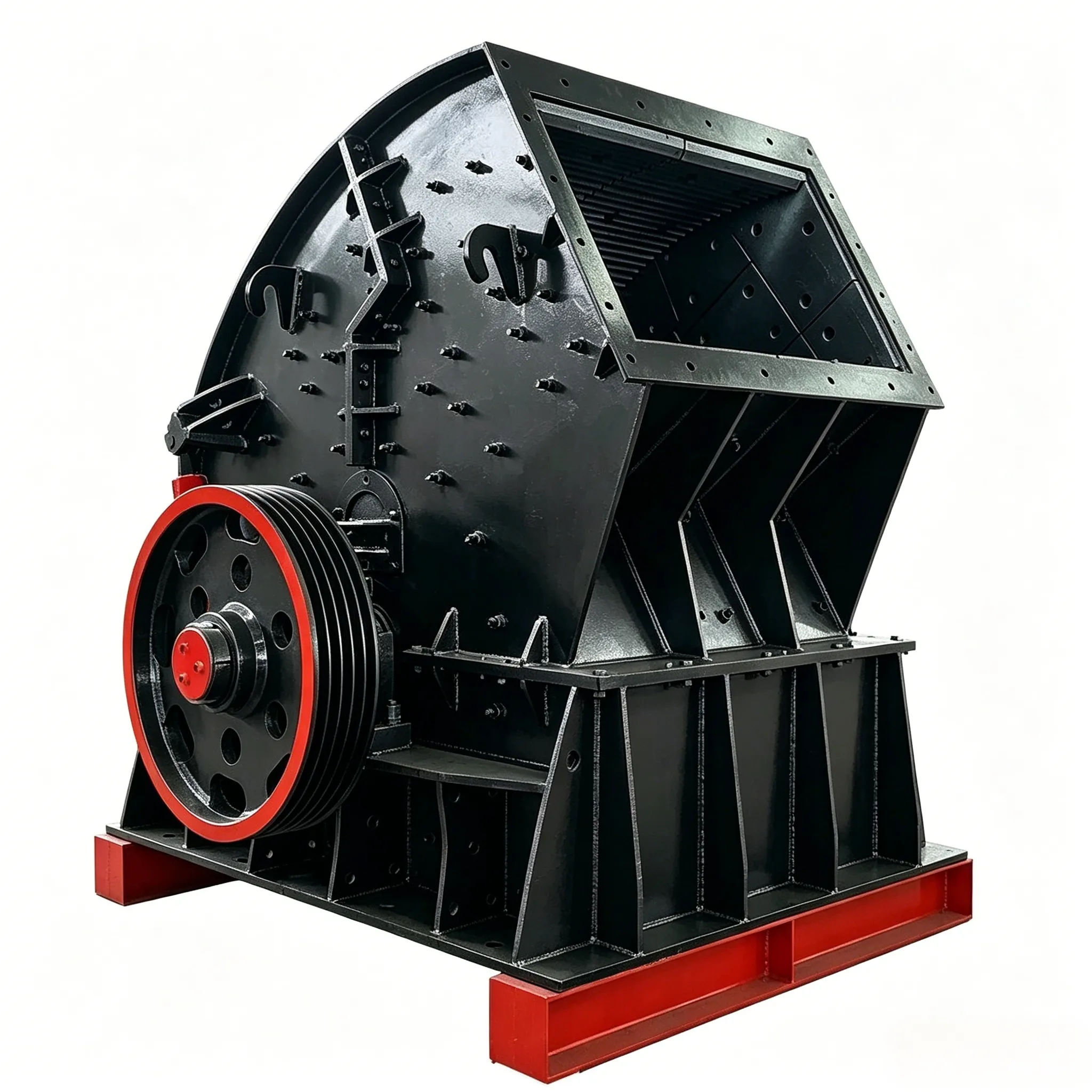
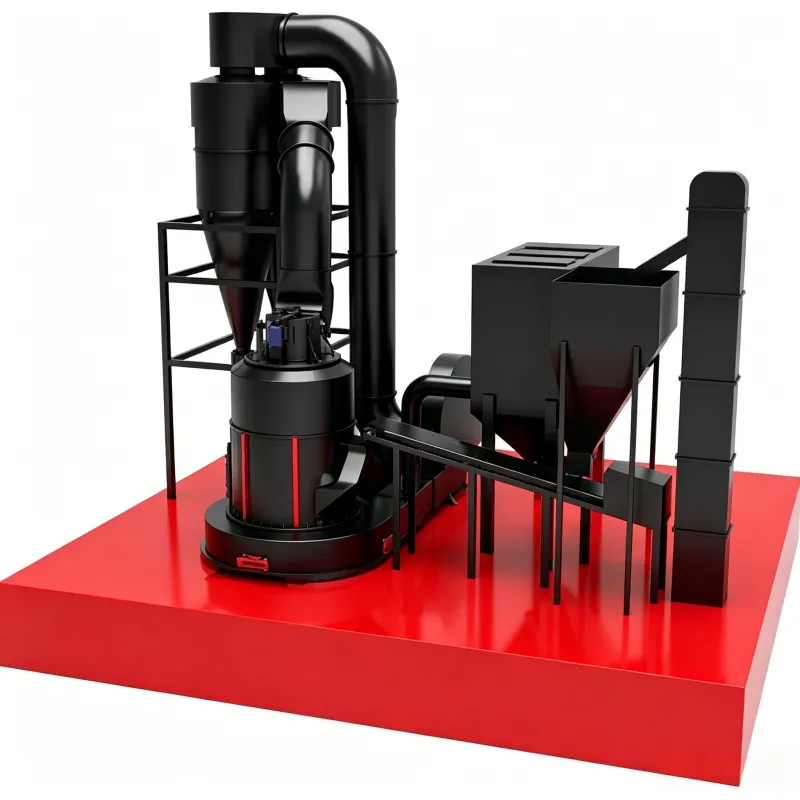
ハンマークラッシャー
ハンマークラッシャーの種類 1924年の登場以来、ハンマークラッシャーは…


The present invention belongs to the field of mineral separation technology.
At present, the beneficiation processes for flake graphite all employ multiple stages of grinding (3–6 times) and multiple stages of cleaning (4–7 times), under the mistaken belief that only in this way can large flakes be protected and recovery be improved. As a result, the flowsheets are complicated, equipment is numerous, investment is large, and costs are high; in particular, the breakage of large flakes is very severe.
The present invention is directed against the above shortcomings and has developed a new beneficiation process for flake graphite. This research reveals the mechanism of large‑flake breakage, and thereby adopts an extremely effective and simplified flowsheet. Compared with the conventional flowsheet, the number of stages is shortened by about half; in particular, the yield of large flakes increases by 20%, while recovery and concentrate grade are also improved simultaneously. Thus, production capacity can be increased by 15–20% and costs can be reduced by 20–30%.
The present invention completely breaks away from the long‑standing domestic and international focus on beneficiation reagents. Instead, it starts from the study of the breakage mechanism of graphite flakes and their flotation behaviour, and makes a major discovery regarding the causes of severe large‑flake damage and low recovery in existing graphite beneficiation. Furthermore, it identifies the regularities among them, and affirms that the breakage of graphite flakes is almost entirely caused by the shearing and compression exerted by gangue particles on them. Among these factors, the specific rates of breakage of gangue and graphite flakes are related to the grinding conditions. When the grinding concentration and the feed grade reach certain values, the breakage of flake graphite can be controlled to the mildest extent. That is, by adopting a flowsheet consisting of only one stage of rough grinding and rough flotation, one stage of regrinding, and two stages of cleaning, with the grinding concentration controlled at 50% and the regrinding feed grade at 40%, large‑flake graphite can be effectively protected, while recovery and concentrate grade are also enhanced.
Because the flowsheet is shortened, the present invention correspondingly expands the processing capacity, improves the recovery of large flakes (especially the +40 mesh product, which can be increased by 4–5 times), reduces equipment, saves plant space, and for new concentrators can reduce capital investment by 30–50%.
Product size distribution and grade of the conventional process:
| Size (mesh) | +40 | -40+50 | -50+80 | -80+100 | -100 |
|---|---|---|---|---|---|
| Yield (%) | 3.71 | 22.56 | 20.10 | 7.45 | 46.18 |
| Grade (%) | 91.58 | 90.18 | 89.60 | 89.12 | 83.91 |
Note: Overall concentrate grade = 89%; recovery = 74.5%.
Product size distribution and grade of the present invention:
| Size (mesh) | +40 | -40+50 | -50+80 | -80+100 | -100 |
|---|---|---|---|---|---|
| Yield (%) | 17.90 | 27.70 | 17.34 | 11.91 | 25.15 |
| Grade (%) | 96.40 | 94.93 | 94.31 | 93.81 | 88.33 |
Note: Overall concentrate grade = 93.4%; recovery = 92%.
Comparison of key indicators:
| Indicator | Conventional Process | Present Invention | Improvement by the Invention |
|---|---|---|---|
| Concentrate grade (%) | 89.00 | 93.40 | +4.4 |
| Recovery (%) | 74.50 | 92.00 | +17.5 |
| Large‑flake yield (%) | 53.82 | 74.85 | +21.03 |
 English English
 Spanish
 Russian
 Arabic
 Swahili
 French
 Turkish
 Portuguese
 Korean
 Japanese
 German
 Italian