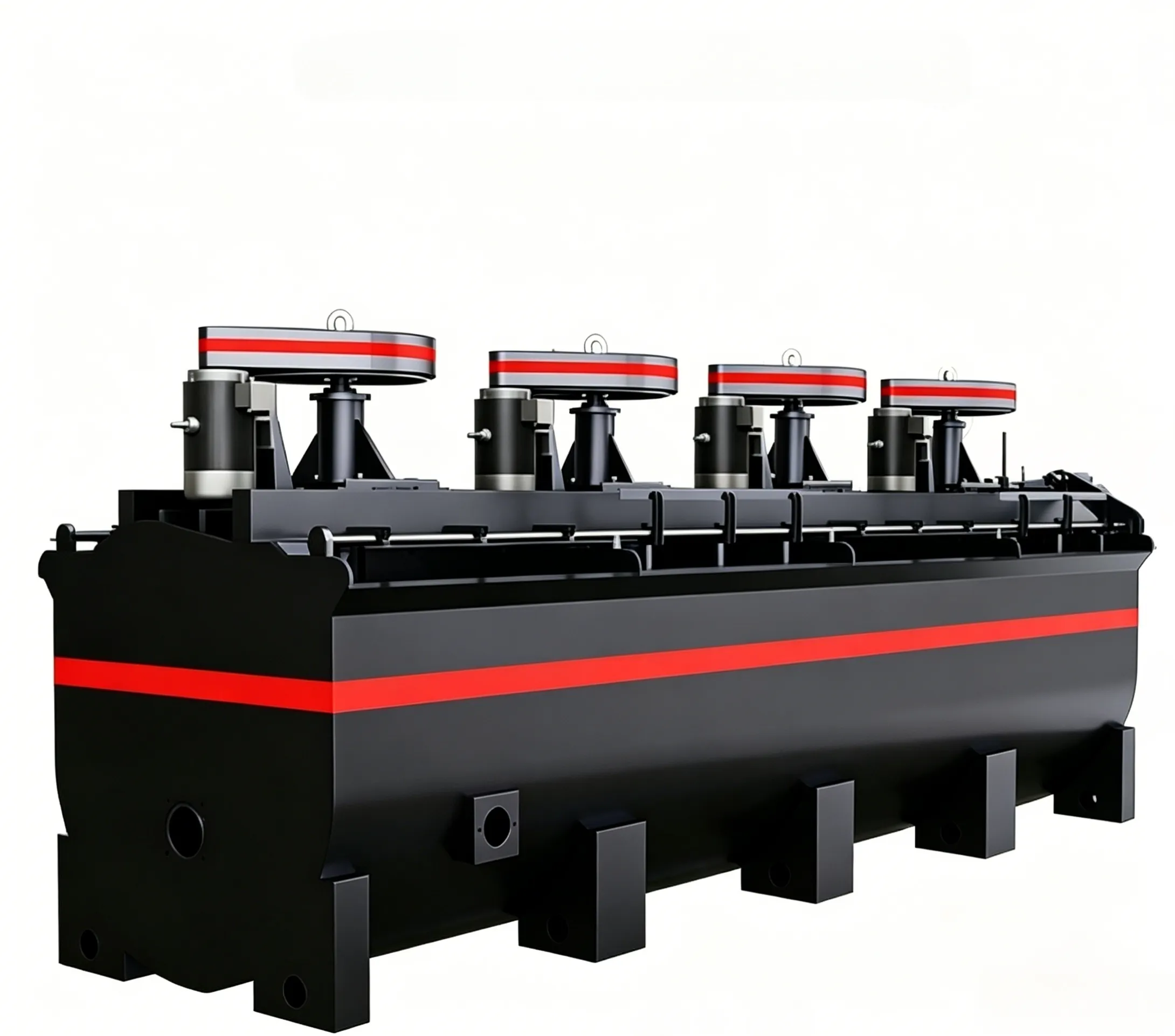
Máquina de flotação GF
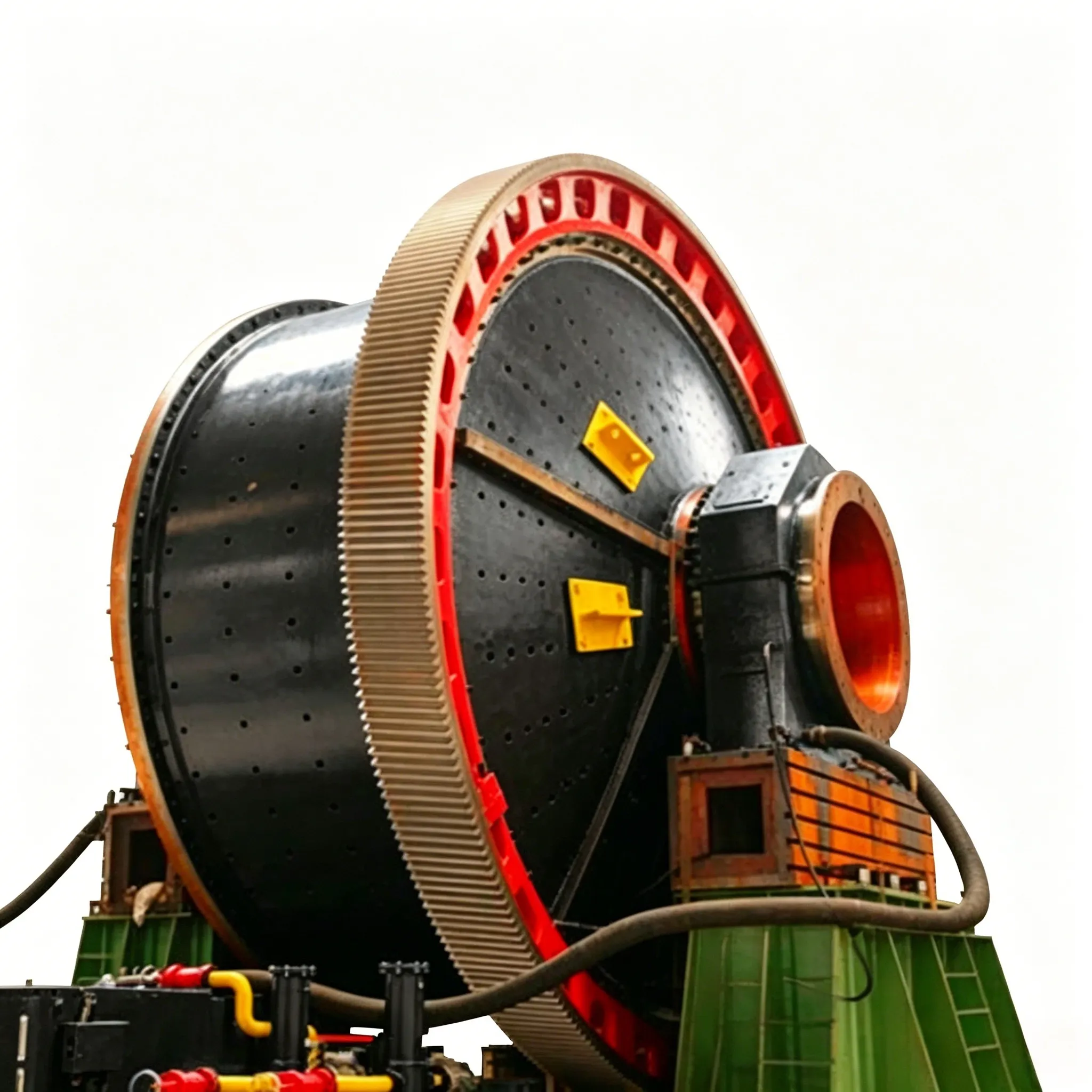
Máquina de flotação GF Esta máquina de flotação foi projetada para partículas grossas e…


(i) it is applicable to the beneficiation of various types of asbestos ores, including chrysotile asbestos (white asbestos), brucite asbestos, fibrous sepiolite asbestos, amphibole asbestos, and the like;
(ii) the process comprises: soaking and penetrating asbestos ores with water as a medium, followed by wet crushing, grinding, fiberizing, and opening, then separating various grades of asbestos fibers, needle‑like fibers, gangue, and mineral slime (asbestos dust) using various wet gravity concentration methods, followed by a fine splitting operation for full loosening, and finally dewatering and desliming by squeeze‑filtration to obtain high‑performance asbestos fiber products;
(iii) the process conditions are: process water used in the beneficiation plant has a pH of 6.5–7.5, wherein the pulp pH for crushing and grinding liberation is 7–9, the high‑concentration asbestos pulp pH is 7–10, and the return water pH is 7–8; the solid‑to‑liquid ratio (by weight) for coarse crushing and fiberizing is 1:0.1–0.5; for medium crushing and fiberizing/opening is 1:0.5–3; for fine crushing and fiberizing/opening is 1:2–5; for grinding and opening is 1:2–5; for roughing is 1:10–40; for cleaning is 1:10–50; for scavenging is 1:8–15; the feed concentration for the fine splitting operation is a solid‑to‑liquid ratio of 1:6–18 (all ratios are by weight); the dewatering and desliming of the cleaned fibers adopt a squeeze‑filtration method, and the dewatered product has a moisture content of 16–25% (by weight), and a –200 mesh dust/slime content of 4–36% (by weight of moisture, controlled according to the quality requirements for different grades of asbestos fiber products);
(iv) the method of the present patent is also applicable to the secondary processing of commercial asbestos fibers produced by dry processes from mines (beneficiation plants) or raw lump asbestos as raw materials in asbestos product factories;
(v) the method of the present patent is also applicable to the wet recovery of short asbestos fibers from dry‑process asbestos tailings.
2. The process according to claim 1, wherein the water used in the operations of wet crushing, grinding, opening, wet separation, and wet fine splitting of fibers can be fresh water (pH = 6.5–7.5) or circulated return water (pH = 7–10).
3. The process according to claim 1, caracterizado pelo fato de que alkaline inorganic compounds may be added to the water used in the operations of wet crushing, grinding, fiberizing, opening, wet separation, and wet fine splitting, with an alkalinity adjustable within a pH range of 7–14, and an optimum operating pH of 7–10.
4. The process according to claim 1, caracterizado pelo fato de que the inorganic alkaline compounds for adjusting the pH of the process water are selected from one or more of the following, used singly or in combination: sodium hydroxide, limewater (Ca(OH)₂), sodium carbonate, sodium bicarbonate, sodium silicate, sodium hexametaphosphate, and sodium tripolyphosphate, with the dosage controlled to maintain the operating pH at 7–14, preferably 8–10.
5. The process according to claim 1, caracterizado pelo fato de que the water consumption for each stage of crushing, grinding, fiberizing, and opening is increased stepwise as the specific surface area of the ore increases, wherein the solid‑to‑liquid ratio (by weight) is 1:0.1–0.5 for coarse crushing/fiberizing, 1:0.5–3 for medium crushing, 1:2–5 for fine crushing, and 1:0.5–6 for grinding.
6. The process according to claim 1, caracterizado pelo fato de que the water consumption for roughing and cleaning operations is increased stepwise according to the required degree of washing, wherein the solid‑to‑liquid ratio (by weight) is 1:10–40 for roughing, 1:10–50 for cleaning, and 1:8–15 for scavenging.
7. The process according to claim 1, caracterizado pelo fato de que the pulp concentration for the fine splitting operation is 5–16% (solid weight concentration), and the number of circulation cycles for the fine splitting is 1–4 times (pump‑refiner circulation) or 10–30 minutes (tank beating circulation).
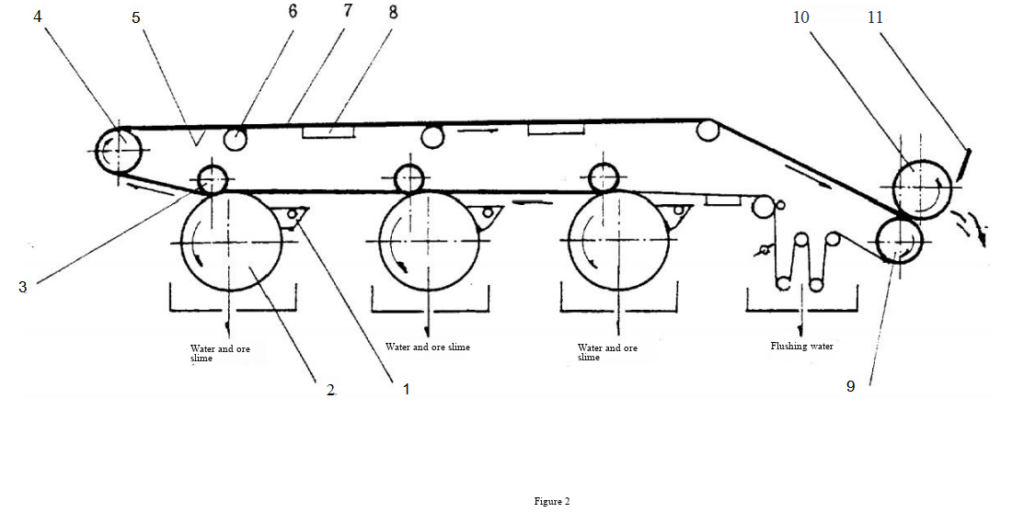
8. The process according to claim 1, caracterizado pelo fato de que the dewatering and desliming of the cleaned asbestos fiber are completed in the same operation, and the equipment used in this operation is a squeeze‑filter machine having both scooping and filtering functions, the technical features of which are:
(i) pulp feeding by a side‑flow pulp feeding method;
(ii) completing the first‑stage dewatering and desliming by a rotary screen scooping method;
(iii) completing the second‑stage dewatering and desliming by squeezing between a press roll and the rotary screen;
(iv) transferring the pulp from the rotary screen onto a felt, and completing the third‑stage dewatering by vacuum suction filtration during felt movement;
(v) conveying the fiber‑loaded felt to a breast roll section, and completing the fourth‑stage dewatering by squeezing with a finished‑product take‑up drum;
(vi) transferring the final dewatered fibers onto the finished‑product take‑up drum and scraping off the product with a scraper, the product having a moisture content of 16–25% (by weight).
9. The process according to claim 8, caracterizado pelo fato de que the technical features of the squeeze‑filter dewatering and desliming equipment are:
(i) feed pulp concentration by the flow‑feeding method is 0.5–4.0% (solid weight concentration);
(ii) the rotary screen has a diameter of φ500–1200 mm, an outer screen mesh of 80–200 mesh, and 1–5 screens per machine; the center distance between the press roll and the rotary screen is 80–160 mm; the felt width is 700–1200 mm (length depending on the number of screens); the linear speed of the felt and rotary screen is 20–50 m/min; the vacuum degree is 100–420 mmHg; the breast roll diameter is φ300–450 mm.
10. The process according to claim 8, caracterizado pelo fato de que the squeeze‑filtration process and the squeeze‑filter machine are equally applicable to dewatering and desliming processes in the beneficiation of various metal ores, non‑metal ores, and coal, with the applicable scope and features being: feed particle size of –2.0–0 mm (preferably –0.5–0 mm), pulp solid concentration of 0.5–6% (preferably 0.5–3%), removed slime particle size of –200 mesh or –325 mesh; the final dewatered and deslimed product has a moisture content of 6–25%, with 15–25% for cohesive mineral products and 6–15% for non‑cohesive mineral products (by weight).
Processo de beneficiamento por gravidade úmida para minerais do tipo amianto
The present invention relates to a beneficiation process for asbestos-type minerals.
Asbestos-type minerals refer to a class of natural mineral fibers having a fibrous structure and spinnability. Examples include: chrysotile asbestos (white asbestos), amphibole asbestos (crocidolite, amosite), anthophyllite asbestos; brucite asbestos – sepiolite (fibrous sepiolite), and palygorskite, among others. These minerals, when formed in nature, are intermixed or cemented with their gangue minerals and occur as relatively dense ore aggregates. To be useful, they must be processed through crushing, grinding, liberation (fiberizing), opening, loosening, sorting, and impurity removal to separate the valuable asbestos minerals.
Both domestic and international traditional asbestos beneficiation processes have been dry processes. That is, the ore is first heated and dried, then subjected to dry crushing and stage grinding for liberation, followed by stage air classification (suction separation) and dry screening using air as the medium to produce different grades of marketable fiber. Common dry process equipment includes: rotary dryers, jaw crushers, impact crushers, vertical-shaft hammer crushers, edge runners, self-centering vibrating screens, plane shaking screens, plane gyratory screens, fiber suction drums, cone-angle screens, square plansifters, counter-current screens, fiber drop drums, dust collection chambers, etc.
However, dry separation of asbestos-type minerals has four fatal drawbacks:
If the concentration of asbestos dust in the air exceeds the safe allowable limit (2 to 0.5 f/ml, i.e., more than 2 or 0.5 fibers per milliliter), it poses a certain health hazard. When inhaled into the lungs, it gradually accumulates and causes asbestosis, affecting the body through dissolution, penetration, migration, and deposition; some fibers enter the esophagus, stomach, and intestines, while most are excreted. The main factor affecting human health is the physical (mechanical) irritation caused by needle‑like fibers (insufficiently liberated hard structural fibers), which can cause pathological changes in living cells. A small proportion (1–2%) of asbestosis patients may develop cancer due to the combined effects of other factors (e.g., smoking or simultaneous exposure to certain organic chemical raw materials).
Among various asbestos fibers, crocidolite is recognized as the most carcinogenic. In addition to its strong mechanical irritating effect, its high adsorption activity may also be a contributing factor. In contrast, chrysotile asbestos, which is now widely used, is much safer; brucite asbestos is more readily dissolved by weak acids in the human body, and to date no cancer cases have been reported for it. Nevertheless, the hazard of dust (asbestosis) remains an issue that cannot be ignored.
The present invention employs a fully wet separation process in an aqueous medium, which can fundamentally eliminate the hazard of asbestos dust.
The present invention achieves liberation and separation in an aqueous medium. Water has penetrating and selective liberating effects, which can protect the original fiber quality and performance to the greatest extent, and significantly improve recovery.
The present invention uses water as the medium. Water has a density of 1, providing much higher separation efficiency and readily washing away sandy impurities. Moreover, water has a good rinsing effect to remove dust adsorbed on fiber surfaces, so the product quality is clearly superior to that of dry processes.
The present invention adopts a water‑based gravity beneficiation method. Because of its high separation efficiency, large operating capacity, simple process flow, investment and costs can be greatly reduced, energy consumption is low, and short fibers in the tailings can be recovered to the maximum extent.
Chinese patent application (No. 97112703.4) proposes a “wet flotation modification process for asbestos”. This is different from the present invention. That patent uses flotation (froth flotation). The fundamental difference between flotation and gravity concentration is that flotation requires the addition of organic flotation reagents (one or several surfactants). That invention selects sodium dioctyl sulfosuccinate (i.e., rapid penetrant T), which has good foaming, penetrating and collecting abilities for fibers, or fatty alcohol polyoxyethylene ether surfactants, etc. Although this method can effectively float asbestos fibers on the water surface (froth flotation) for effective separation, it has several disadvantages: ① Rapid penetrant T is only effective for certain magnesium‑rich (Mg²⁺‑rich) types of chrysotile and lacks selective collecting ability for many other chrysotile types or other asbestos‑type minerals, while fatty alcohol polyoxyethylene ether has even poorer collecting and foaming properties; ② The addition of various surfactants contaminates the pulp with organic active agents, preventing reuse of return water and causing environmental pollution; ③ The accumulation of froth in the pulp worsens the performance of separation and auxiliary operations; ④ The addition of defoamers (e.g., organosilicon defoamers or aluminum sulfate, as used in patent 97112703.4) increases the defoaming ability in the return water, thereby partially deactivating the added surfactants; ⑤ The addition of surfactants and defoamers significantly raises costs; ⑥ The asbestos fibers that have adsorbed large amounts of surfactants and defoamers show a marked increase in water absorption and viscosity, making final concentrate dewatering very difficult, and that patent does not indicate what special dewatering method (or technology) should be used.
In summary, the present invention aims to overcome the various disadvantages of dry processes and provide a new technology that allows a completely wet process, free from dust and toxic contamination, starting from the raw ore, and achieving high recovery, high quality, low investment and low cost. Moreover, it is fundamentally different from the wet flotation method using surfactants.
The present invention is applicable not only to various asbestos ore beneficiation plants, but also to secondary processing operations (raw fiber workshops) in asbestos product plants that require further quality improvement (sand removal, dust removal and further fiber loosening) of commercial asbestos, thereby completely eliminating secondary pollution caused by re‑processing raw asbestos in such plants. It is also suitable for recovering short asbestos fibers from tailings discarded by dry‑process plants. In addition, this process provides good conditions for chemical or surface‑chemical modification of asbestos fibers (including modification for high‑performance utilization and safe utilization). The present invention is described in detail below with reference to Figures 1 and 2.
The asbestos‑bearing raw ore mined from the mine is first coarsely screened to remove large waste rock (gangue) and then sent to the beneficiation plant, where the wet beneficiation process begins.
The water consumption for crushing and grinding depends on the ore particle size (which determines specific surface area and water adsorption capacity) and is determined by the need for good anti‑sticking properties and flowability. Generally, water consumption (ore:water by weight) for coarse crushing is 1:0.1–0.5; for medium crushing 1:0.5–3; for fine crushing 1:2–5; and for grinding about 1:2–3. Autogenous (pebble) milling, which combines coarse, medium and fine crushing, may also be used, with a ratio of 1:2–5 being suitable. All ratios are by weight.
Using a slightly alkaline aqueous solution is more conducive to water penetration and selective liberation of asbestos fibers than neutral water, protecting medium‑ and long‑length fibers from damage during liberation. The mechanism is that alkaline water is rich in OH⁻ groups, which have better ability to penetrate between fiber layers, swell and split the fibers. Meanwhile, all asbestos fiber crystals are hydrous minerals rich in structural water (OH⁻ groups). However, due to differences in local metallogenic geological conditions, some deposits may have insufficient hydration during mineralization, resulting in deficient OH⁻ groups, incomplete crystallization, and insufficient fiber strength. Infiltration of OH⁻ groups helps improve the strength quality of the asbestos fibers.
Wet separation is a gravity concentration process carried out in an aqueous medium at higher water content and lower pulp density. The purpose of low density is to ensure that the liberated fiber flocks have sufficient space for expansion and suspension. The solid concentration by weight is 1–6%, optimally 2–4%.
In gravity concentration, the ease of separating valuable minerals from gangue is mainly determined by two factors: ① the density difference between the valuable mineral and the gangue – the greater the difference, the easier the separation; ② the difference between the density of the separating medium and the densities of the mineral or gangue – the smaller the difference, the greater the suspending power of the medium for the material to be separated, and thus the easier the separation.
In asbestos ores, unopened asbestos (lumps) has a density of 2.50–2.54 g/cm³, and gangue 2.60–2.64 g/cm³, making it extremely difficult to separate. However, after opening, the asbestos fibers expand in volume and their apparent density drops (to about 0.3–1.1 g/cm³, depending on ore properties), making them easy to separate. At the same time, the density of the water medium is much higher than that of air, meaning that water has a significantly higher suspending power for loosened asbestos fibers than air. Thus, in water, asbestos becomes a very easy‑to‑separate mineral. This is the basic principle underlying the higher efficiency of wet separation over dry separation.
Dry separation is very difficult to achieve deep splitting of fibers, whereas wet processes, especially at high pulp densities, readily achieve deep splitting while maintaining a high fiber aspect ratio. At the same time, this operation also provides theoretical and practical justification for the full utilization of short asbestos fibers.
Taking chrysotile medium‑short fiber of grade 5‑50 as an example: before deep splitting, looseness is 120–150 ml/5g, specific surface area 60–90 dm²/g; after deep splitting, looseness is 200–300 ml/5g, specific surface area >150 dm²/g.
The dewatering and desliming technology of the squeeze‑filter method of the present invention completely solves this problem. The key to its success is that the water‑ and slime‑containing fiber pulp is always maintained in an extremely thin layer (Q = 0.10–0.5 mm) during the entire main dewatering process. At the same time, through a rotary screen with mesh apertures (80–200 mesh) selected to remove mineral slime (fiber dust) of the required particle size, it first screens and squeezes out large amounts of water and slime, and then vacuum‑sucks and filters the thin layer of pulp on a felt. Because the material layer on the felt never thickens, dewatering efficiency is high, continuous, and stable. By changing the feed pulp concentration, the felt running speed, and the vacuum level of the vacuum box, the production capacity and the quality of water and slime removal can be freely controlled.
The pulp to be dewatered and deslimed flows by gravity into the side‑flow feed trough (part 1), which feeds the pulp to the upper side of the rotary screen (feed concentration 0.5–4.0%, optimally 1.5–3.0% solid weight concentration). The pulp passes through the rotating screen drum (part 2), with drum diameter φ500–1200 mm, outer screen mesh 80–200 mesh, 1–5 drums per machine. After preliminary screening to remove slime and water, the pulp passes through the felt (part 5) and the press roll (part 3) for further squeezing dewatering and desliming. Then, the thickened cotton material is transferred onto the felt and conveyed forward as a thin layer (7) with a thickness of 0.10–0.4 mm via the turning roll (part 4). During conveying, it is further dewatered by suction through the vacuum filter box (part 8) (vacuum degree 100–420 mmHg), and then conveyed to the breast roll section (part 9), where it undergoes a fourth dewatering by squeezing between the breast roll (φ300–450 mm) and the finished product take‑up drum (part 10). Finally, the semi‑dry cotton material after dewatering and desliming is transferred onto the finished product take‑up drum and scraped off by a scraper (part 11) to obtain a final board‑like or flake product. The final product has a moisture content of 16–25% (solid weight %).
① Improved recovery: Based on the raw ore asbestos grade (+0.3 mm fiber content) taken as 100% (using conventional dry‑method grade determination, with wet‑sieve standard inspection), the total recovery of the wet process (+0.30 mm) is >150–200%, whereas the same ore using dry process gives a total recovery (+0.30 mm) of 70–80%; among these, the recovery of medium‑ and long‑length fibers is 6–20% higher in the wet process than in the dry process.
② Improved product quality: According to the quality standard for machine‑selected asbestos (GB8071‑87), under the premise that the main fiber content (+1.18 mm) of the same grade products tested by wet method is equivalent to the grade, the +1.18 mm main fiber content of the wet‑process product is slightly higher than that of the dry‑process product, while the –0.075 mm dust content is reduced by 20–50%.
③ Investment comparison: Under the same raw ore grade and quality conditions, the investment for a wet‑process beneficiation plant is 20–50% less than that for a dry‑process plant.
④ Production cost comparison: Under the same raw ore grade and quality conditions, the wet beneficiation cost is 20–30% lower than the dry beneficiation cost.
The following are examples of the present invention:
Example 1: Wet gravity beneficiation process for chrysotile asbestos (white asbestos)
Example 2: Wet gravity beneficiation process for fibrous brucite asbestos
Example 3: Wet reprocessing of commercially produced dry‑process asbestos fiber
Example 4: Recovery of short fibers from asbestos‑bearing tailings from a dry‑process plant

 English English
 Spanish
 Russian
 Arabic
 Swahili
 French
 Turkish
 Portuguese
 Korean
 Japanese
 German
 Italian