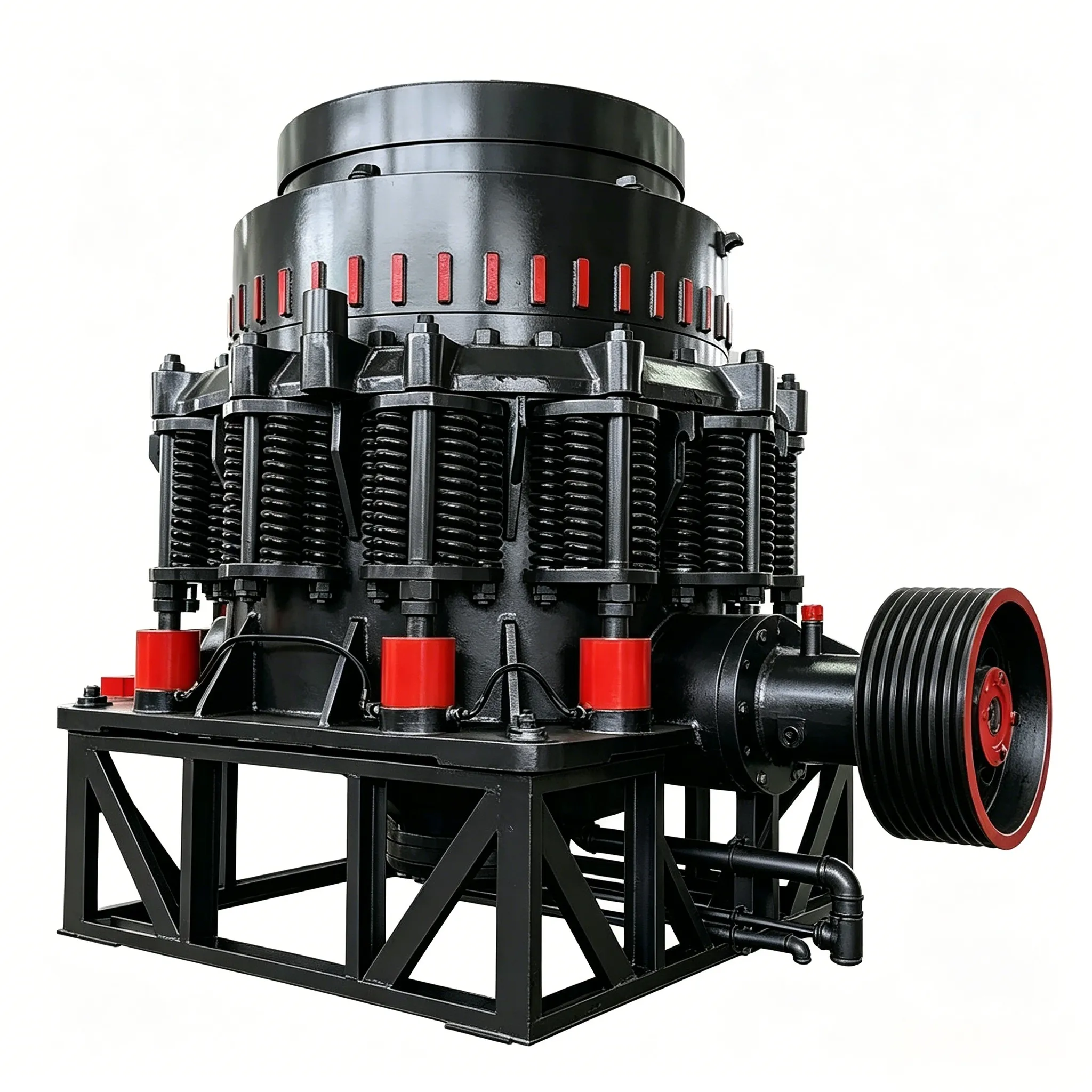
Visagaji vya koni
Aina za visagaji vya koni Visagaji vya koni vinajulikana duniani kote kama “aina ya Symons”…


Grinding density is an important parameter affecting the grinding performance.
If the density is too high or too low, it may affect the grinding and classification performance.
1. Grinding density too high
If the pulp is too dense, the following may occur:
In severe cases, it may also lead to an increased mill load, affecting normal operation.
2. Grinding density too low
If the pulp is too dilute, it may also affect the grinding performance.
When the water volume is too large, the effective interaction between the ore and the grinding balls changes, and it may also affect the subsequent classification state.
3. Why does the density need to be stable?
Fluctuations in grinding density will further affect:
Grinding efficiency → Classification performance → Grinding fineness → Subsequent flotation.
Therefore, on site, one cannot simply pursue “the higher the density, the better” or “the lower, the better.”
A reasonable range should be determined based on ore properties, mill status, throughput, and target fineness.
4. What can automation do?
Through online density detection, combined with parameters such as:
Feed rate, water addition rate, mill power, and cyclone pressure,
the PLC/DCS can regulate the water addition to reduce density fluctuations.
 English English
 Spanish
 Russian
 Arabic
 Swahili
 French
 Turkish
 Portuguese
 Korean
 Japanese
 German
 Italian