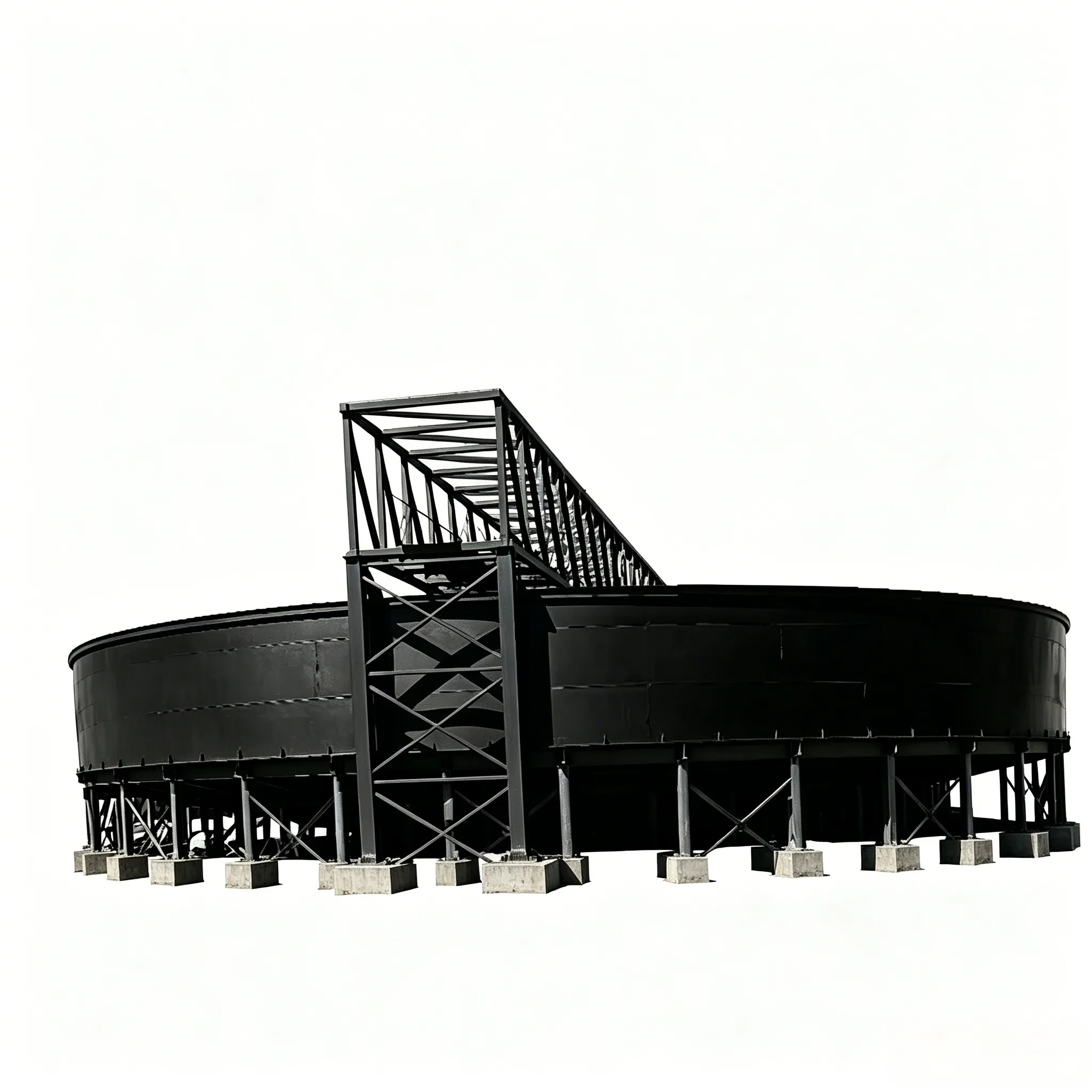
مكثف من النوع الصندوقي ذو الألواح المائلة
جهاز تكثيف (تصفية) ذو الألواح المائلة التقليدي: جهاز التكثيف (التصفية) ذو الألواح المائلة من سلسلة KMIZ(Y) هو جهاز جديد…

Fluorite (CaF₂) is an important strategic non-metallic mineral resource, widely used in fluorochemicals, metallurgy, glass and ceramics, new energy, and information technology. As easily beneficiated fluorite resources in China become increasingly depleted, calcite-type fluorite ore has become a major focus for fluorite resource development and utilization. However, the flotation separation of calcite-type fluorite ore remains a well‑known technical challenge in mineral processing. This article systematically analyzes the difficulties, key reagent technologies, process flowsheets, and latest research progress for calcite-type fluorite ore flotation, providing a useful reference for industry practitioners.
Based on genesis and associated minerals, fluorite ores can be classified into quartz-type, calcite-type, barite-type, and polymetallic fluorite ores. Calcite-type fluorite ore refers to fluorite ore in which the main gangue mineral is calcite (CaCO₃). A typical example is a high‑calcite fluorite ore from Xinjiang, containing 25.47% CaF₂ and as much as 41.67% calcite; another from Guizhou contains 41.71% CaF₂ and 13.83% CaCO₃.
China has abundant calcite-type fluorite resources. For instance, the super‑large fluorite deposits discovered in Ruoqiang County, Xinjiang (e.g., Karlkal, Gaijike) contain over 10 million tonnes of resources, all of which are high‑calcite type. The efficient utilization of such resources is of great significance for ensuring China’s fluorine resource supply security.
The core challenge in flotation of calcite-type fluorite ore is the efficient separation of fluorite from calcite.
Fluorite and calcite are both calcium‑bearing salt‑type minerals with similar crystal structures and surface physicochemical properties. Both minerals have Ca²⁺ active sites on their surfaces, which makes their floatability extremely similar in flotation. Conventional flotation reagents struggle to achieve selective adsorption between the two, so the separation of calcite-type fluorite ore has long been a difficult problem in mineral processing.
In addition, calcite is relatively brittle and tends to over‑grind during milling, producing a large amount of slime. These slimes coat the fluorite surface during flotation, deteriorating separation performance. Therefore, calcite-type fluorite ore flotation demands higher standards for grinding processes and reagent regimes.
Depressants are the key to achieving flotation separation of fluorite and calcite. Based on recent research, depressants can be divided into three main categories:
سيليكات الصوديوم المعدلة is one of the most commonly used inorganic depressants. When used alone, traditional sodium silicate cannot effectively separate fluorite from calcite. By combining sodium silicate with acids or metal ions to form acidified or salinized sodium silicate, its selective depression of gangue minerals can be enhanced. For example, the Fe³⁺–sodium silicate combination produces Fe‑silicate polymers that selectively adsorb on the calcite surface, hindering further collector adsorption and thus achieving selective depression of calcite.
Sodium hexametaphosphate acts by complexing and dissolving active ions on the calcite surface.
Organic depressants are diverse and have various mechanisms of action. Tannic acid effectively depresses calcite via chemisorption on calcite while only physically adsorbing on fluorite, facilitating direct flotation separation. Oxalic acid, tartaric acid, and citric acid can effectively depress fluorite, enabling reverse flotation separation.
In recent years, environmentally friendly organic depressants such as carboxymethyl chitosan have attracted attention. Research shows that carboxymethyl chitosan selectively depresses calcite while avoiding the environmental pollution associated with traditional inorganic depressants.
Phosphorus‑containing depressants have become a research hotspot. Ethylenediamine tetramethylene phosphonic acid sodium salt (EDTMPS) effectively depresses calcite flotation at pH 7–9, with little effect on fluorite floatability. Alendronate sodium and other phosphate‑type depressants can chemically adsorb onto calcium sites on the calcite surface, forming a stable hydrophilic layer with strong selective depression.
Single depressants often cannot achieve both high‑grade fluorite concentrate and high recovery. Therefore, المهدئات المركبة have become the mainstream direction in both research and application.
Direct flotation is the most widely used process. The principle is to depress calcite and other gangue minerals while selectively collecting fluorite. The typical flowsheet is “one stage of roughing – multiple stages of cleaning – scavenging,” with middlings returned in order.
For example, for a high‑calcite fluorite ore from Xinjiang, at a grinding fineness of 65% passing 0.074 mm, using collector EM‑OL8, depressant EMN, and modifier SSB, a closed‑circuit flowsheet of “two roughings, one scavenging, eight cleanings” yielded a fluorite concentrate with 22.02% yield, 97.38% grade, and 84.20% recovery.
For a calcite-type fluorite ore from Guizhou, at a grinding fineness of 87.21% passing 0.074 mm, using sodium carbonate as pH modifier, sodium silicate + sodium humate and acidified sodium silicate as depressants, and sodium oleate as collector, a closed‑circuit flowsheet of “1 roughing, 2 scavengings, 7 cleanings” produced a fluorite concentrate with 96.31% grade and 81.67% recovery.
For quartz‑calcite composite fluorite ores, a combined direct–reverse flotation process can be used: first, direct flotation to remove quartz gangue, followed by reverse flotation to remove calcite gangue, ultimately obtaining fluorite concentrate. This process offers high separation efficiency, good metallurgical indices, and easy concentrate filtration.
Calcite-type fluorite ore is best processed with a single‑stage grinding and middlings‑in‑order‑return flowsheet to avoid over‑grinding of calcite, which would generate excessive slimes that circulate and worsen separation performance. In contrast, quartz-type fluorite ores are more suitable for two‑stage grinding with regrinding of high‑grade middlings.
Ultrasonic pretreatment shows promising application prospects. Studies indicate that 15 minutes of ultrasonic pretreatment significantly enhances fluorite recovery (up to 84.28%) while effectively suppressing calcite recovery (only 4.69%).
Key research focuses for calcite-type fluorite ore flotation in the future include:
Although flotation separation of calcite-type fluorite ore is challenging, continuous advances in novel depressants, combined reagent systems, and advanced process flowsheets are gradually overcoming this technical hurdle. Successful practices in Xinjiang, Guizhou, and elsewhere demonstrate that with proper reagent regimes and process designs, high‑quality fluorite concentrates with CaF₂ grades above 97% and recoveries above 80% can be achieved.
As the contradiction between “abundant low‑grade ores and scarce high‑grade ores” becomes more acute in China’s fluorite resources, the efficient development and utilization of calcite-type fluorite ore will become a vital pathway to securing fluorine supply. Continuous innovation in beneficiation technology will provide solid support for the clean and efficient utilization of this strategic mineral resource.
 English English
 Spanish
 Russian
 Arabic
 Swahili
 French
 Turkish
 Portuguese
 Korean
 Japanese
 German
 Italian