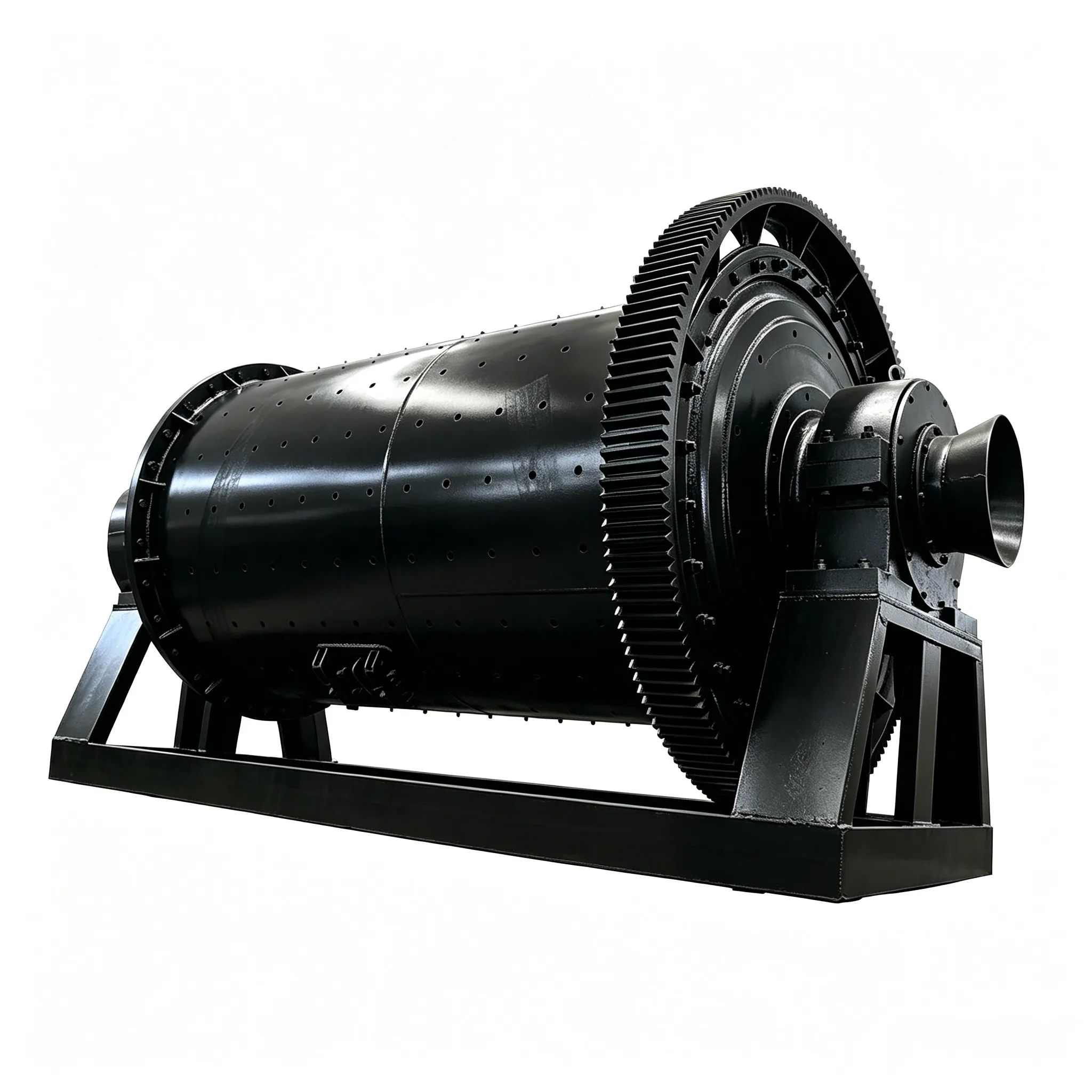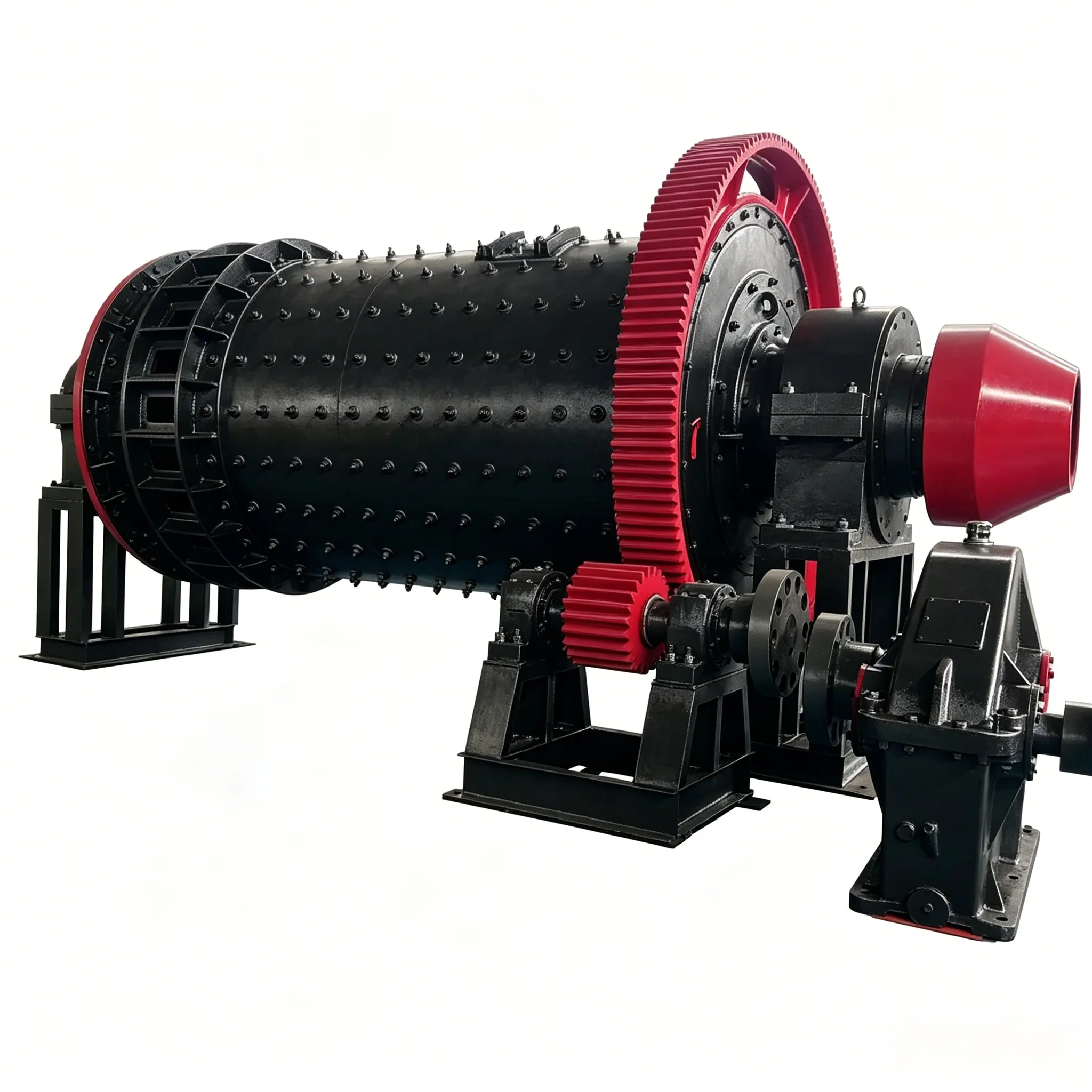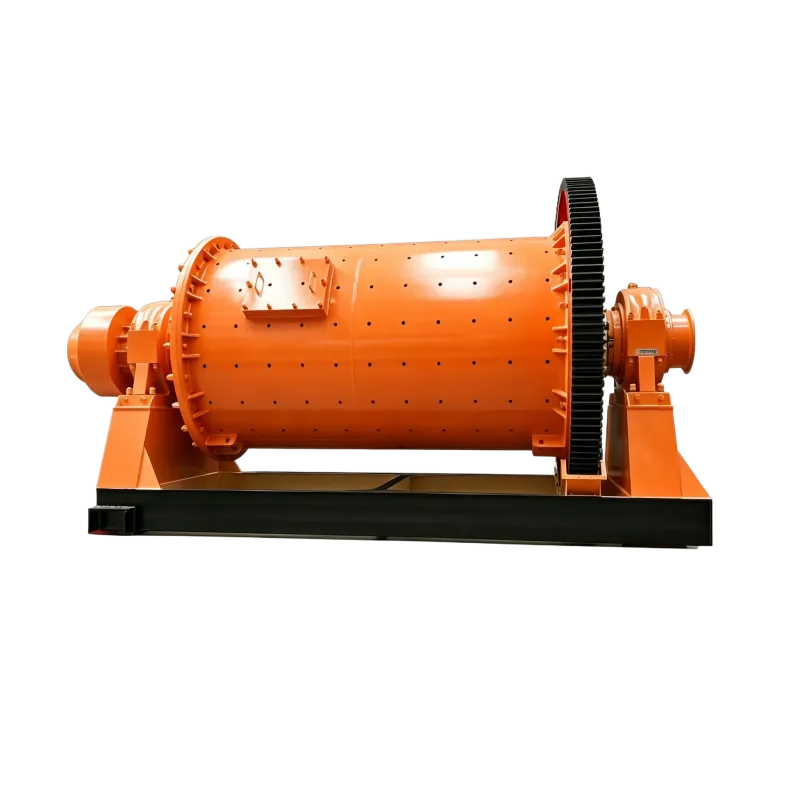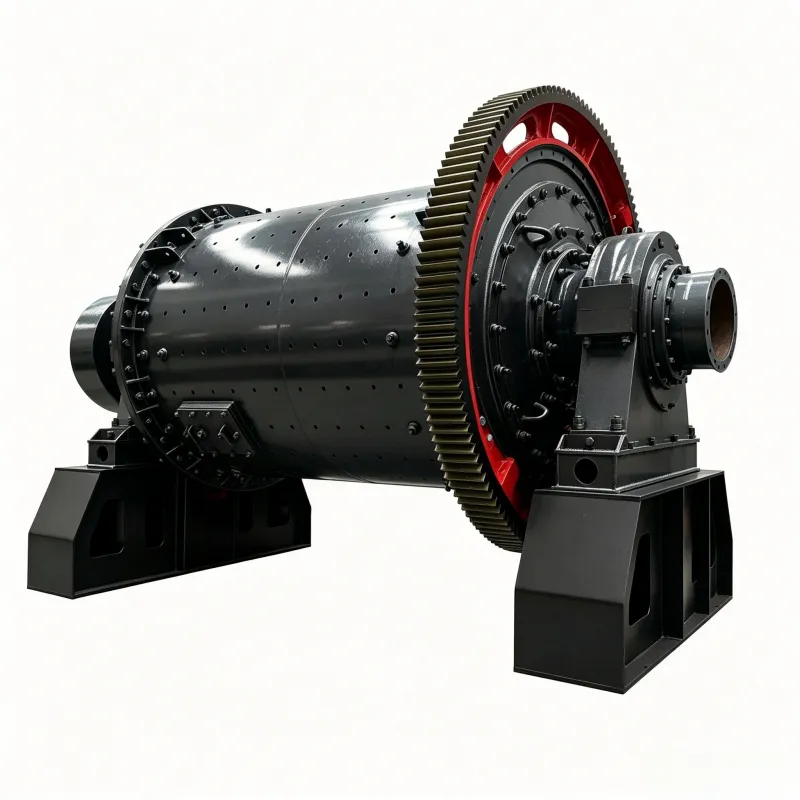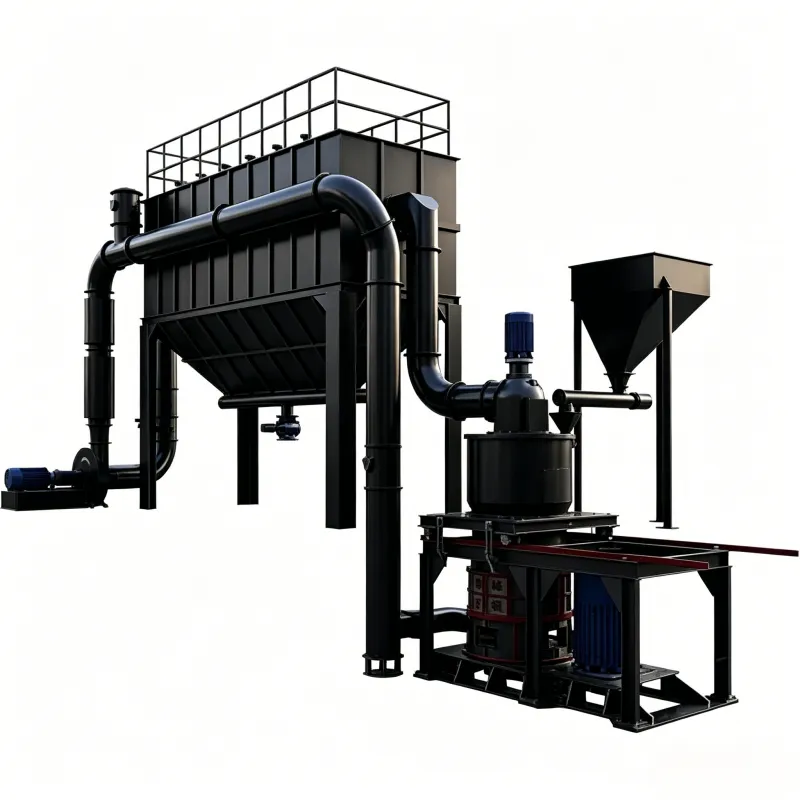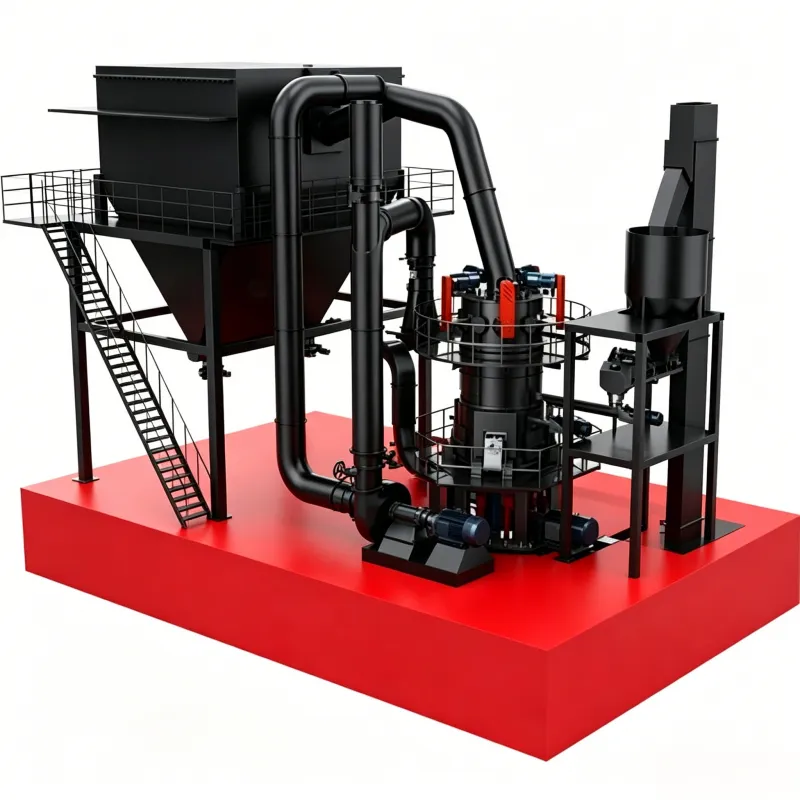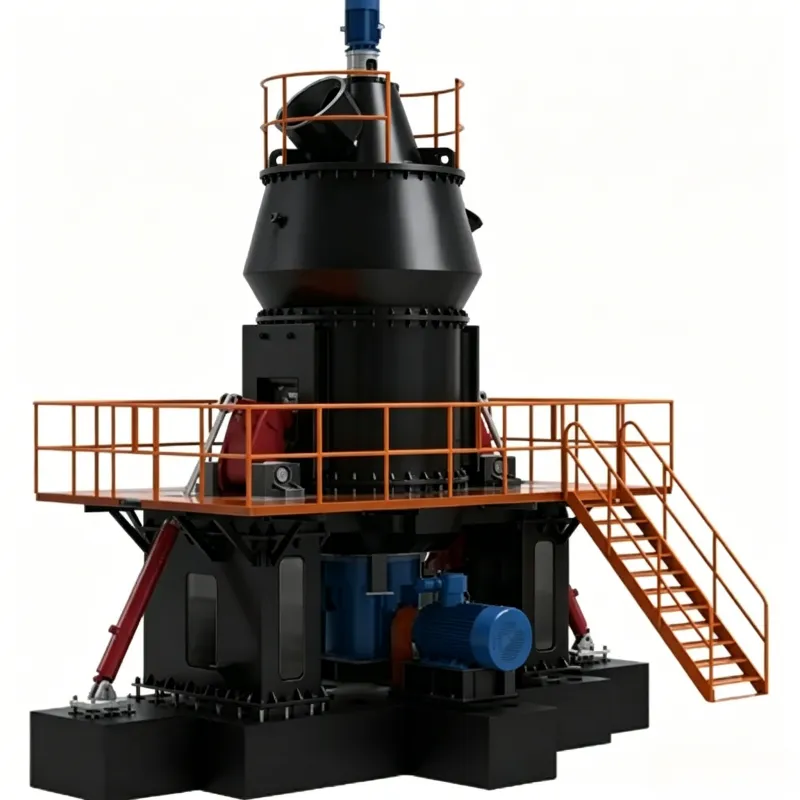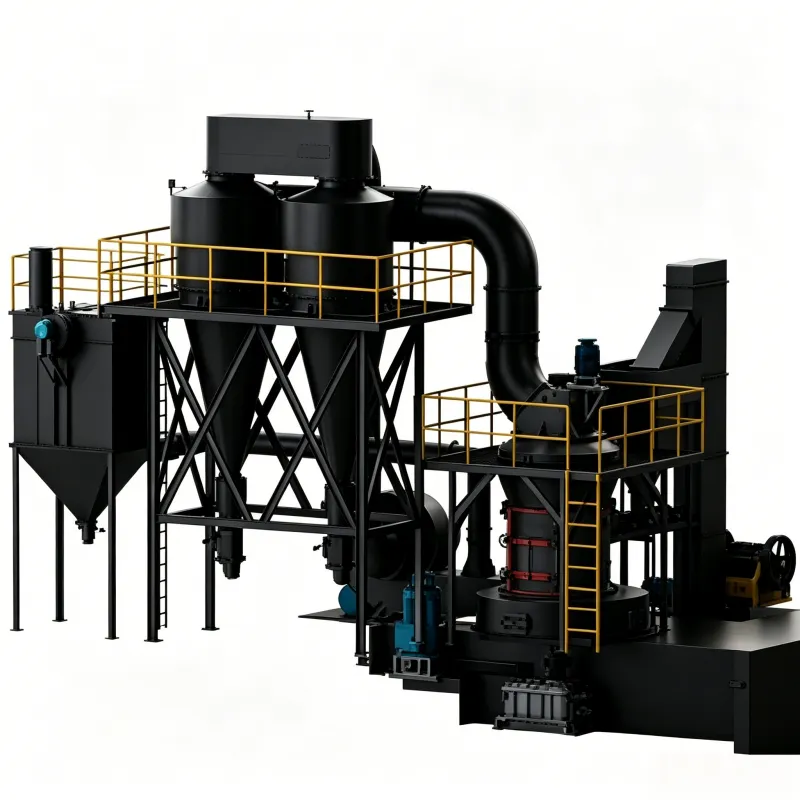

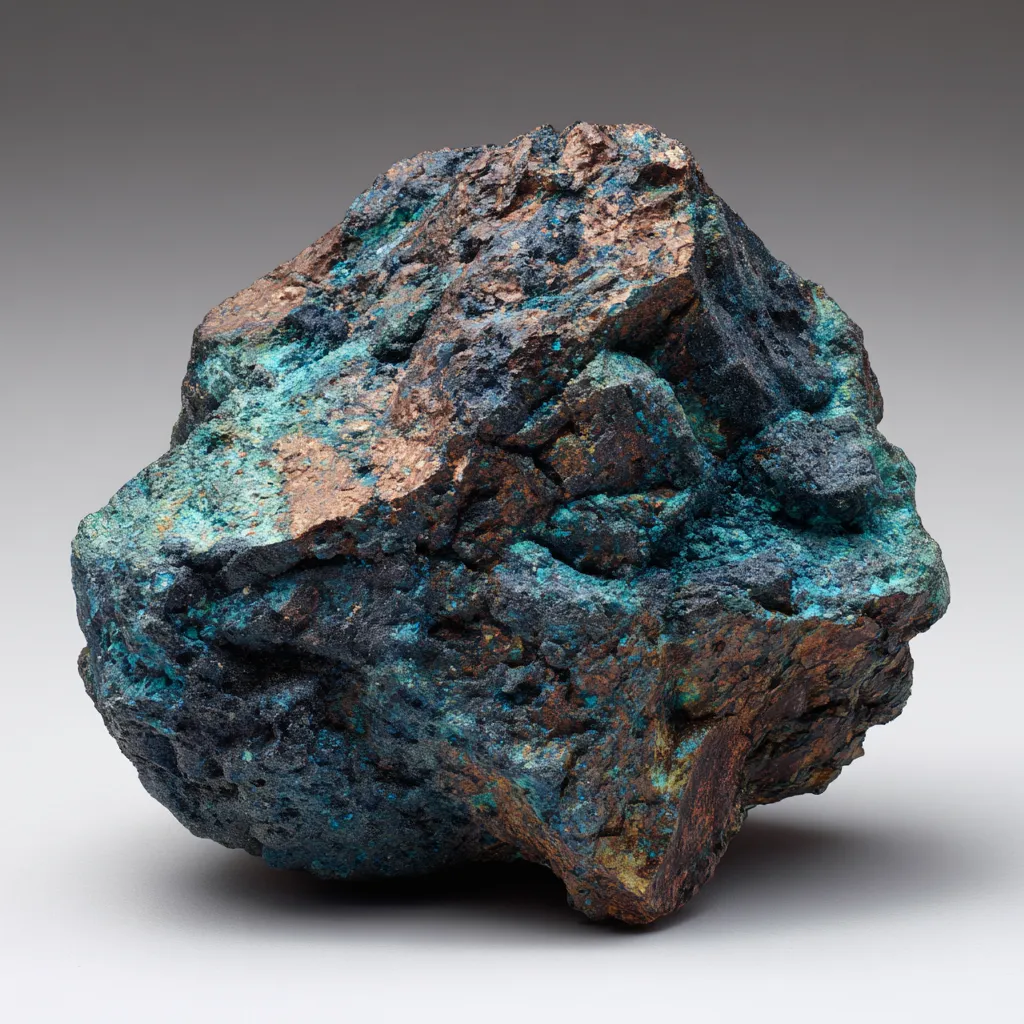
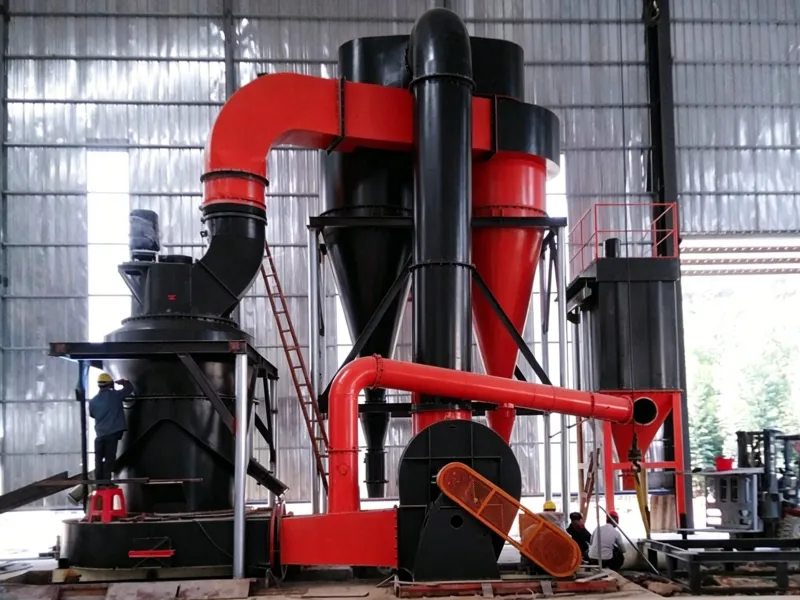
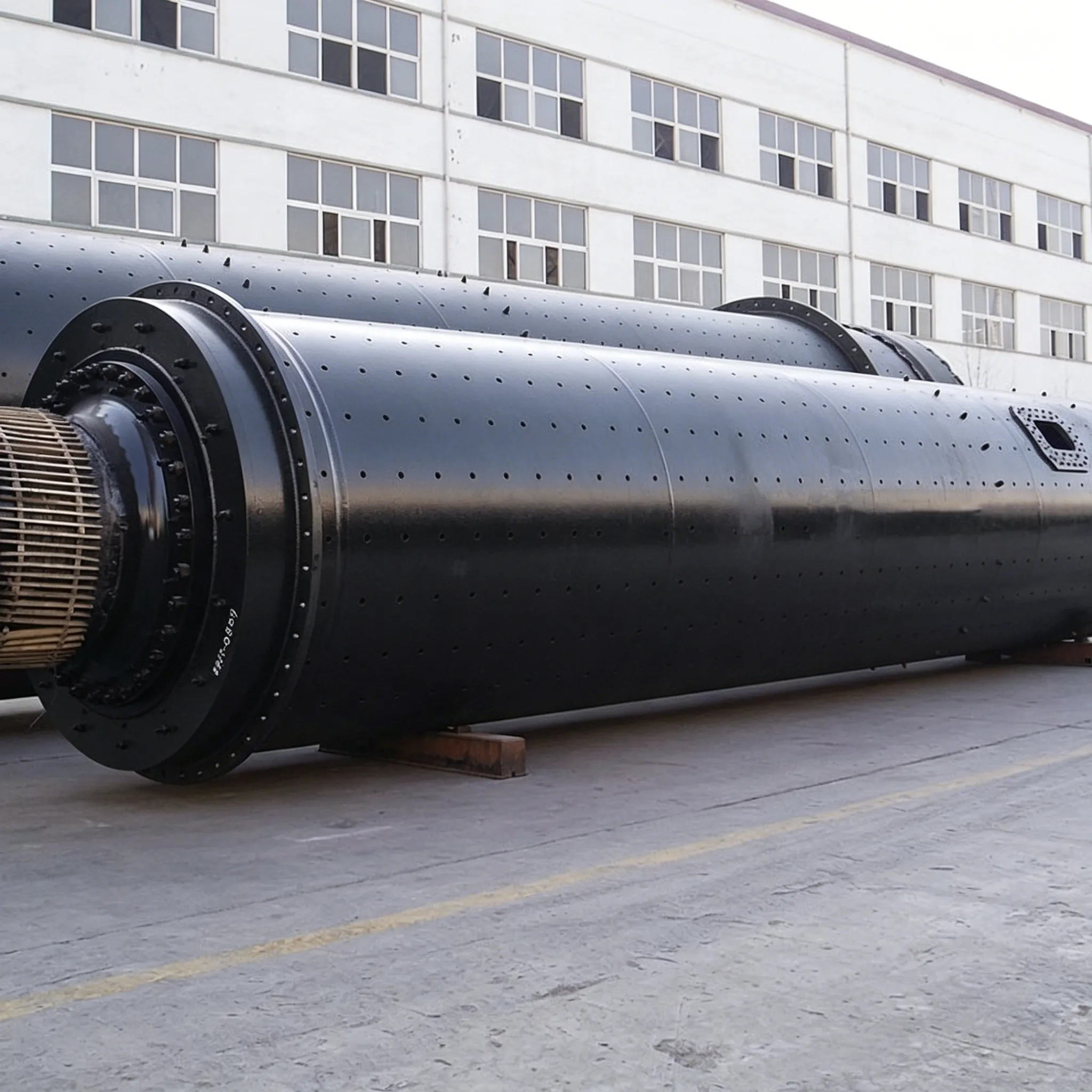
The cement ball mill is key equipment used in cement production lines for grinding clinker, admixtures, slag, and other materials. It is widely applied in the finish grinding and raw material grinding of cement plants, and is also suitable for grinding various ores and other grindable materials in metallurgical, chemical, electric power, and other industries. Our cement ball mills are manufactured with advanced processes and feature high grinding efficiency
The cement ball mill is key equipment used in cement production lines for grinding clinker, admixtures, slag, and other materials. It is widely applied in the finish grinding and raw material grinding of cement plants, and is also suitable for grinding various ores and other grindable materials in metallurgical, chemical, electric power, and other industries. Our cement ball mills are manufactured with advanced processes and feature high grinding efficiency, stable operation, low energy consumption, and easy maintenance. They are an ideal choice for new cement production lines and also suitable for upgrading existing lines.
The cement ball mill is a horizontally rotating cylindrical device, mainly composed of the feeding part, discharging part, rotary part, transmission part (reducer, small transmission gear, motor, electric control), and other components. The two ends of the cylinder are provided with hollow shafts supported on sliding bearings. Inside the cylinder, diaphragm plates divide the mill into 2 to 4 compartments, which are filled with steel balls or steel segments as grinding media. Material enters the first compartment through the feeding device via the feeding hollow shaft screw, where coarse grinding takes place. Then it passes through the diaphragm plate into the next compartment for fine grinding. The powdered product is discharged through the discharge grate plate, completing the grinding process. The cement ball mill can perform dry grinding, wet grinding, or simultaneous grinding and drying.
Mainly used in closed-circuit grinding systems (in combination with an air separator). It is characterized by high grinding efficiency, large output, and low power consumption. Compared with conventional grinding systems, output can be increased by 15–20%, power consumption reduced by about 10%, and product temperature lowered by 20–40°C. Product fineness is easy to adjust, making it especially suitable for grinding slag cement.
Mainly used in open-circuit grinding systems. The system and process flow are simple, requiring lower investment and less floor space. The mill structure adopts a special internal powder-selecting diaphragm device, and the fine grinding compartment is equipped with an activation device. A special discharge grate plate is installed at the mill outlet, which minimizes the size of grinding media in the fine grinding compartment, significantly improving grinding efficiency to achieve high output and low energy consumption.
Used for grinding raw materials in cement plants. Edge drive is usually adopted. The motor drives the cylinder to rotate via a reducer. Under centrifugal force, the material is lifted to a certain height and then cascaded down in a curtain, where it is crushed and ground by the steel balls.
Our company produces a full range of cement ball mills from Φ1.2m to Φ4.2m, with single-machine capacity ranging from 1.4 to 87 t/h and motor power from 55 to 3520 kW. Detailed technical parameters for each specification are provided below for customer reference.
| Specification (m) | Capacity (t/h) | Rotating speed (r/min) | Grinding media load (t) | Motor model | Motor power (kW) | Reducer model | Reducer ratio | Weight (t) |
|---|---|---|---|---|---|---|---|---|
| Φ1.2×4.5 | 1.4 | 30.3 | 5 | YR250M-6 | 55 | ZD30-8 | 4.481 | 13.1 |
| Φ1.5×5.7 | 3.5 | 26.34 | 11 | JR127-8 | 130 | ZD40-7 | 4 | 25 |
| Φ1.83×6.4 | 6 | 23.9 | 18 | JR137-8 | 210 | ZD60-8 | 4.5 | 35.3 |
| Φ1.83×7 | 6.5 | 24.5 | 20 | JR138-8 | 245 | ZD60-8 | 4.5 | 37.2 |
| Φ2×9 | 9.5~10 | 23.88 | 31 | JR158-8 | 380 | ZD70-8 | 4.5 | 58.4 |
| Φ2.2×6.5 | 11 (open circuit) | 21.4 | 30 | JRQ158-8 | 380 | ZD70-9 | 5 | 46.2 |
| Φ2.2×6.5 | 14 (closed circuit) | 21.4 | 30 | YR630-8 | 380 | ZD70-9 | 5 | 46.2 |
| Φ2.2×7 | 12 | 21.4 | 30 | JR158-8 | 380 | ZD70-9 | 5 | 54 |
| Φ2.2×7.5 | 13 | 21.4 | 32 | JR158-8 | 380 | ZD70-9 | 5 | 63 |
| Φ2.2×8 | 14 | 21.4 | 37 | JR158-8 | 380 | ZD70-9 | 5 | 65 |
| Φ2.2×9.5 | 14~16 (closed circuit) | 21.4 | 43 | JR1510-8 | 475 | ZD70-9 | 5 | 70 |
| Φ2.2×11 | 15~17 | 20.91 | 50 | TR1512-8 | 570 | Zd80 | 5.6 | 92 |
| Φ2.2×13 | 16 | 21.4 | 55 | JR1510-8 | 475 | ZD70-9 | 5 | — |
| Φ2.4×8 | 14~18 | 20.91 | 39.5~42 | TRQ1512-8 | 570 | Zd80-9 | 5 | 76.4 |
| Φ2.4×9 | 23~25 (closed circuit) | 20.91 | 50 | TR1512-8 | 570 | Zd80-9 | 5 | 91 |
| Φ2.4×10 | 16~22 | 20.91 | 50 | TR1512-8 | 570 | Zd80-9 | 5 | 111 |
| Φ2.4×11 | 19~24 (open circuit) 22~28 (closed circuit) | 21 | 62~65 | YR710-8/1180 | 710 | — | — | — |
Notes:
- “Open circuit” means the material passes through the mill once to become finished product. “Closed circuit” works with an air separator: unqualified material returns to the mill for regrinding.
- The above parameters are standard reference values. Actual performance may vary depending on feed size, material properties, moisture content, and process configuration.
| Specification (D×L) | Capacity (t/h) | Mill speed (r/min) | Feed size (mm) | Grinding media load (t) | Effective volume (m³) | Drive type | Main motor power (kW) | Main reducer model | Equipment weight (t) |
|---|---|---|---|---|---|---|---|---|---|
| Φ2.2×6.5 | 15~16 | 22 | <20 | 22 | 18 | Edge drive | 320 | ZD70 | 52 |
| Φ2.2×11 | 22~25 | 21 | <25 | 40~45 | 43 | Edge/central | 630 | D110/D100 | 105~106 |
| Φ2.2×13 | 29~30 | 21.5 | <25 | 60 | 43 | Central drive | 630 | ZDYA560A | 118.4 |
| Φ2.4×8 | 30 | 20.8 | <25 | 45 | 43 | Edge drive | 560 | — | 81 |
| Φ2.4×13 | 40~46 | 19 | <25 | 65 | 50 | Central drive | 800 | — | 134 |
| Φ3.2×13 | 50 (closed circuit with roller press) | 18.4 | ≤2~3 | — | — | — | 1000 | — | 218 |
| Φ4.2×13 | — | — | — | — | — | — | — | — | — |
Note: For the Φ3.2×13m model: equipped with roller press, closed circuit, ordinary Portland cement; feed size ≤2-3mm, moisture ≤0.5%, specific surface area ≥320㎡/㎏.
When the cement ball mill operates, the motor drives the cylinder to rotate via a reducer. The grinding media (steel balls) rotate together with the cylinder. Under centrifugal force and friction, they are lifted to a certain height and then fall in a cascading or cataracting manner. During falling, the grinding media impact and grind the material, crushing and pulverizing it.
The grinding process follows these steps:
The cement ball mill mainly consists of six major systems:
| System | Core Components |
|---|---|
| Feeding device | Feeder, feed screw, feed hollow shaft |
| Supporting device | Bearing cap, bearing housing, roller wheel, bracket |
| Rotary part | Cylinder, large liners, diaphragm plate, grate plate, mill door, liner bolts |
| Discharging device | Discharge grate plate, discharge screw, discharge hollow shaft |
| Transmission device | Motor, reducer, coupling, pinion, large ring gear |
| Lubrication & cooling device | Oil station, oil pipeline, cooling water system |
Mill output can be increased by 15–20%, power consumption reduced by about 10%, and product temperature lowered by 20–40°C. Suitable for both open-circuit and closed-circuit grinding processes, optional according to customer needs.
Double sliding shoe structure solves the problem of excessive temperature at the discharge end sliding shoe bearing that prevented continuous operation. The mill can run continuously for long periods.
Finished product specific surface area can reach 330–380 m²/kg, featuring high fineness, large specific surface area, fast hydration reaction, and rapid strength development.
Suitable for various materials such as cement clinker, slag, coal gangue, limestone, etc., and can meet different process requirements including dry, wet, and simultaneous drying-grinding.
The internal lining uses high-quality wear-resistant materials with high strength, long service life, low vibration, and low noise, meeting environmental protection requirements for clean production.
The system and process flow are simple, resulting in low investment cost and small plant area. Easy to operate, with minimal inspection and maintenance workload.
The cement ball mill is widely used in:
The equipment can be used for open-circuit grinding or closed-circuit grinding with an air separator, and supports both dry and wet processes, offering flexible configuration according to process requirements.
Key factors to consider when selecting a model:
| Factor | Specific Requirements | Impact |
|---|---|---|
| Material properties | Hardness, moisture content, grindability index, feed size | Affects mill capacity and grinding media grading |
| Production capacity | Target output and annual operating hours | Directly determines mill size |
| System configuration | Open/closed circuit, whether equipped with roller press | Open-circuit output is generally 10-20% lower than closed-circuit |
| Drive type | Edge drive or central drive | Central drive has higher efficiency; edge drive is easier to maintain |
Our cement ball mills have been successfully put into operation in many cement plants and grinding stations both at home and abroad. Jiangsu Pengfei Group’s Φ4.6×13m intermediate discharge mill and Φ4.2×13m high-efficiency ball mill operate stably in various cement production lines. Our company customizes liners according to the customer’s material properties (hardness, particle size, moisture, etc.) to adjust the motion state of grinding media and improve grinding efficiency. Typical applications include the Guangxi Yulin 1,000,000 t/y cement production site (materials: limestone, clay, iron ore; capacity: 3,200 t/day) and the Hebei Tangshan 800 t/day ceramic proppant production site.
To ensure long-term stable and efficient operation, a sound maintenance plan is recommended:
| Fault Phenomenon | Possible Cause | Solution |
|---|---|---|
| Bearing overheating or melting | Insufficient lubricating oil / improper bearing installation / insufficient cooling water | Check oil, adjust bearing installation, ensure adequate cooling water |
| Abnormal noise, reduced discharge | Too much feed or oversized feed / high material moisture / improper grinding media grading | Reduce feed moderately, check moisture, clean grate plate, adjust media grading |
| Cannot start or motor overload | Motor system failure / obstruction in rotary part / material solidified after long shutdown | Check motor system, remove obstruction, clean material inside mill |
| Main bearing bush temperature exceeds limit | Insufficient lubrication / cooling system failure / overload | Check oil level and supply system, clean filter, reduce feed rate |
| Gear tooth wear | Long operation / gear vibration / loose transmission bolts | Replace gear if severely worn; for light wear, gear can be reversed |
| Abnormal oil pressure in lubrication system | Oil pipe blockage / low oil level / oil pump leak | Check oil pipe, add oil, repair oil pump |
| Liner falling off | Severe liner wear or loose bolts | Stop immediately and replace liner |
Q1: What is the price of a cement ball mill?
A: The price varies depending on specification, configuration, and process requirements. Generally, small models (below Φ1.83m) cost less, while large models (Φ3.2m and above) cost more. For detailed pricing, please contact the manufacturer directly.
Q2: How to choose the right model?
A: Selection is mainly based on target output, feed size, material properties (grindability index, moisture content), and system configuration (open/closed circuit, whether equipped with a roller press). For the same specification, output difference between open-circuit and closed-circuit can be 10–20%.
Q3: What is the difference between dry grinding and wet grinding?
A: Dry grinding is suitable for materials with low moisture content; it has high efficiency and low energy consumption, and is the mainstream process in the cement industry. Wet grinding is suitable for high-moisture materials, allowing direct grinding into slurry without a drying step, and noise during wet grinding is lower (about 8 dB reduction).
Q4: Edge drive vs. central drive – which is better?
A: Central drive has higher transmission efficiency, compact structure, and is suitable for high-power configurations. Edge drive has a classic structure, is easier to inspect and maintain, and is suitable for conventional configurations. Both have advantages and can be flexibly selected according to customer needs.
Q5: How often should liners and grinding media be replaced?
A: Replacement cycles depend on material hardness, operating time, and maintenance quality. Generally, liner life is 2–3 years. Grinding media should be replenished quarterly, and partially or fully replaced annually depending on wear. Regular inspection of liner wear and media grading is recommended.
Q6: How can mill output be increased?
A: Optimization measures include: (1) adjust grinding media grading (reasonable proportion of large, medium, small balls); (2) control feed size (as small as possible) and moisture (generally ≤1%); (3) maintain proper filling rate (30%–40%); (4) clean diaphragm and grate plates promptly to prevent clogging; (5) consider adding pre-grinding equipment such as a roller press.